|
When was the last time you wrote a letter? Not an email, not a text, but an honest-to-goodness, pen-on-paper missive of a full page or more, folded, sealed, stamped, and placed in an actual—not virtual—mailbox. When, for that matter, was the last time you received a letter? 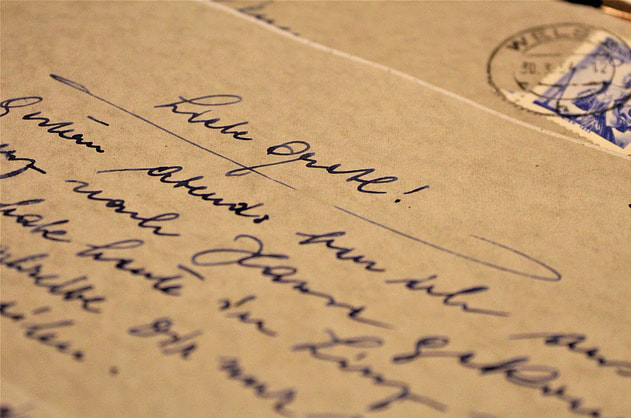 Letters: an endangered species? Letters: an endangered species? That old-fashioned mode of communication seems to be a vanishing species these days. The average American household receives only ten pieces of personal mail per year (not counting holiday cards and invitations), according to a New York Times article by Susan Shain. That's a pity. Letters have worth far beyond the paper they're written on, offering intimate musings and glimpses of everyday life that can't be found in brief dispatches or even impassioned Facebook posts.  Letters allow for fuller expression of ideas and emotions Letters allow for fuller expression of ideas and emotions "A letter is, after all, a piece of writing in which we give ourselves the space to reflect—to distill our emotions and reactions, to choose the things that are important and flesh them out in detail," writes Cristen Hemingway Jaynes in the November/December issue of Poets & Writers magazine. "Without the more intimate form of writing letters, I drift apart from those who are not in my daily life." Reflecting on her communications with one friend who still writes letters but never sends emails, Jaynes observes, "I know more about her thoughts and her relationship with the world—how she is actually doing—than I do about most of my other friends." 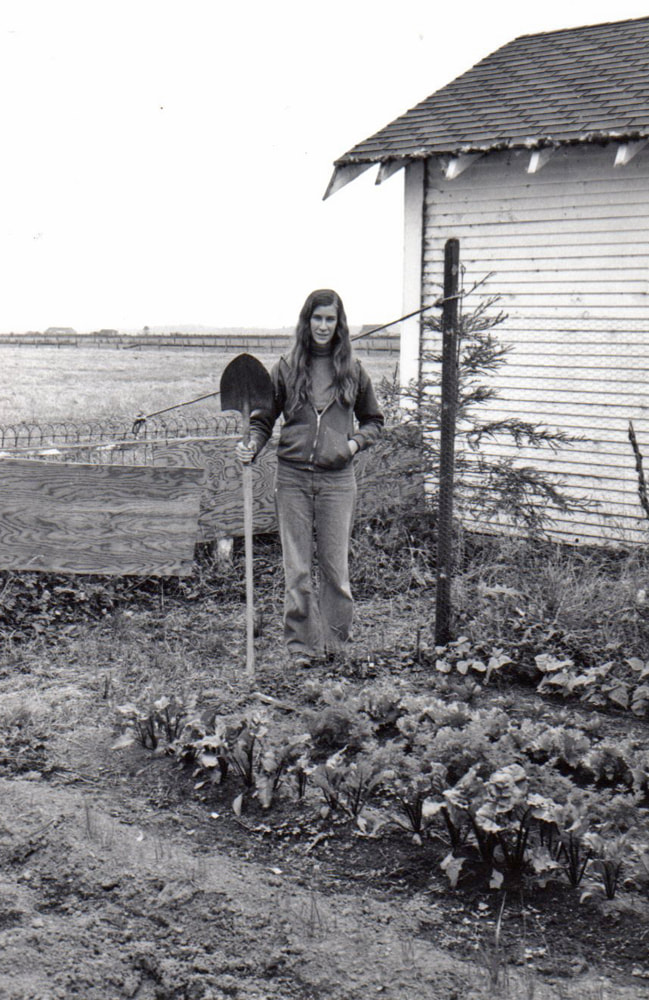 Laurel saved the letters that kept us connected after she moved from Northern California to Seattle Laurel saved the letters that kept us connected after she moved from Northern California to Seattle I thought about that kind of connection recently, when my friend Laurel gave me a packet of letters I'd written to her in the 1970s and '80s. Reading through them, I found verbal snapshots of that period of my life: vivid descriptions of my friends, amusing anecdotes about everyday incidents, accounts of the books I was reading, ramblings on romances, ruminations on my college and grad school anxieties. 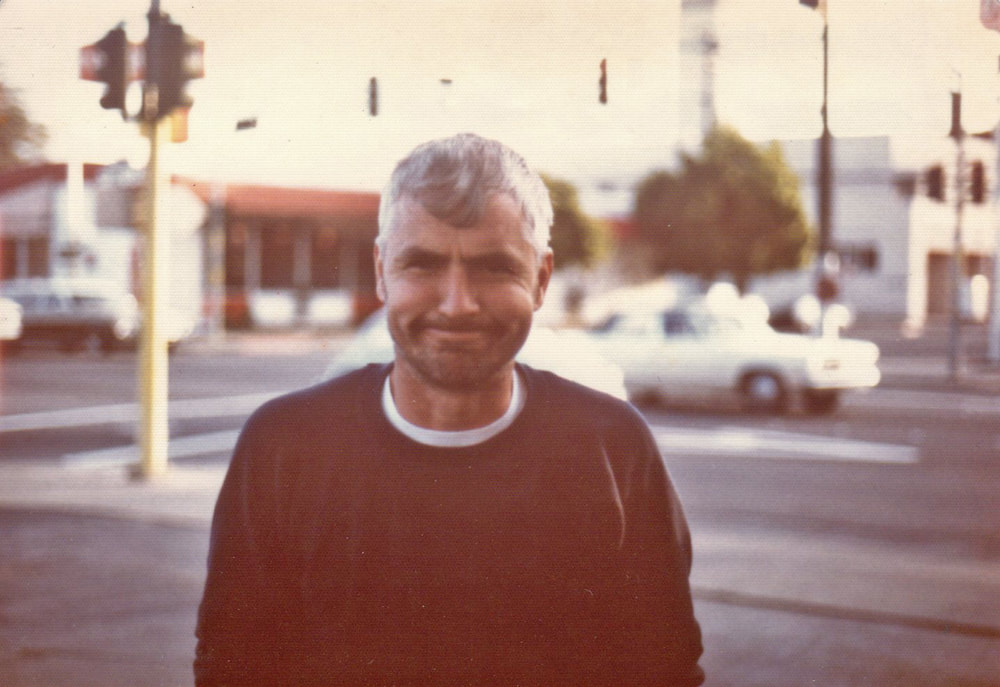 The prof I was trying to impress The prof I was trying to impress For instance: "I'm feeling very anxious about my entomology project and I want to make sure I have something done before Dr. Hurley gets back. I'm trying to get my equipment together this week so I can start the project next week. So far my equipment is a cake pan with the bottom cut out of it and a sieve. I have fears that the whole project is going to be about that sophisticated. I'm very nervous about it. I will enclose some of my bitten off fingernails if I remember." 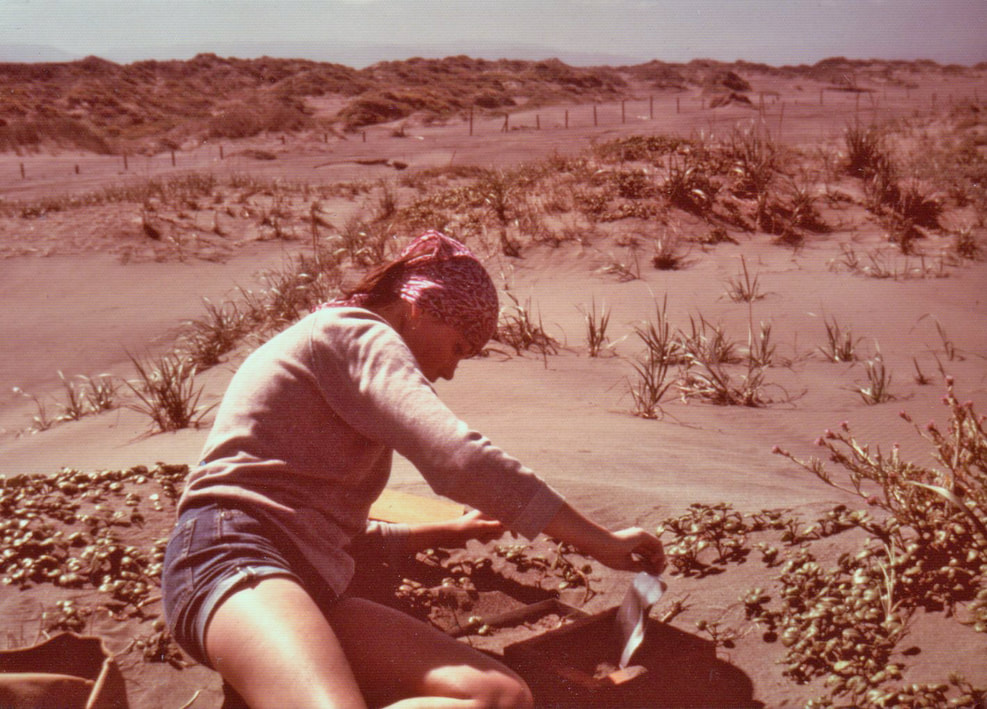 Working on my entomology field project (after progressing beyond the cake-pan stage) 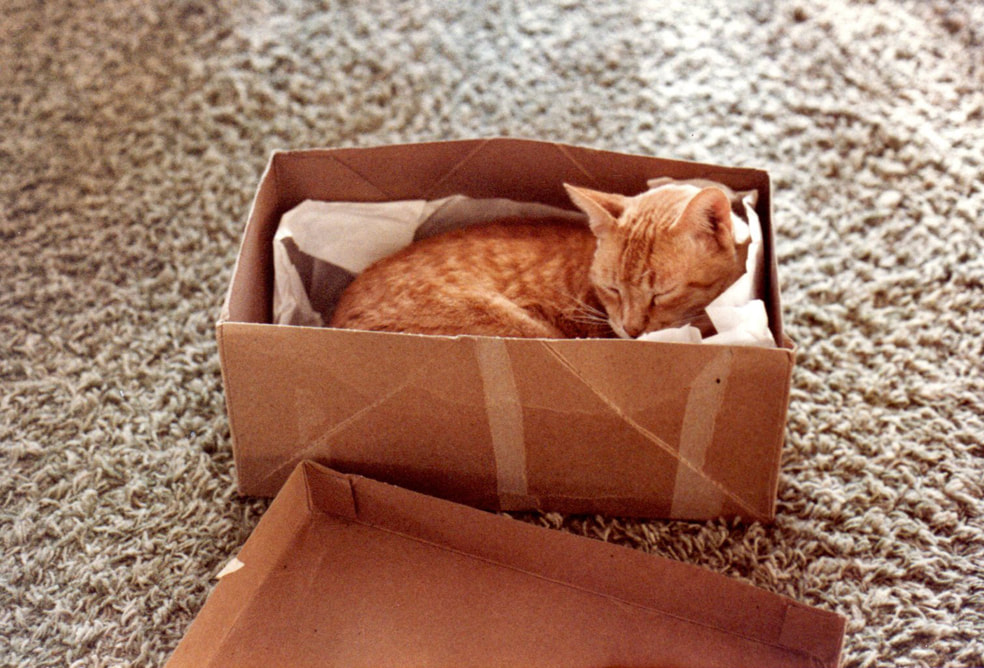 Zeke, the bird-chatterer Zeke, the bird-chatterer Segues were seemingly unnecessary. I followed a discussion of travel plans with this news flash about my cat: "Ooooh, the most creepy thing just happened. Zeke has been sitting next to me on the couch, watching the birds outside and chattering his teeth at them. Then he lay down and went to sleep and chattered his teeth in his sleep. I CAN'T STAND IT!!!" 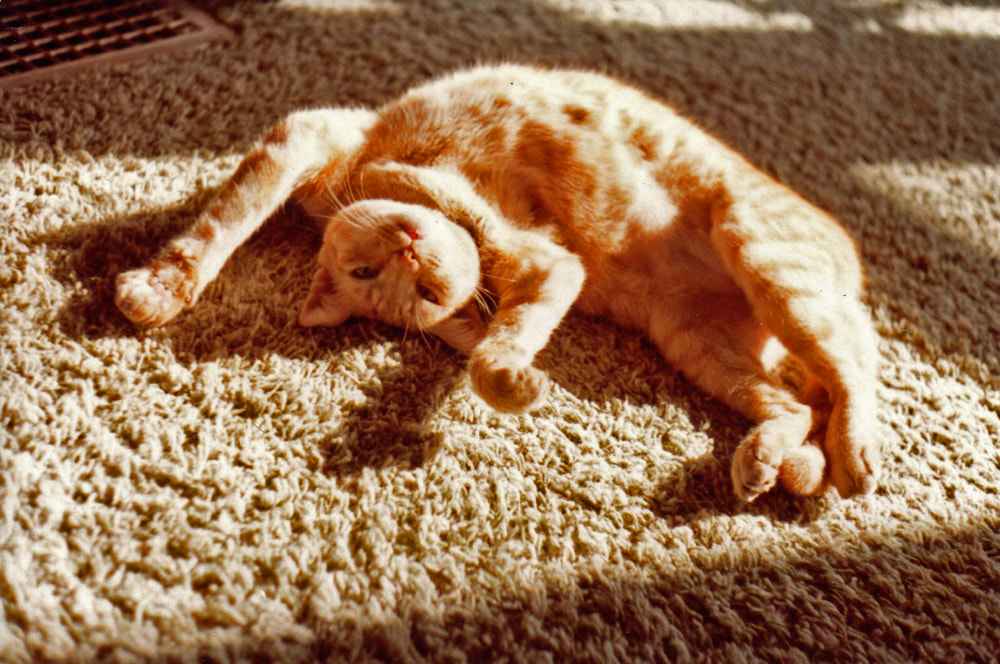 I just had the craziest dream! Some letters included funny drawings; others carried silly variations of my return address: "Sunset Avenue Circus Museum," "Sunset Avenue Center for the Development of Better Sleep Habits." Reading the Laurel letters inspired me to haul out a box of letters that friends and family members had written to me over the years. Just the act of taking the letters out of the box gave me a deeper satisfaction than I've ever gotten from an email popping into my inbox. Seeing my brother's artsy, backhand cursive trailing across an envelope; recognizing a friend's old return address, noticing the stamp she selected, the kind of paper she wrote on, all felt like little homecomings. And the contents of those letters took me to times, places, and crannies of my friends' hearts and souls I couldn't have visited—and revisited—any other way. 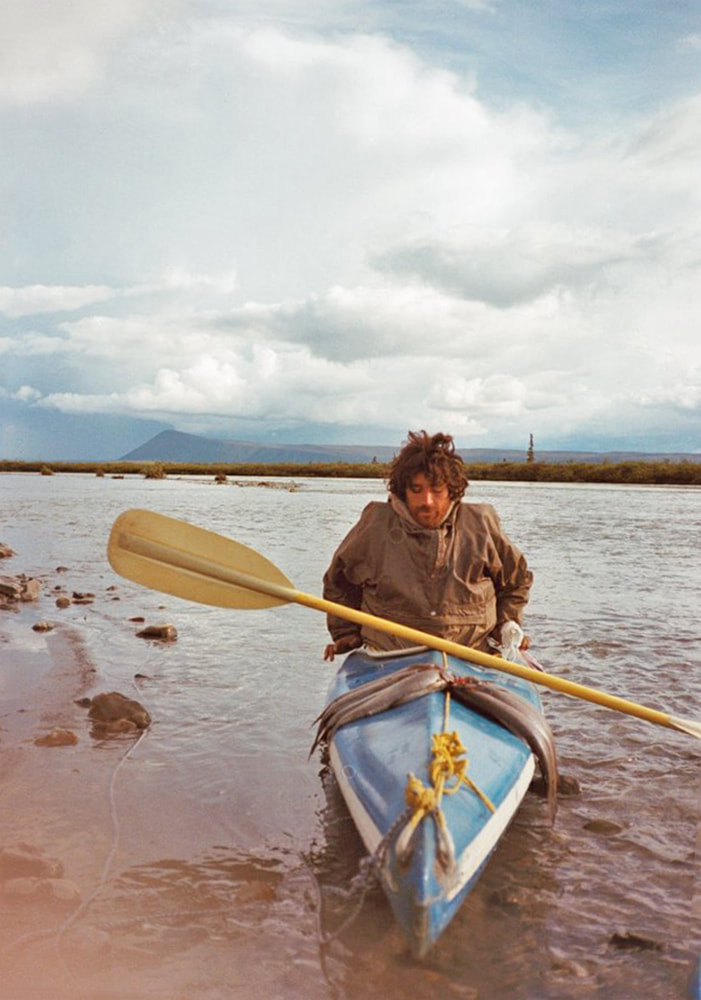 Darwin wrote to me on a bar napkin at the end of this adventure Darwin wrote to me on a bar napkin at the end of this adventure Among those treasures was a note written on a Buckaroo Club napkin by my friend Darwin in 1981, shortly after he'd completed a 300-mile kayaking odyssey on the Yukon, Porcupine, Sheenjek, and Kongakut rivers, culminating at the Beaufort Sea. "Though very maladjusted and in a state totally unfit for normal upright society except for that of Alaska, which I hate the city part of, I'm alive and back in Anchorage," he wrote. He went on to recount seeing hundreds of caribou, five grizzlies, two moose, and one gyrfalcon; tipping over twice, but righting himself before swamping his kayak; and sharing bowhead whale meat and blubber with local indigenous people on Barter Island. 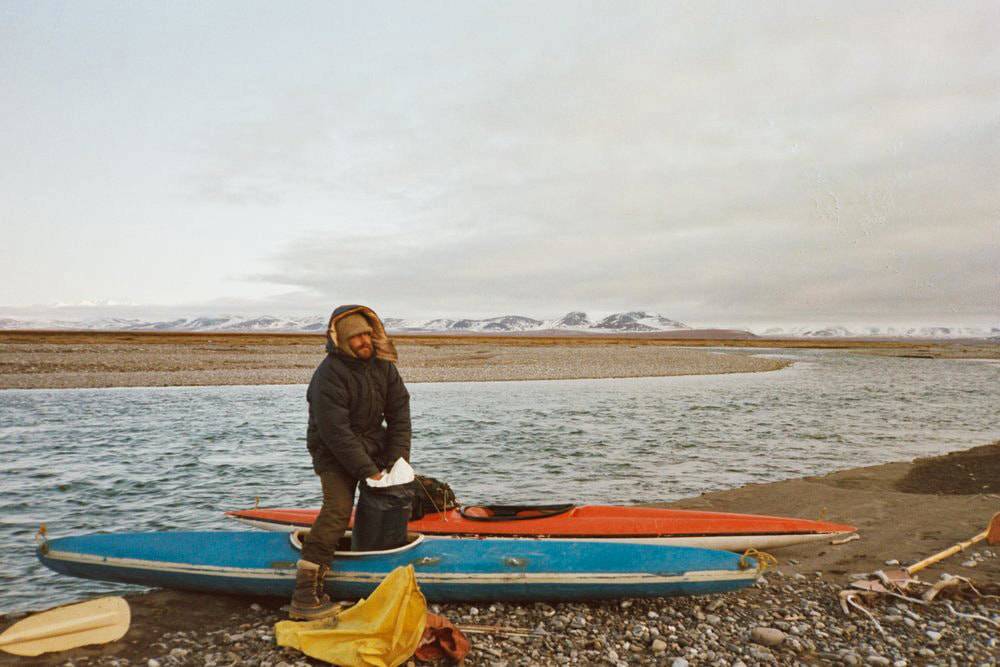 Darwin, before his return to civilization Even accounts of my correspondents' less adventurous experiences were a treat to read. My friend Barry's dispatch from college in 1969 was just as keenly observed: 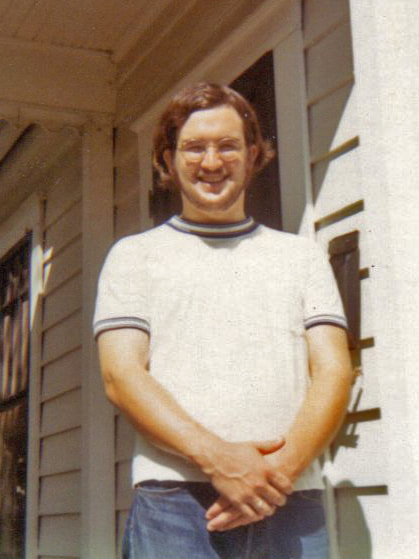 Barry's communiques from college could make even a boring lecture entertaining Barry's communiques from college could make even a boring lecture entertaining "Right here you have a prime example of a Communications 301 class," he wrote. "Notice the yawns and the chins propped drowsily on hands. Notice the blank sheets of paper without any notes. Notice the guest speaker getting shook. Notice chair #213 back there writing a letter to some girl in Oklahoma." 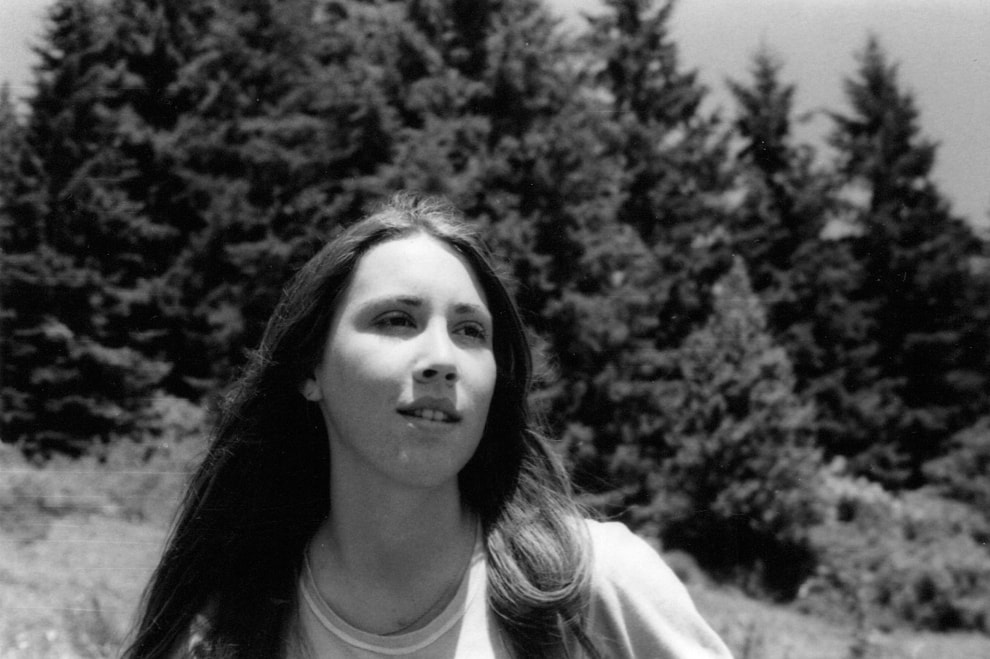 In letters, Wendy and I commiserated over financial and fashion dilemmas In letters, Wendy and I commiserated over financial and fashion dilemmas Old letters preserve daily details that now seem quaint. Writing in 1971 about her employment woes, my friend Wendy lamented "I really want to get out of the $1.65/hr range. It's a drag." In the same letter, she included sketches of a denim coat and paisley dress she'd managed to buy on those skimpy wages, and added, "I've ordered rain boots from Sears (pg. 555, Fall-Winter book, item 5, on sale for $8.94 in one of their sale books)." Over the years I've sometimes chided myself for holding onto mementos like these old letters. But a single snowy afternoon spent reading them—even if that happens only once a decade—is more than worth the closet space my box of letters occupies. I'm reminded of how long my friendships have endured and how they've sustained me. Letters enhance connection and contentment, to be sure, but they're also good for creativity.  Letters are a way to exercise creative muscles Letters are a way to exercise creative muscles "When I write longhand each pass of the ink on to paper is a physical creation. And as with sculpture, textiles, painting, and furniture, it contains remnants of myself," notes Jaynes, whose great-grandfather Ernest Hemingway was also an inveterate letter writer. "The exercise of writing, whether it be in the form of a letter or a story, is all good practice. As my great-grandfather demonstrated in his colorful letters to friends, there can be just as much creativity in letter writing as in any other form. Similar to freewriting exercises, writing a letter loosens the knots in neural pathways, leading to subjects and characters lying just below the surface." I know it did for me. I learned to write largely by crafting letters to everyone from grandparents to pen pals with whom I connected through a kids' magazine. 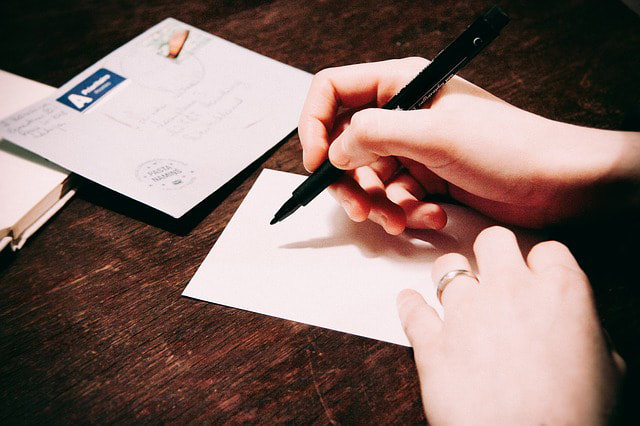 Keep those cards and letters coming Keep those cards and letters coming After all I've said in praise of letters, you probably think I'm going to end this post with a pledge to write more of them. I could, but I know it would be a hollow promise. Truth is, I've never been that great a correspondent, even when letters were my main form of communication. I wrote tons of them, but I always seemed to have a stack of unanswered ones nagging at me (kind of like my email inbox these days). So rather than make a promise I'm not likely to keep, I will resolve to keep writing an occasional letter, and I'll encourage you to do the same. After all, as Hemingway once wrote to F. Scott Fitzgerald, "it's such a swell way to keep from working and yet feel you've done something." Need more inspiration? Check out Letters of Note, a website that "offers an intimate window into history and the characters who shaped it." Or write a letter to a stranger who could use an encouraging word. Find stories of deserving people, along with where to send letters, at More Love Letters.
12 Comments
Feeling a little (or a lot) weighed down lately? I know I have been. With dreadful things happening around the world, and many friends and family members facing difficult challenges, it's sometimes hard to find reasons to smile. Yet even in rough times, a little levity can help us cope. In that spirit, I'm taking a look back at some of the funny and light-hearted things we've come across in our recent travels. One way I amuse myself on long road trips is by collecting funny names of roads, businesses, and other points of interest. I don't do this in any organized way—I just scribble them down in whatever notebook I have at hand. It's a treat to come across those notations later, when I'm thumbing through the pages, looking for the name of a book someone mentioned or the phone number of a tradesman I saw on a street-corner sign, or whatever else I've stowed in the same notebook. On our latest trip out west, we chuckled at a highway exit sign for Bad Route Road, and then laughed harder when we saw the next sign advising trucks to exit there. On the same stretch of Montana highway, we encountered Whoop-Up Creek Road. I guess if you make it through the Bad Route, you've got something to whoop about.  Some place names just make you wonder how they came by those monikers. Take Tongue River, for instance. Or Fourth of July Creek. I Googled that one while working on this piece and didn't find out the origins of the name, but I did discover author Smith Henderson's 2014 novel by the same name. Looks like another book worth jotting down in that little notebook and adding to my to-read list. 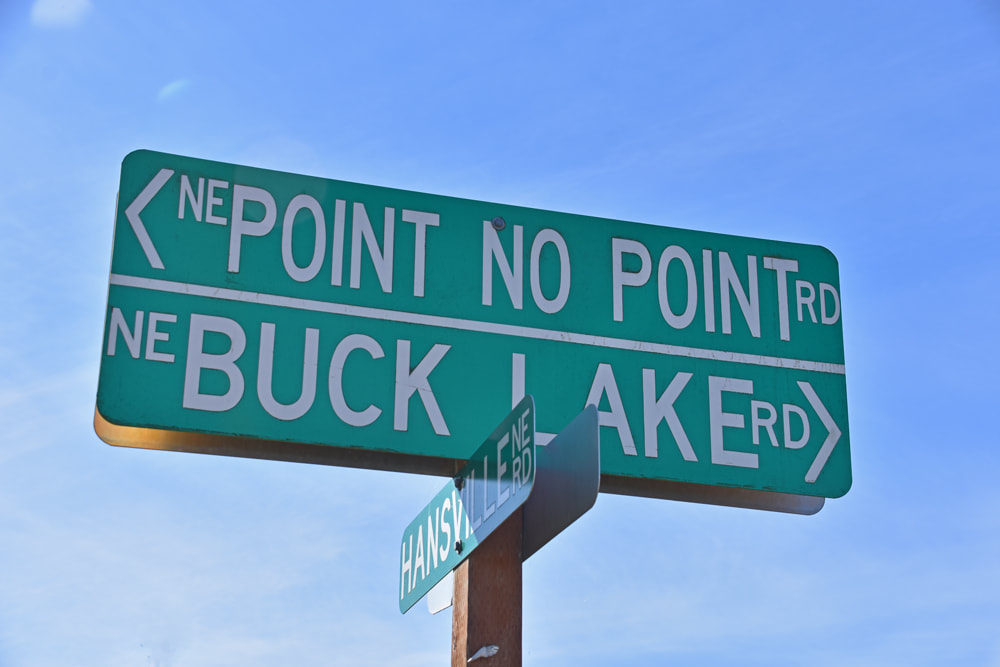 In Seattle, our friends Laurel and Darwin took us on a day trip to Kitsap Peninsula, which included a visit to a finger of land known as Point No Point. According to a source cited in Wikipedia, explorer Charles Wilkes gave the place its name because "it appears much less of a promontory at close range than it does from a distance." I don’t know about that, as I didn't view it from a distance (I didn't see the point--ha, ha), but I will say that there is a point to visiting Point No Point: seeing the oldest lighthouse on Puget Sound and enjoying the driftwood sculptures and furnishings that decorate the grounds. 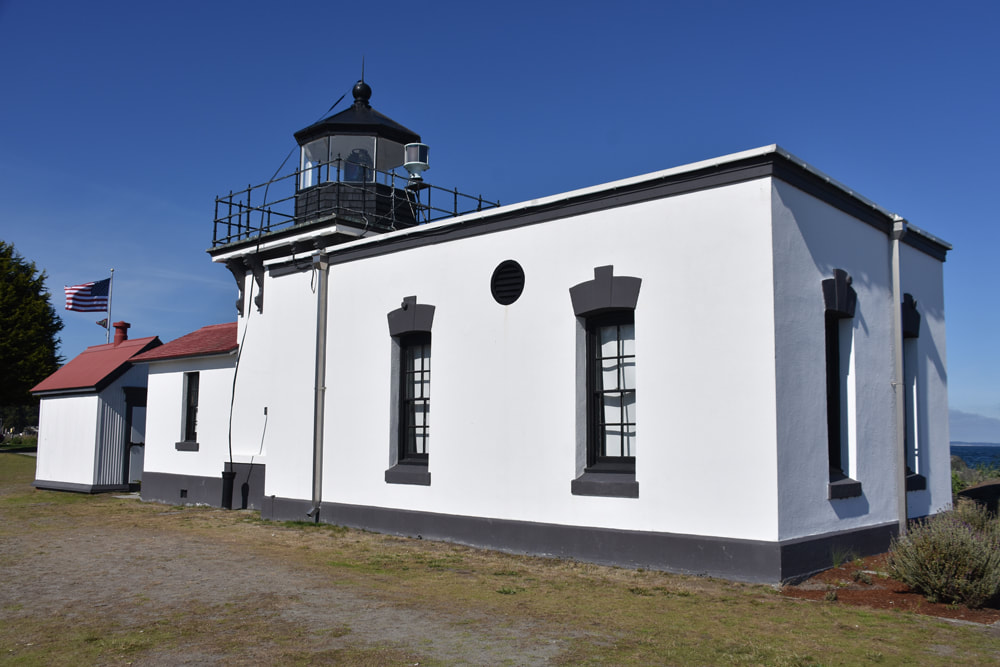 Point No Point Lighthouse 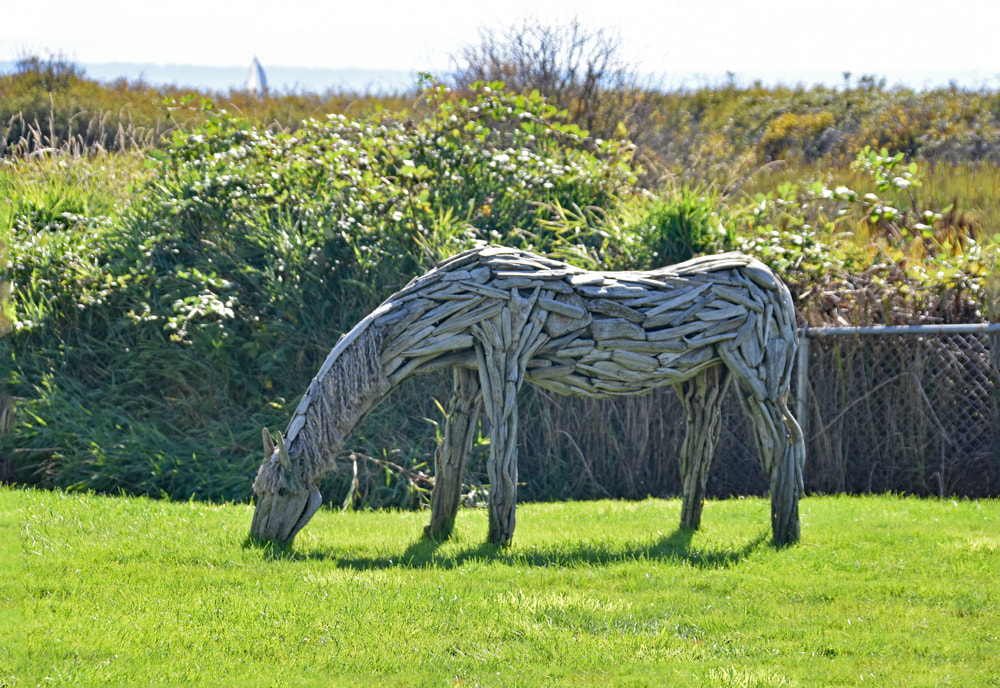 This driftwood horse is another point of interest at Point No Point 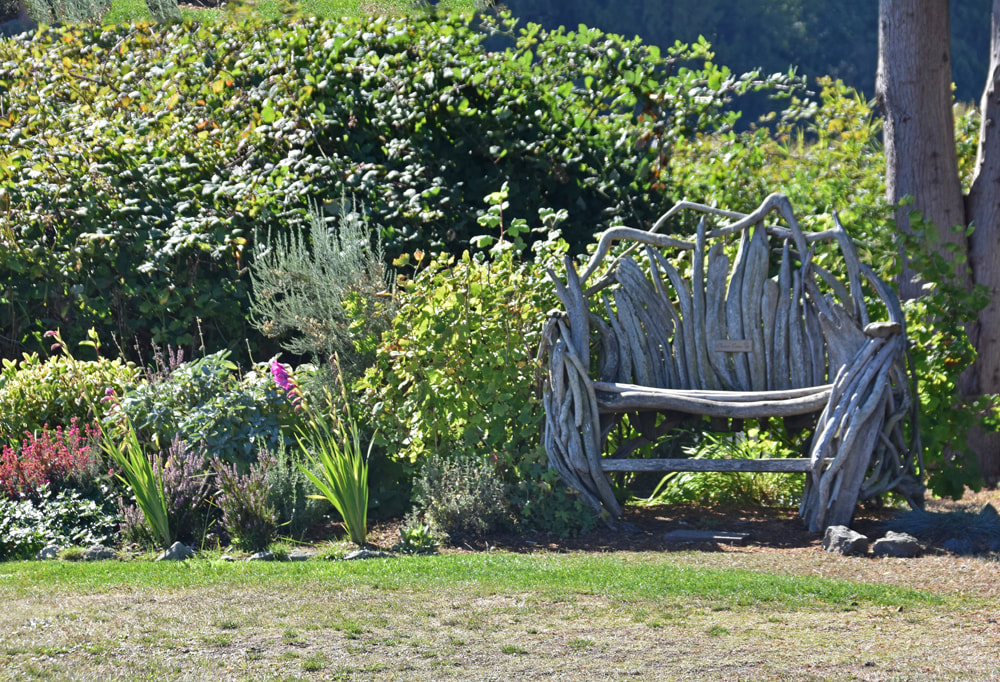 As is this lovely garden bench 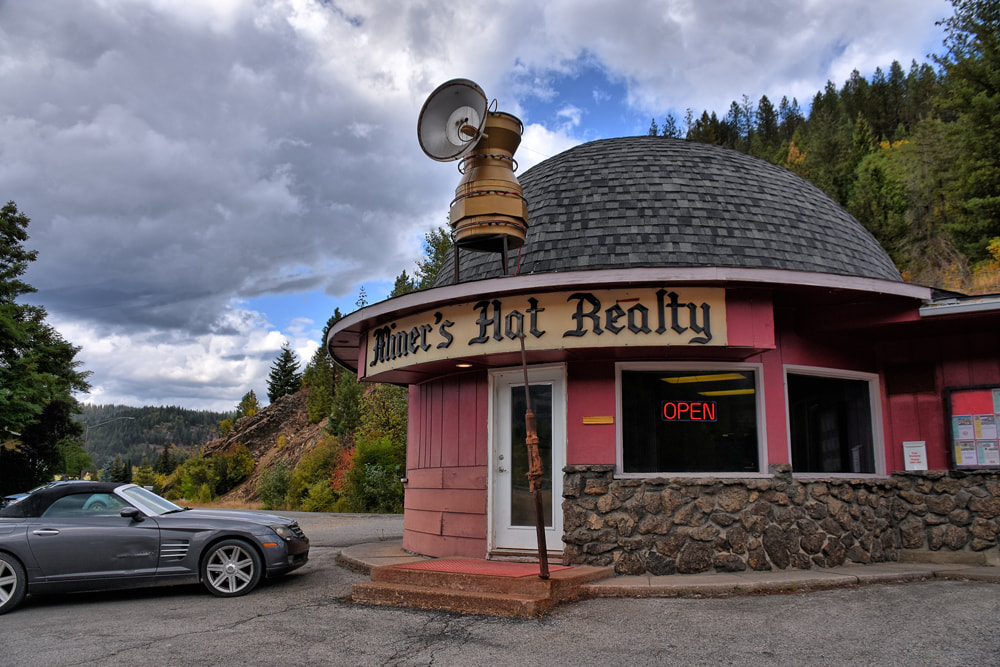 Hats off to this creative landmark Hats off to this creative landmark On our drive back to Michigan, we saw other sights that made us smile. In Kellogg, Idaho, there's a circular building topped with an oversized miner's helmet and lantern. Built in 1939, it was originally a roadside diner where workers from nearby lead and silver mines stopped for Coneys and beers. After a stint as a 1950s drive-in restaurant, it closed in 1963, but reopened in 1991 as a realty office, which is what it remains. 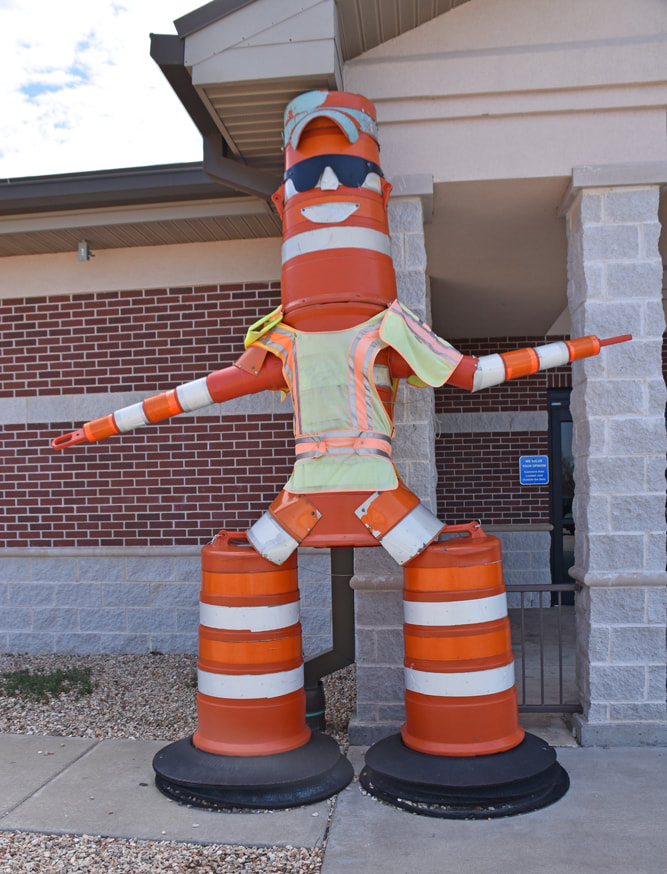 Construction barrel creation Construction barrel creation Even highway rest stops can serve up some smiles. Weary of construction delays toward the end of our travels last spring, we came across this jaunty fellow in one rest area. 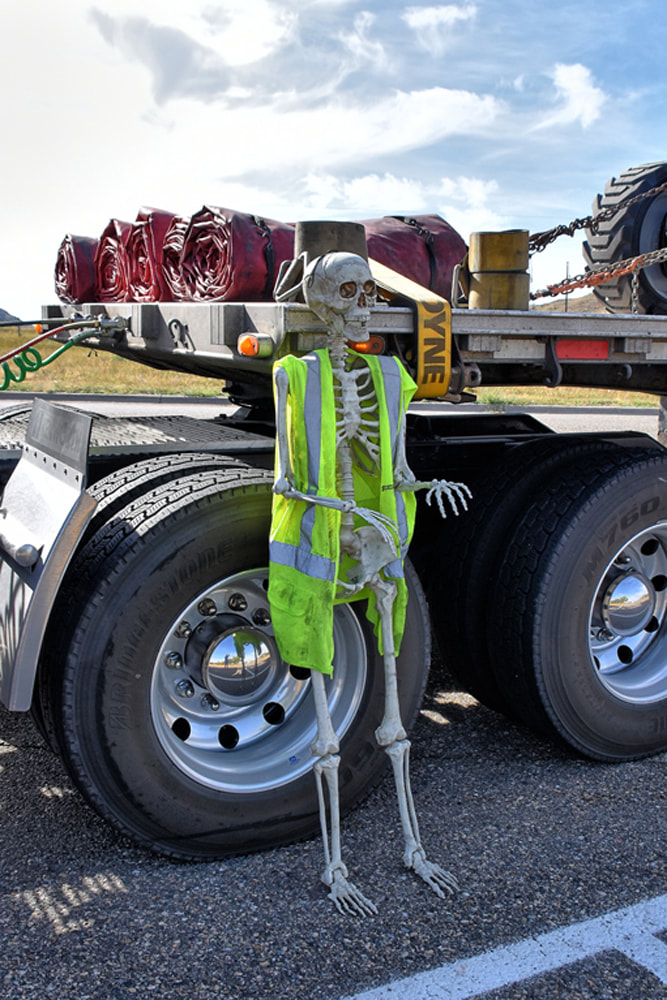 And on our most recent trip, we encountered this frighteningly funny chap at a pit stop. Two truck drivers were preparing to station the skeleton at the controls of a piece of equipment they were transporting. They told me they planned to put a sign on Mr. Bones's back reading "I WAS TEXTING." 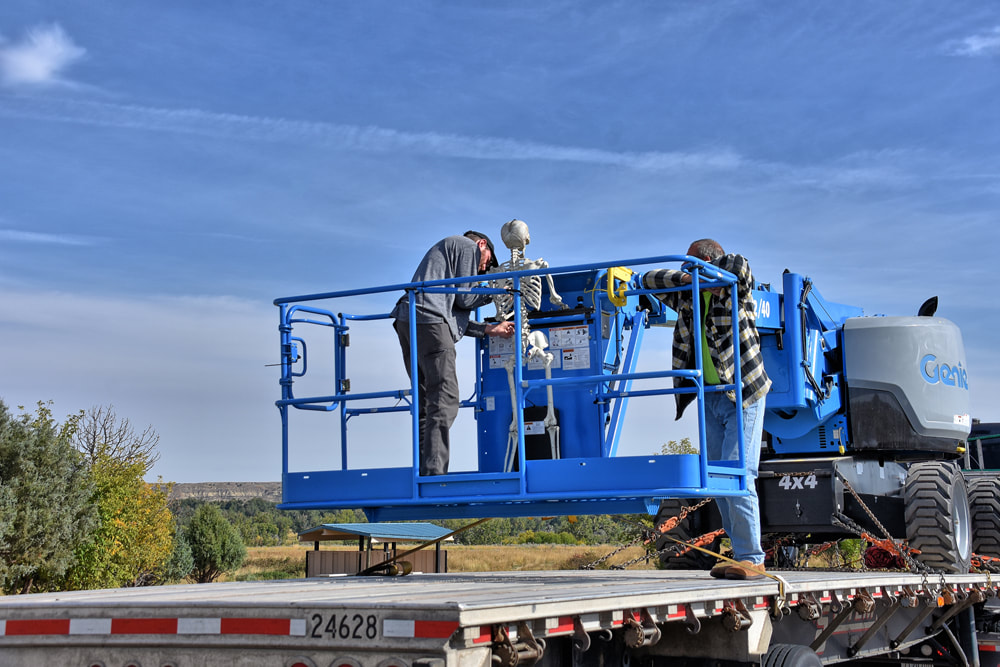 The lengths people will go to, just to relieve highway monotony! More merriment came from the names of businesses we passed along the way: Garden of Read'n bookstore in Missoula and Animal House Veterinary Hospital in Forsyth, Montana. Then there was the billboard that warranted a double take, with its ad for the Rock Creek Testicle Festival. You know I had to look that one up! Turns out it's an annual event famous for dishing up the local delicacy known as Rocky Mountain oysters—breaded and deep-fried cattle testicles—and sponsoring such contests as the Undie 500 tricycle race. I should say it was an annual event, as the Testy Fest (motto: "Have a ball") was discontinued this year, following a series of incidents, including fatal crashes caused by festival-goers, in previous years. The owner of the lodge that hosted the rowdy event for 35 years said attendance—which once numbered more than 10,000 people—also had been dropping, due at least in part to social media. Apparently not all attendees cared to have footage of their festival antics posted on Facebook. Though I'm a big fan of festivals (read more about that here), I think this is one I'm not sorry to have missed. At this stage in life, I'm content to get my amusement from road signs and sights. And newspaper headlines, which are sometimes downright funny, but more often ironic in their placement. One day, for instance, the front pages of Montana Standard and Great Falls Tribune were crowded with news of corruption and strife—a sheriff charged with felonies, nastiness between two state senate candidates—but anchored with a story bearing this headline: "Labyrinths across state bring peace, meditation." Let's hope so. What has tickled your funny bone lately?
If you ever find yourself traveling through North Dakota on I-94, wishing for relief from the tedium of driving and the monotony of the plains, just take Exit 72 for a delightful detour through one man's imagination. Known as the Enchanted Highway, the 32-mile stretch of two-lane county road from Gladstone to Regent showcases a collection of colossal creations by metal sculptor and retired teacher Gary Greff. Gargantuan grasshoppers, humongous fish, gigantic pheasants, the world's largest tin family—you'll find all of these and more if you venture off the interstate. 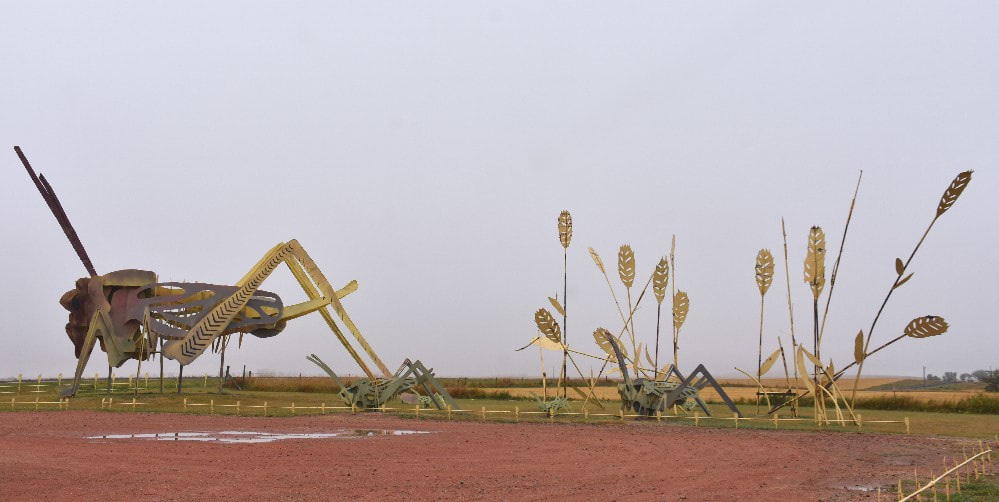 Gary Greff's gargantuan grasshoppers 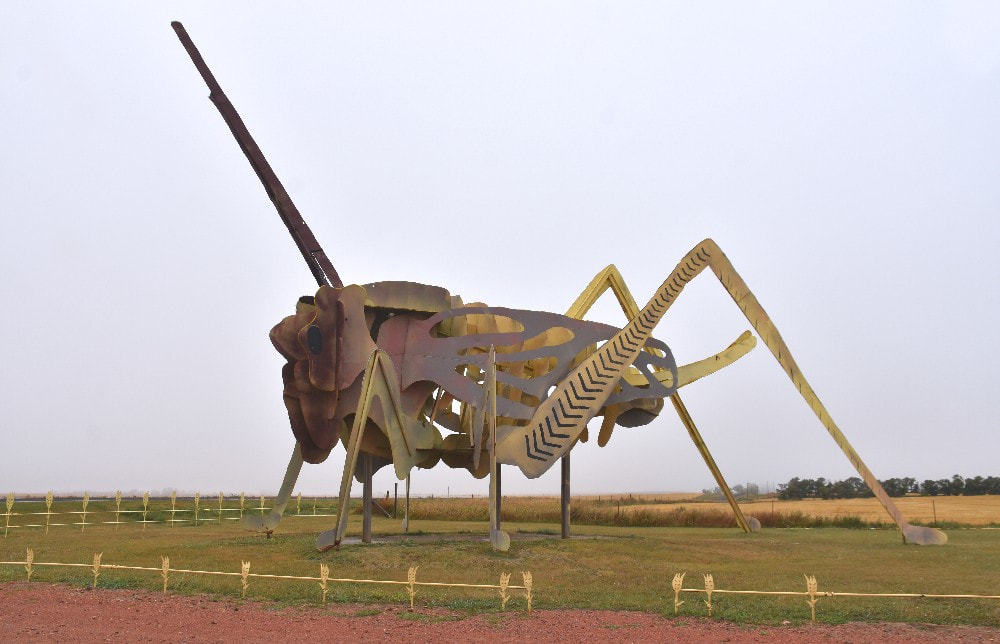 A closer look at a mega-hopper Greff dreamed up the Enchanted Highway nearly three decades ago in an attempt to revitalize his hometown of Regent, then a town of around 200 people. He'd never studied art and didn't know how to weld, but that didn't stop him. Using scrap metal, cast-off oil drums and recycled pipes, Greff just figured things out as he went along, sculpture by sculpture. 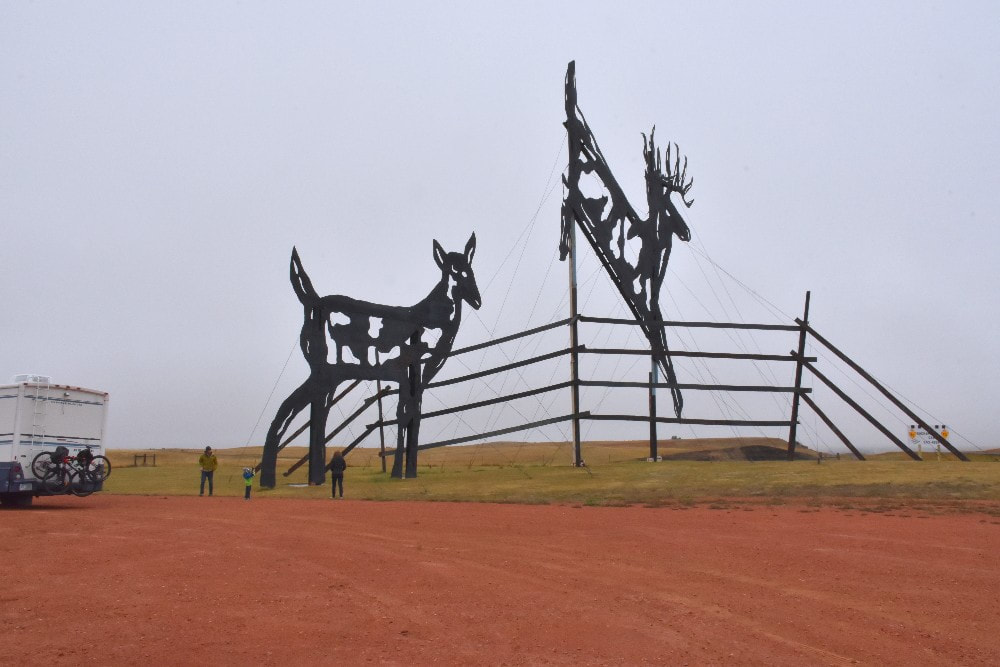 A young family checks out Greff's "Deer Crossing" sculpture "He envisioned ten mega-sculptures, each with parking lot, picnic area and playground equipment, spaced every few miles along the road. So far, he has completed six on the Gladstone-to-Regent road, plus an additional sculpture, "Geese in Flight," on a ridge overlooking I-94 at the Gladstone exit. 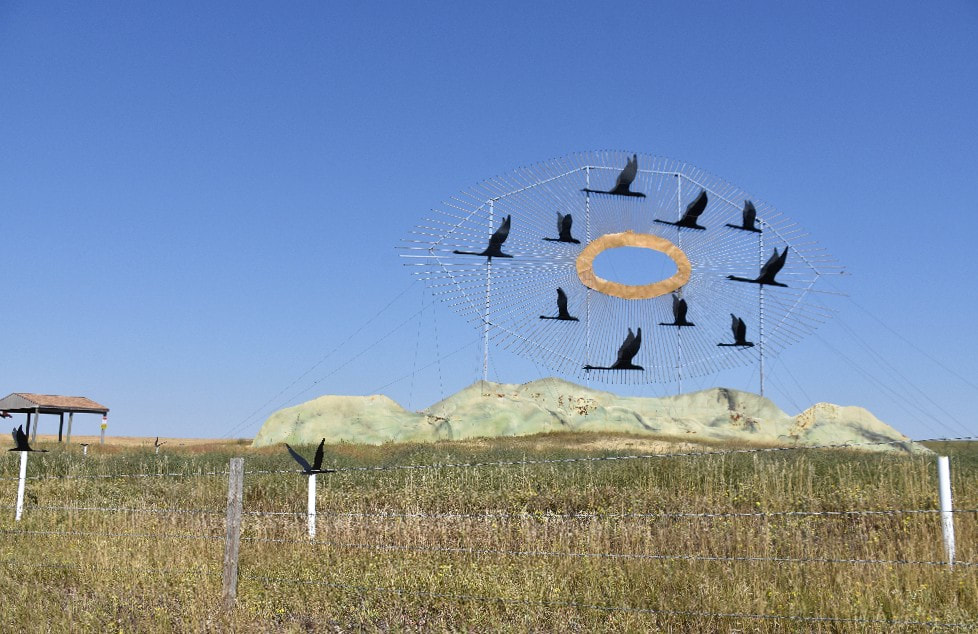 "Geese in Flight" overlooks I-94 and serves as a gateway to the Enchanted Highway Simply funneling travelers into Regent wasn't enough for Greff, though. He wanted to keep them there long enough to eat, drink, sleep, shop, and hang out a while. So he opened a gift shop, and when the town's school—which Greff had attended as a kid—closed, he and his brother converted the building into a hotel. 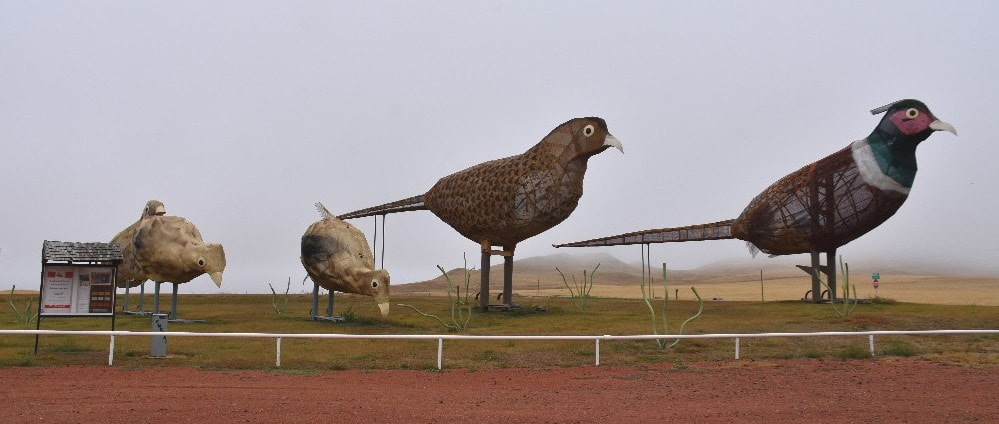 "Pheasants on the Prairie," a la Greff But not just an ordinary hotel. No, the brothers Greff wanted a hostelry in keeping with the enchantment theme. So, once again with more inspiration than experience, they turned the school into the Enchanted Castle, a 23-room hotel with waterfall walls, suits of armor, and other medieval touches. The inn even has a bar and a restaurant fittingly named Excalibur Steakhouse. 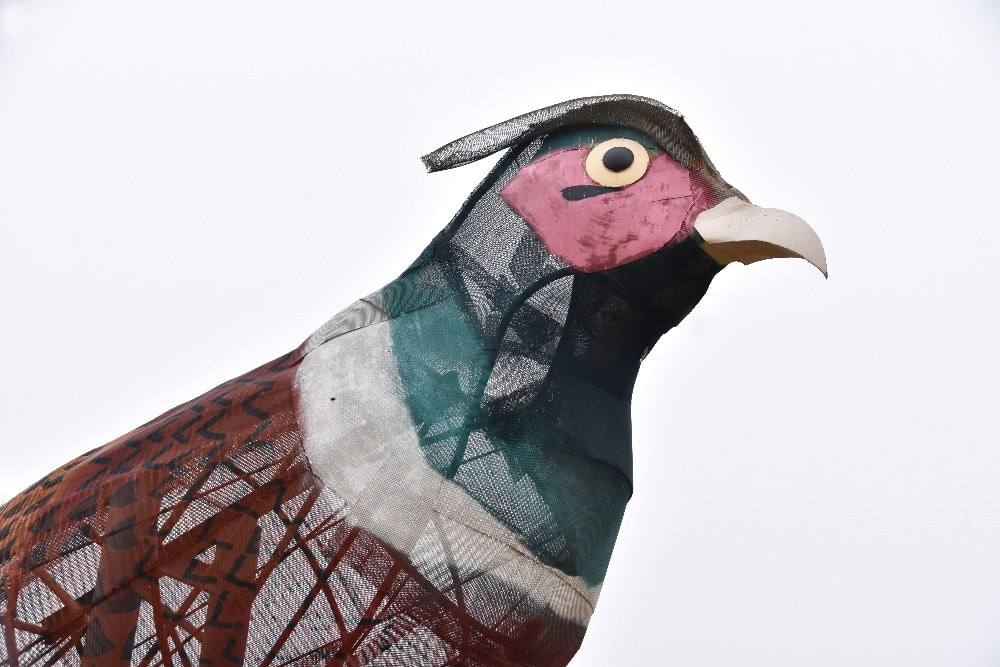 One big bird! Though the hotel, bar, and restaurants have garnered glowing reviews, they haven't yet turned things around for Regent. The population has dwindled to around 170. Yet Greff is undaunted. Ever the optimist, he's working on two new sculptures to grace the hotel grounds and attract more visitors, he told the Dickinson (North Dakota) Press: a 35-foot-tall, sword-wielding knight and a 40-foot tall dragon that will breathe fire every hour. 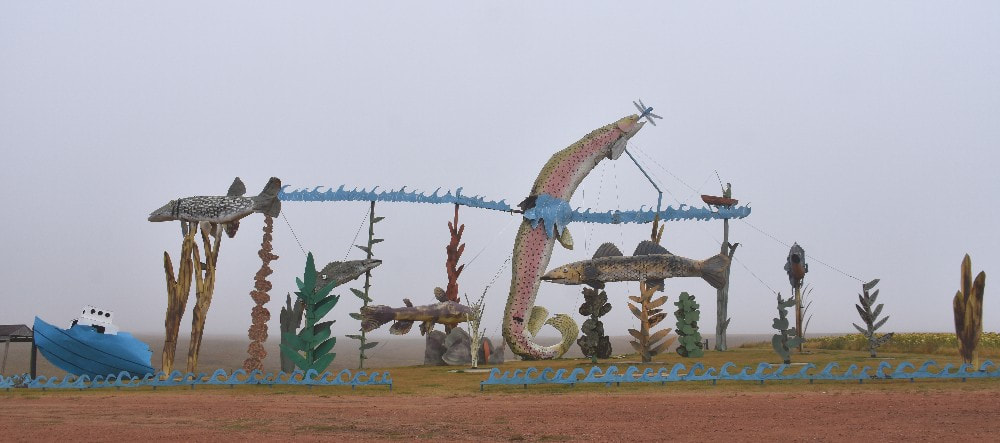 "Fisherman's Dream" is arguably the most ambitious of Greff's sculptures to date, but he's still making BIG plans for imaginative works Regular readers of HeartWood know I can never pass up roadside oddities, especially the oversized variety. My patient husband and traveling companion, Ray, knows it, too, and never objects my quests for the quirky. So when I read about the Enchanted Highway in a North Dakota tourism magazine and realized it was right on the route of our recent road trip to Seattle, I declared it a must-see. On the way out to Seattle, we had only enough time to stop at "Geese in Flight," which is currently closed to visitors, but can be viewed from the highway exit. On the way back, however, we spent an entire morning visiting the rest of the sculptures. 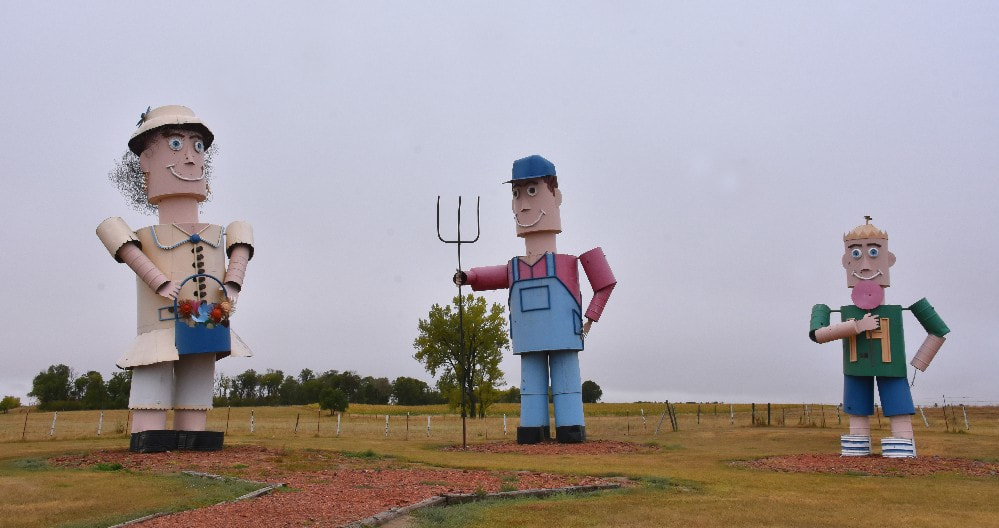 "Tin Family" 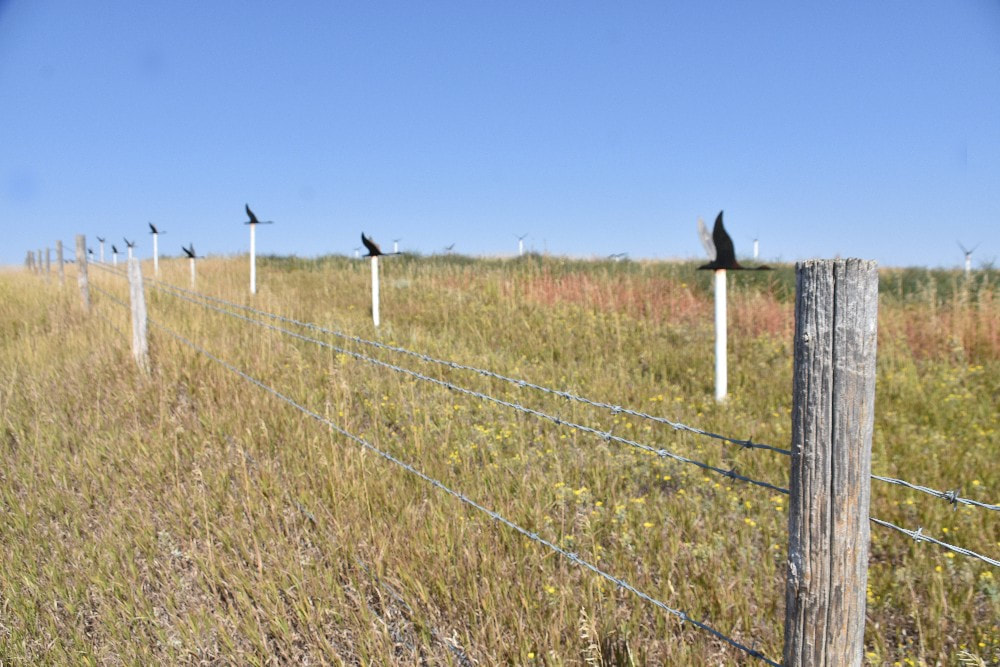 Many of the sculptures include extra touches, like these flying-goose-topped posts along the driveway leading to "Geese in Flight" I was— of course—enchanted! The sculptures were even more immense and intricate than they appear in photos. It was clear, though, that some could benefit from an infusion of cash to maintain or restore them to their original conditions. 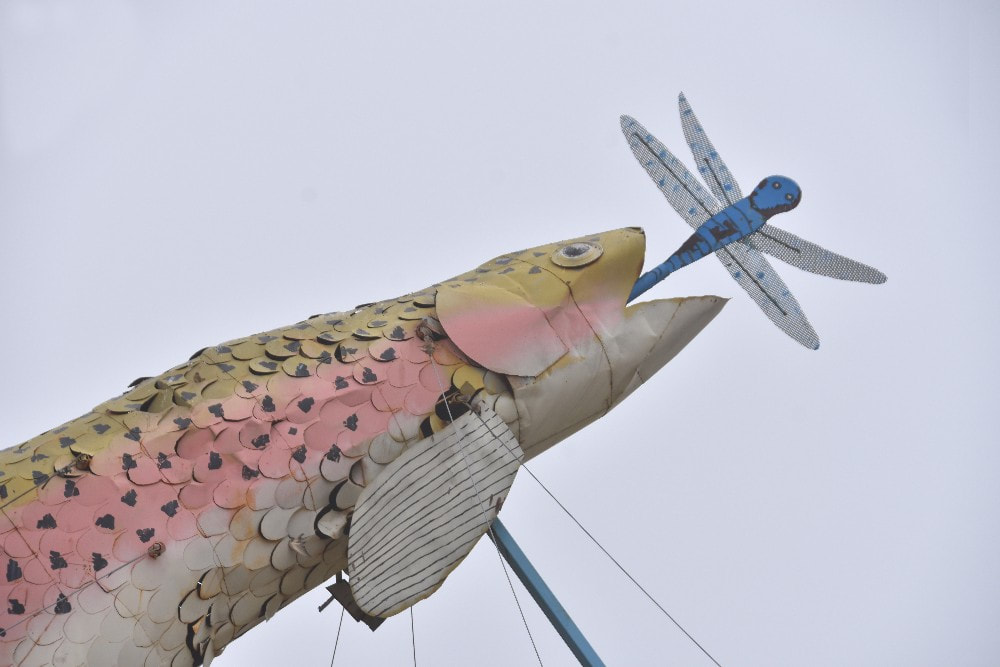 Greff's fish sculptures impressed me with their detail 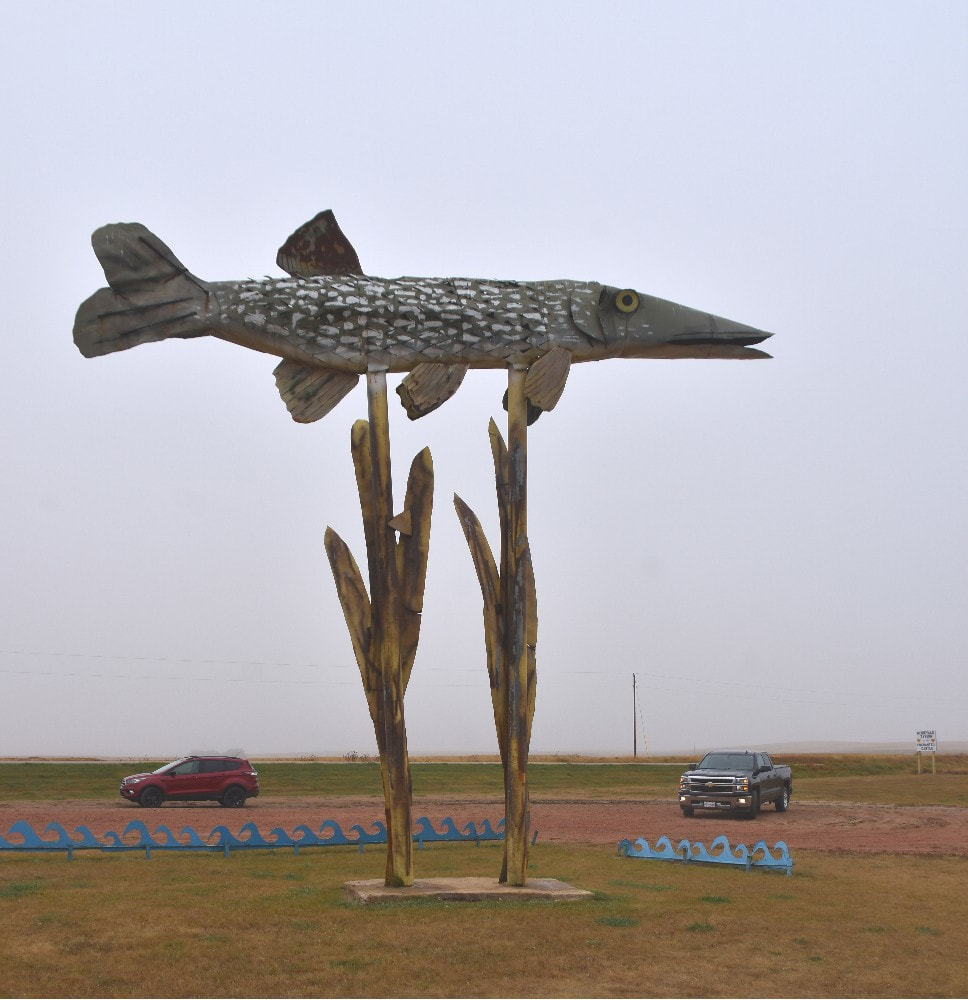 Photos hardly do justice to the scale (no fish pun intended) of Greff's sculptures Greff's project is largely self-funded, and he does all the upkeep, including cutting the grass. He'd hoped gift shop proceeds would cover costs, but so far they haven't, he told the Dickinson Press. Neither, apparently, have the donation stations at the sculpture sites. 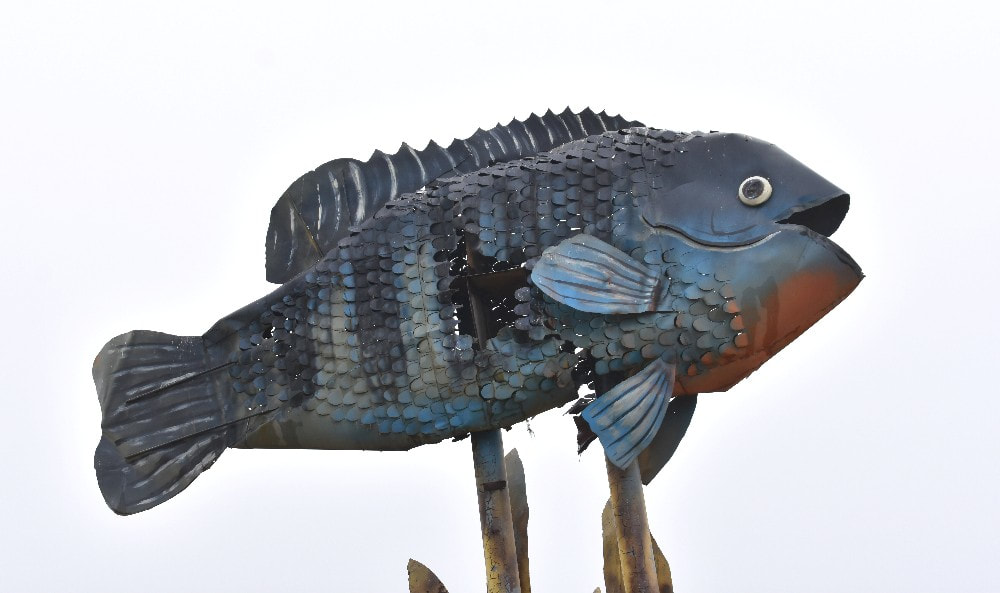 Some of the works could use a little TLC, but that takes money I only hope some kind of magic materializes to provide Greff with the means to continue and care for his work. It's a testament to the vision and perseverance of one big-time dreamer and an inspiration to all who dare to aim high. 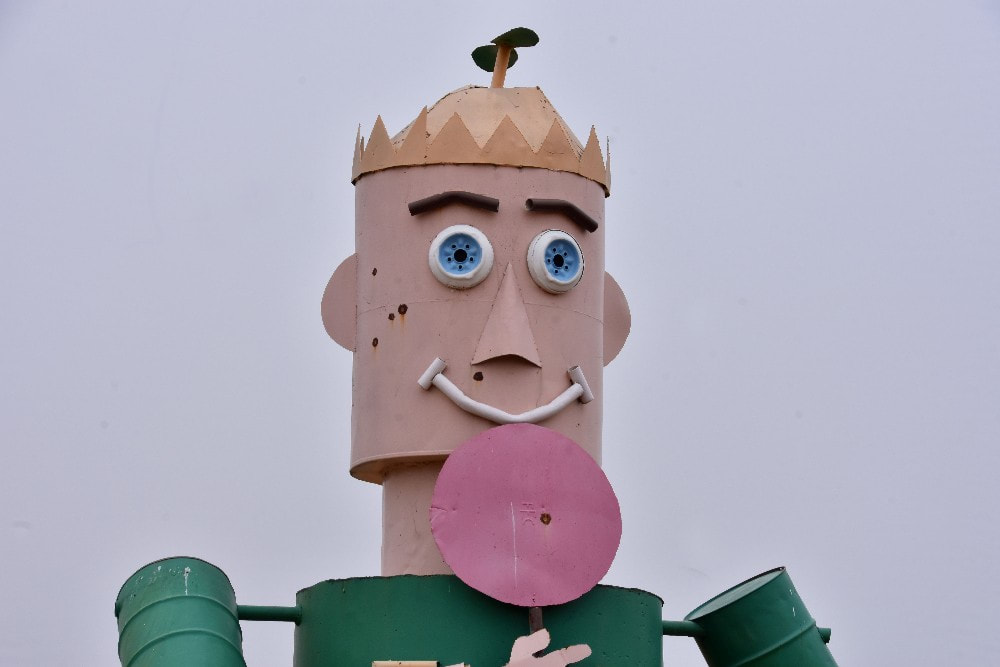 Here's to big dreamers! As Greff summed it up in an article on a North Dakota tourism website, "You've got a dream. Live that dream. Don't hesitate. If I can do it, a person who didn't know how to weld and didn't have an art class, if I can go out and build 110-foot metal sculptures, I think you can do whatever you put your mind to."
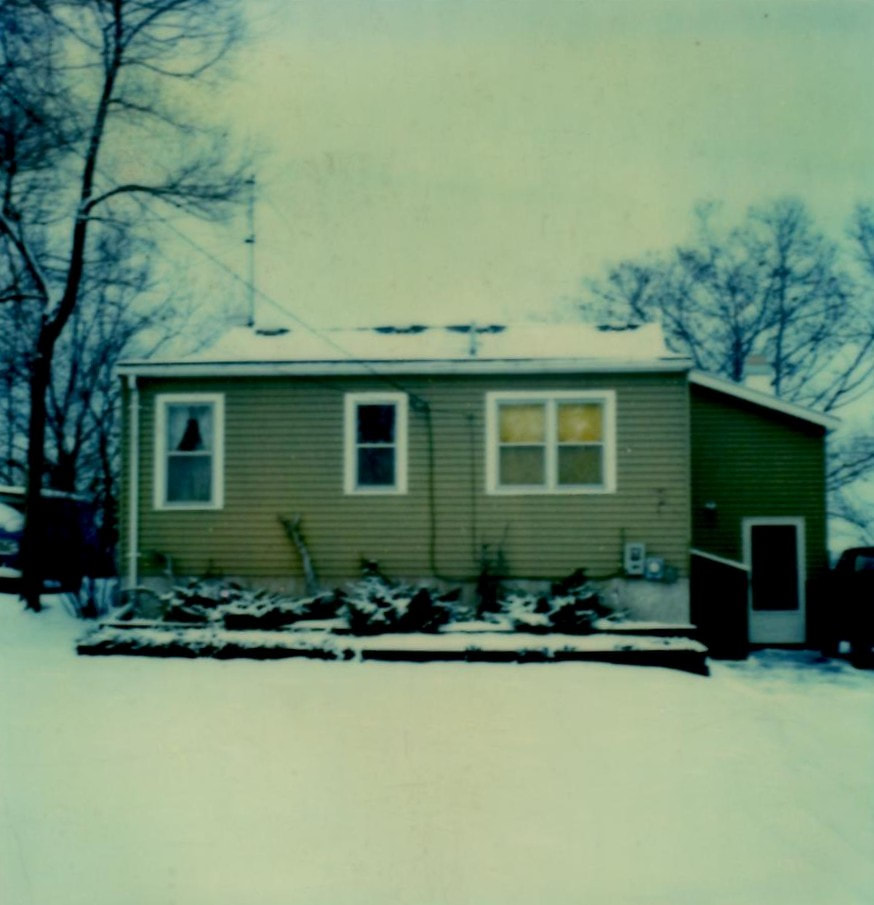
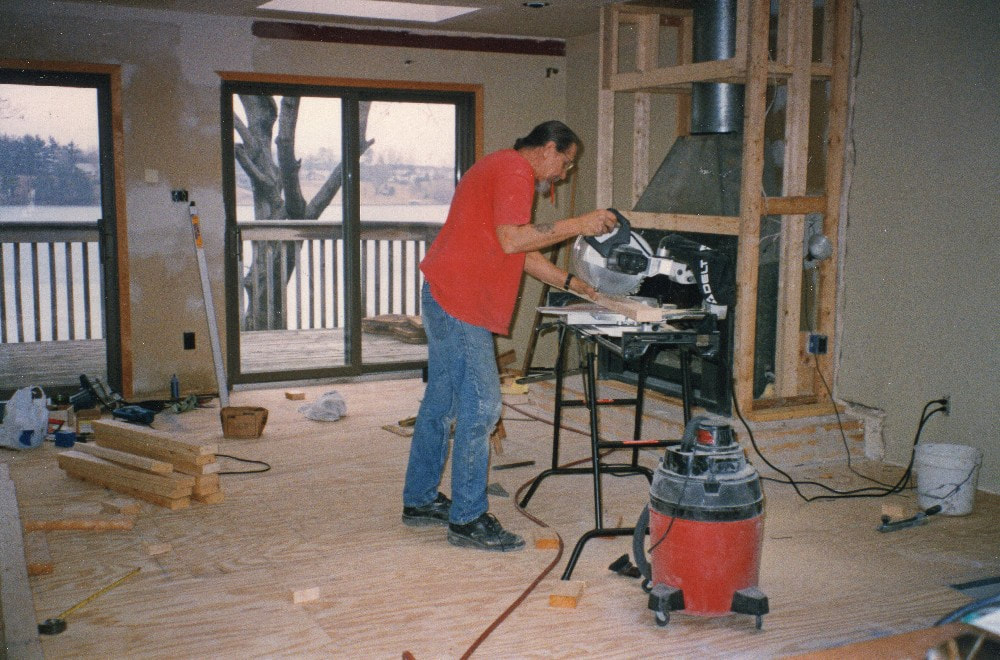
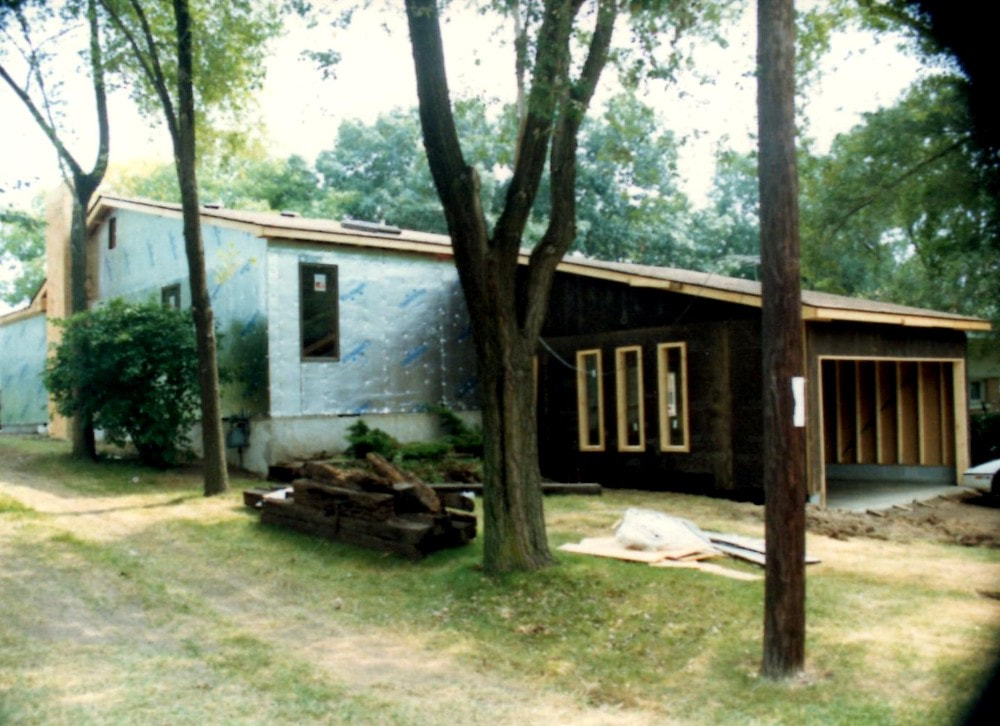
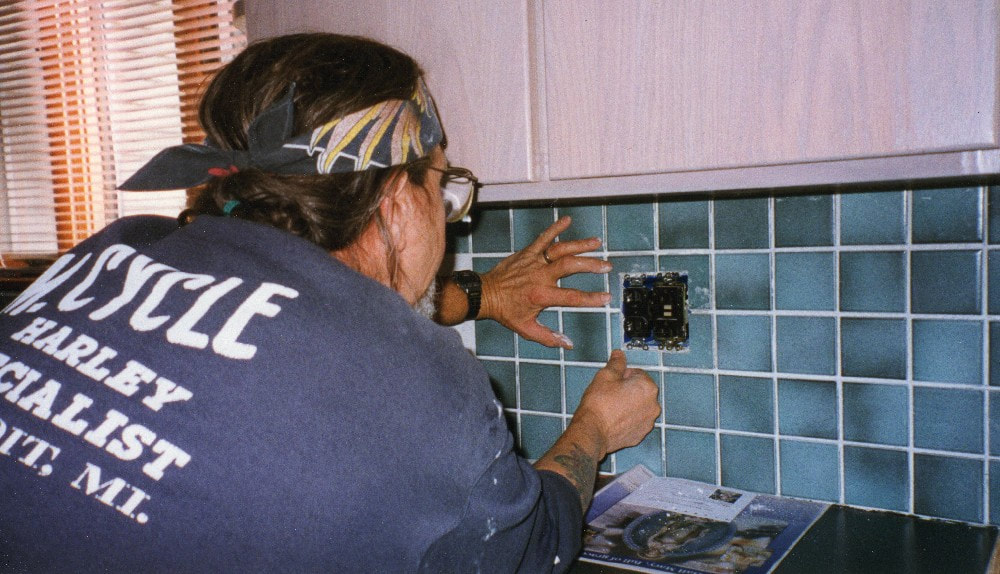
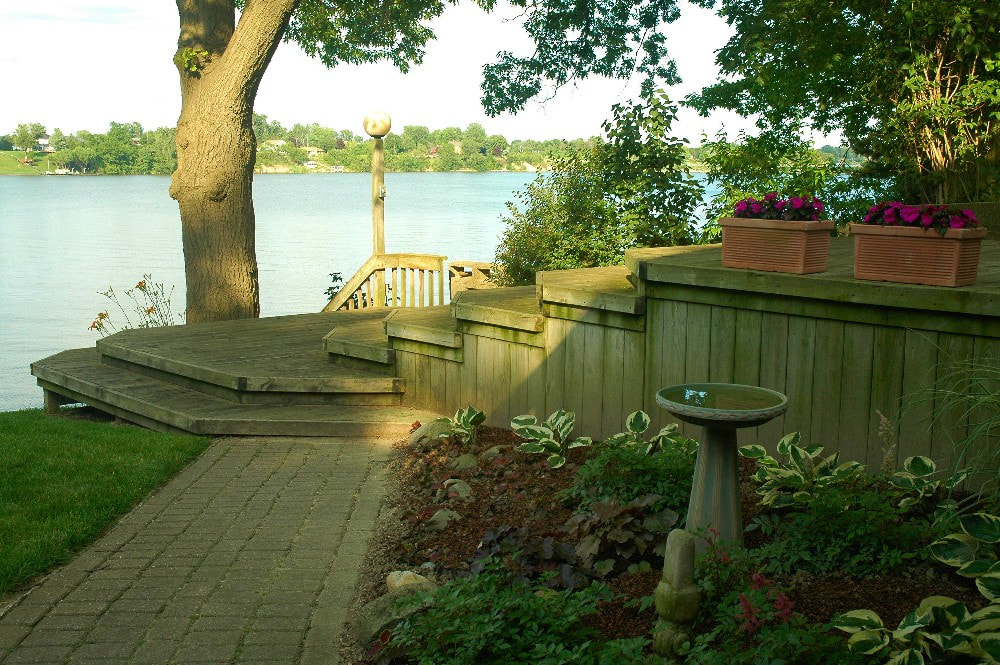
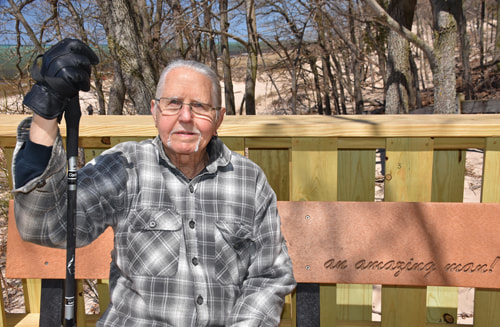 The bench says it all The bench says it all In the two-and-a-half years since I started this blog, I've written about dozens of creative people, some here in Newaygo County, others as far away as the U.K. But it struck me recently that I've never written about my favorite creative individual, one who's right here at home: my husband, Ray Pokerwinski. Since Ray has a birthday coming up next week, what better time to celebrate his talents? One of the first things I appreciated about Ray (after his green eyes and engaging personality) was his imagination and ability to apply it to all sorts of projects. When we first met, twenty-six years ago, he was remodeling a house, transforming a cobbled-together lakeside cottage into a stunning, open-floorplan, contemporary home, complete with boat house and tiered decks. He envisioned the whole thing, then set about gutting the place and putting it back together in an entirely different conformation. (That house, by the way, was the fifth house he had remodeled, all with self-taught skills.)
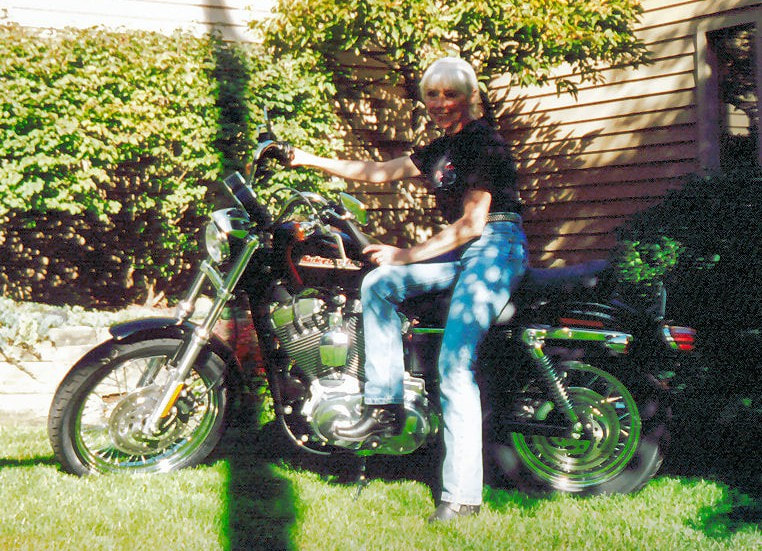
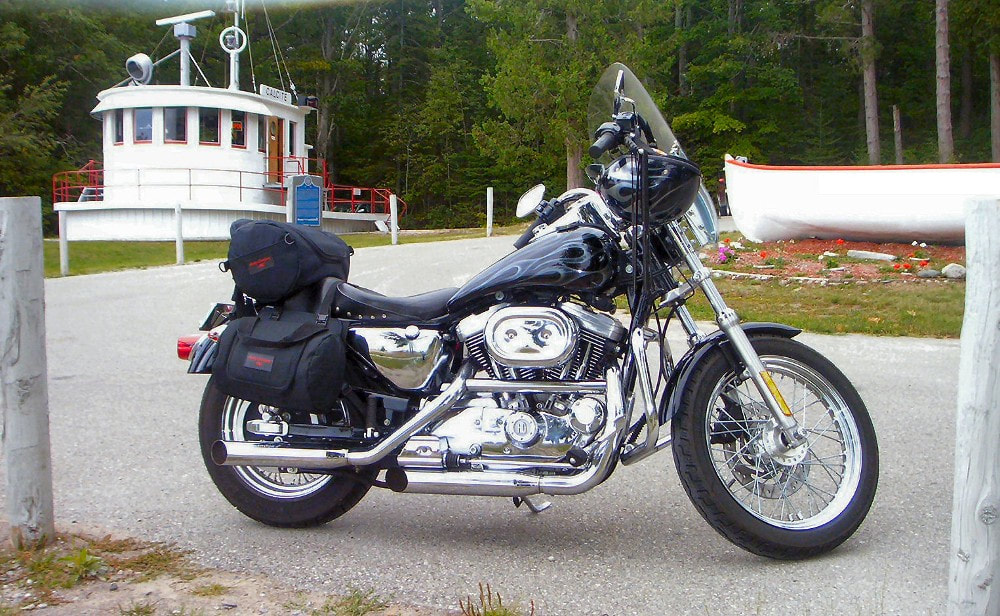
As time went on, I discovered he was equally adept at re-imagining all sorts of things, including two of my motorcycles. With my input, his skills and artistry, and a little help from a custom painter, Ray turned stock bikes into head-turners.
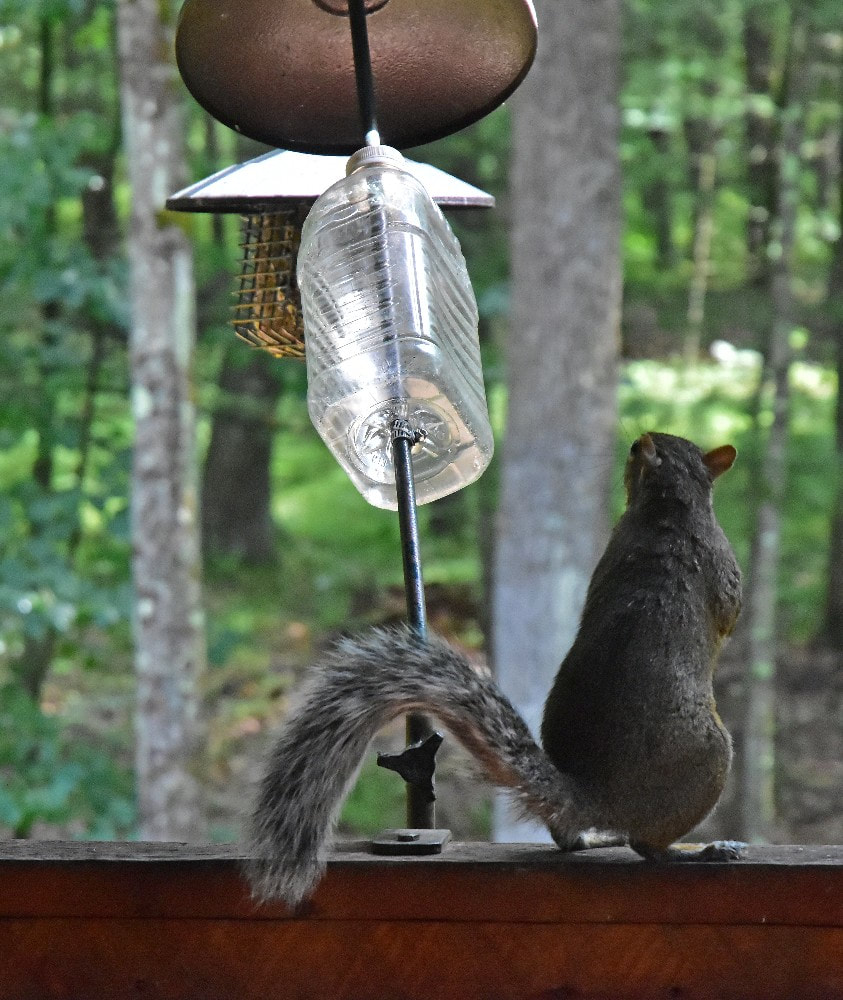
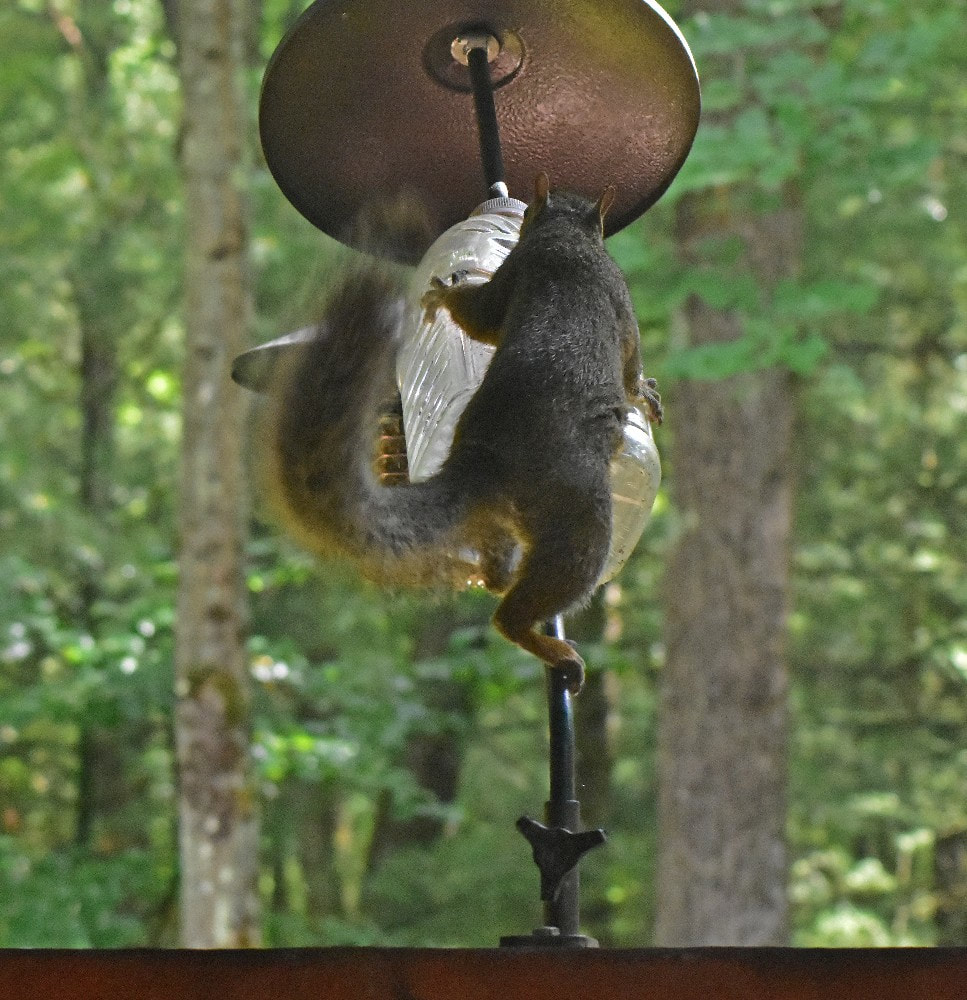
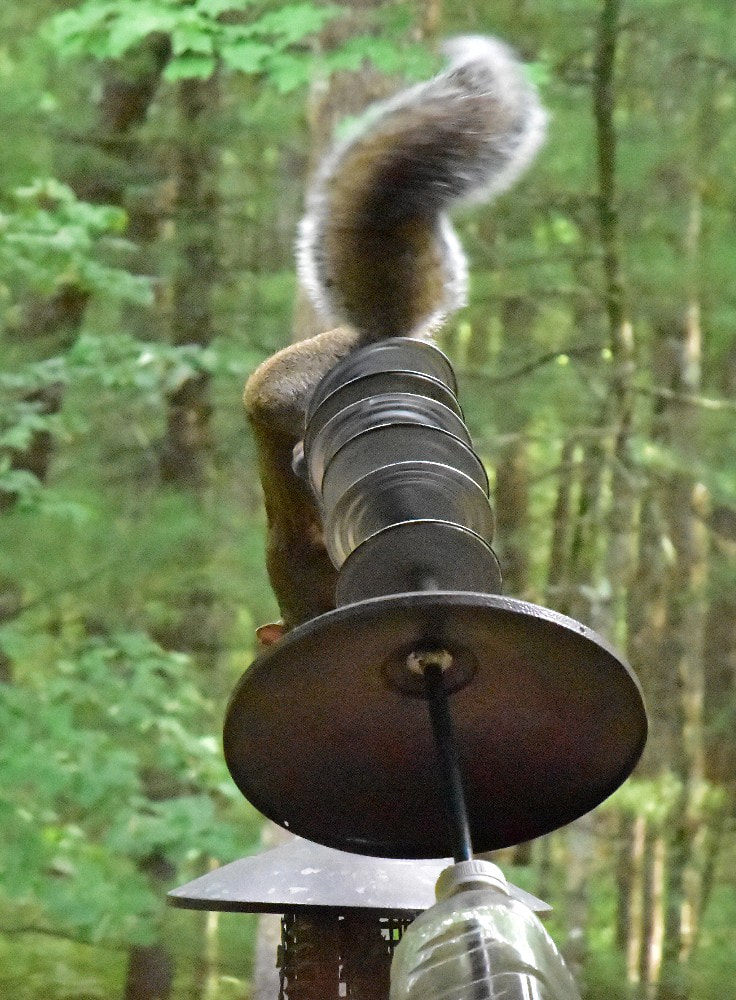
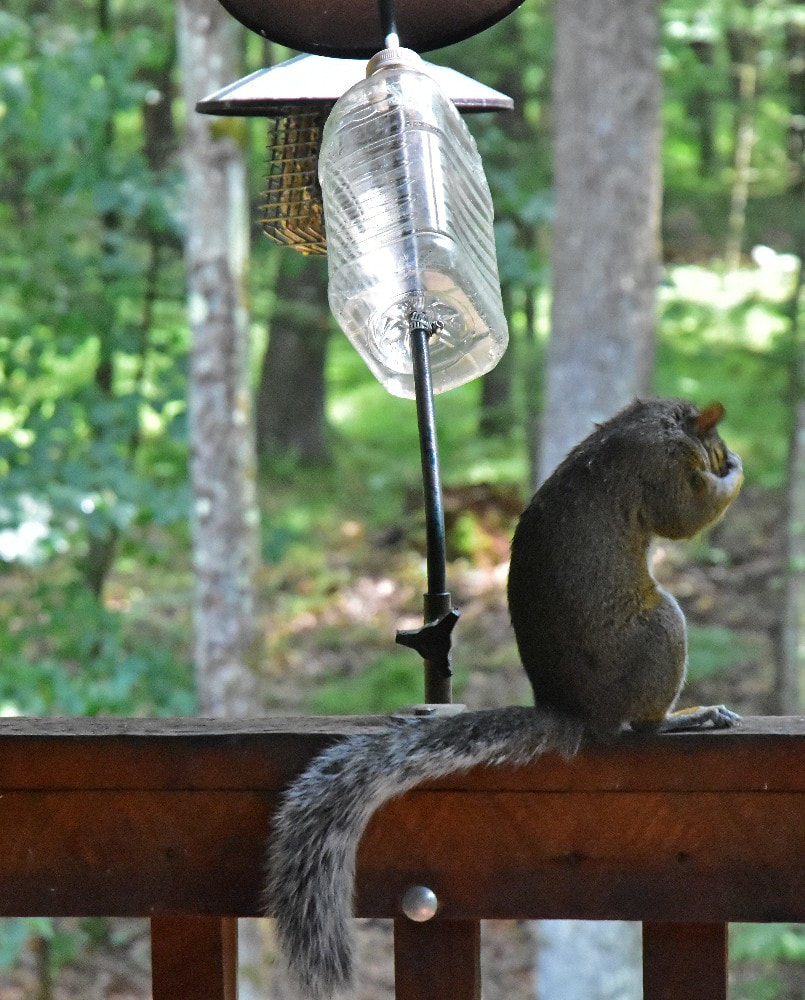
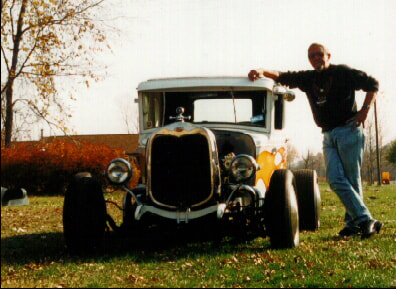 I guarantee this roadster will look totally different by the time Ray is done with it I guarantee this roadster will look totally different by the time Ray is done with it Now he's turned his attention to a hot rod, the design of which has been incubating in his brain for a few years. Finally he's found time to start chipping away at the project as time permits. Ray's genius for innovation applies to more than making things; he's a whiz at coming up with out-of-the box solutions to all sorts of problems. I can't tell you how many times I've been stuck, unable to figure out how to deal with a complicated schedule or some other seemingly intractable situation (like keeping squirrels out of the bird feeder). When I outline the problem to Ray, he instantly sees a simple fix that I was too mired in details to discern. (So far, he's winning the squirrel battle.)
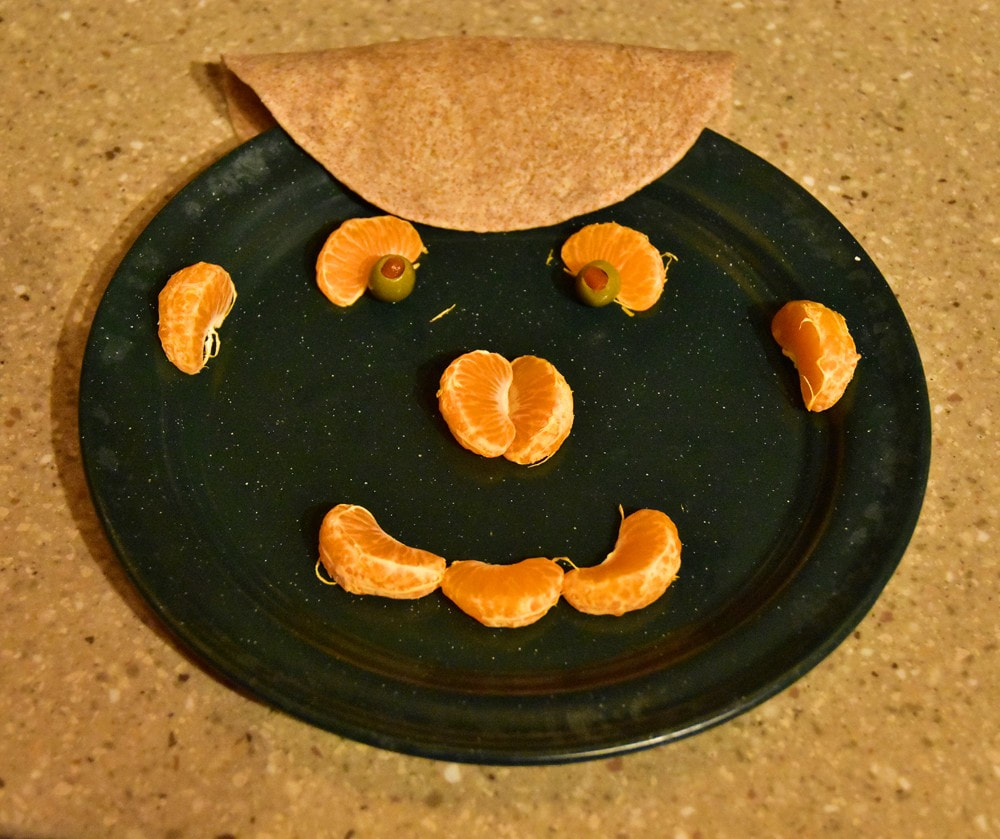
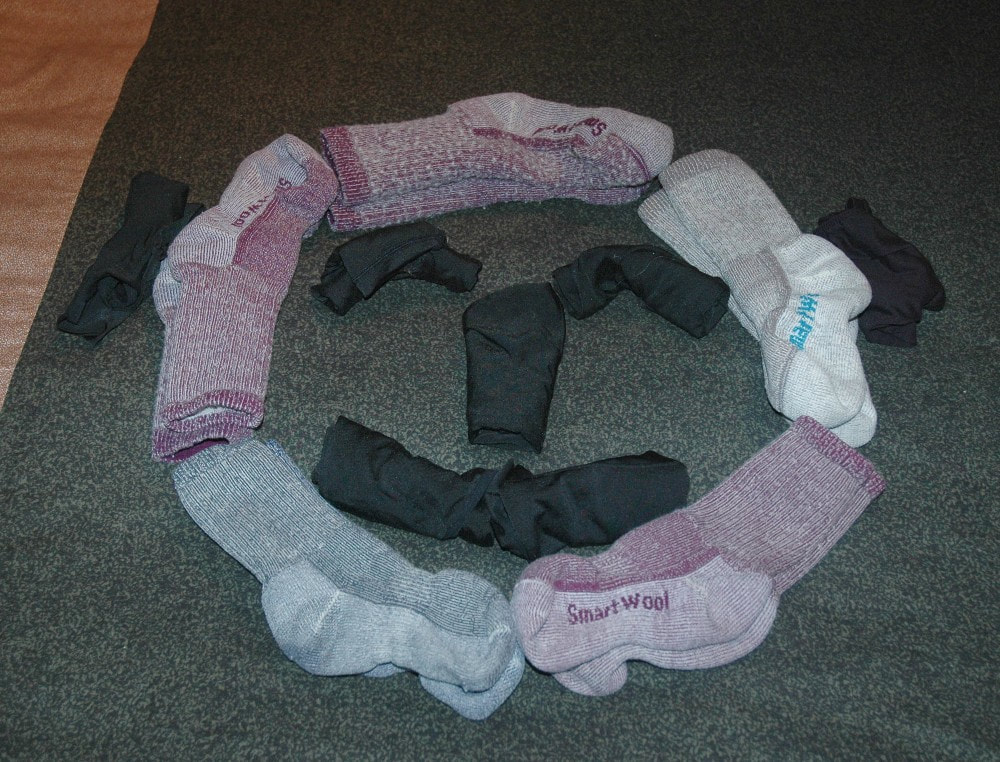
So yeah, his ingenuity makes everyday life more efficient, but it also makes life a whole lot more fun. I never know when I might find a funny face on my lunch plate. Or fashioned out of folded laundry.
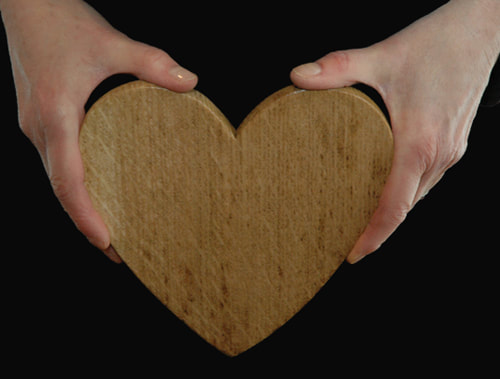
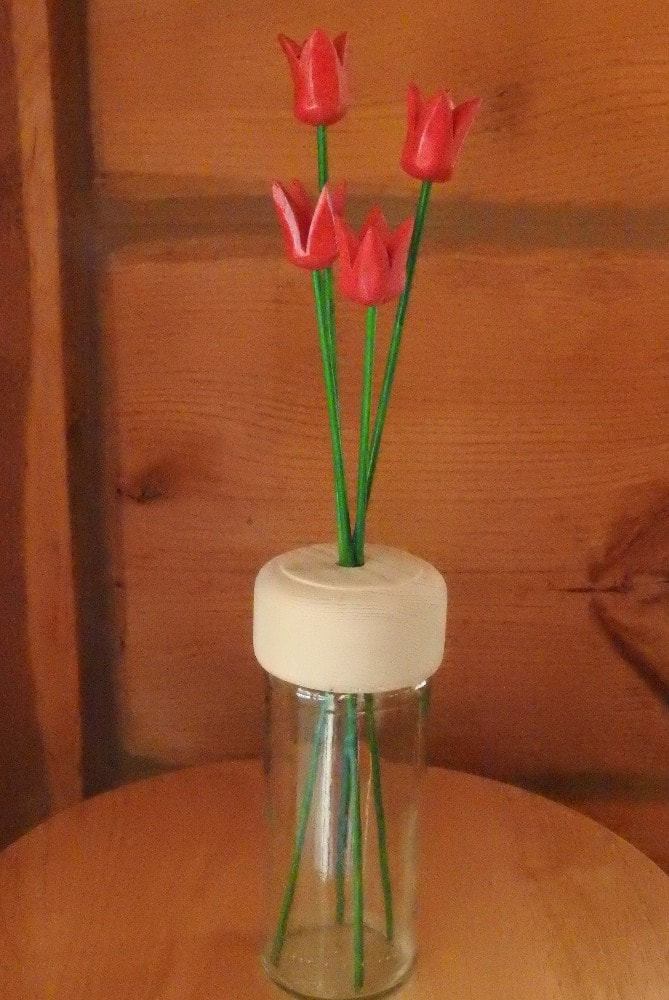
When we bought an adjacent piece of property with a weathered shed, Ray amused the whole neighborhood by decorating the shed for holidays with mostly Ray-made adornments. 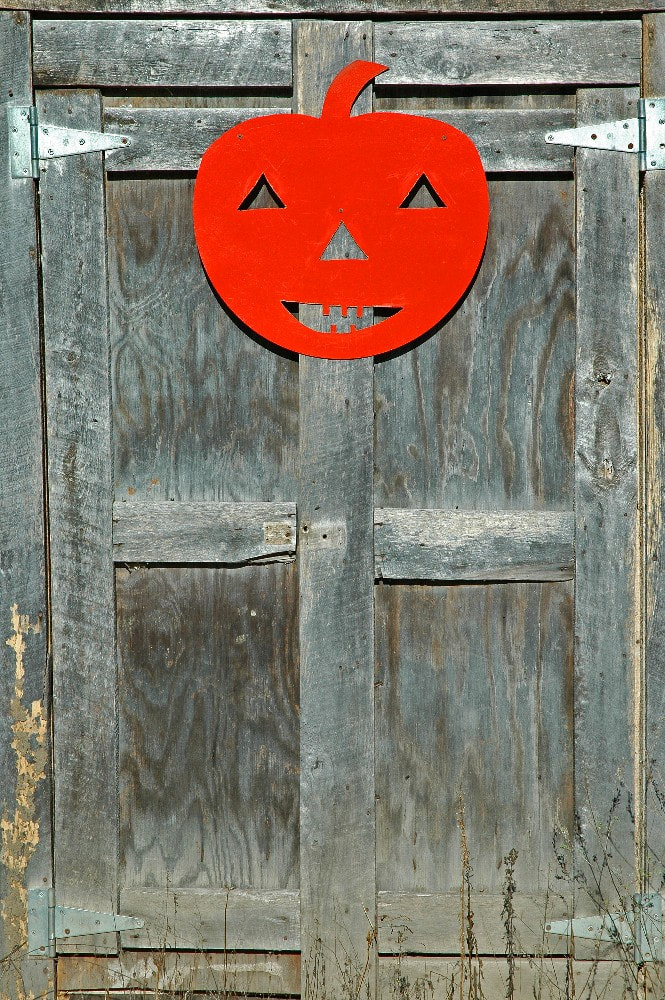 Ray's jack-o-lantern on shed door 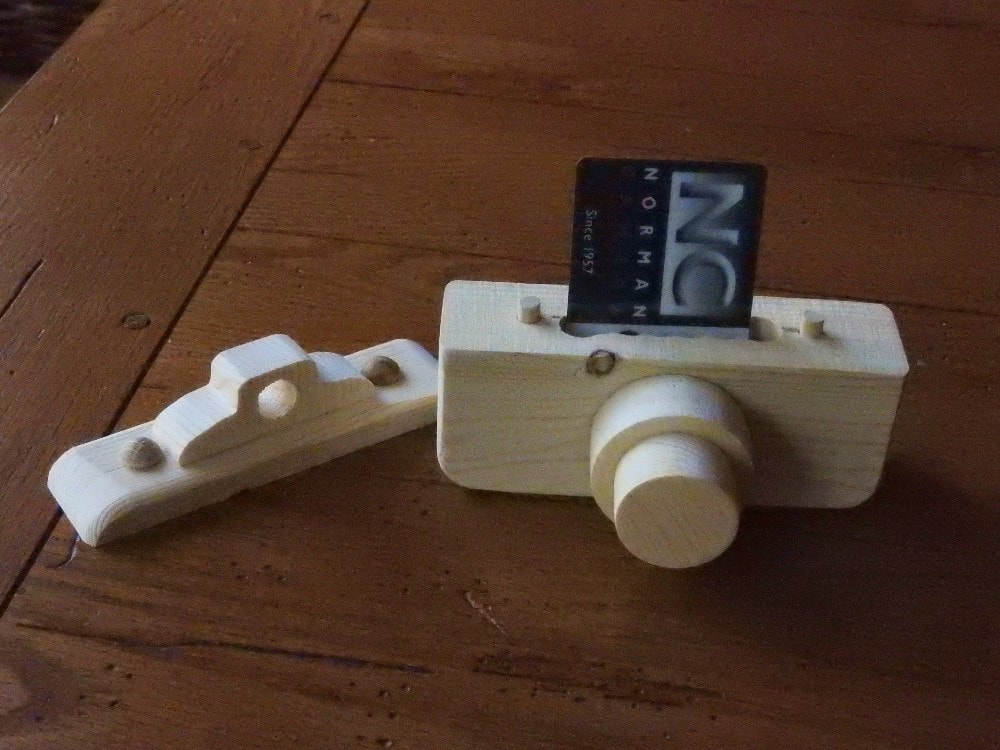 The camera box The camera box For my birthday a couple of years ago, he gave me a gift card to a local camera store, but instead of just sticking it in a greeting card, he presented it in a camera-shaped, wooden box that he had made. And one Valentine's Day morning, I stumbled into the kitchen to find a wooden heart Ray had fashioned from a piece of the towering oak we'd had to cut down. That's the heart you see in my HeartWood logo. Another year, I found a bouquet of wooden tulips he had made in his workshop.
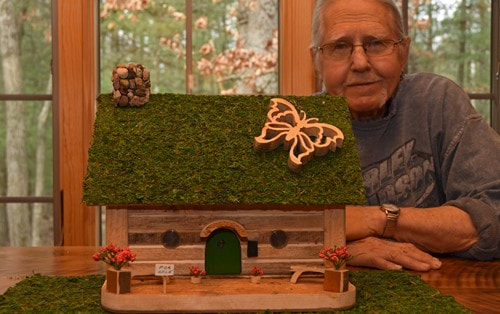
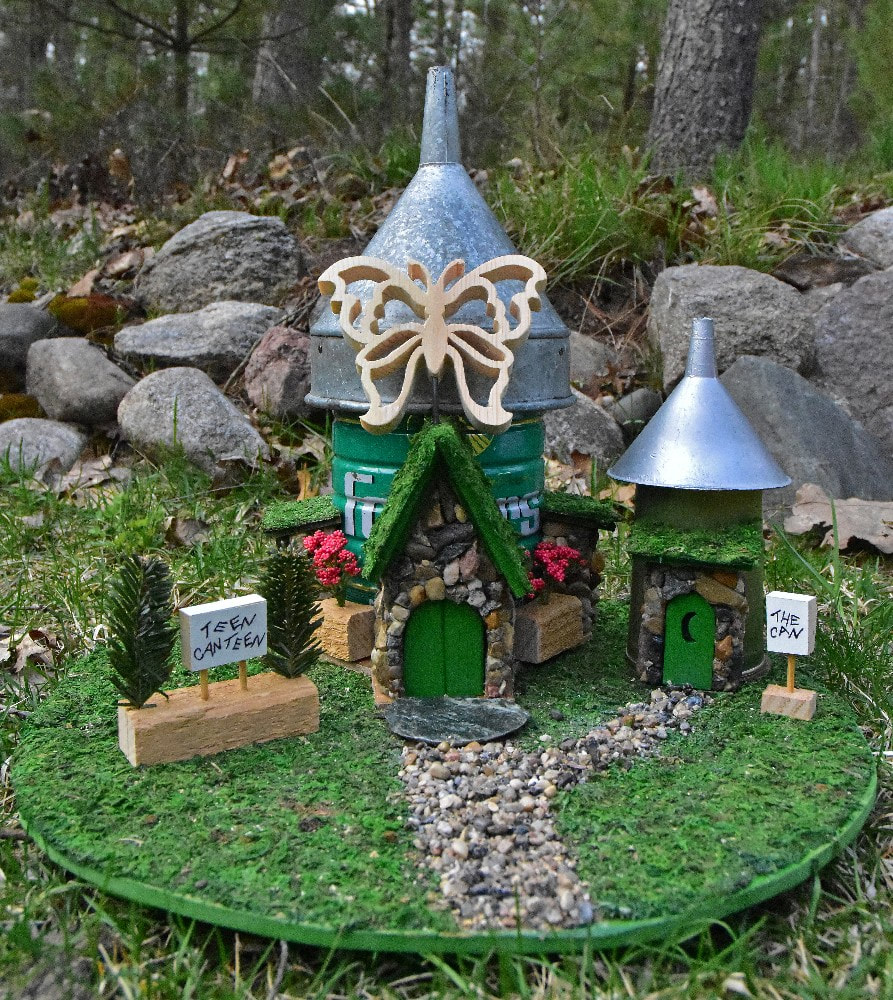
It's been a pleasure, too, to collaborate with him on creative projects, like fairy houses for Camp Newaygo's annual Enchanted Forest event. Ray dreams up the creations; I just help with a few finishing touches. And it's Ray who makes up the fairy stories to accompany each house; then we work together on the wording.
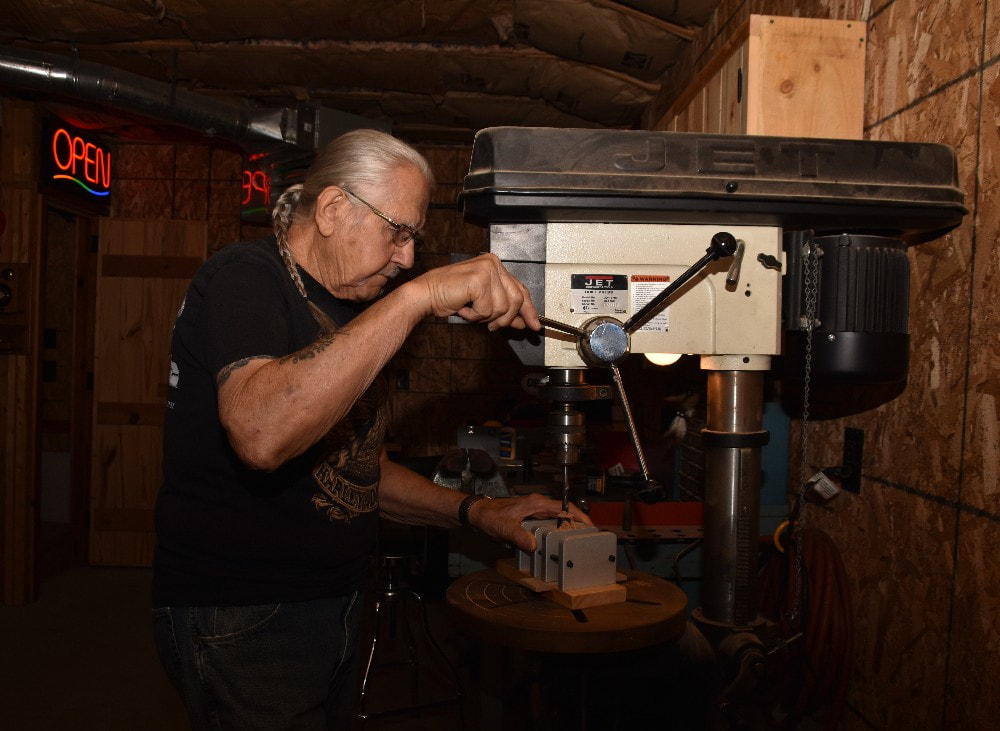
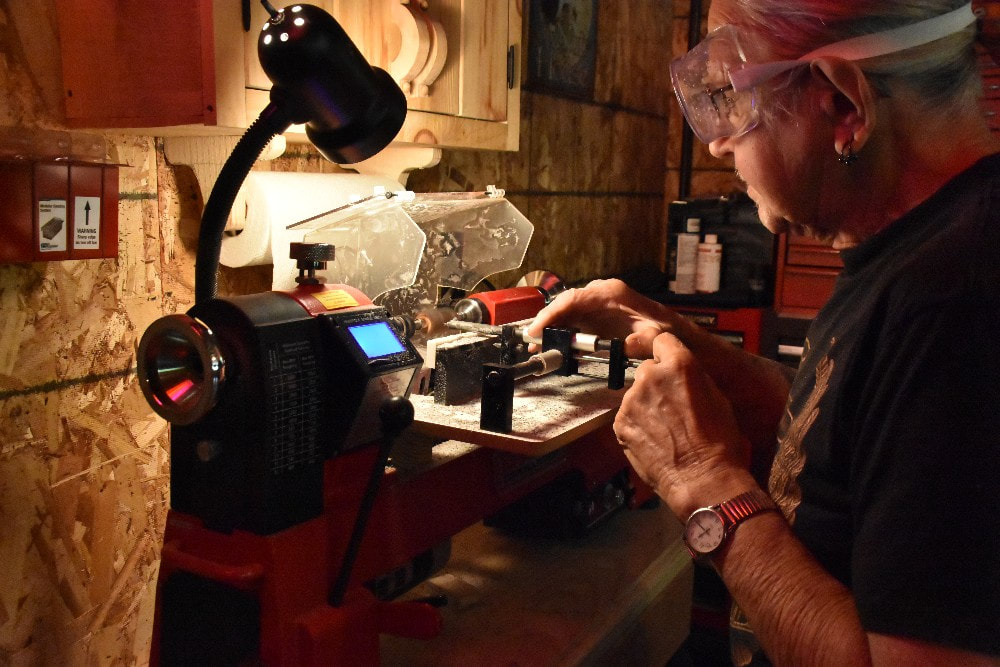
Seeing how Ray makes creativity a priority emboldens me to do the same. What's more, he actively encourages and celebrates all my creative undertakings, from my memoir to this blog to photography projects and other artistic dabblings. It's inspiring, as well, to see that he's still trying new things, with youthful enthusiasm that belies the number of candles on his cake (or pie, as that was his request for the upcoming birthday). His latest venture: hand-turning wooden pens and mechanical pencils for friends, relatives and fundraisers.
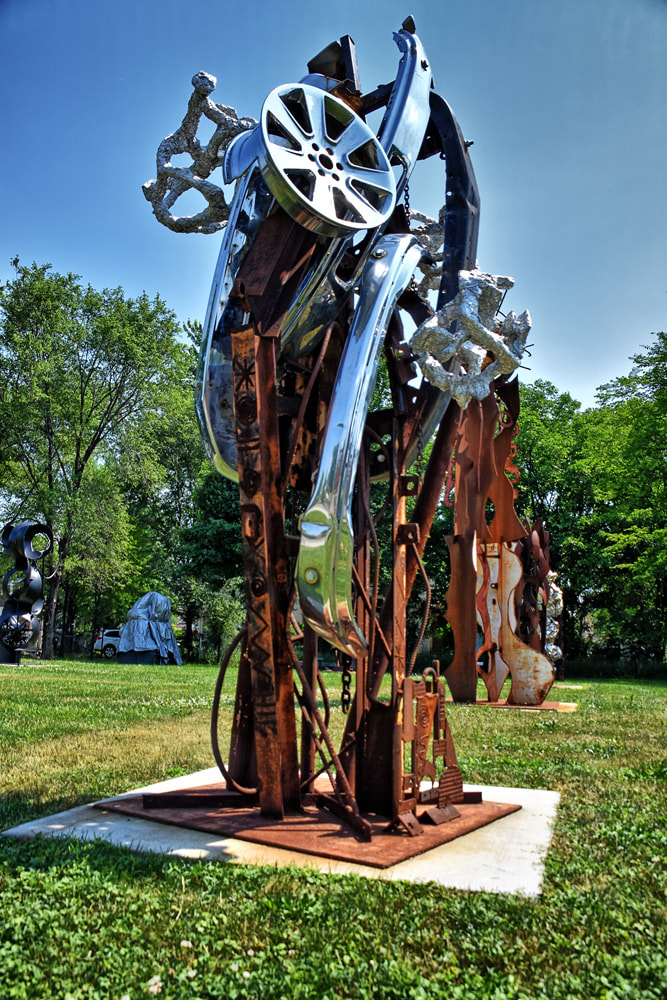
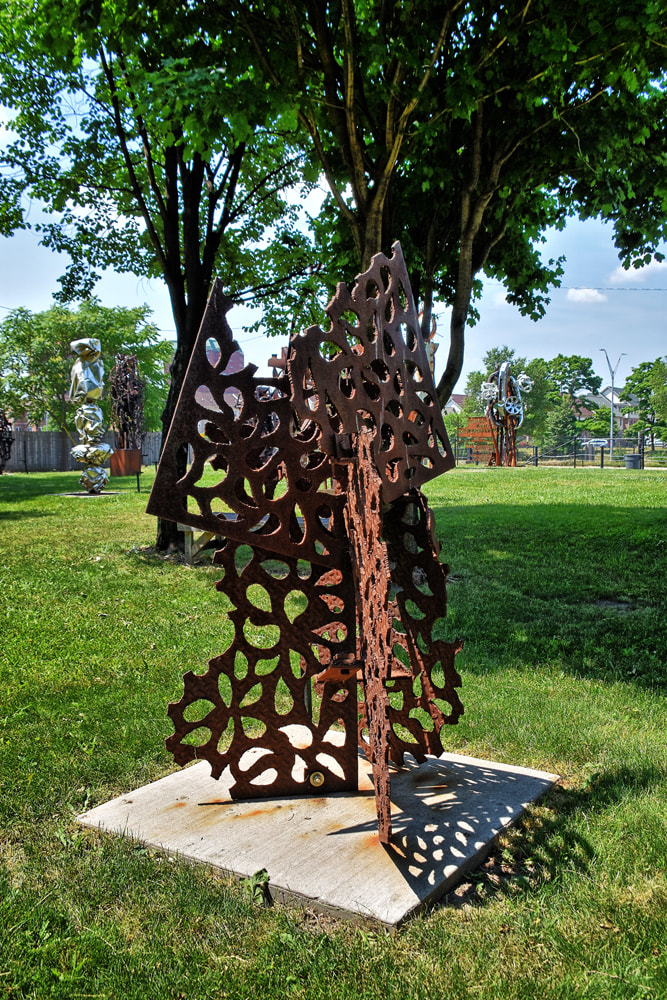
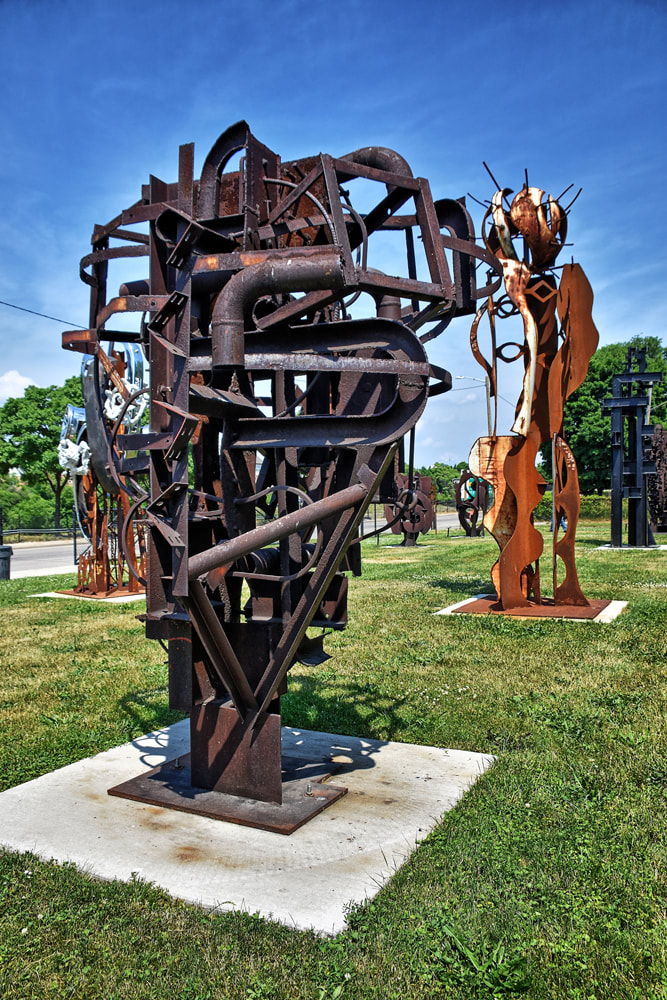
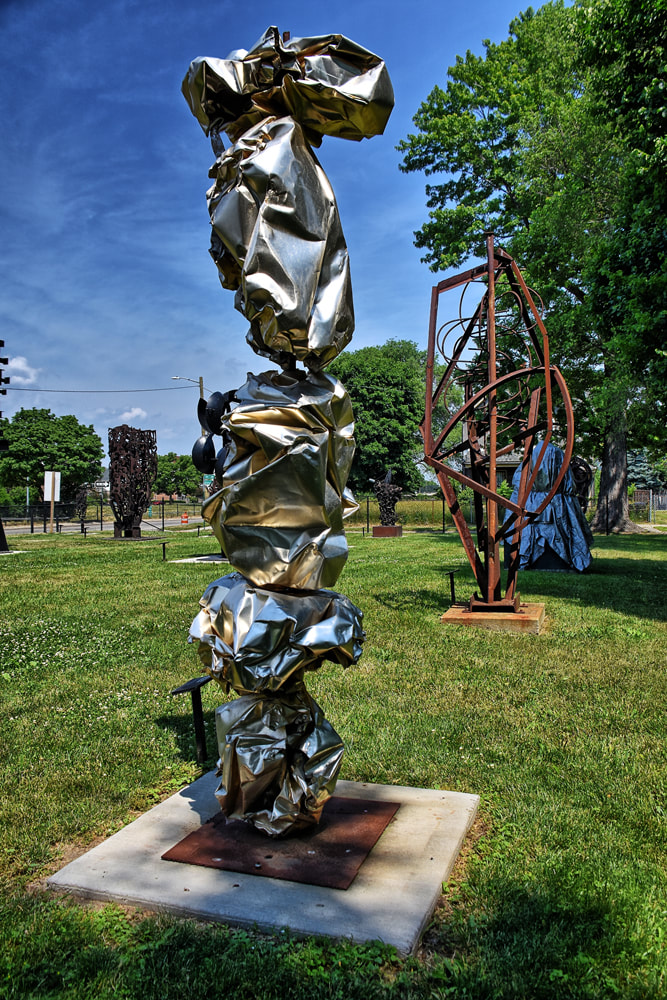
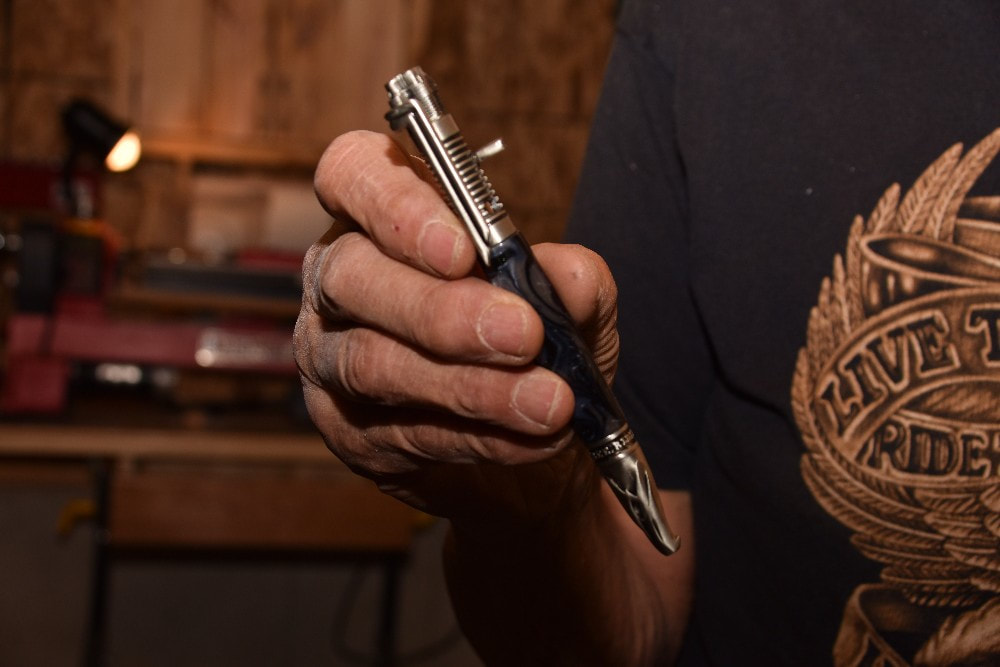 One of Ray's latest pen projects I could go on and on singing Ray's praises, but I've gotta go now—I have a pie to make. 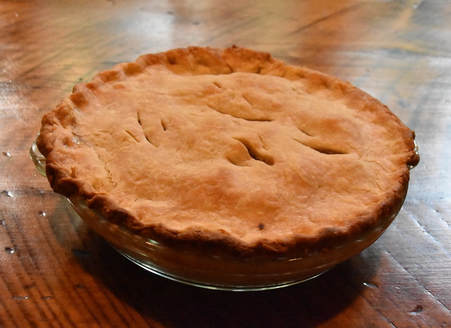 Dreams, determination and a life's artistic work—that's what transformed a nondescript vacant lot in Detroit into an urban sculpture park.  Sign at the entrance to City Sculpture Sign at the entrance to City Sculpture City Sculpture is the creation of Robert "Bob" Sestok, who has been making art in Detroit since the 1960s. I met Bob in the early '80s, when the neighborhood now called Midtown was in its grittier incarnation as the Cass Corridor. Bob was already a fixture in that community, as one of the founders of Willis Gallery and part of the Cass Corridor Movement, a group of artists whose unconventional methods and materials reflected the crumbling, post-industrial environment of the time and were influenced by the abstract expressionists of the 1950s. Some of those artists, including Bob, were featured in a 1980 Detroit Institute of Arts retrospective exhibition, "Kick Out the Jams: Detroit's Cass Corridor, 1963-1977." (The title was a nod to the debut album of the rock band MC5, which played at the opening of an art show Bob organized in 1972.) 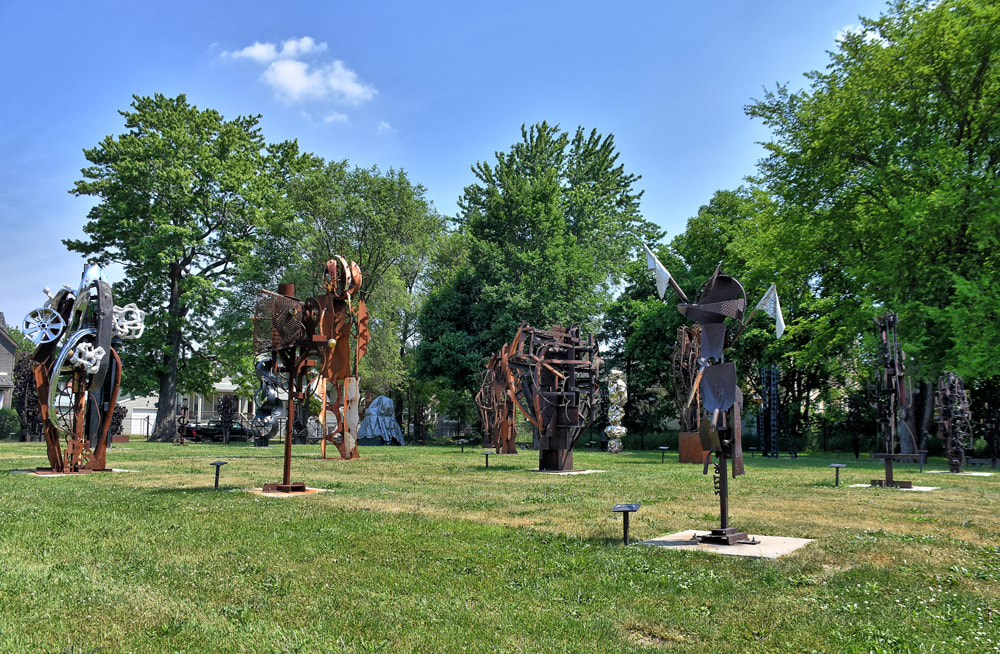 The park showcases sculptures Bob Sestok created between 1980 and 2016 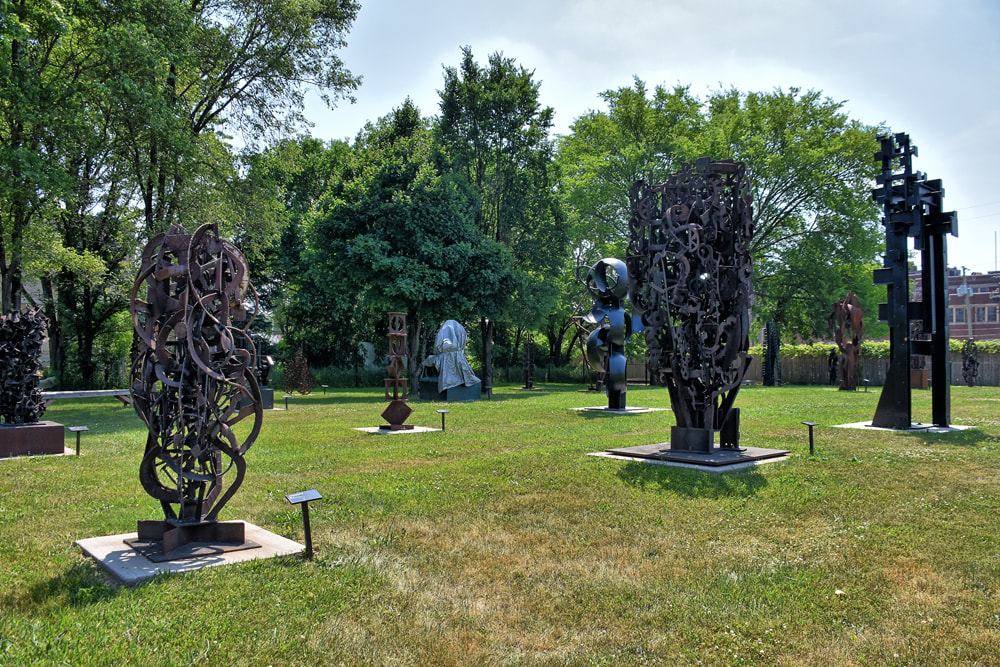 The collected sculptures show the range of Bob Sestok's styles
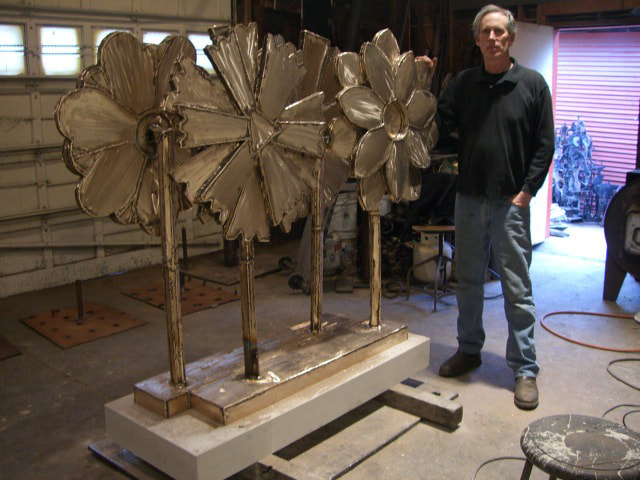 Bob Sestok with one of his sculptures Bob Sestok with one of his sculptures I've always been amazed at Bob's ability to segue seamlessly from drawing to painting to printmaking to creating massive metal sculptures. Many of those sculptures are displayed in public spaces in Detroit, its suburbs, and other locations around Michigan and beyond. Other pieces accumulated over the years in the alley behind Bob's studio. But Bob had a bigger vision for those works: a public space to display the sculptures right in the neighborhood where they were produced. He didn't have to look far to find a good spot. A block away from his home and studio was a city-owned vacant lot that fronted the John C. Lodge Service Drive. A conscientious neighbor and his kids had been mowing the lot and keeping it trash-free, and when that neighbor died, Bob took over the job. 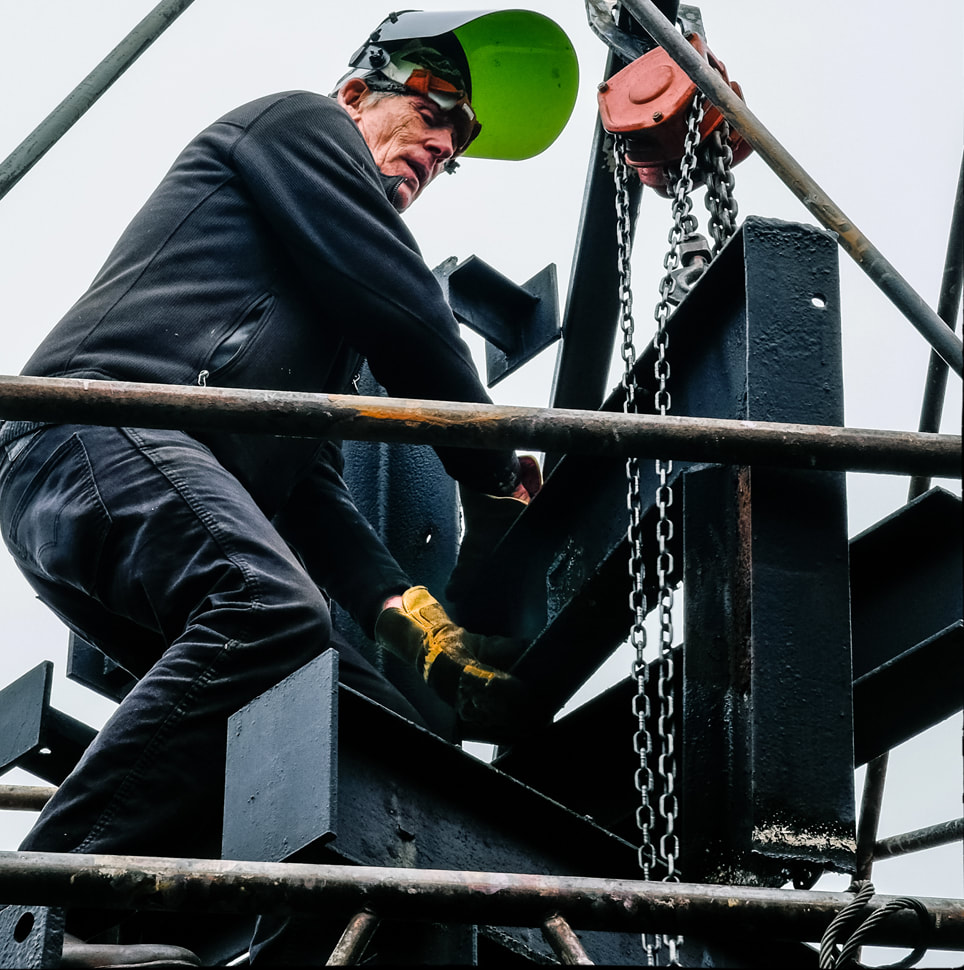 Bob Sestok atop one of his sculptures (Photo: Roy Feldman) Bob Sestok atop one of his sculptures (Photo: Roy Feldman) "I was cutting the grass and thinking, 'Why don't I own this?'" Bob recalls. So he bought the property from the city and then spent about a year cleaning it up, repairing the sidewalks, installing a fence and pouring concrete slabs for the sculptures. Once that work was done, he spent another week or so moving and positioning the sculptures. 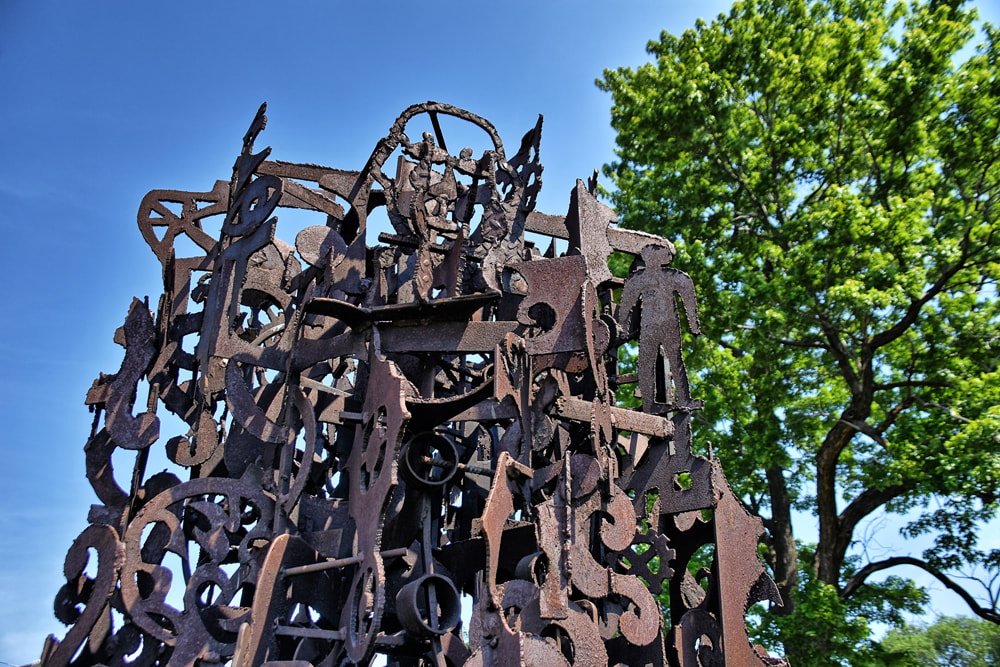 "As soon as I did that, all of a sudden the news media got wind of it, and I was on all the television channels and in the newspaper," says Bob. "It was quite a big bang." And quite a change for an artist who has always been more comfortable just doing his work than being in the public eye. "I kind of shy away from stuff like that," says Bob, "but I was willing to do interviews and tell people about the work in the park. So I'm a little more public today than I have been in the past, but that's the nature of having a space like that. And it's a fun thing to have. People go there from all over the place." Like Tyree Guyton's Heidelberg Project and Olayami Dabls's MBAD African Bead Museum, City Sculpture has become a destination landmark, as well as a showcase for an individual artist's life work. "Tour buses pull up, school buses pull up, kids get out, all kinds of people," says Bob. "We give tours. People contact me if they want to have the artist's viewpoint of the park. I do a little talk. We've had thirty or forty people at a time."
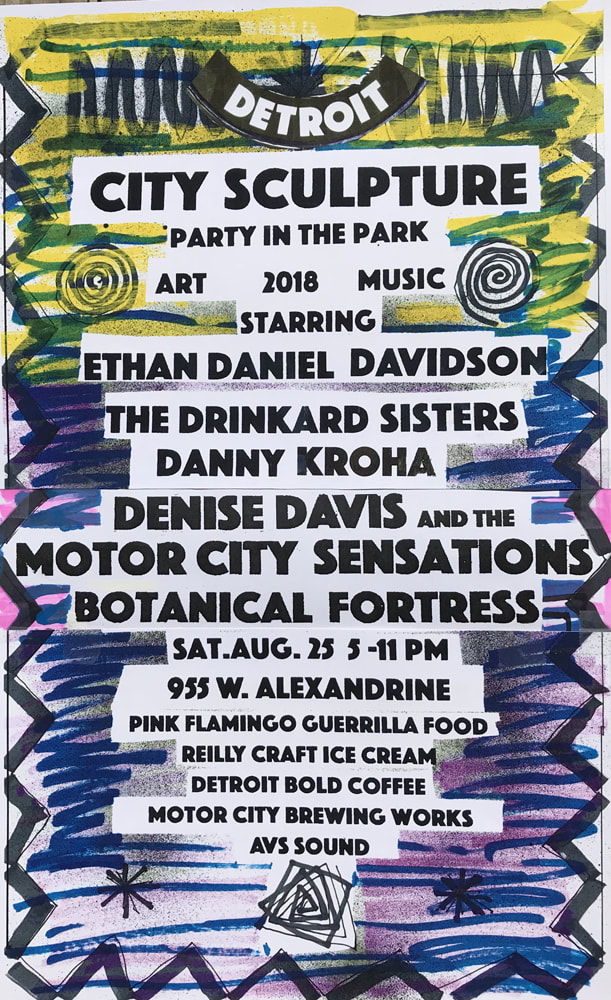 The poster for this year's City Sculpture Party in the Park The poster for this year's City Sculpture Party in the Park He also throws a party in the park every summer. "It's kind of a big thing for me to put together," he says, "but I get local musicians and it's a lot of fun." This year's event, scheduled for Saturday, August 25, features Ethan Daniel Davidson, The Drinkard Sisters, Danny Kroha, Denise Davis and the Motor City Sensations, and Botanical Fortress. 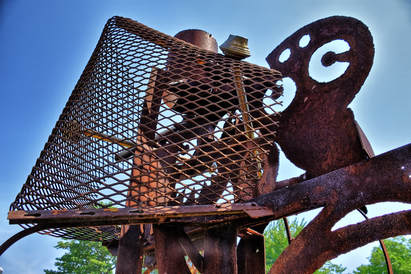 I'd been hearing about the park since it opened in 2015, but hadn't had a chance to visit it until a few weeks ago, when Ray and I drove down to Detroit to have lunch with another old Cass Corridor friend who was back in town for a couple of days. We arrived a little early, and since the restaurant where we were to meet our friend was only a few blocks from City Sculpture, we made a side trip to the park to check out Bob's creations. 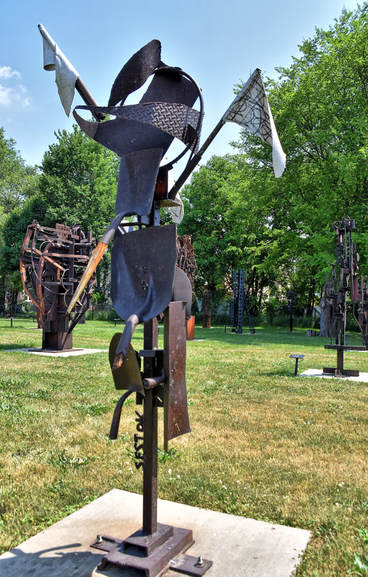 Seeing so much of Bob's work in one place was truly impressive. Thirty-two sculptures of welded steel, crushed aluminum, car parts, and garden implements are artfully arranged around the well-maintained site. A bench beneath a tree offers a place to sit and reflect. Even with traffic whizzing along on the Lodge Freeway, City Sculpture feels like a haven. 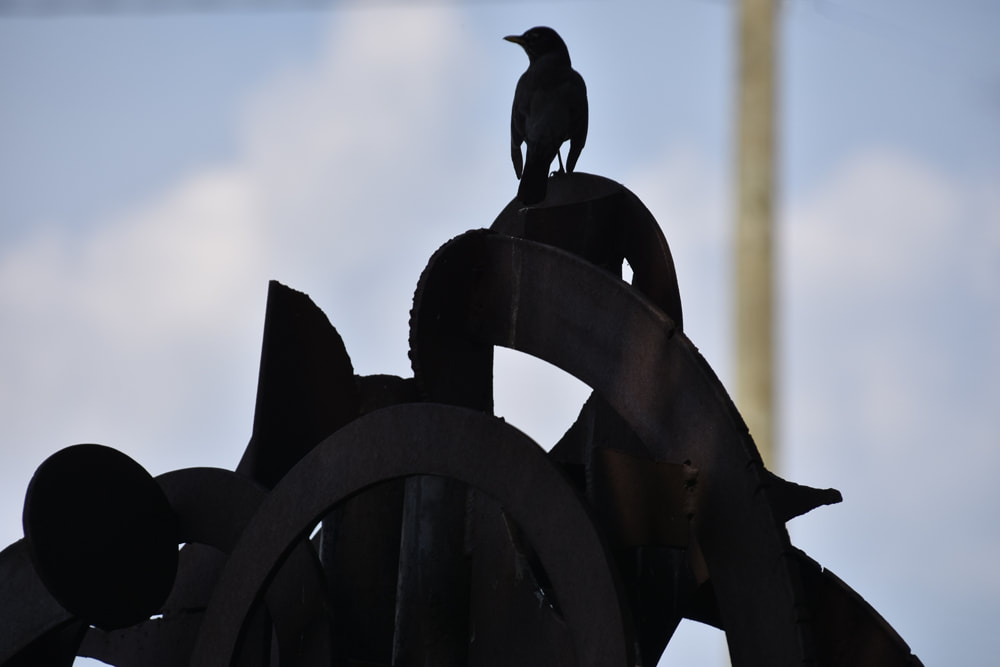 City Sculpture is a haven, and not just for humans The works on display reflect Bob's eclectic approach to making art, a style he has described as the absolute lack of a single, cohesive style. 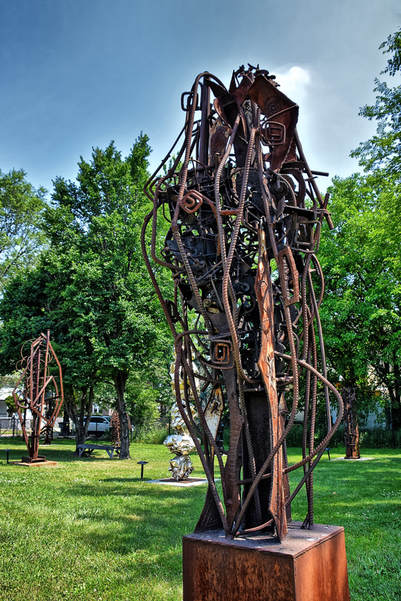 "When people ask who made all these, I tell them, 'Well, they could've been made by a lot of different people, because nothing looks the same.' There's a lot of diversity in my work. I think that keeps me moving forward." 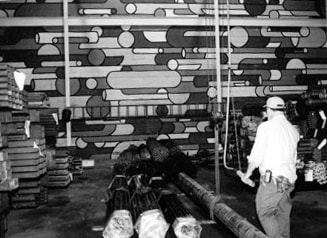 One of the murals at the Edward W. Duffy Company One of the murals at the Edward W. Duffy Company A graduate of the College for Creative Studies (then known as the Detroit Society of Arts and Crafts), Bob is known not only for his sculptures, but also for his paintings, including both permitted and unauthorized public art pieces. Among the first were murals commissioned in the early 1970s for the Edward W. Duffy Company, a pipe and tubing supply business. More recently, Bob created a mural for musician Jack White's Third Man Pressing, a vinyl record manufacturing plant in the Cass Corridor. White remembered seeing the Duffy Company murals when he was in high school, and once he became a successful musician with his own factory, he got in touch with Bob to commission a mural for the record-pressing facility. 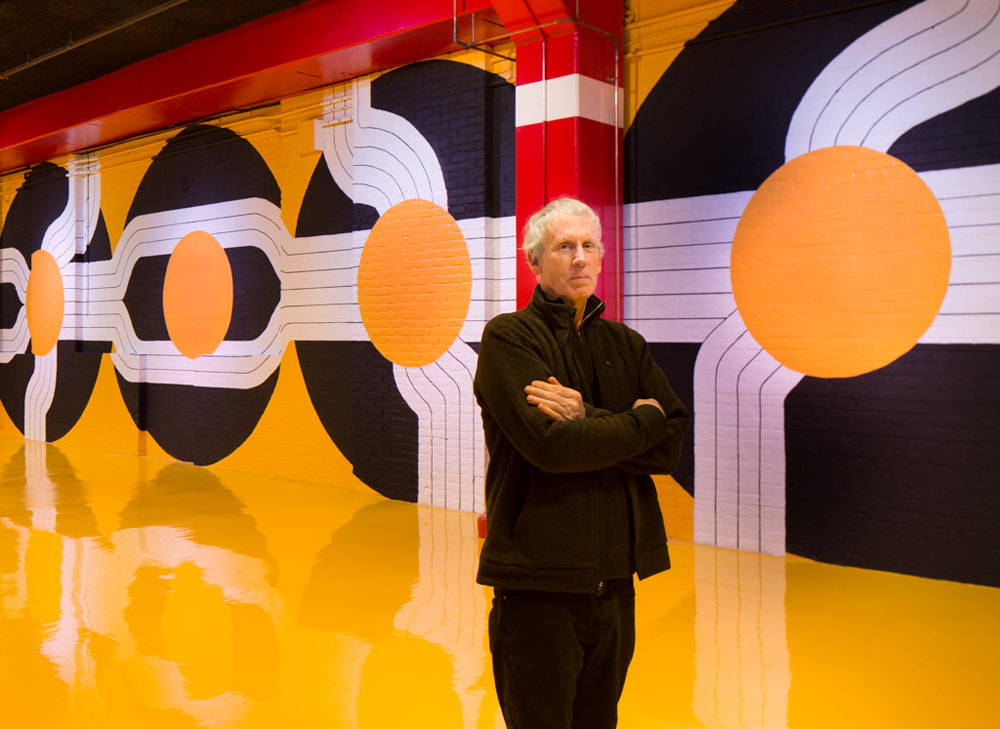 Bob Sestok with his mural at Third Man Pressing (Photo: Robert Hensleigh) As for unsanctioned street art, Bob says he's pretty much "retired" from that line of work. "All the buildings I painted on were rehabbed or torn down. I said, I don't want to have my art destroyed completely." The desire to preserve his art also has him thinking about the future of City Sculpture. "Now I'm becoming more of a businessman and trying to get corporate sponsorships," he says. "I created a nonprofit, which I'm thinking to turn into a foundation to manage the park." He plans to turn over management of the foundation to his daughter Erika, who grew up in the neighborhood and has experience in park management. 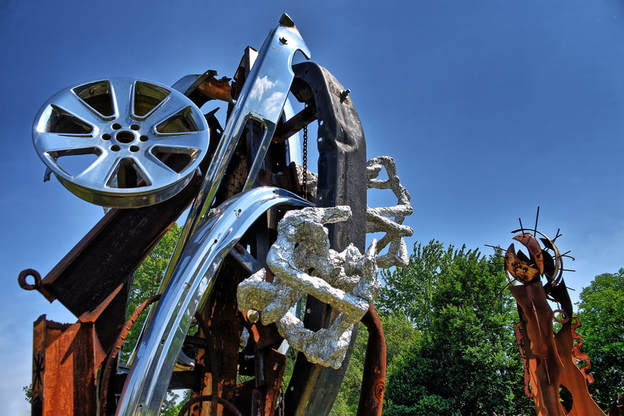 Meanwhile, Bob keeps making art and displaying his work in different venues. He recently delivered five sculptures to Michigan Legacy Art Park at Crystal Mountain in Thompsonville, and he's currently in a show at Marshall M. Fredericks Sculpture Museum in Saginaw. "I'm a lucky guy," he says. "I've got a job for my life. I can't stop—I just keep doing my thing. I like to discover things and challenge myself. If you don't challenge yourself, you're not learning anything. You have to push yourself and reach outside of your comfort zone in order to be prolific." With nearly one hundred sculptures, more than five thousand drawings, and some one thousand paintings completed to date, he should know. City Sculpture is located at 955 West Alexandrine in Detroit. To help support City Sculpture, visit https://www.citysculpture.org/donate/ Bob Sestok has exhibited at the Detroit Institute of Arts, Museum of Contemporary Art (Chicago), Cranbrook Museum of Art, and Marianne Boesky Gallery (New York City), among others, and had work in ArtPrize 2009. His work is held in numerous collections, including the Detroit Institute of Arts, Cranbrook Museum of Art,and Wayne State University. He has received grants from the Pollock-Krasner Foundation, the National Endowment for the Arts and The Kresge Foundation. 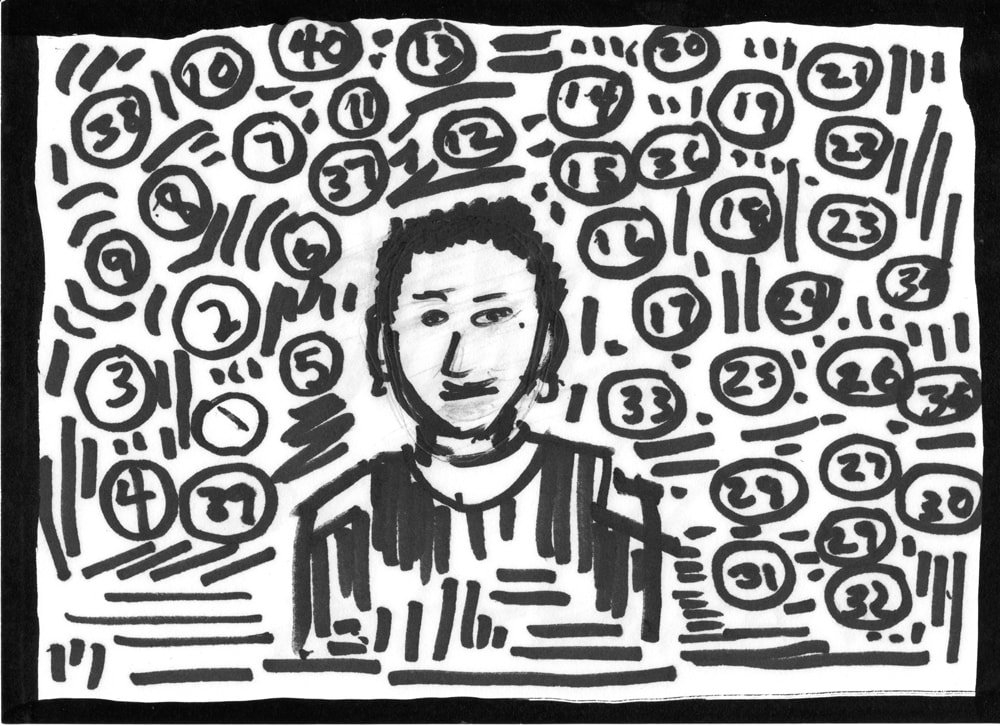 Bob drew this picture of me for my 40th birthday (a lo-o-o-o-ng time ago!) Do you ever have those back-in-school dreams? Like the one where you realize you're late for the final exam in a class you've somehow forgotten to attend for the whole semester? Or the one where you have to make a presentation that you haven't prepared for? And you're inappropriately dressed. Or not dressed at all. Distressing, aren't they? Fortunately, I don't have those dreams so often any more, but I've had them often enough over the years. Between those nightmarish episodes and all the waking-life years I spent in actual classrooms, I have no interest furthering my formal education. So it's kind of funny that one of the things I most looked forward to when I retired was having time to take classes. Not the kind that involve brain-busting study and deadlines, but the fun and enriching kind. 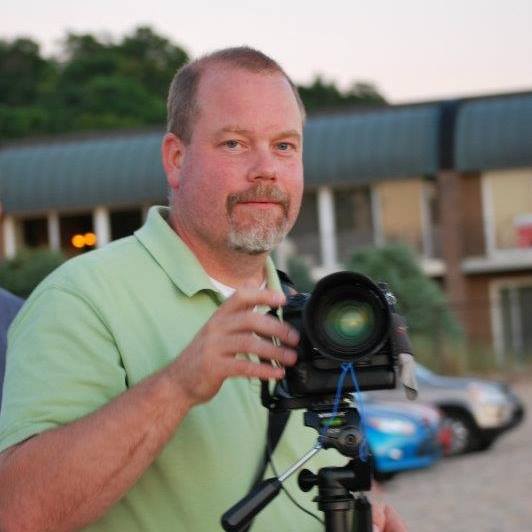 Dave Johnson (Photo: Michael Sievers) Dave Johnson (Photo: Michael Sievers) Recently I took just such a class, and it turned out to be so enjoyable, I may never have another school-days nightmare. The class was a six-week Intermediate Photography course at Artworks in Big Rapids, taught by local photographer Dave Johnson. Dave has been a shutterbug since high school, but got serious about honing his skills over the past ten years. Now he focuses mainly on event, lifestyle, and landscape photography. A proponent of life-long learning, he not only strives to keep improving his skills, but also shares his passion and knowledge with others through classes, photo walks and individual lessons. I was a little nervous about taking the class. For one thing, I wasn't sure how "intermediate" it would be. Though not an absolute beginner, I consider myself a novice. Would I be out of my depth? 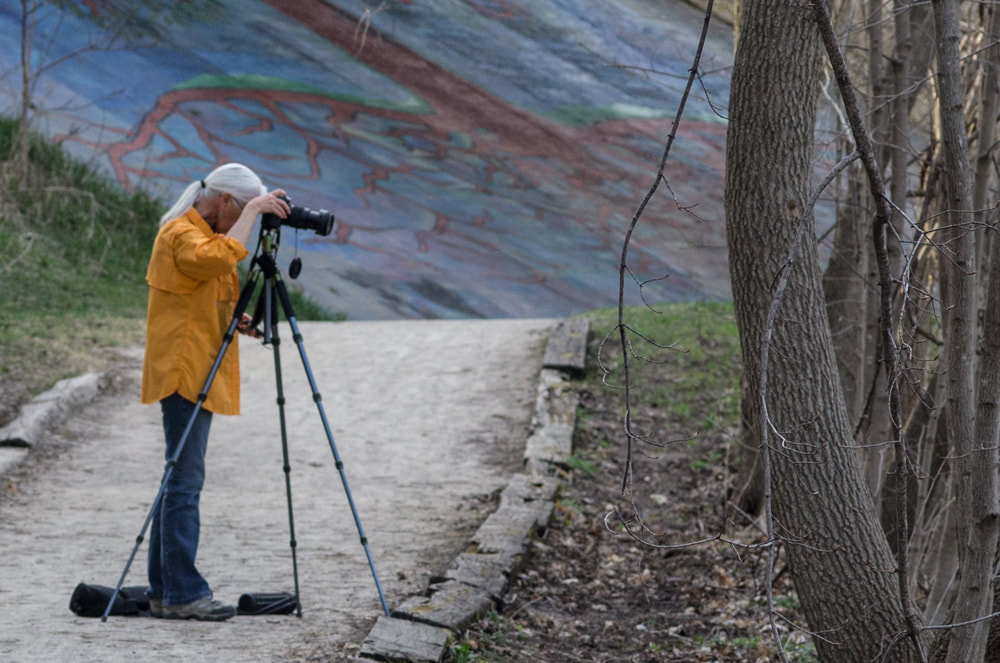 Shooting in class turned out not to be as intimidating as I'd feared (Photo: Dave Johnson) Shooting in class turned out not to be as intimidating as I'd feared (Photo: Dave Johnson) For another thing, I'd been looking for a hands-on class, where we'd spend at least part of the class period actually shooting and getting feedback on our work. But once I found this class, I was anxious about that very aspect of it. I know how I can feel suddenly brainless and blocked in writing workshops where we have to write on the spot. Would I turn photo-blind when it came time to shoot in class? 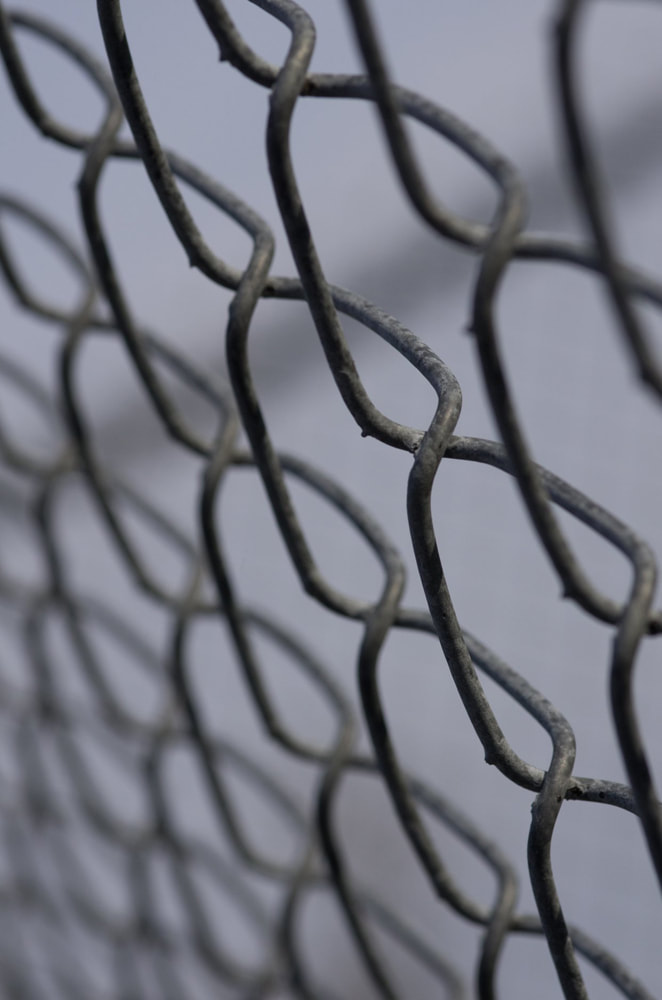 This shot of a chain-link fence illustrates Dave's approach to looking at the world in unusual ways (Photo: Dave Johnson) This shot of a chain-link fence illustrates Dave's approach to looking at the world in unusual ways (Photo: Dave Johnson) I needn't have worried. Dave's an easygoing instructor who makes the course relaxed and fun, encouraging experimentation and allowing plenty of time for questions. He also shares his approach to photography: trying to look at the world in unique ways, focusing on both the details and the larger scenes they come together to create. When he photographs people, he looks for ways to capture something of their life stories and sources of inspiration. A few more examples of Dave's work: 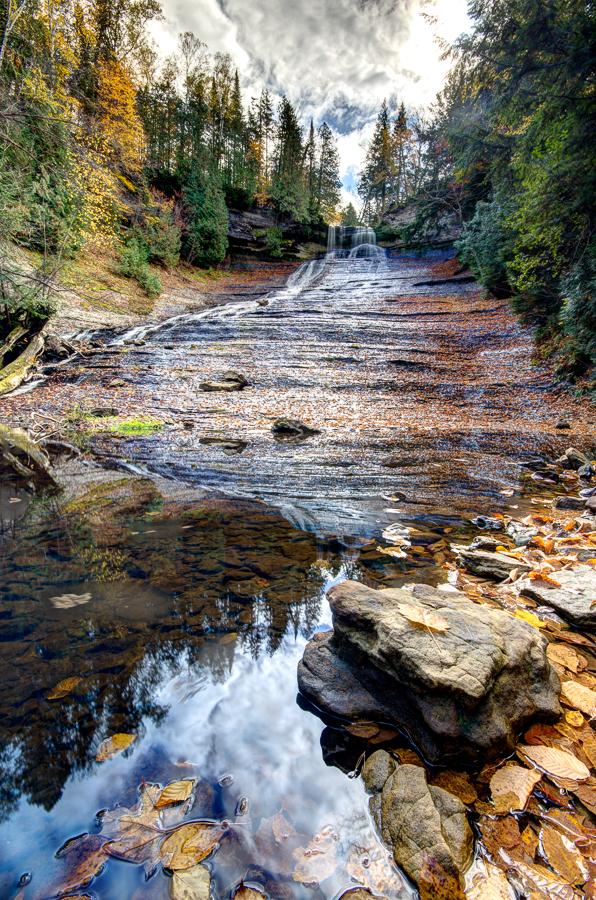 Photo: Dave Johnson 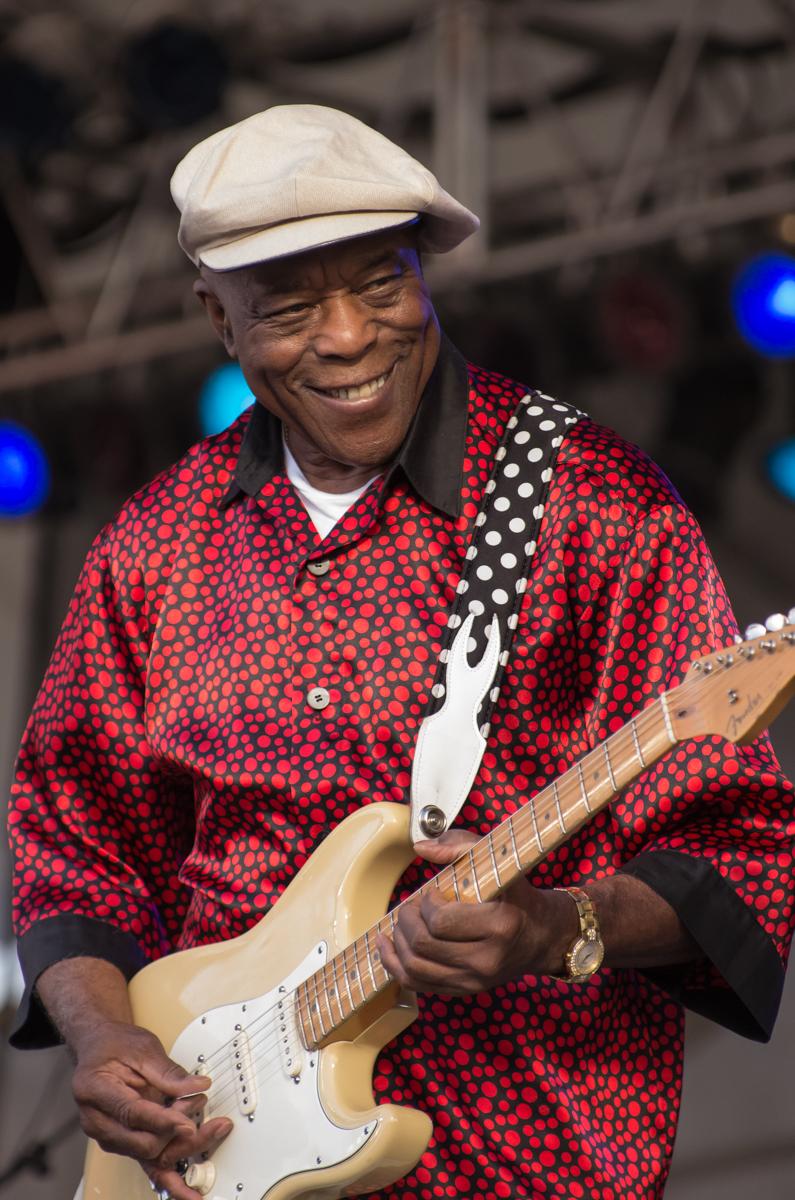 Photo: Dave Johnson 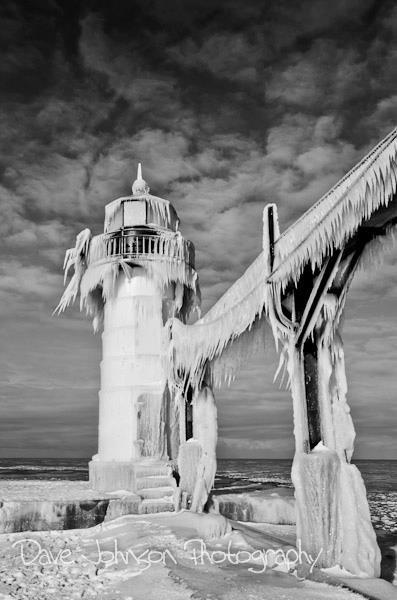 Photo: Dave Johnson 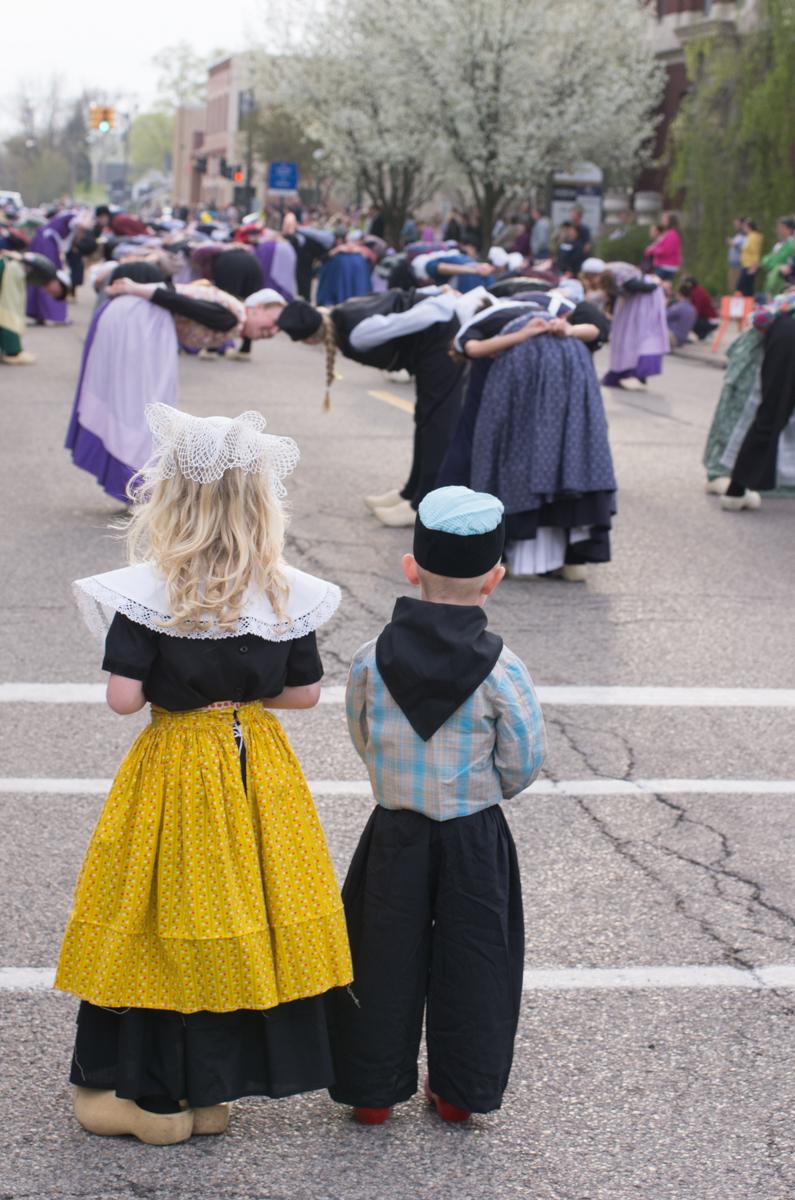 Photo: Dave Johnson For our first out-of-class assignments, Dave encouraged us to photograph everyday objects we could find around the house. I found eggs . . . 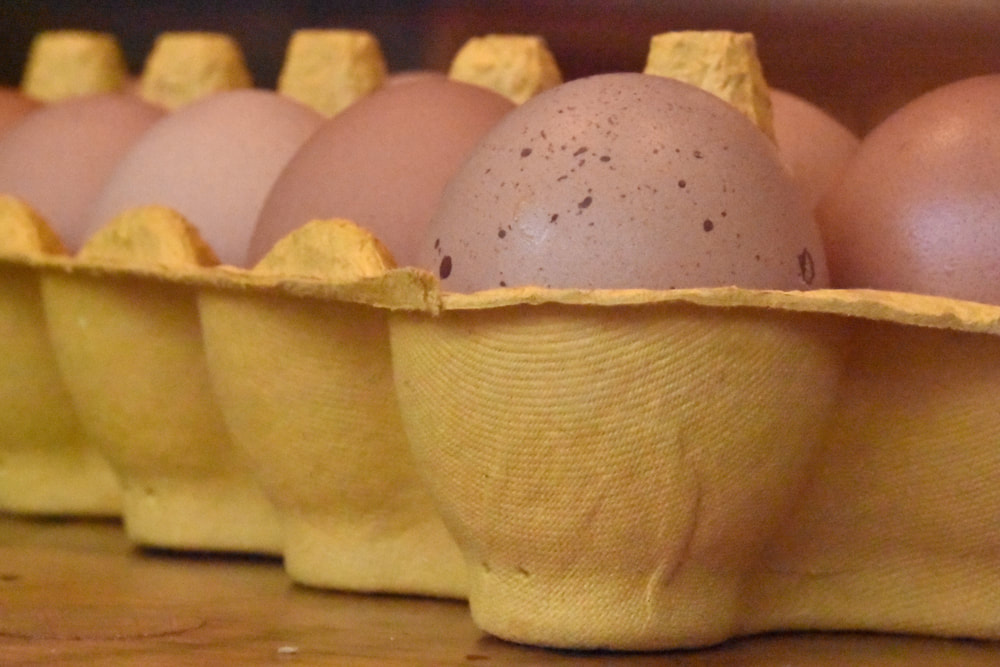 and the candle I light every night at dinner time . . . 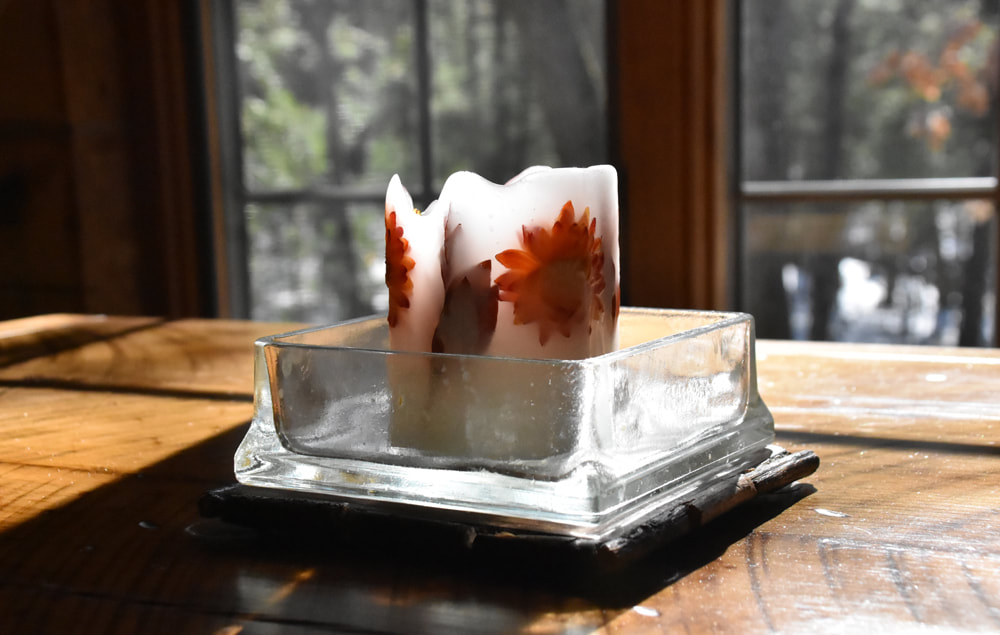 and a still life of kitchen utensils.  In class, Dave showed lots of photos to illustrate points he was making. But rather than simply showcasing his best work (and possibly intimidating us in the process), he also showed us some of his less successful photos and engaged us in discussions of what would've made them better. It was a good reminder that learning any skill takes lots and lots of practice and that even accomplished artists have to work at getting everything right. 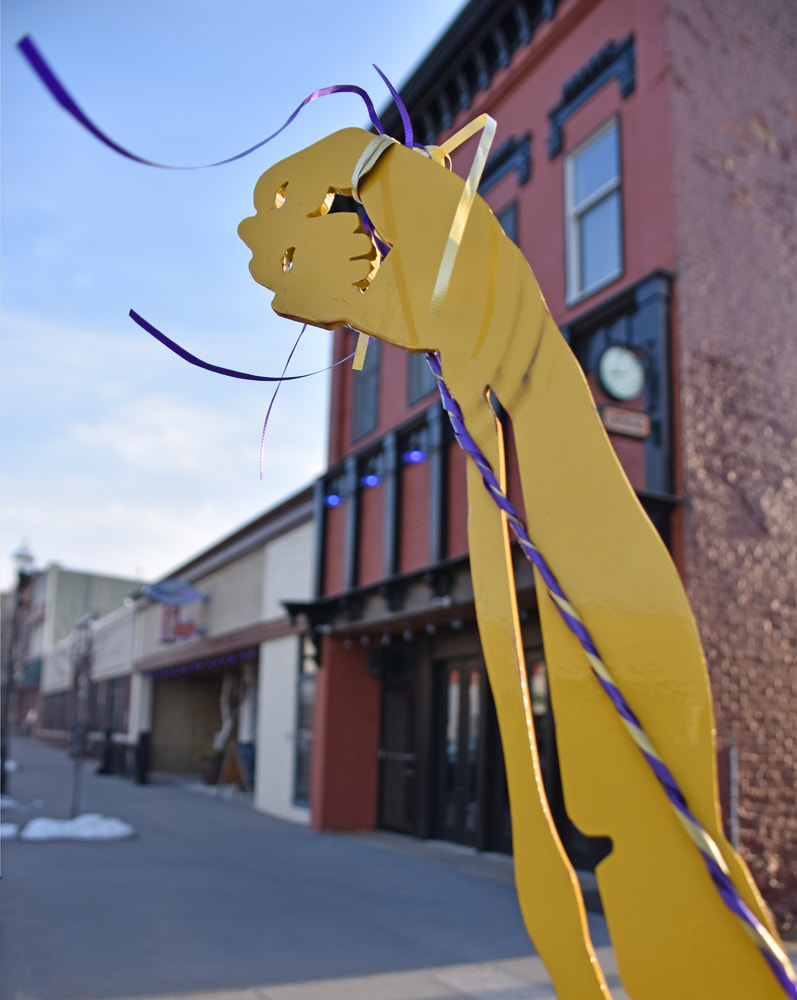 I shot this on a class photo walk in downtown Big Rapids I shot this on a class photo walk in downtown Big Rapids Each class session mixed lecture and discussion on the finer points of exposure, composition, lighting, and specific types of photography—such as landscape, macro photography, and night photography—with breaks to try out techniques we'd just discussed. When the weather cooperated, we took our breaks outdoors. 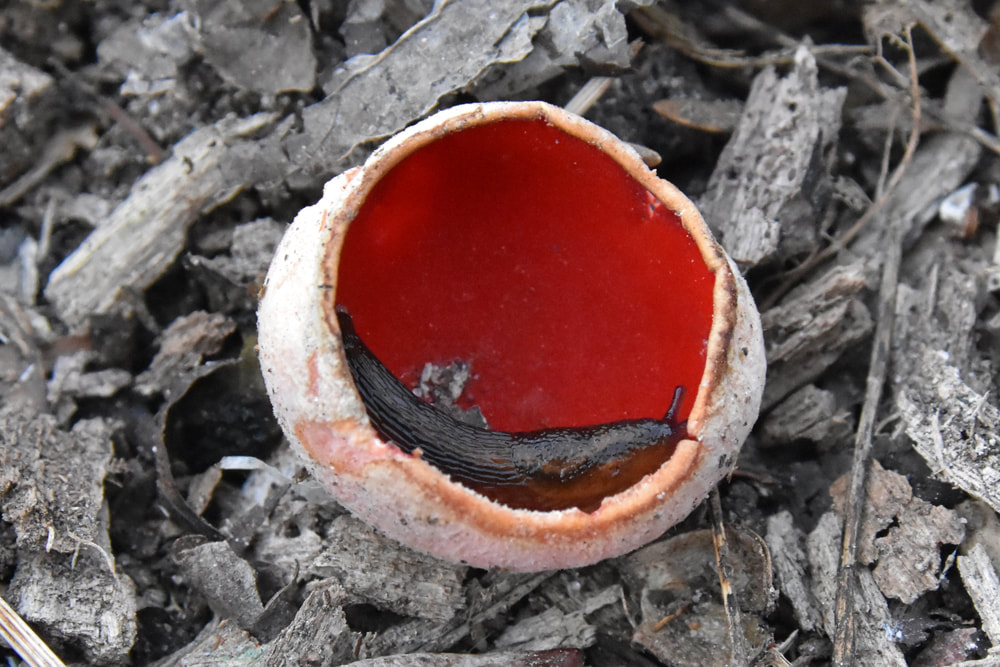 Found on a photo walk in Hemlock Park 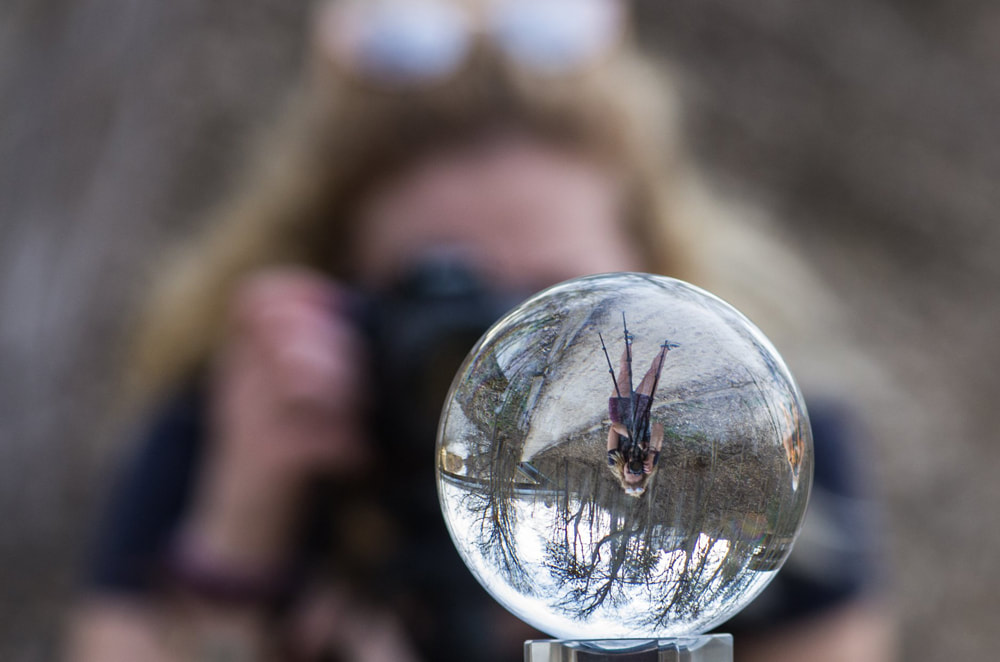 Dave took this photo of classmate Kailey shooting through a crystal ball (Photo: Dave Johnson) 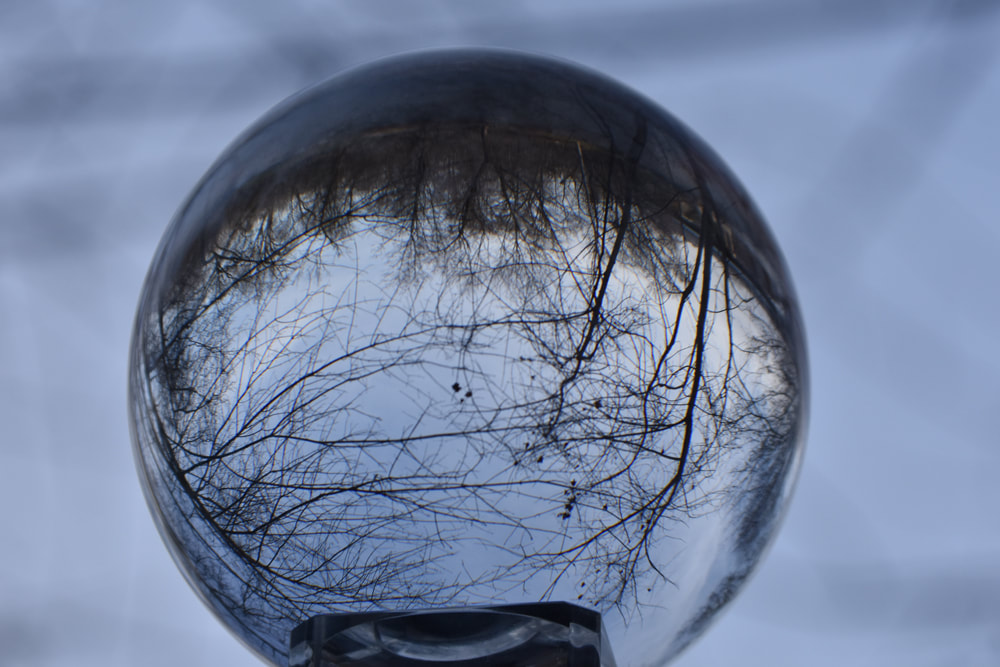 I tried my hand at a crystal ball shot, too When the weather didn't cooperate, we found things to photograph indoors—either the Artworks exhibits or items Dave brought in: tiny toys for close-up practice, prisms for special effects, and a variety of dollar store light-up doo-dads for a session on playing with light. That one, with the light-up gadgets, was probably my favorite in-class exercise. We experimented with shooting long exposures of ourselves and Dave moving around with glow sticks and strings of lights. It felt like pure play, but we ended up with some pretty cool abstract images. 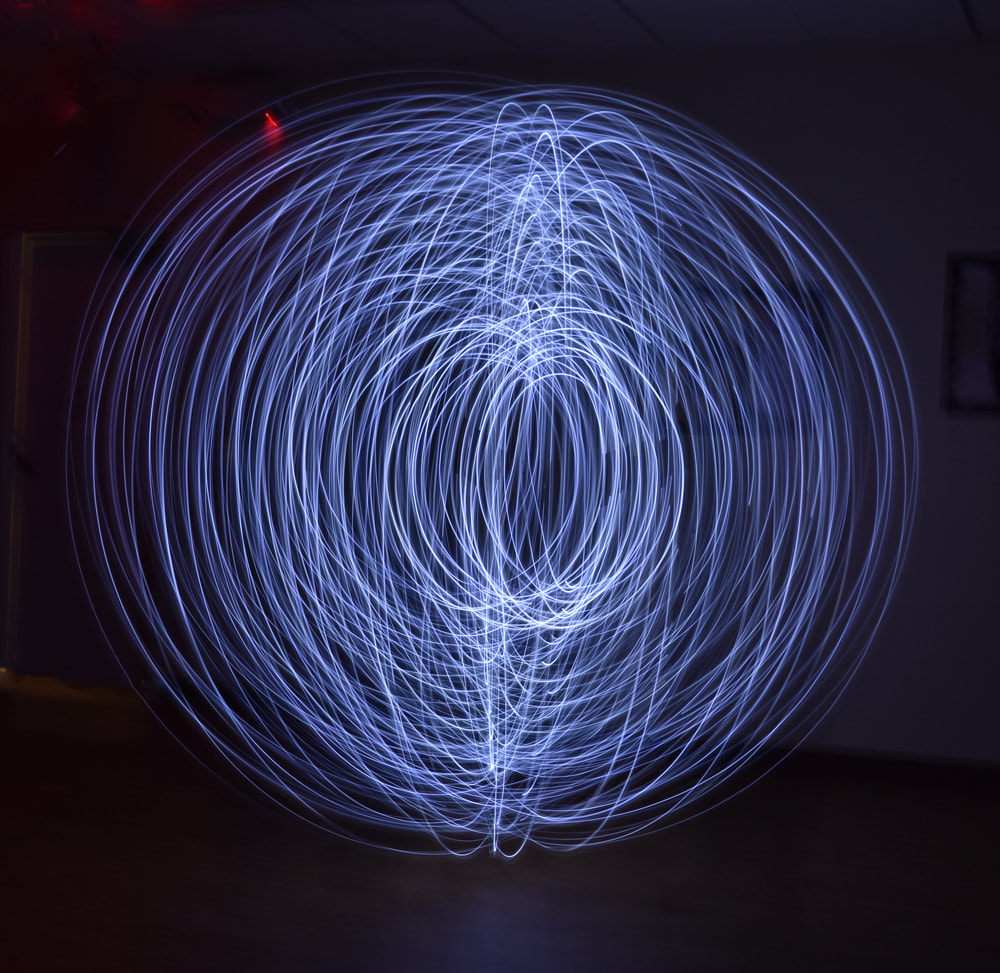 Swinging a string of lights around a central point produced this spherical shape 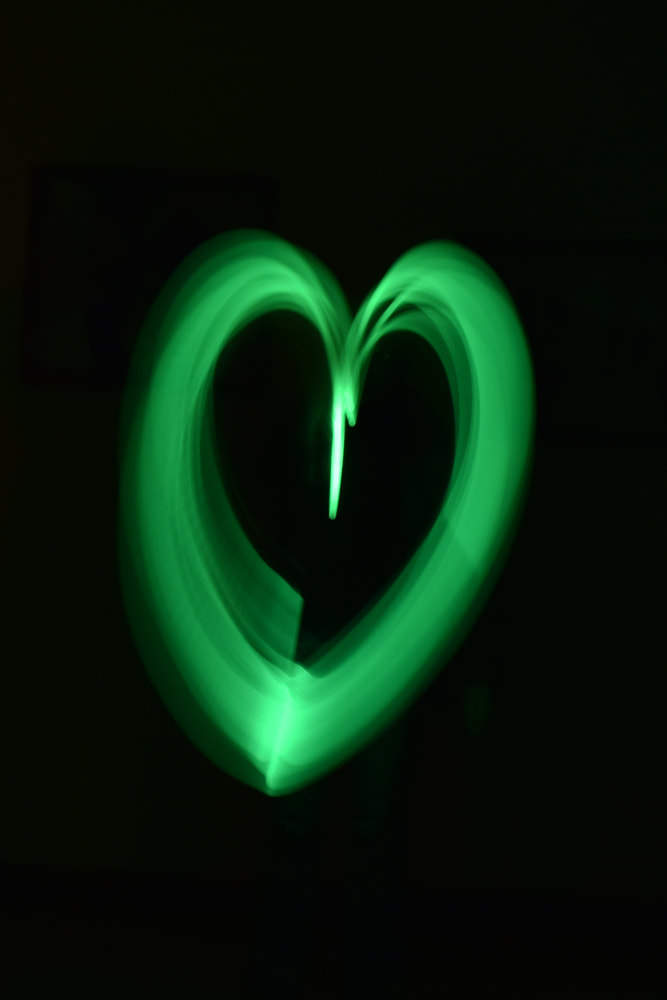 I ♥ glow sticks!  Dizzying, but delightfully fun In spite of my early fears, I didn't freeze up when it came time to practice our skills together. I did find group shooting a different experience from roaming around on my own, but it was fun to see what other people were shooting. To promote even more of that kind of exchange, Dave maintains a Facebook group where current and former class members can post photos and comment on photos that other group members post. Busy schedules kept some class members from taking full advantage of this resource, but I appreciated having a place to share work and get feedback. At the end of each class period, Dave issued a challenge for the coming week, such as photographing a fast-moving subject at different shutter speeds, or taking photos at different distances from a given subject.
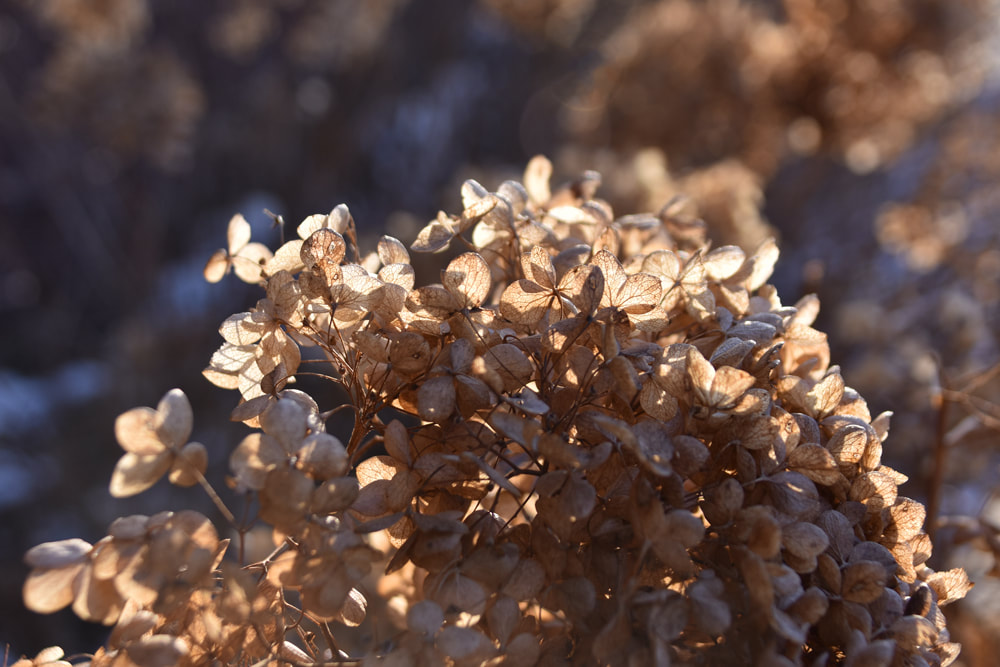 Flowers far . . . 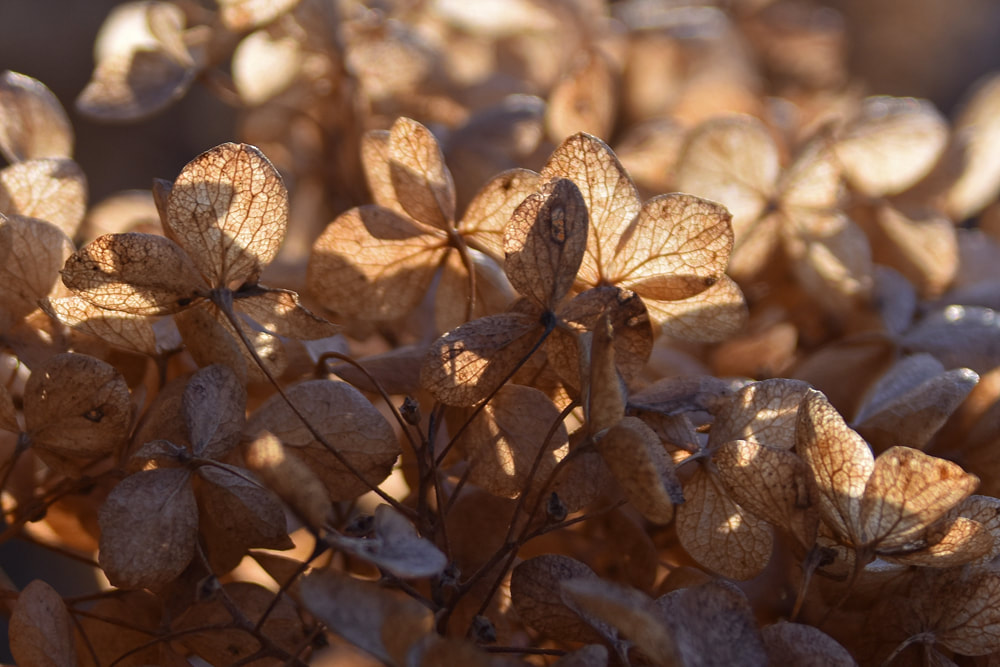 and near For once, I loved having homework! When I spent an afternoon wandering around with my camera, I wasn't just goofing off, I was working on an assignment. 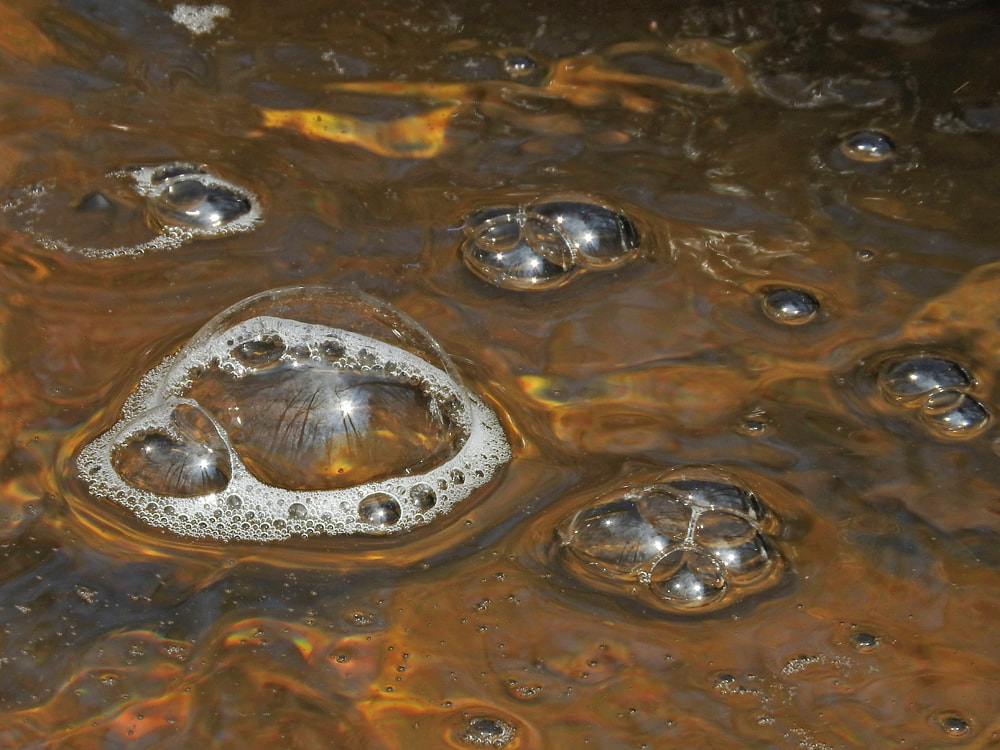 I could sit and stare at bubbles in a stream and actually feel like I was accomplishing something!
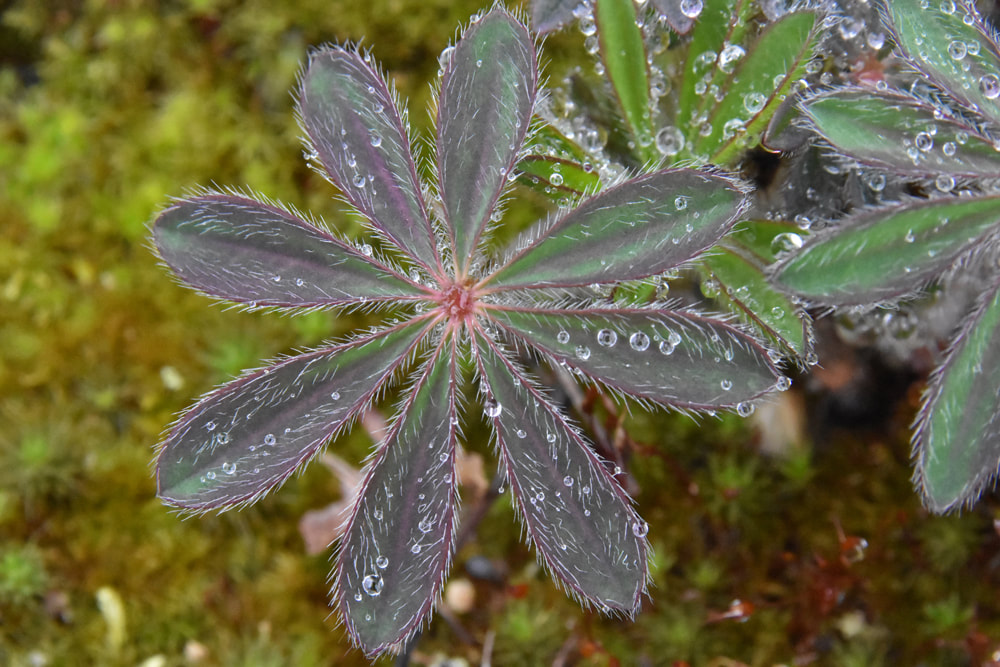 play outside after a rain . . .
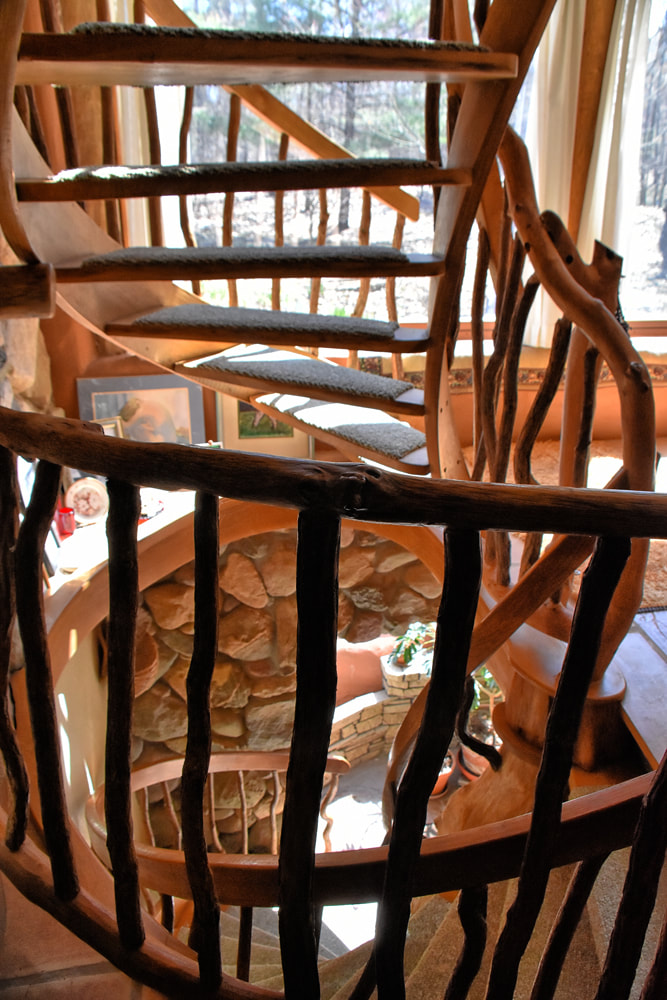
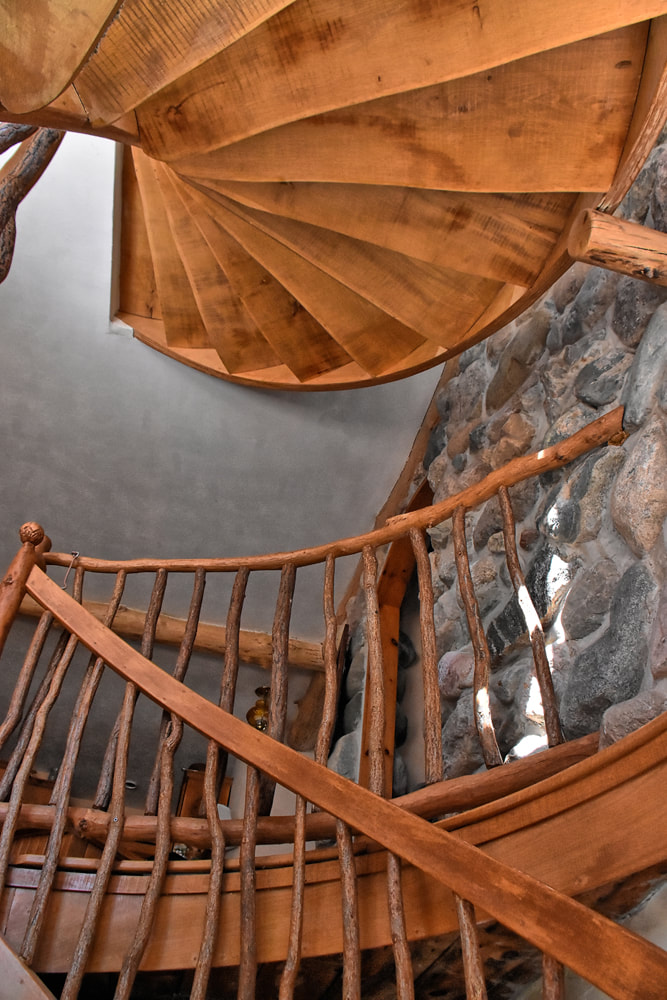
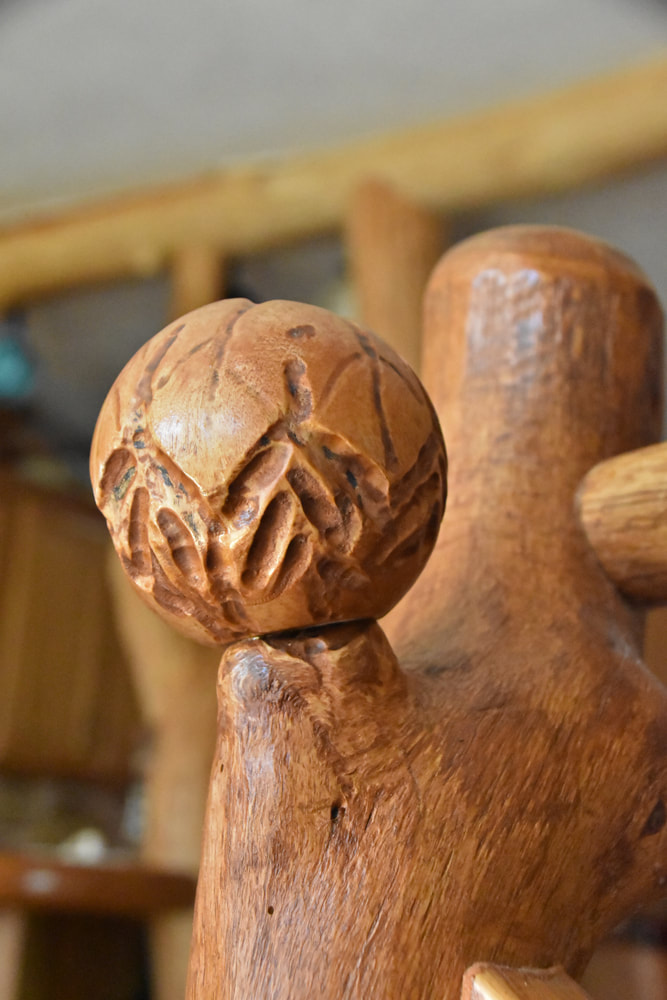
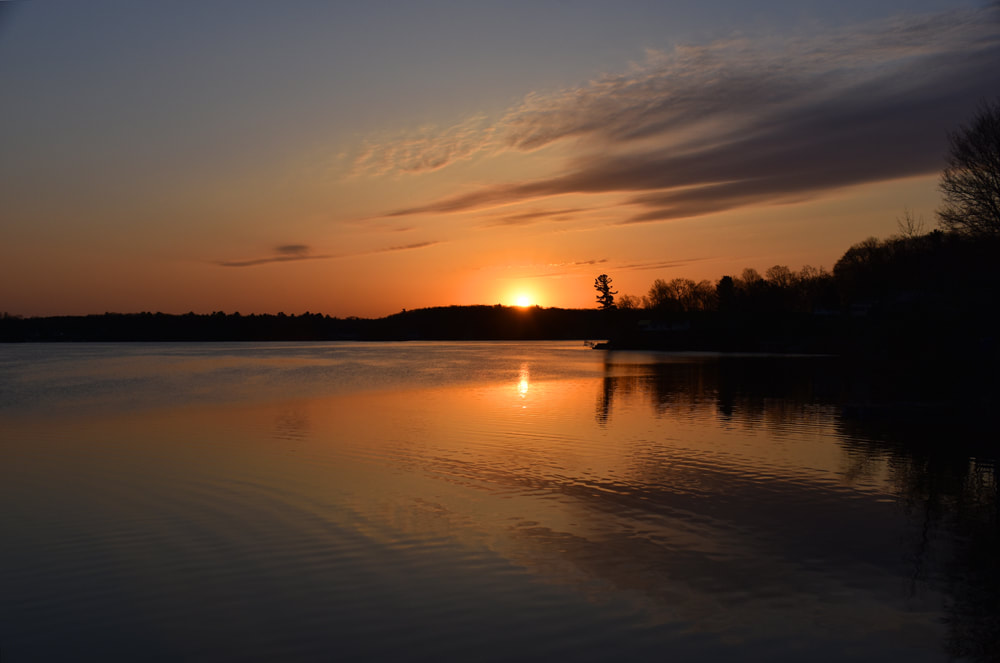 and once in a while, even drag myself out of bed to catch a sunrise. I came away from the class with a fresh set of tips and techniques, but perhaps more important, the inspiration to keep stretching my skills, trying new things, and seeing the world in different ways. 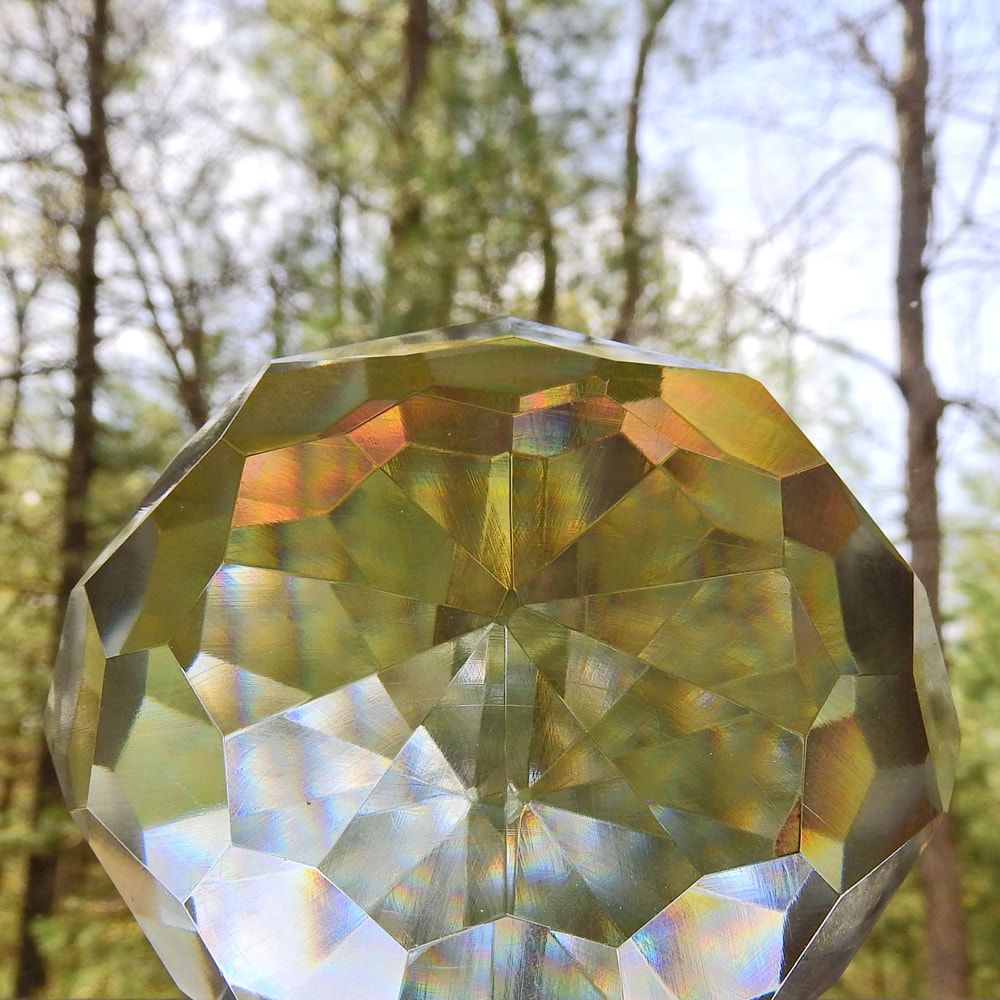 Have you taken an enjoyable or challenging class recently? What have you learned? Enjoy a few more of Dave Johnson's photos: 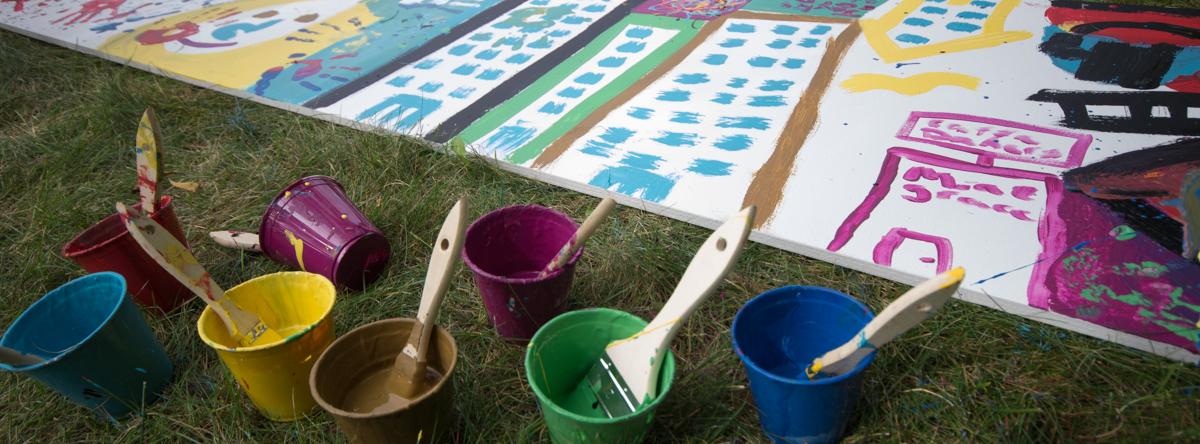 Photo: Dave Johnson 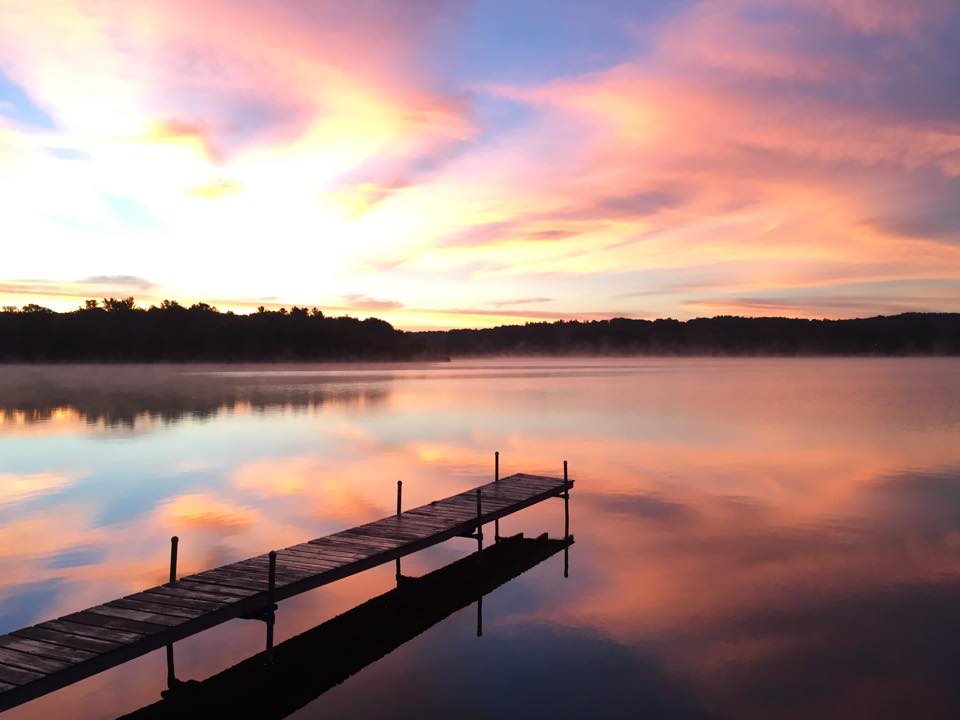 Photo: Dave Johnson 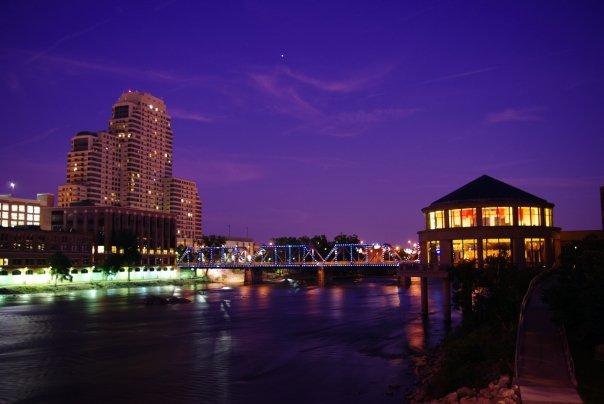 Photo: Dave Johnson 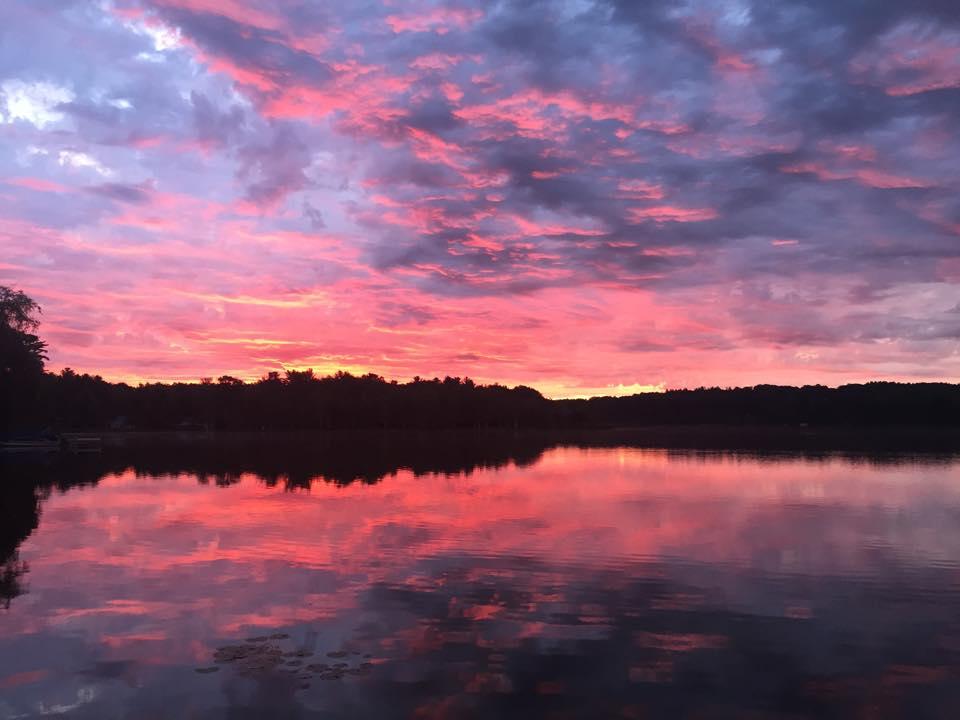 Photo: Dave Johnson 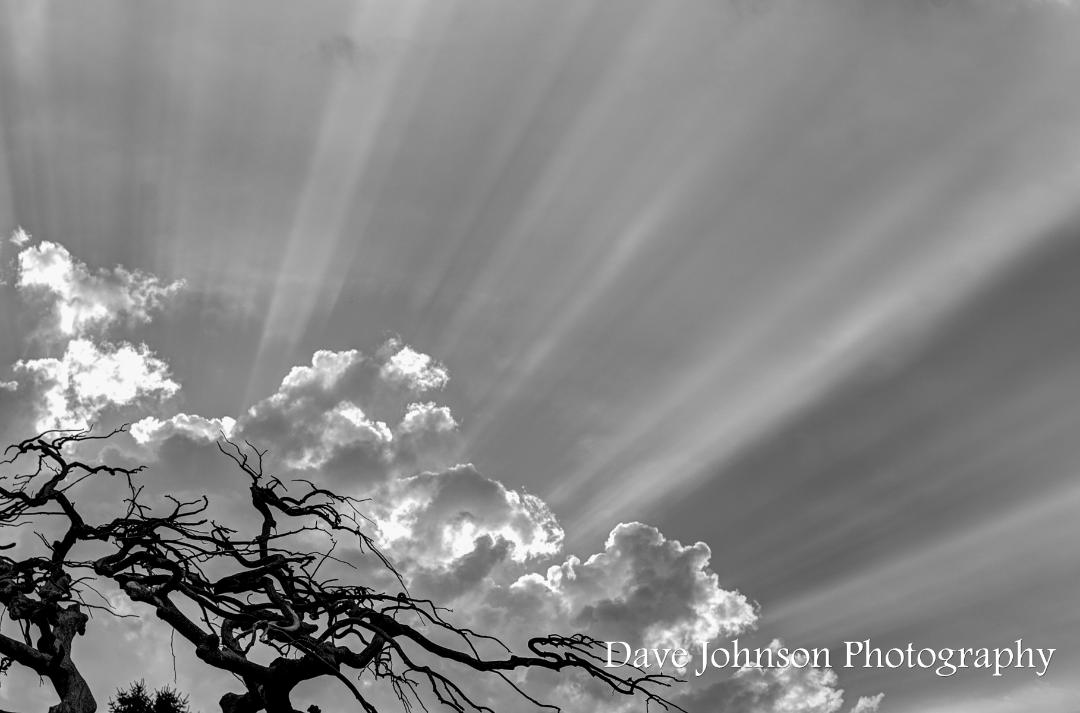 Photo: Dave Johnson I'm not much of a souvenir shopper. I don't need t-shirts, hats, mugs, or other paraphernalia to remind me of places I've been. However, there's something I do like to bring back from our travels: the memory of at least one interesting person we met along the way. 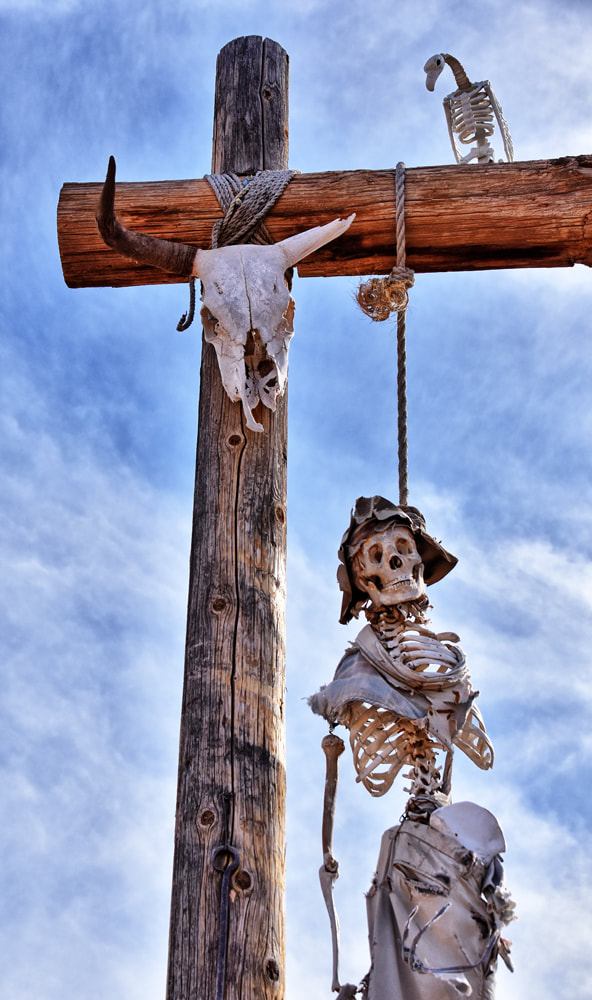 Tombstone is an appropriate setting for a guy named Bones (but this isn't Johnny) Tombstone is an appropriate setting for a guy named Bones (but this isn't Johnny) Some months ago, I wrote about Leroy Gonzales of Golden, New Mexico, who captivated me with his eccentric roadside assemblage and friendly banter. On our latest road trip, I encountered another colorful local character, Johnny Bones, in Tombstone, Arizona. 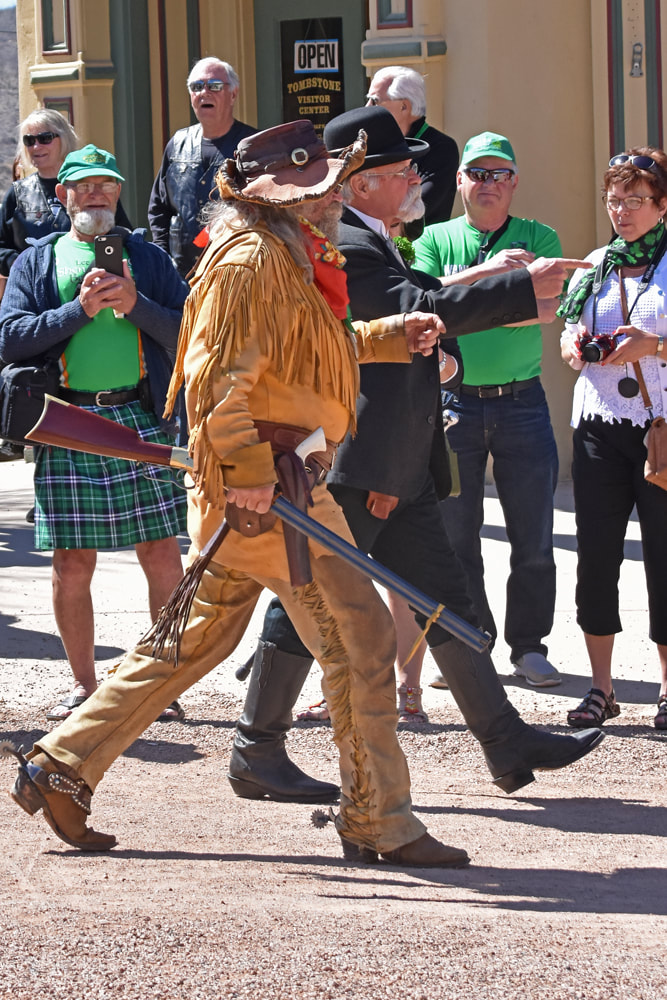 Erin go bragh meets the Wild West Erin go bragh meets the Wild West Our visit to Tombstone happened to fall on St. Patrick's Day, which happened to coincide with Tombstone's annual Wild West Days and Salute to the Troops. Talk about a combination of celebrations! We rolled into town about an hour before a parade was set to step off, but the main street was already teeming with performers and local folks in period costumes. Gunslingers, cowpokes, banditos, fancy ladies, dandies, and dance hall girls mingled with the crowds and posed for pictures. 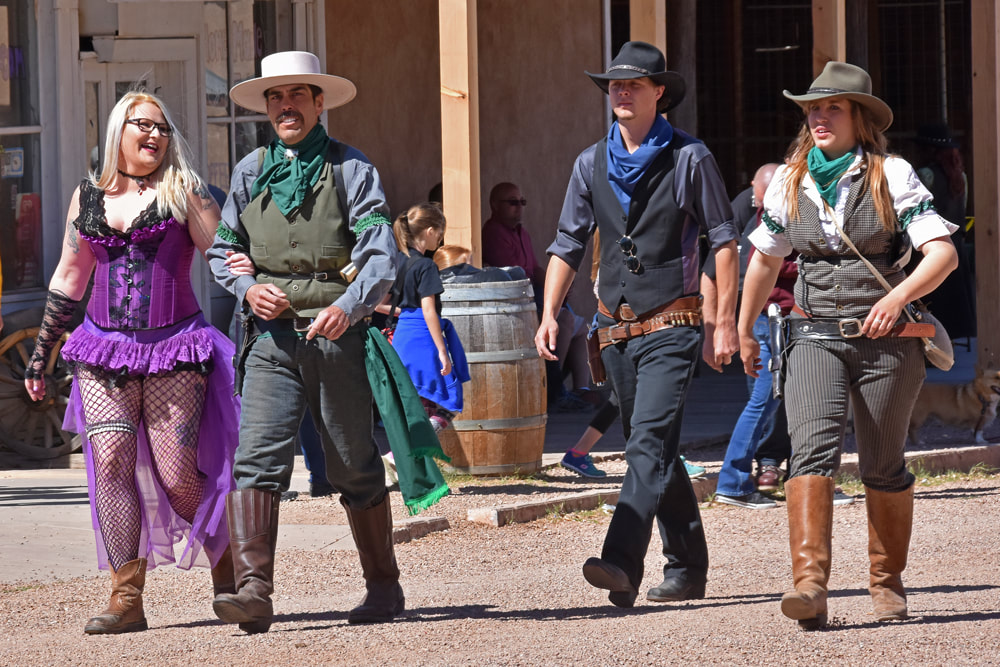 Dance hall girls, dandies and what-all filled the streets in Tombstone 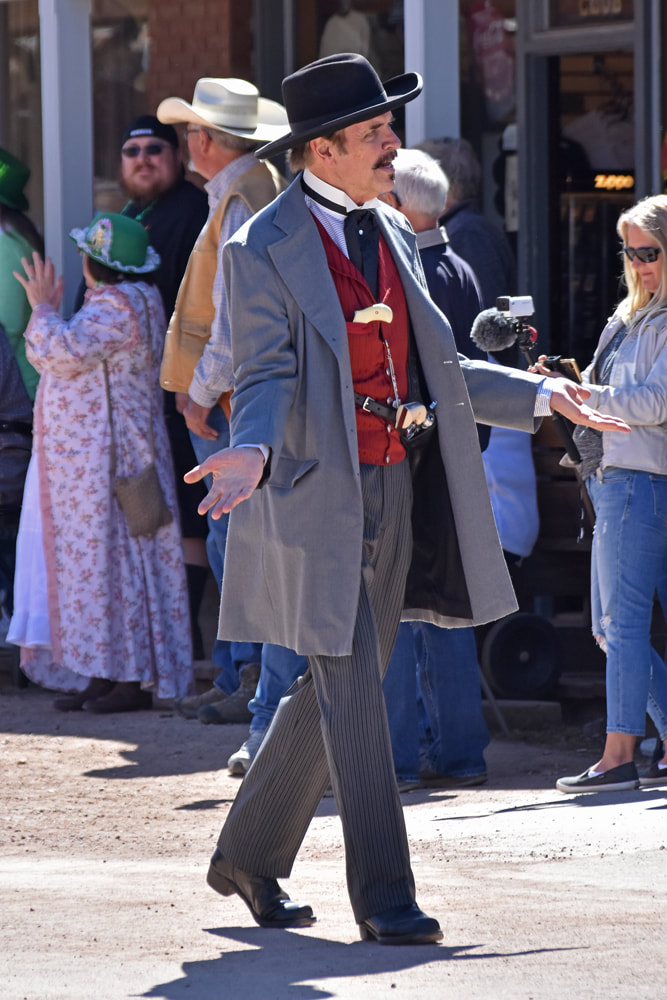 Dapper dude 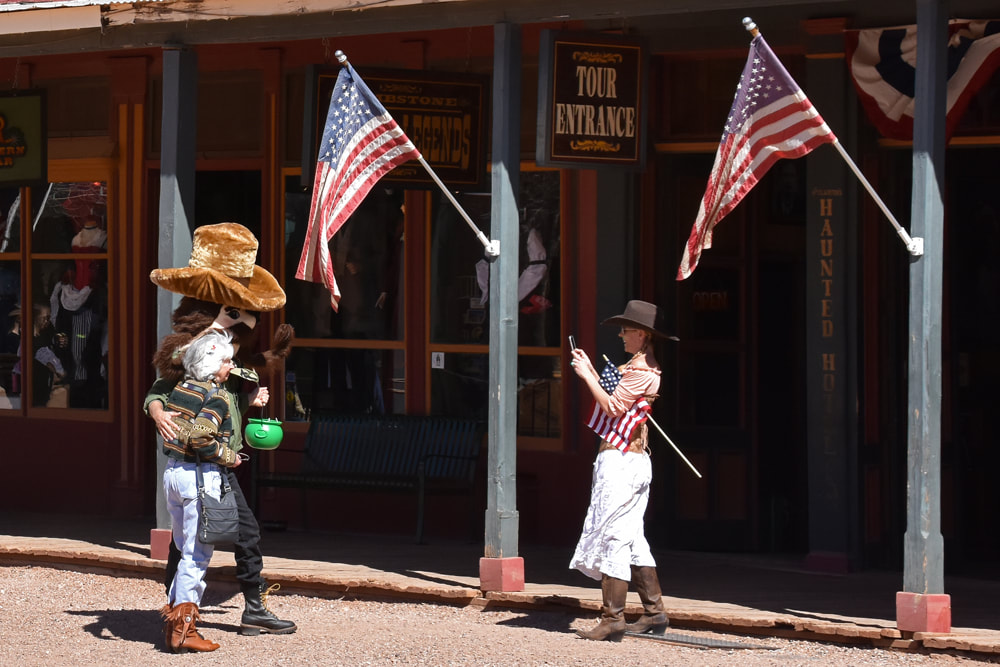 Posing for pictures with a costumed character Amidst all the hubbub, one chap stood out. He wore a top hat decorated with baubles, feathers, playing cards, and a picture of an angelic orchestra. An assortment of belts—including one that looked like it might've graced a belly dancer's hips—encircled his waist. A long chain dangled from one ear; bells jangled around both ankles. Chunky rings, bracelets, necklaces, and a green bowtie completed the look. 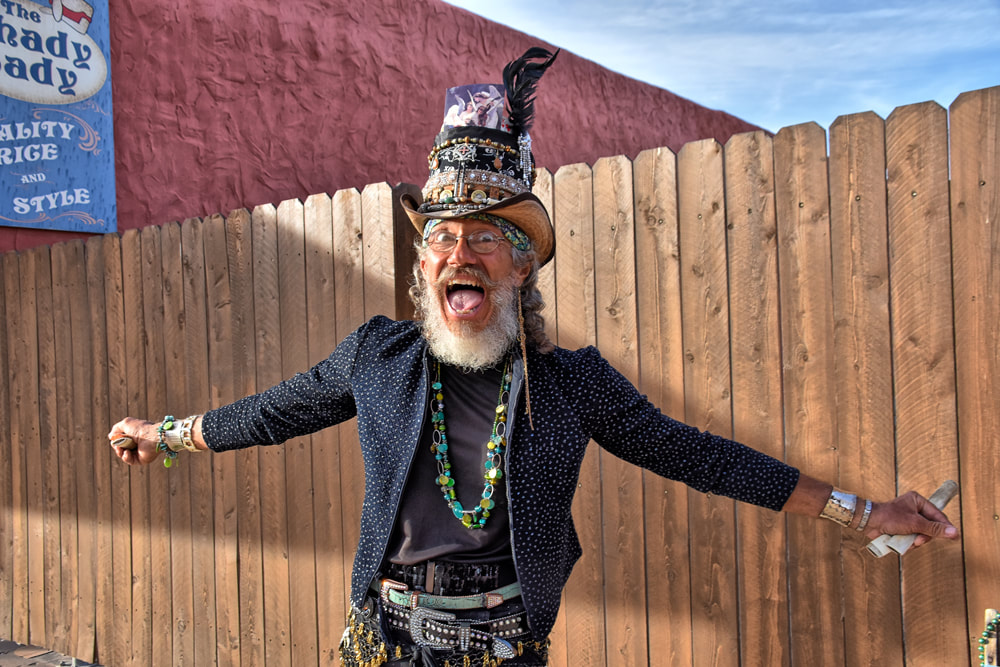 Couldn't help but notice this guy! But his outfit wasn't what made him so noticeable. Or at least it wasn't the only thing that made him so noticeable. The fellow was in constant motion, twirling, stomping, dancing a jig, and clacking two pairs of bone castanets. 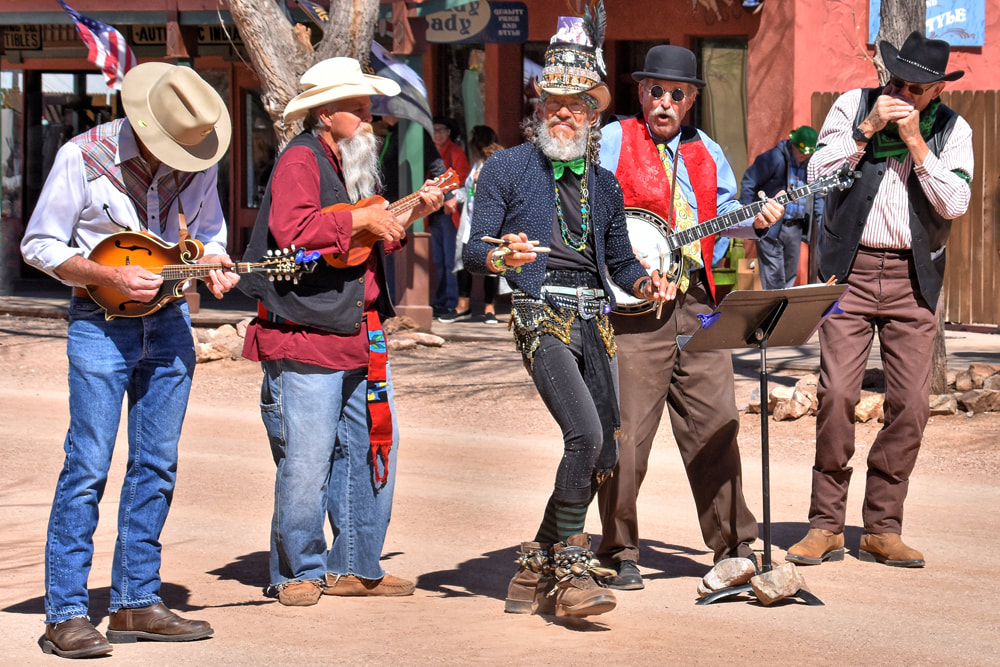 Johnny Bones in action We watched him perform with a group of musicians before the parade. Then the parade got underway, and our attention turned to marchers, floats, and some sweet donkeys from Forever Home Donkey Rescue Sanctuary. 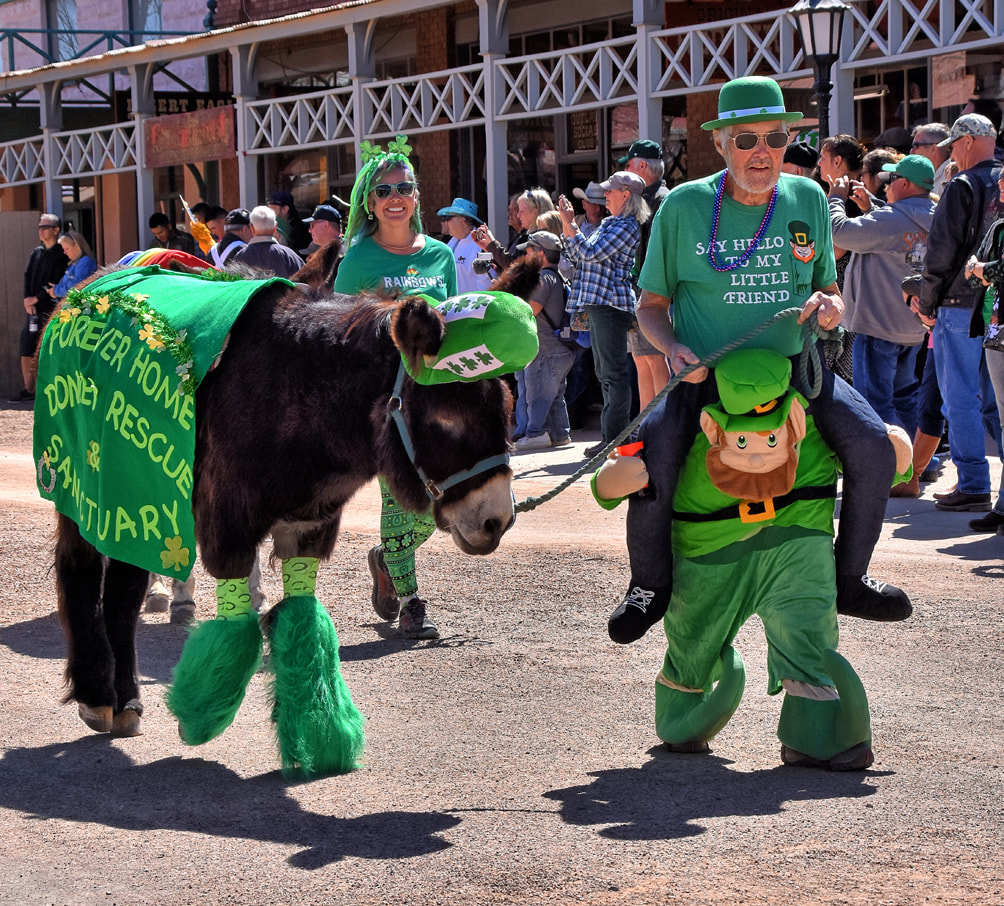 Donkeys on parade 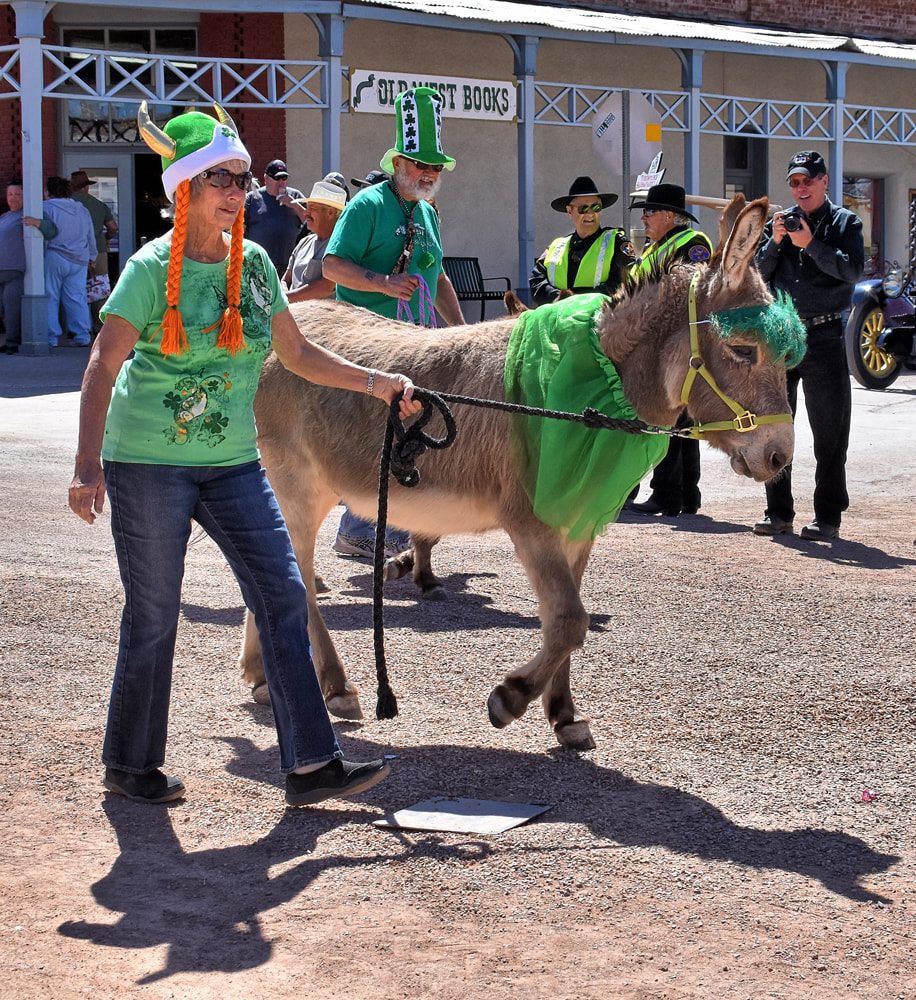 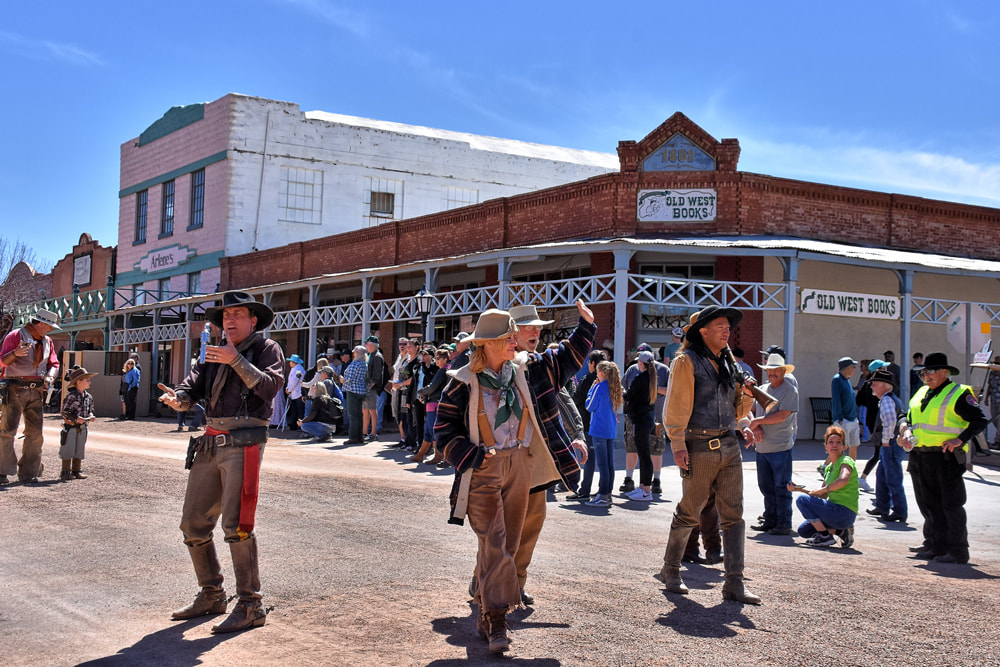 Wild West marchers 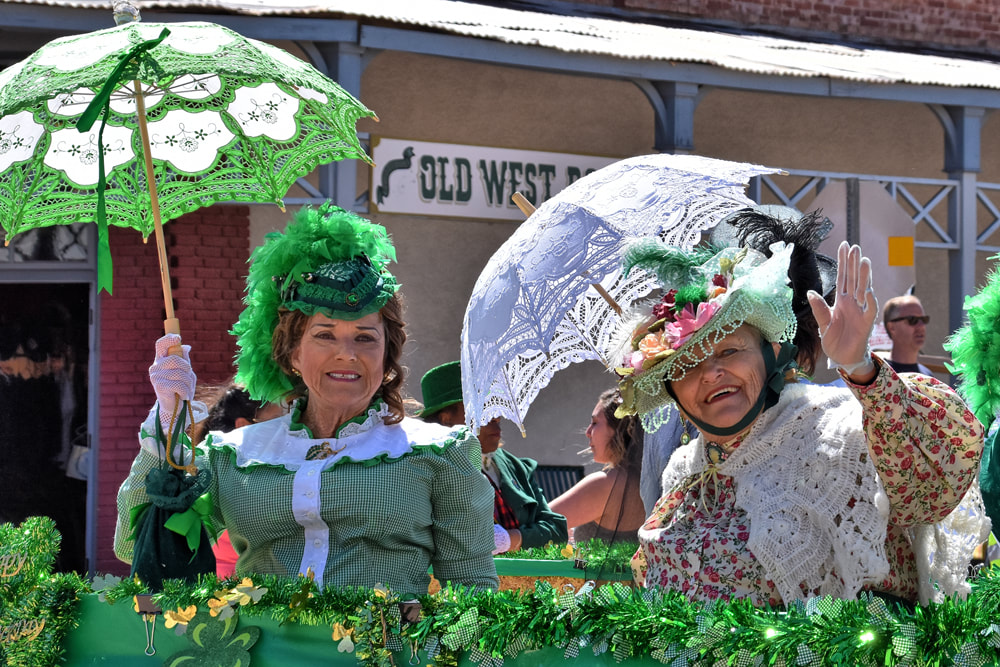 Ladies in their finery 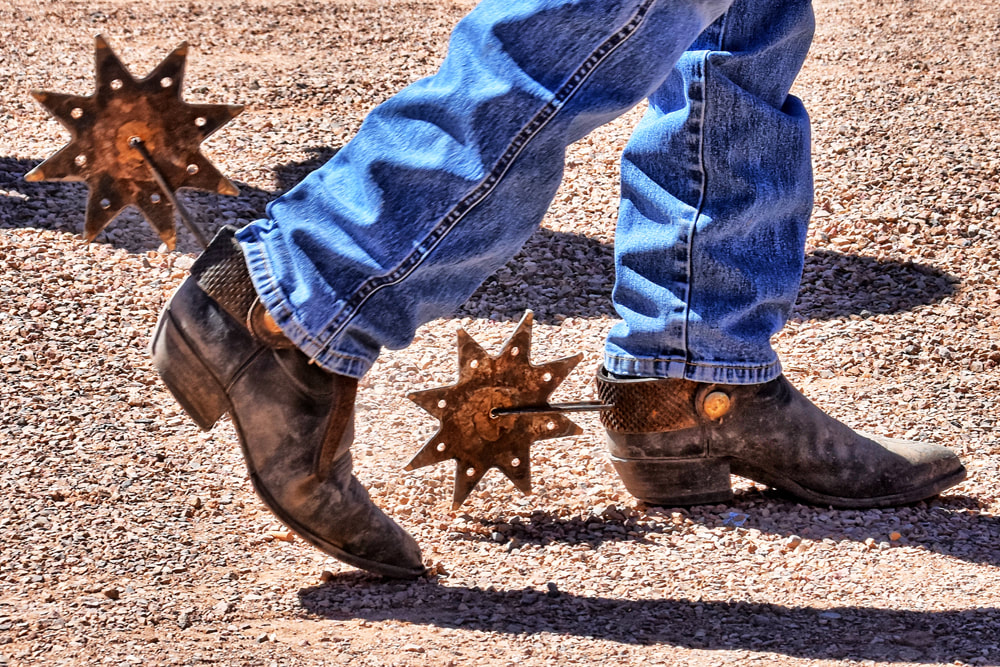 Fancy footwear 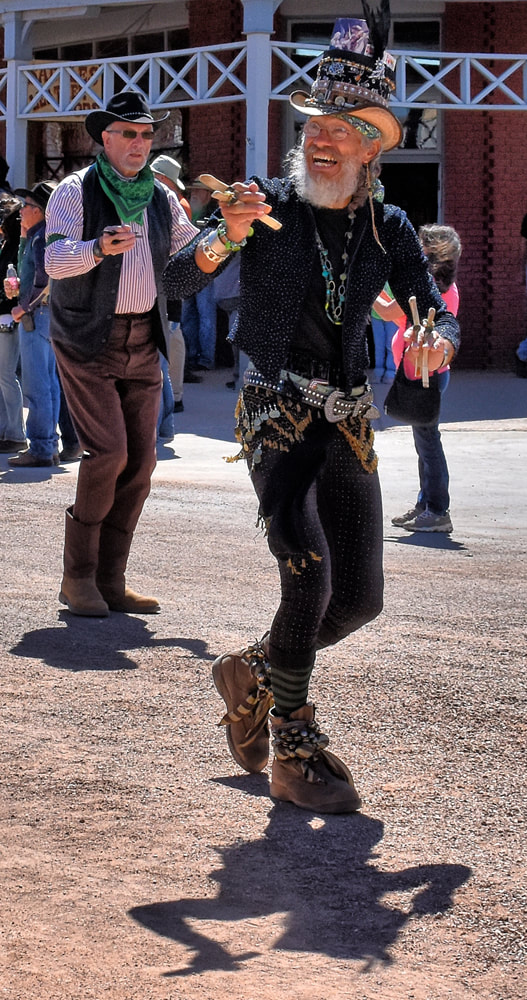 Johnny's back! Johnny's back! Then, sure enough, here came Johnny Bones, prancing along with the other revelers. The guy was everywhere, clacking, cavorting, and wearing a smile wide as the desert horizon. We left the bustle of the street to have lunch and watch a live OK Corral dramatization.  Actors at the OK Corral 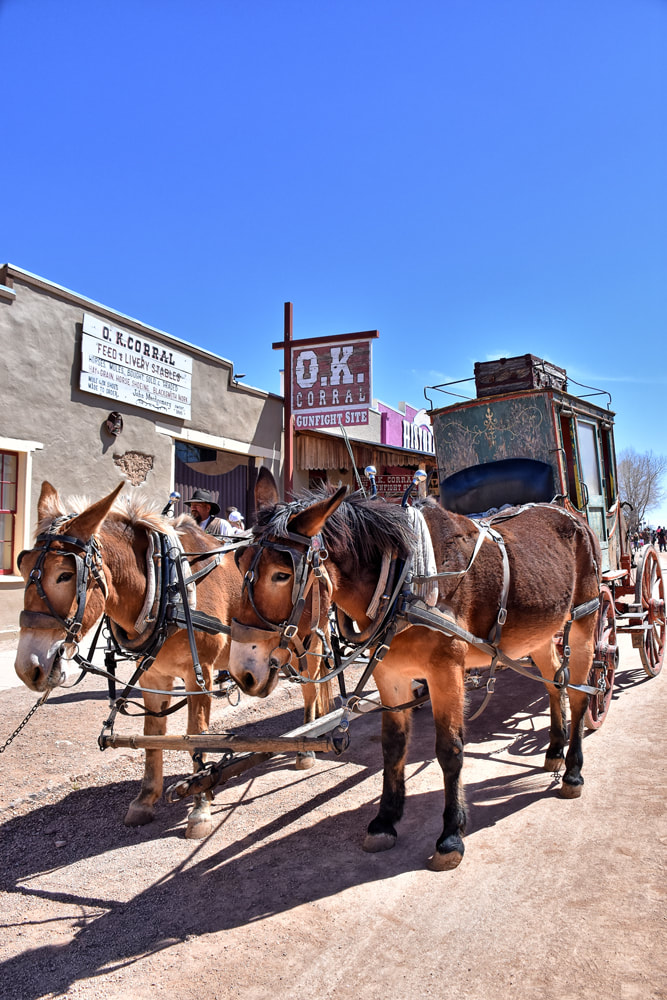 Then we stopped in at Historama, a hokey depiction of Tombstone's history that the website Roadside America describes as "a big, lumpy mound on a turntable, decorated with small vignettes from Tombstone's early history, set on a stage in a small theater." Blinking lights, sound effects, and clips of old Western movies enhance the 25-minute presentation, which also features narration recorded by Vincent Price in 1964. You get the picture. Funky, but fun. 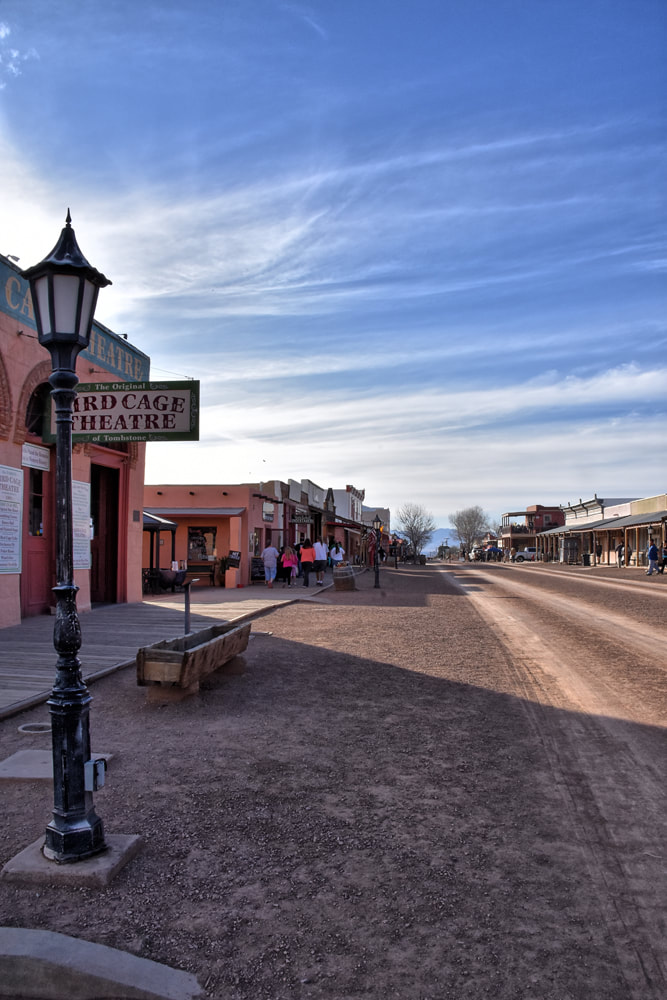 By late afternoon, activity had died down in Tombstone By late afternoon, activity had died down in Tombstone Late in the day, I took another stroll through town to snap a few more photos. The main street was almost deserted by then, but there, on a sunny patch of boardwalk was our man Bones, still jumping, jiving, clacking, and looking not the least bit weary. 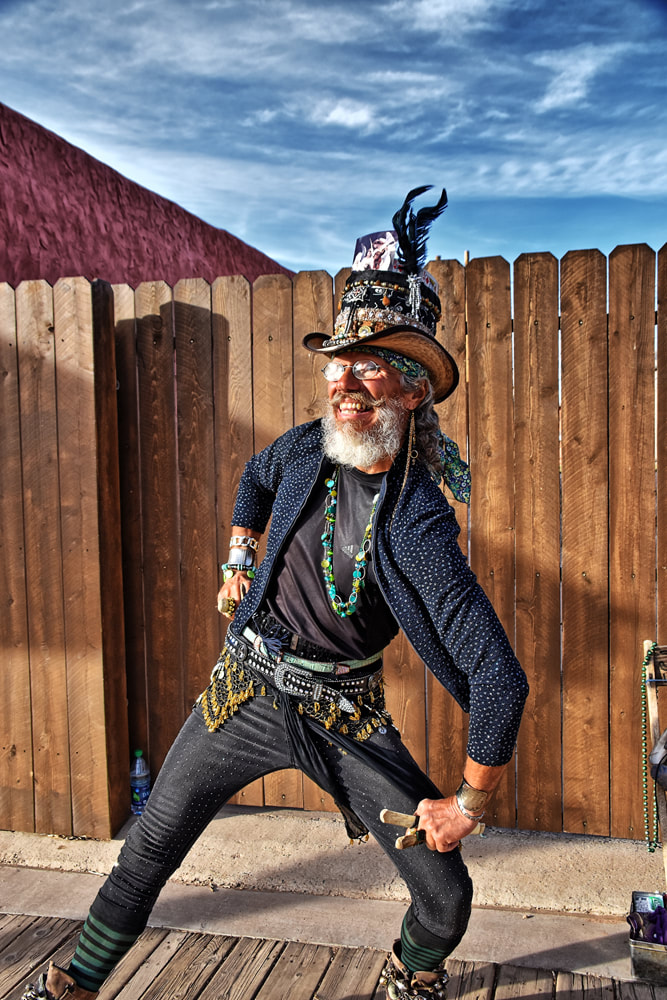 But Johnny was still going strong He seemed so naturally chipper, I imagined his life to be just one big dance party. But I later learned that he's had his troubles. Six years ago, the city of Tombstone passed an ordinance aimed at banning Bones (whose real name is Ronald Koch) from the town's historic district. He was permitted to perform by the visitor center or by the park—both at the far end of town—but those places are "dead zones for busking," Koch told Arizona Sonora News. Somehow, the American Civil Liberties Union of Arizona got wind of Bones's banishment and wrote a letter to Tombstone's mayor asserting that Koch was protected by the First Amendment, as busking is considered artistic free speech. Johnny Bones, whose costumes and talents are reminiscent of the minstrels that once performed in Tombstone's Bird Cage Theatre, was allowed to return to the heart of town, which is where I found him. 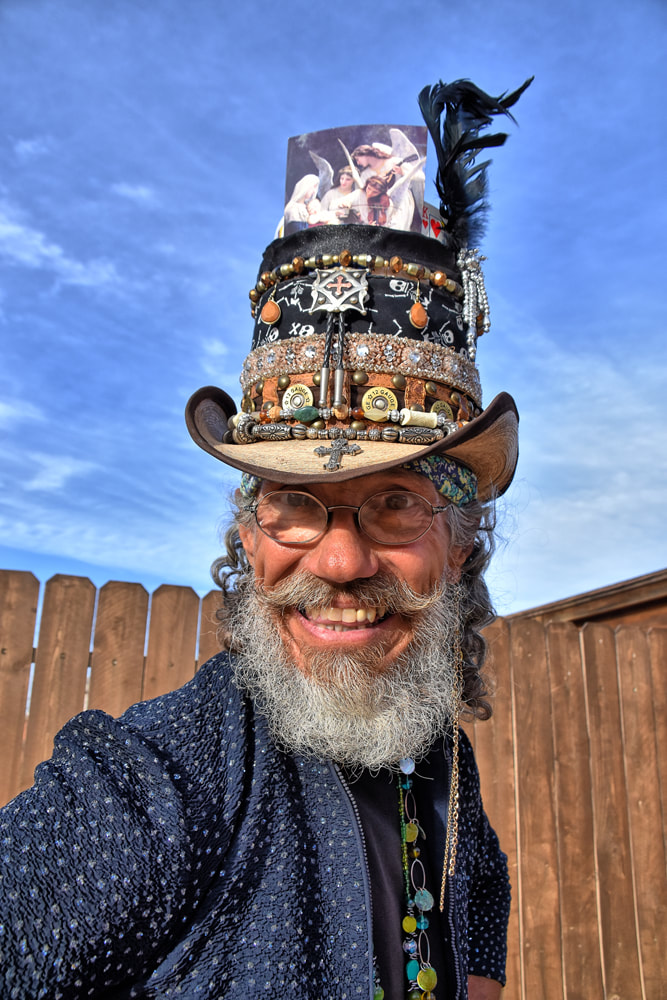 A gardener of smiles A gardener of smiles He didn't have much to say when I stopped to leave a tip and tell him how much he'd brightened my day. He just beamed and struck a pose for my camera. But if I'd asked what keeps him going, I have a feeling he would have told me what he told the Arizona Sonora News reporter: "I'm a gardener of smiles. This makes me feel fulfilled because my position in life right now is to make people smile." 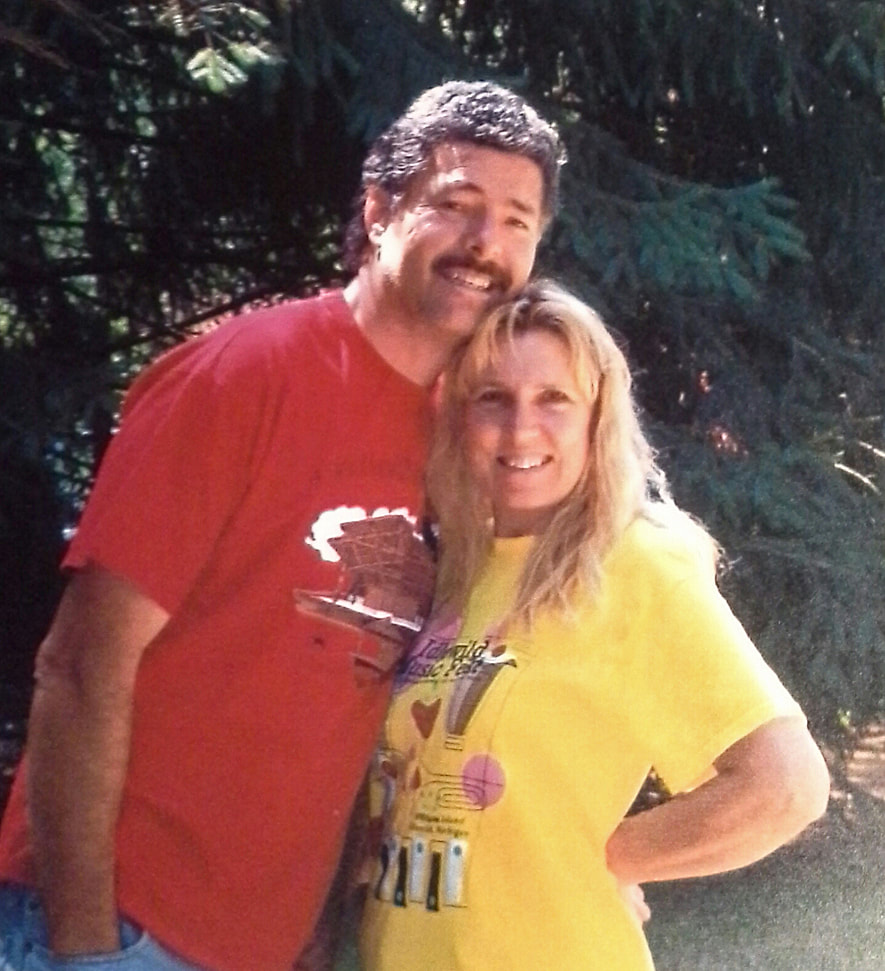 Eldon and Tonya Howe ( Photo: Cindy Simons) Eldon and Tonya Howe ( Photo: Cindy Simons) Welcome to the second installment of HeartWood's occasional feature on creative couples. In this edition, I'm profiling Newaygo County residents Tonya and Eldon Howe, whose talents impressed me when I first met them at the River Stop writers' salon and continue to amaze me. 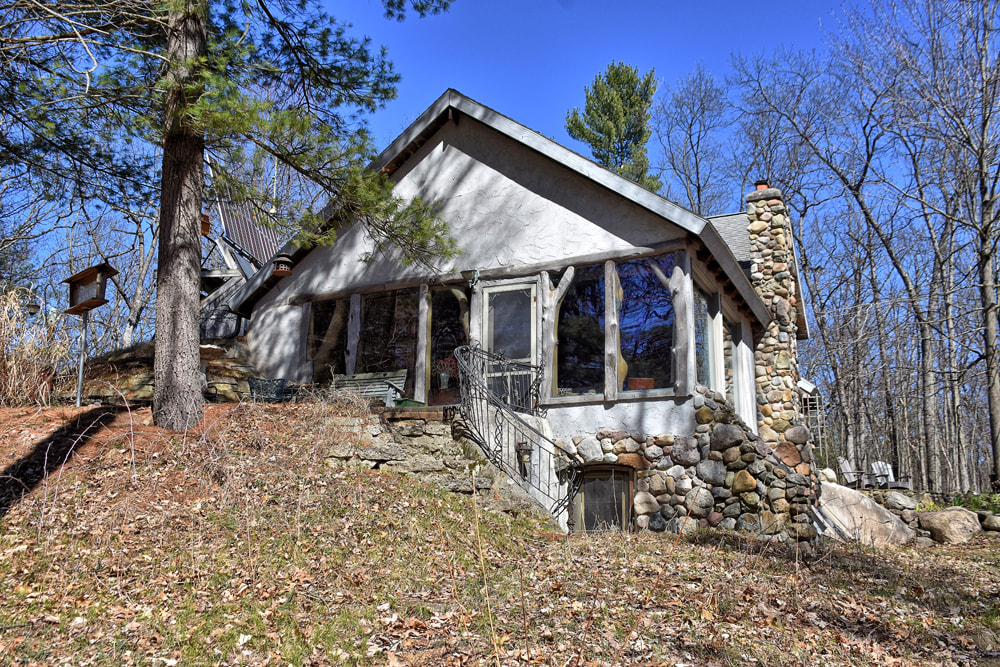 Tonya and Eldon's home reflects their creative collaboration Tonya and Eldon's home reflects their creative collaboration You know you're in the presence of a creative couple when you look around their house, and every angle reveals artistry they've created, either individually or together. In fact, Tonya and Eldon's house itself is one of their creations—a six-year labor of love and imagination, inspired by their wooded setting.  Early in their relationship, Tonya and Eldon worked together on this creation Early in their relationship, Tonya and Eldon worked together on this creation But even before they collaborated on that ambitious project, Tonya and Eldon were co-creating. A few years into their courtship, in the 1980s, the couple took a pottery class together. Eldon made the jug they're holding in this picture, and Tonya decorated it with the carved design and artfully-applied glaze. Later on, when they took on the task of building a home, Eldon—a builder by trade—worked with Tonya to integrate her design ideas into the house, even when that presented a challenge. 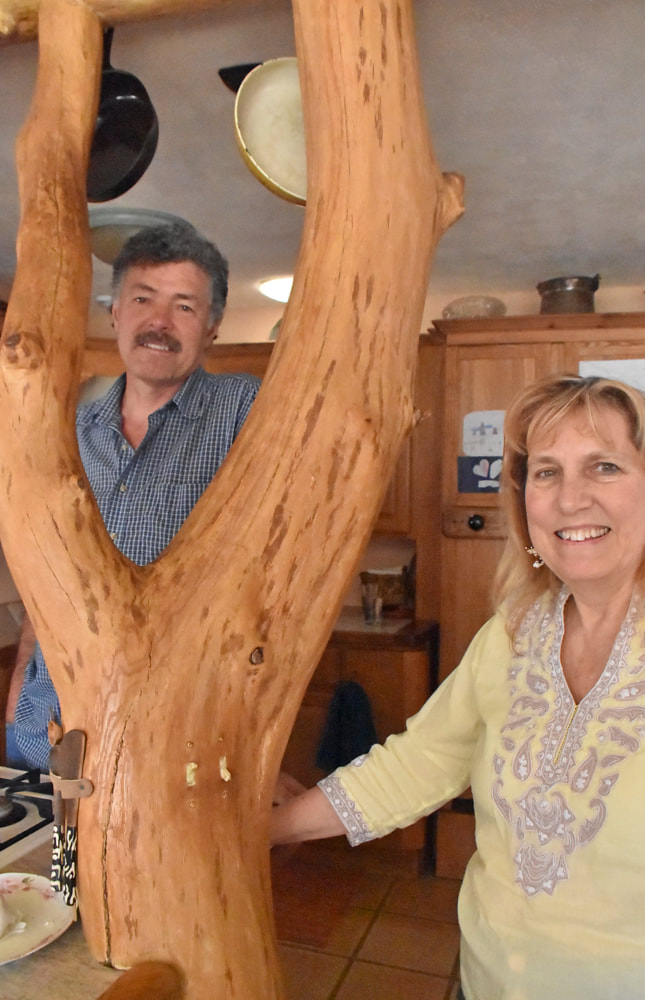 The curvy tree presented a challenge, but Eldon made it work The curvy tree presented a challenge, but Eldon made it work "You see that curvy post over there?" Eldon points toward the kitchen. "I was going to put in a simple, straight post—just a post—and run the electrical up through it. But Tonya said, 'Can't we find something in the woods that'll be nicer than that?' So we walked down below the hill—there was snow on the ground—and she saw this tree and said, 'Can we use that one? I like that one.' I said, 'No, we can't use that one. It's all curvy. There's no way I can put electrical in it.' But she just kept looking at it." Eldon started walking away, but then he kept looking back at it, too, thinking. "Finally I said, 'Okay, I think I can. So I got a chainsaw out, cut it down, put it on a plastic toboggan and literally drug it up here and spent probably a day or more trying to carve it and get it to fit in place." Now it's a focal point of the house. It was Tonya's idea, too, to use crotched tree trunks and burls for the window posts. And the couple came up with other natural touches, from the twisting stairway railing to the stone walls and fireplace, that grace the sustainably-designed home. 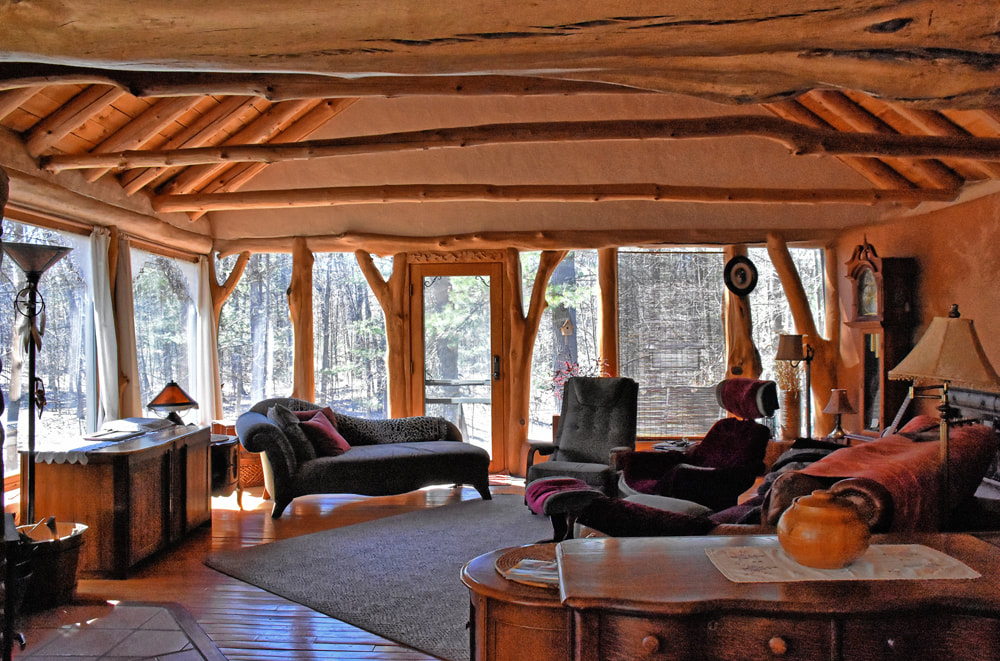 The house is full of the couple's natural touches  One of Eldon's woodworking creations
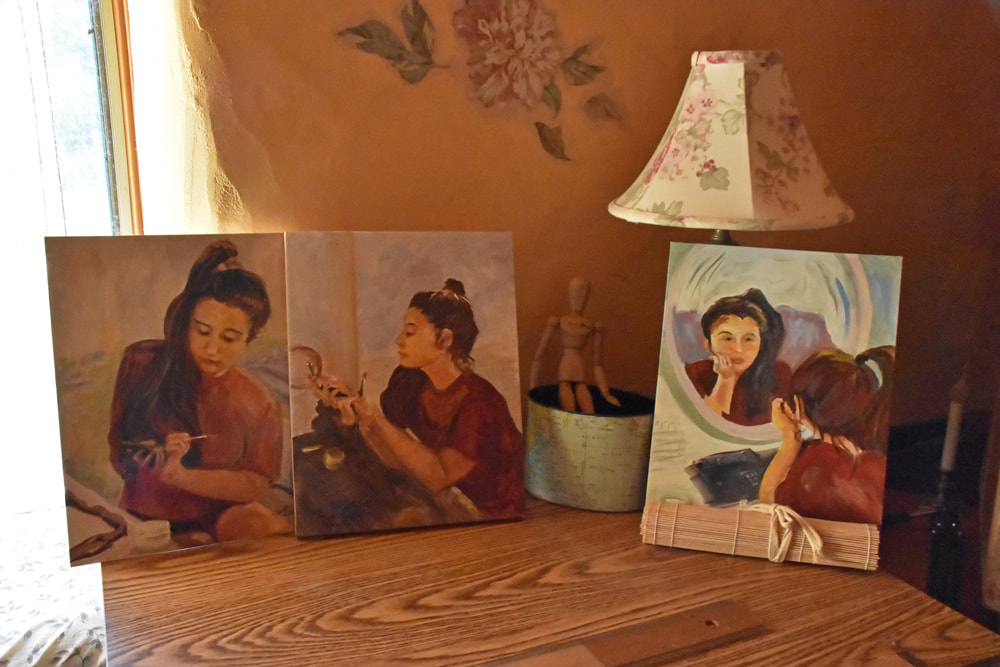
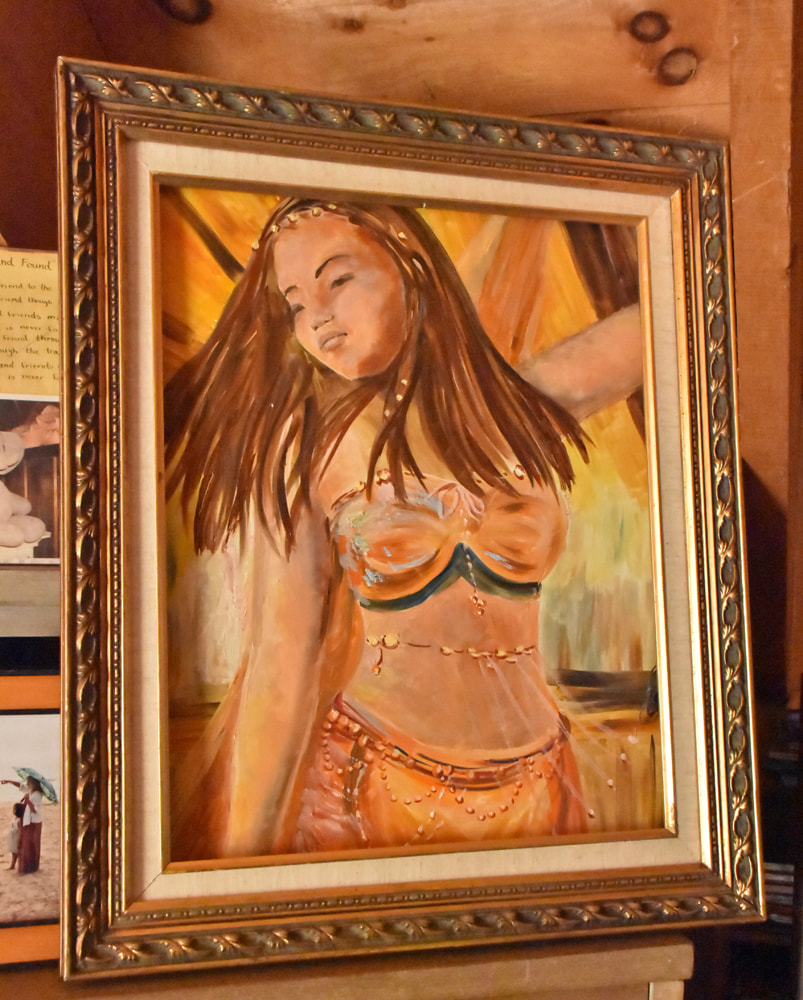
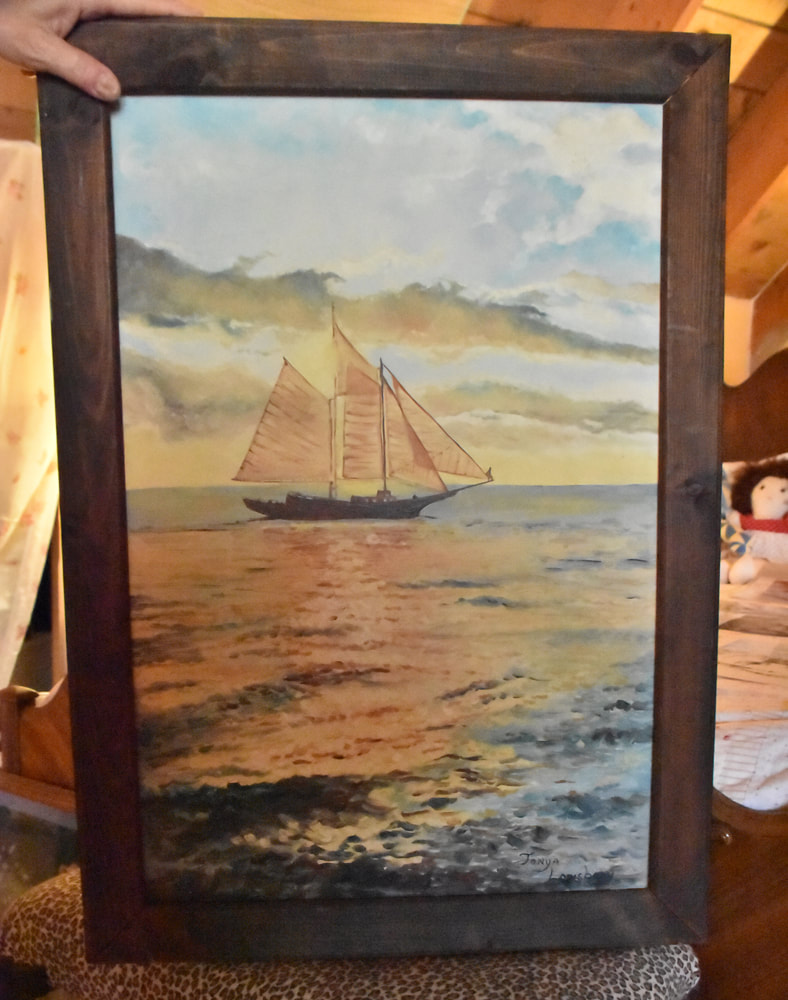
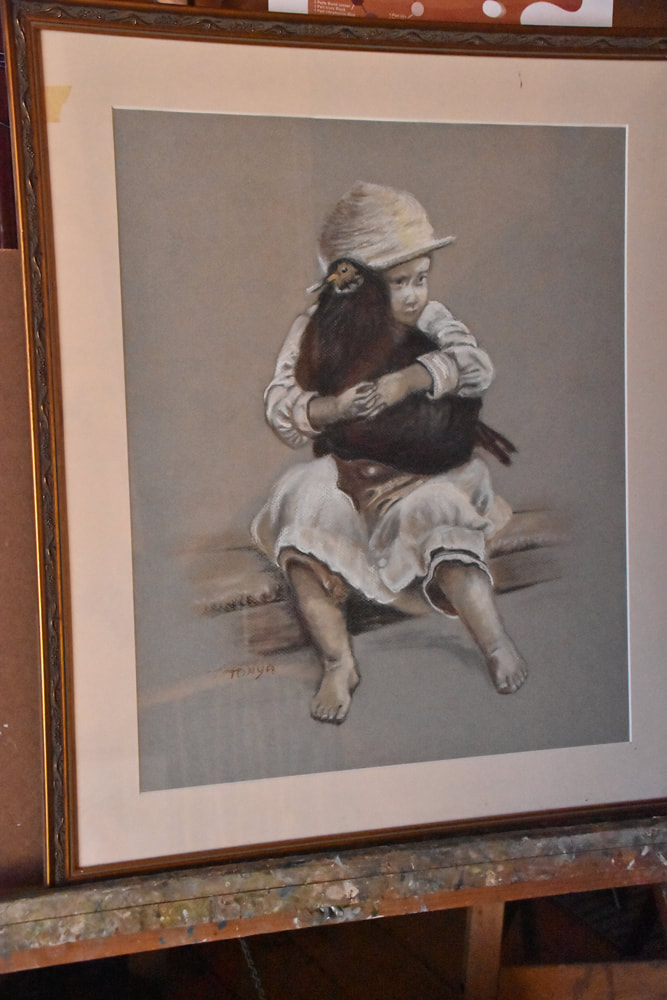
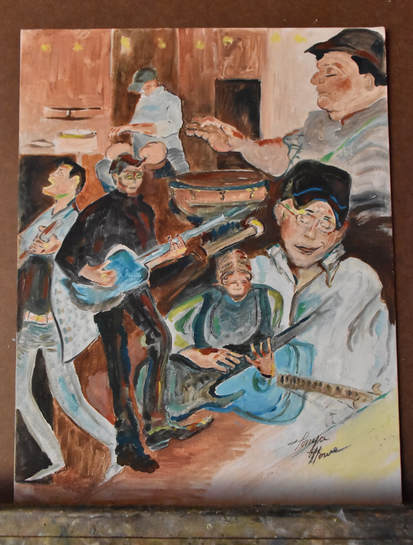
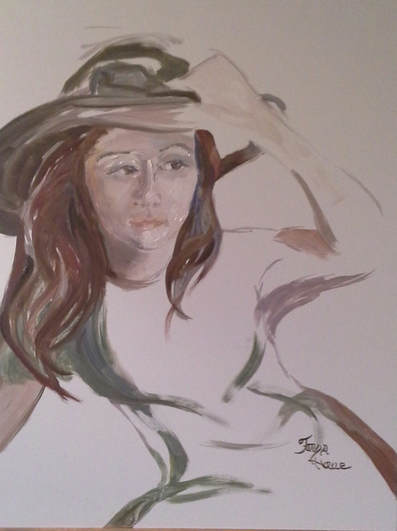
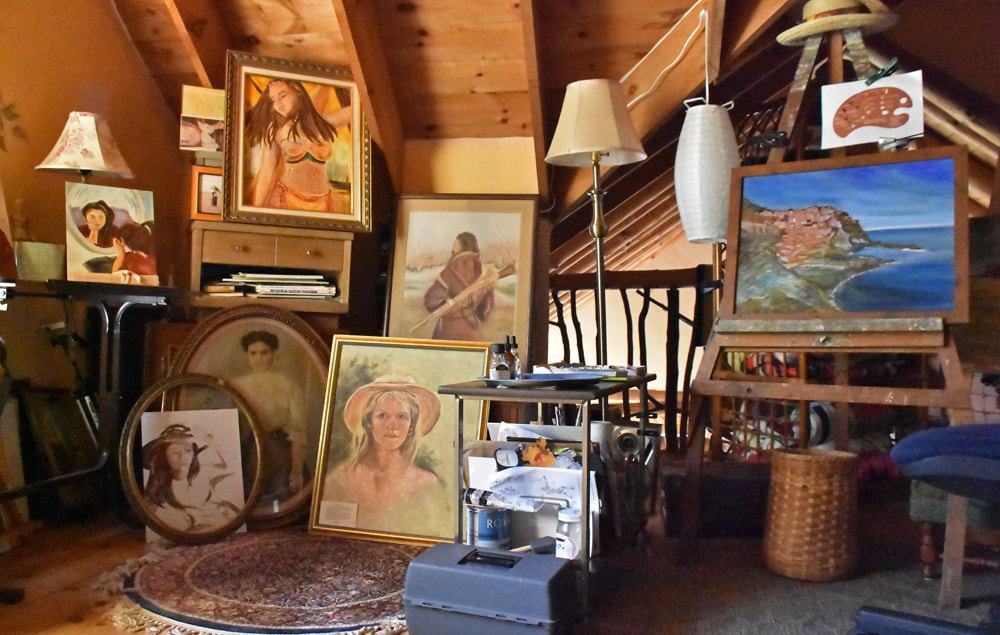 Tonya's studio Tonya's studio In a second-floor studio off the bedroom, Tonya pursues her passion for oil painting and drawing.  The artist in her element The artist in her element "I like to paint mostly scenery and people, trying to capture the mood or character, or the exchange between people," she says. Though mostly self-taught, Tonya took some classes in the 1980s with Pentwater artists Cheri Petri and the late Bert Petri. Until recently, she favored realism, but now she's experimenting with more abstract, impressionistic paintings. Some of Tonya's work:
Photographs from Tonya's "Rock People of Moonlight Beach" series:
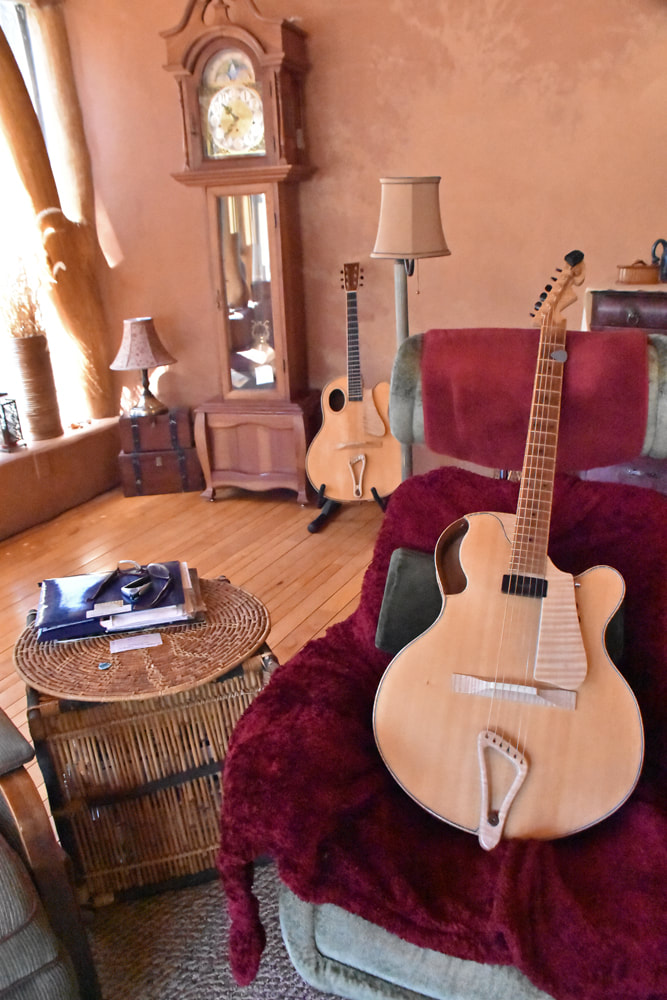
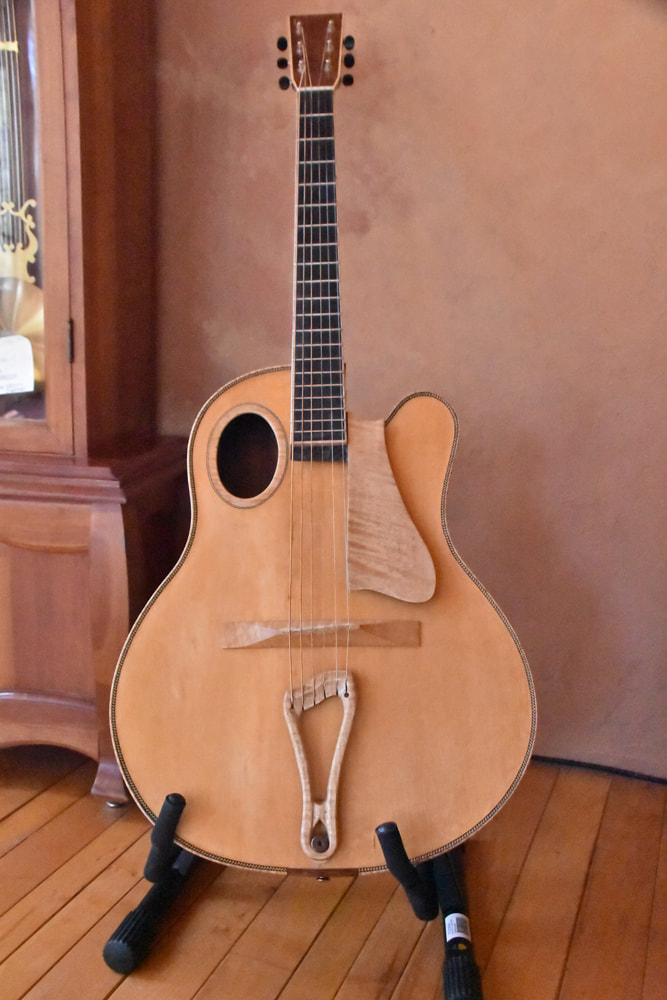
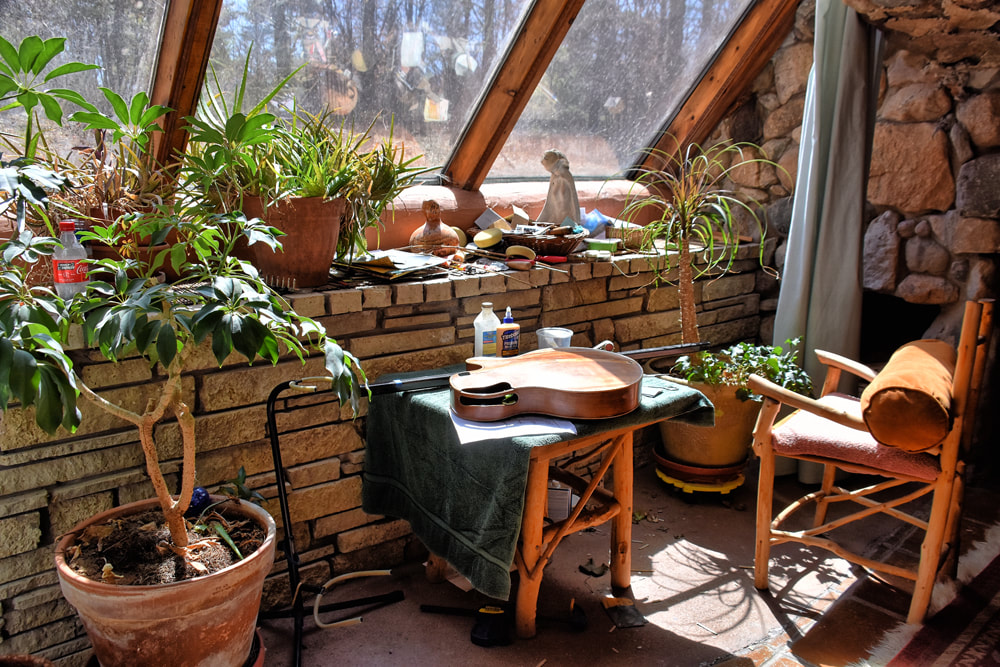 Eldon's workspace Eldon's workspace Two floors below Tonya's studio, Eldon has a space for working on the guitars he crafts in a larger workshop down the hill from the house. Guitar-making is a natural pastime for Eldon, who's been playing guitar since the early 1980s and working with wood since his teens. What's more, his father, Elon Howe, is an award-winning maker of violins, violas, and mandolins. 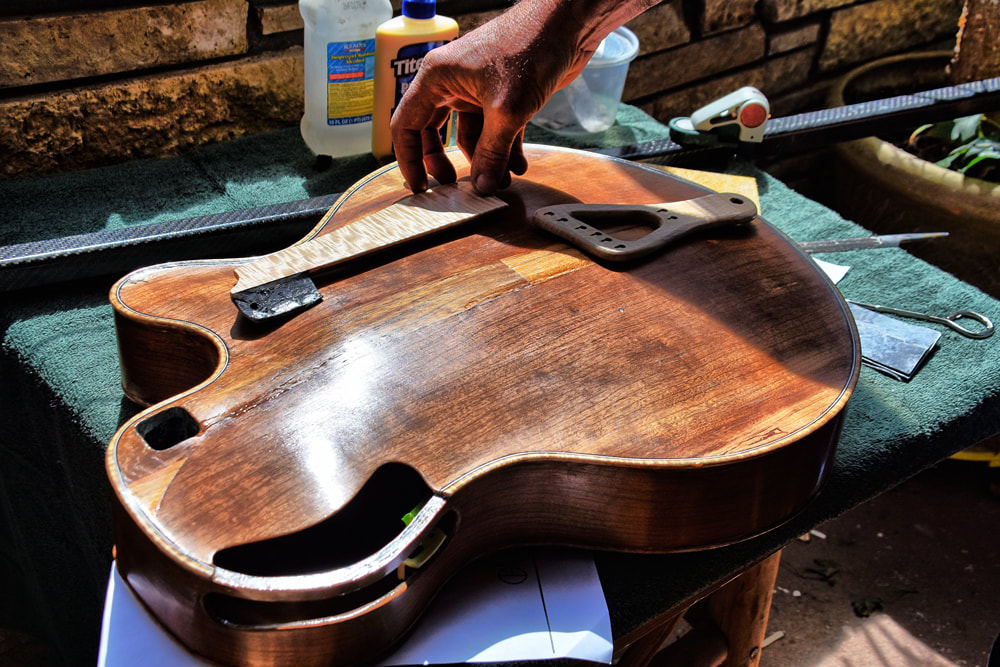 A work-in-progress A work-in-progress "A nice side benefit is, Eldon's been able to work with his dad in his shop, so they're spending time together in his dad's later years," says Tonya.
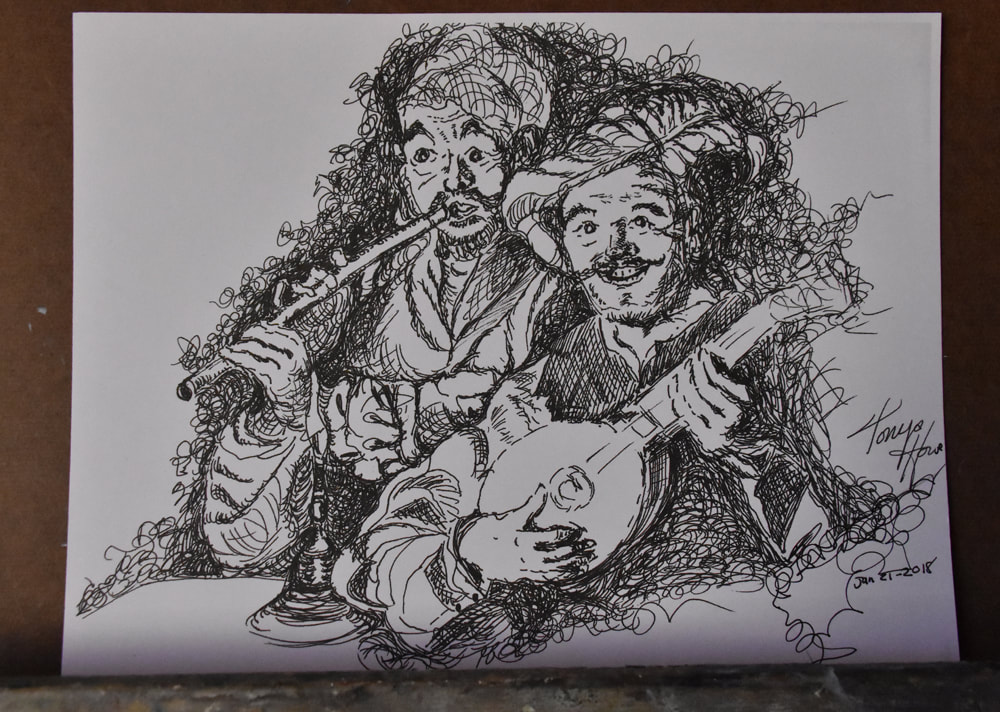
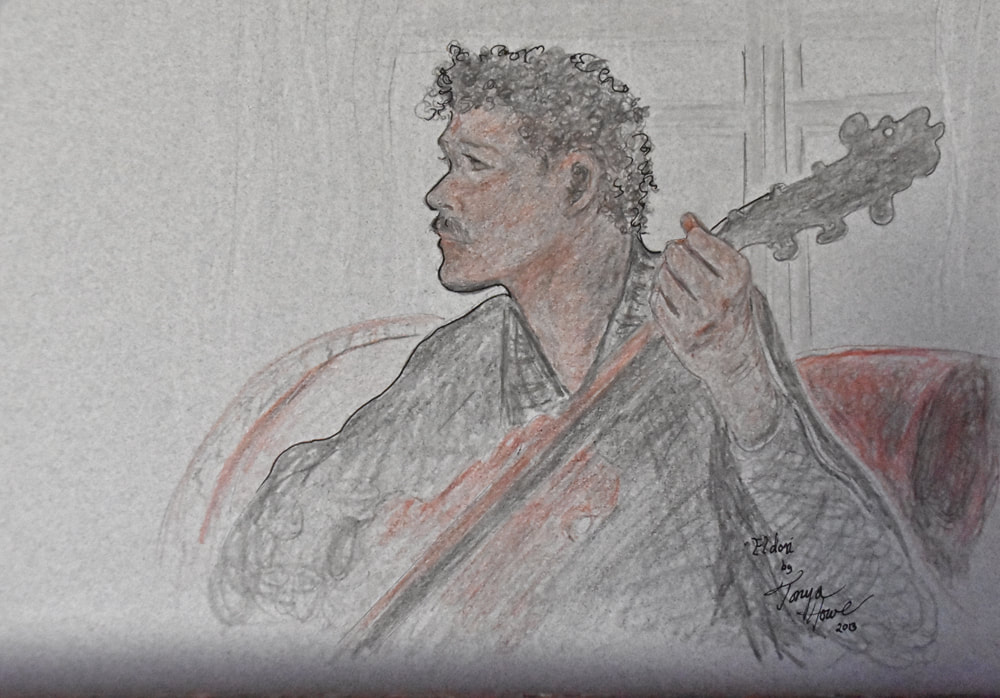
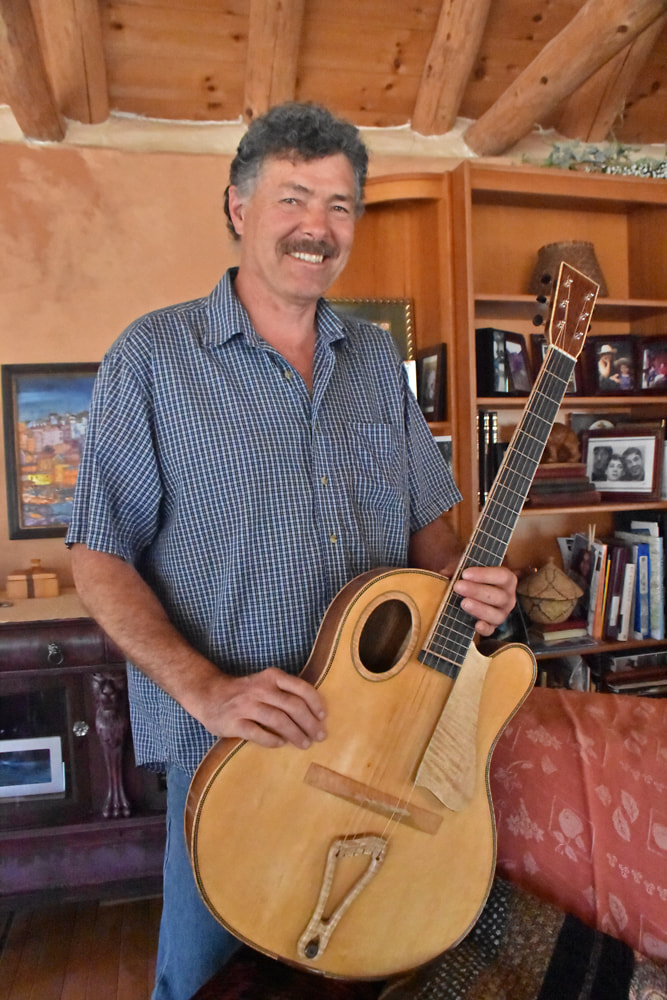 Eldon's guitars are designed with function in mind Eldon's guitars are designed with function in mind Eldon's aim in guitar building is "functional artistry." Though beautiful to look at, the guitars are designed with specific playability goals in mind. "It's very experimental, what I'm doing," he says. Music is also an area of collaboration for Tonya and Eldon. Eldon composes music, writes, and sings, and Tonya writes lyrics for some of the songs that he performs. 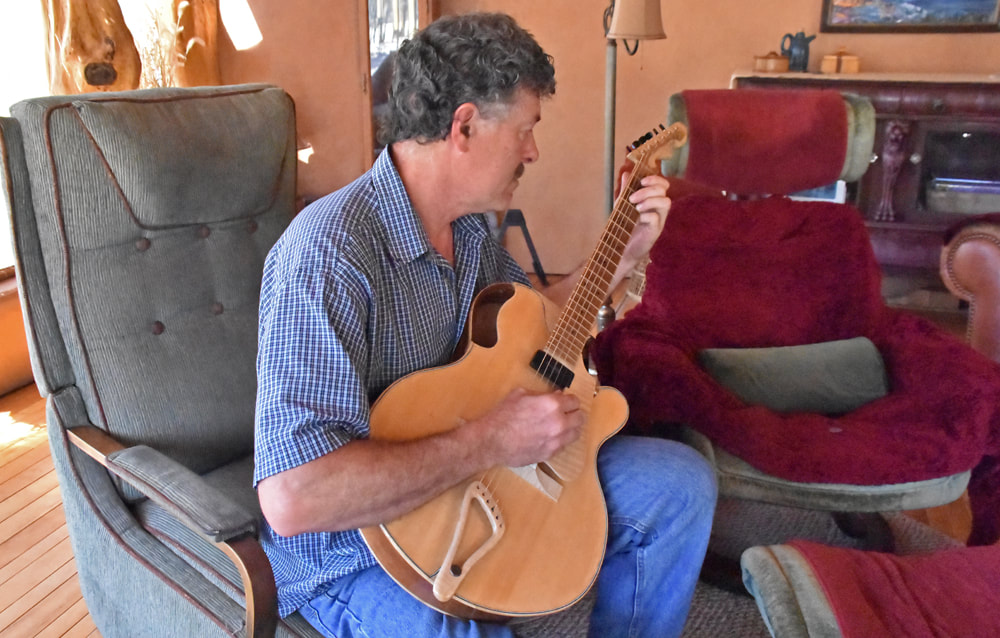 Eldon's compositions begin with "relaxed daydreaming" "When Eldon and I are working on a song, our creations always start with Eldon's music composition coming first, by chance and by relaxed daydreaming," says Tonya. "Then later, I run his music through my head and create lyrics to go with it. It's like I can see a story, poem, or drama play out in front of my eyes." "She pays attention to the emotion of what I play," says Eldon. And Tonya's response is a kind of barometer, he adds. "I know it's a good piece of music if she wants to write lyrics to it."  Cover of the recently-released CD album Cover of the recently-released CD album The Howes recently released a CD album of their songs, titled "Sundown," currently in the music rotation on WYCE. (Songs can be requested online at https://grcmc.org/wyce/wyce/request or by phone at 616-742-9923.) Tonya shot the cover photo of Eldon before a performance at the Urban Institute for Contemporary Arts in Grand Rapids. "He was just warming up before going on stage," she recalls. "I saw how he was sitting and said 'Stay right there.' I just could see in my head that that would make a good promotional picture." 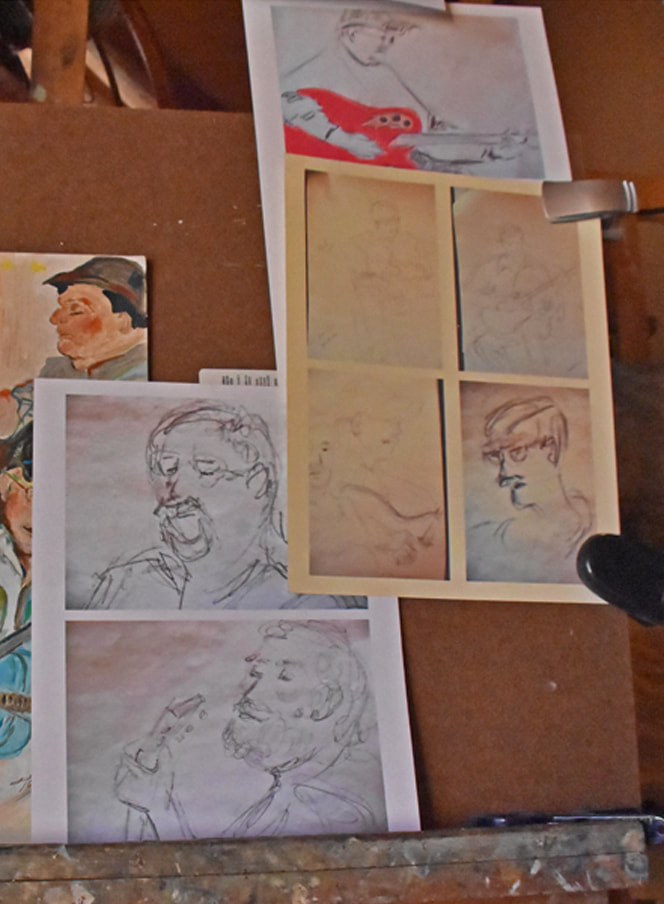 Some of Tonya's "one song long" sketches Some of Tonya's "one song long" sketches Tonya also offered suggestions on accompanying instruments that would convey the proper emotions and fit the theme of each song. Now, she's mixing music into her art in another way. "I'm trying my hand at quick sketches of musicians while they're playing a song," she says. "I call them 'one song long' sketches." 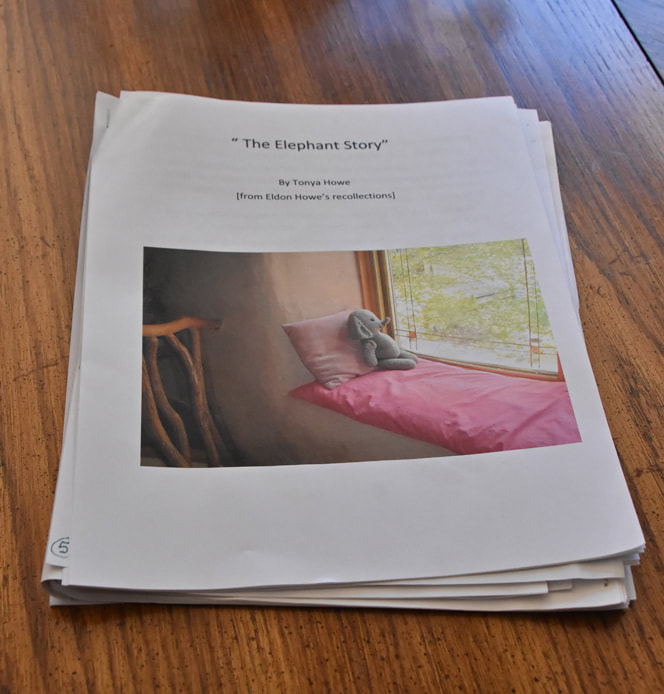 "The Elephant Story" manuscript "The Elephant Story" manuscript
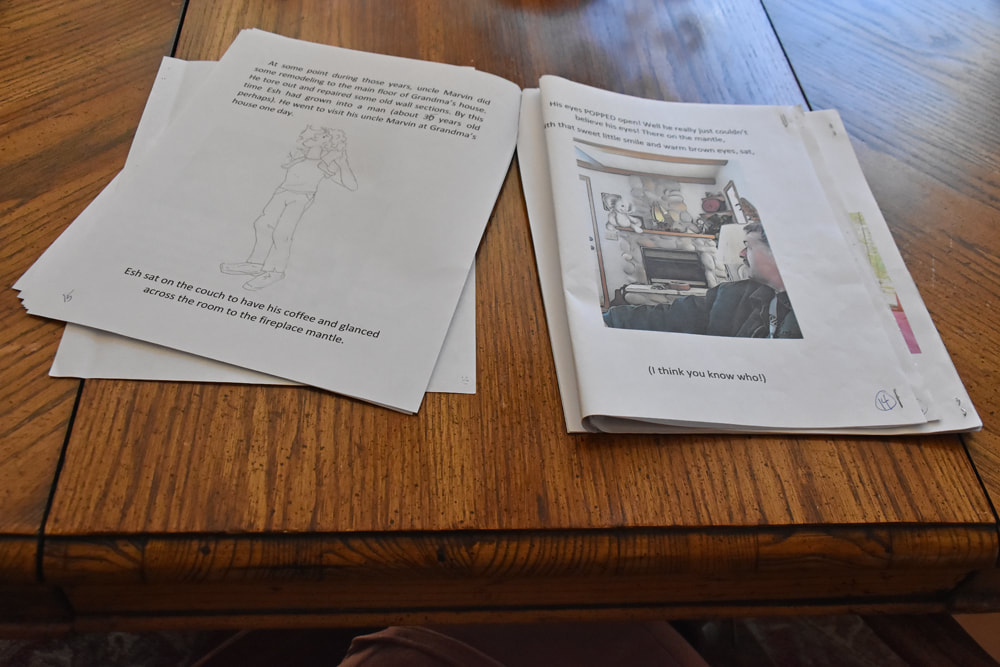 Tonya's photographs and daughter Sherry's drawings illustrate the book Tonya's photographs and daughter Sherry's drawings illustrate the book As Tonya describes the genesis of the book, "I took notes on Eldon's memories of how the story played out, and then I said, 'Give me a few days to write it, because I can't think of anything right now.' But that night I couldn't sleep, and all of a sudden the story started coming to me, and I saw it through the eyes of the elephant." She wrote the story, and her daughter Sherry Perkins did the drawings that illustrate the book, along with some of Tonya's photographs. Stories, paintings, photographs, songs, instruments—who knows what Tonya and Eldon will create next? I only know I want to see and hear whatever they come up with. The CD, "Sundown" is available from Eldon Howe at totalicf@gmail.com Listen to tracks from "Sundown"
I was at my desk, working on this week's blog post when a mysterious missive came over the transom. The thing literally flew in as if borne by winged creatures. Now, I'm pretty good at ignoring tweets, pings, and such, but a fluttering billet is quite another matter. Of course I had to give it a read, and when I did, I knew I had to drop everything and share it with you. Here it is . . . 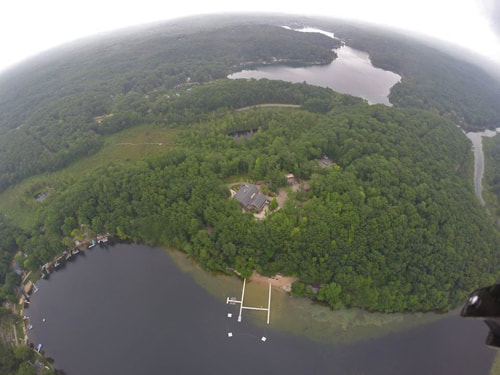 Fairy's eye view of Camp Newaygo (Photo courtesy of Camp Newaygo) Fairy's eye view of Camp Newaygo (Photo courtesy of Camp Newaygo) FAIRYLAND, Newaygo County (April 28, 2018)—This year's late spring had officials in the Enchanted Forest (also known as Camp Newaygo) concerned about the availability of housing for all the fairy folk returning from their winter homes down South. "Construction has been delayed all over the county, and the Enchanted Forest was no exception," said Elvira Elf, housing coordinator. "Fortunately, however, artisans from all around pitched in to fill the forest with creative homes for wee folk." 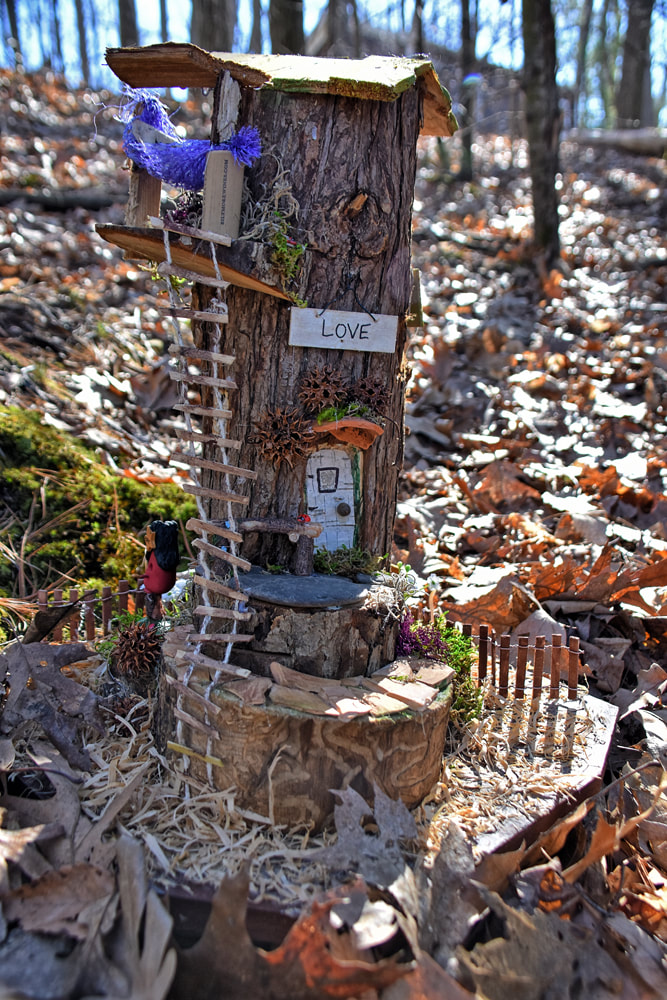 "Simplify" by Marcia Holcomb "Simplify" by Marcia Holcomb When fairies, gnomes, pixies and their pals showed up last weekend to check out the offerings, they found every kind of dwelling imaginable, from condo to castle. However, it's common knowledge that pixies can be, well, picky. And fairies are notoriously fickle, with whims that shift with the wind. So we sent a reporter out to tag along with the fae and find out what they thought of the choices. 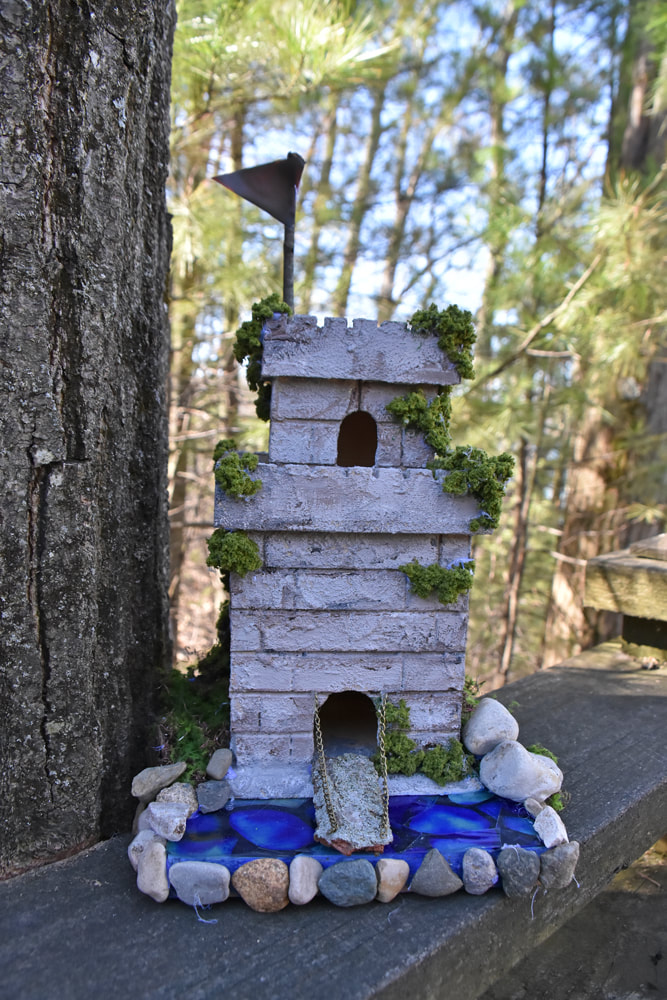 "Fairy Queen's Court" by Cortney Horan "Fairy Queen's Court" by Cortney Horan Pierre Pixée, who winters in the South of France, was searching for something palatial. "C'est si bon!" he said when he spied this turreted manse, complete with moat. Scurrying along a woodland path, Grizela Gnome pulled her cloak around her. "It's still too cold here in Michigan," she complained. "I wish I'd stayed on the beach." 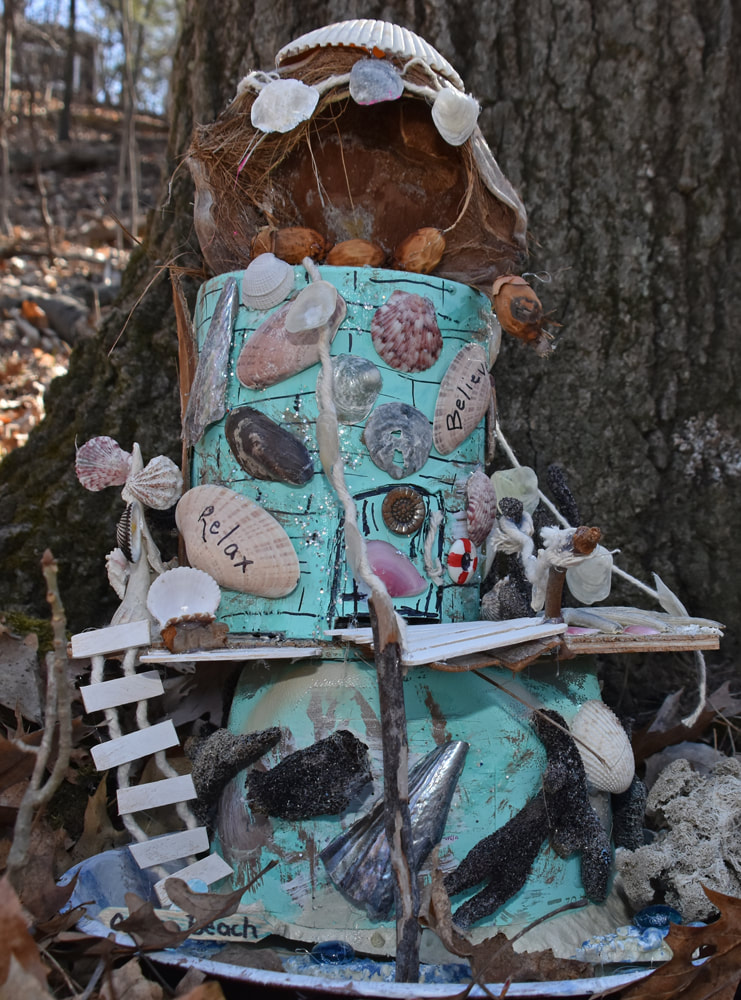 "Ocean Beach" by Marcia Holcomb "Ocean Beach" by Marcia Holcomb "But look," said her friend Sophie Sprite, pointing to a cottage nestled beneath a tree. "This house will make you feel sunny and warm no matter what the weather." "You're right! I'll take it," said Grizela. "Care to stay for a piña colada?" On the stairway leading down to Pickerel Lake, Fairy Fiona paused to take a breather. "These houses are all beautiful," she said, "but what I'd really love to find is one with room for my wine collection AND a view of the lake." Then she leaned over the railing and there it was: Gnome Top Vinyard. "It's an oenophile's dream!" she said. 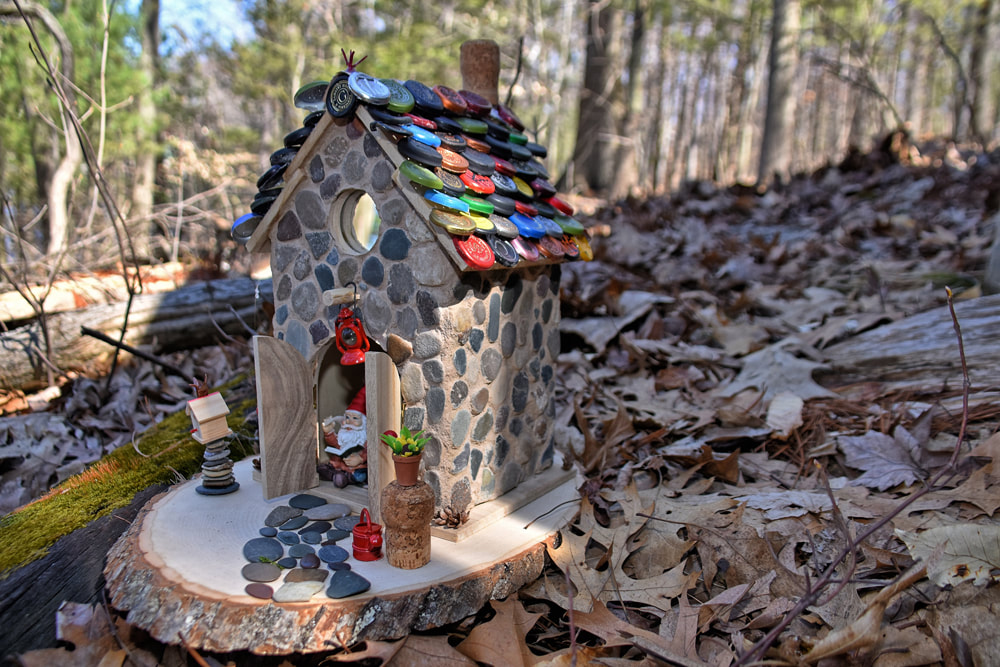 "Gnome Top Vinyard" by Ellen Chamberlin and Charlie Gallmeyer 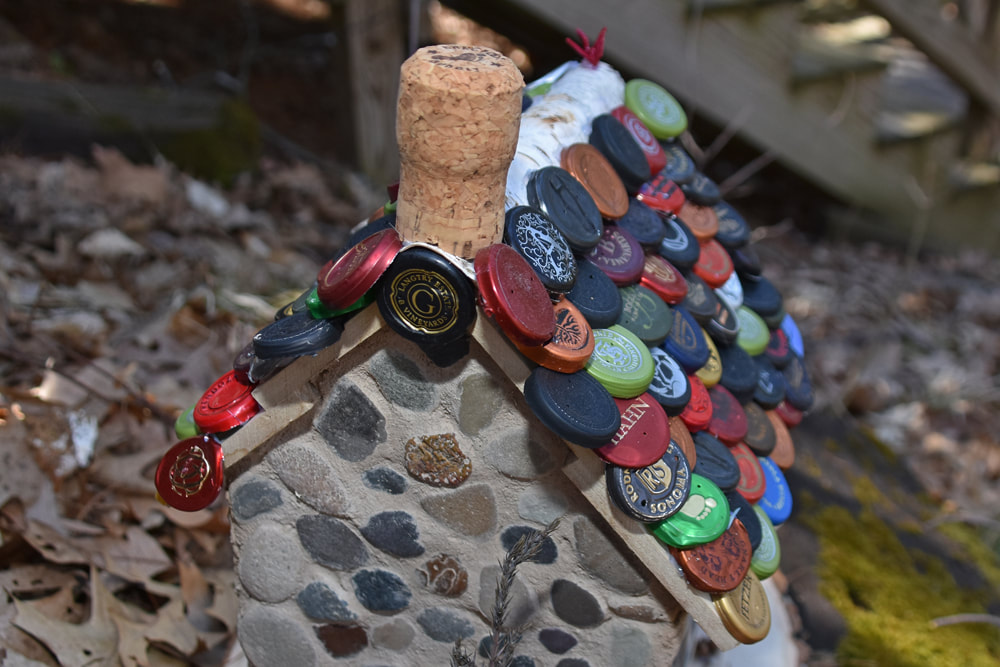 Roof and chimney of "Gnome Top Vinyard" 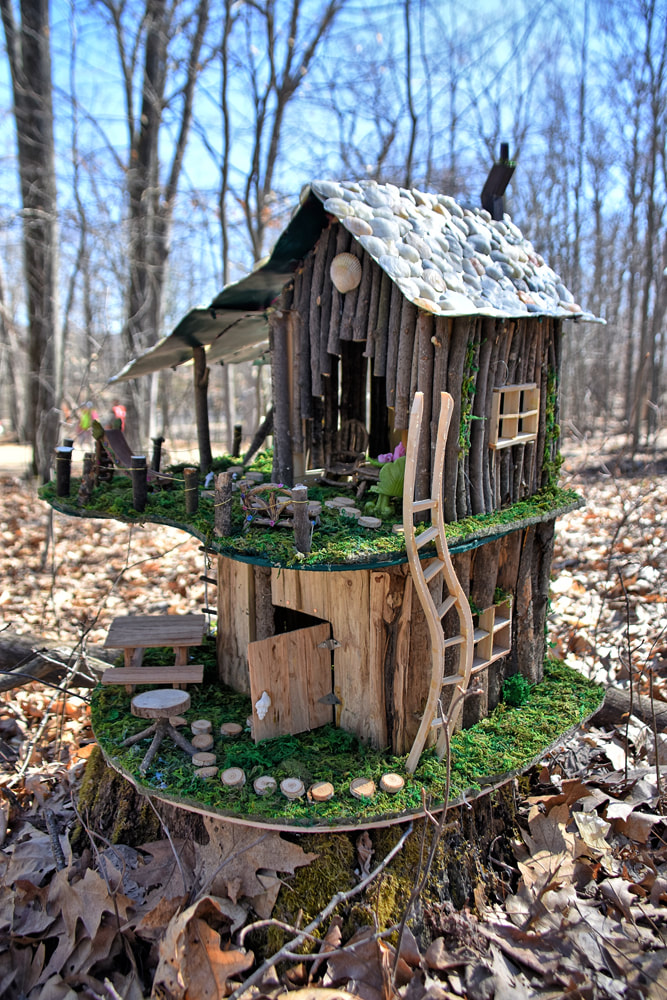 "Rustic Retreat" by Bob Hurley "Rustic Retreat" by Bob Hurley Up on the patio of Lang Lodge, Ivan Imp took Elvira Elf aside. "I hate to admit this," he said, "but I'm not much of a woodsy fellow. Really more of a garden guy. Any chance that the house I choose could be, um, relocated?" 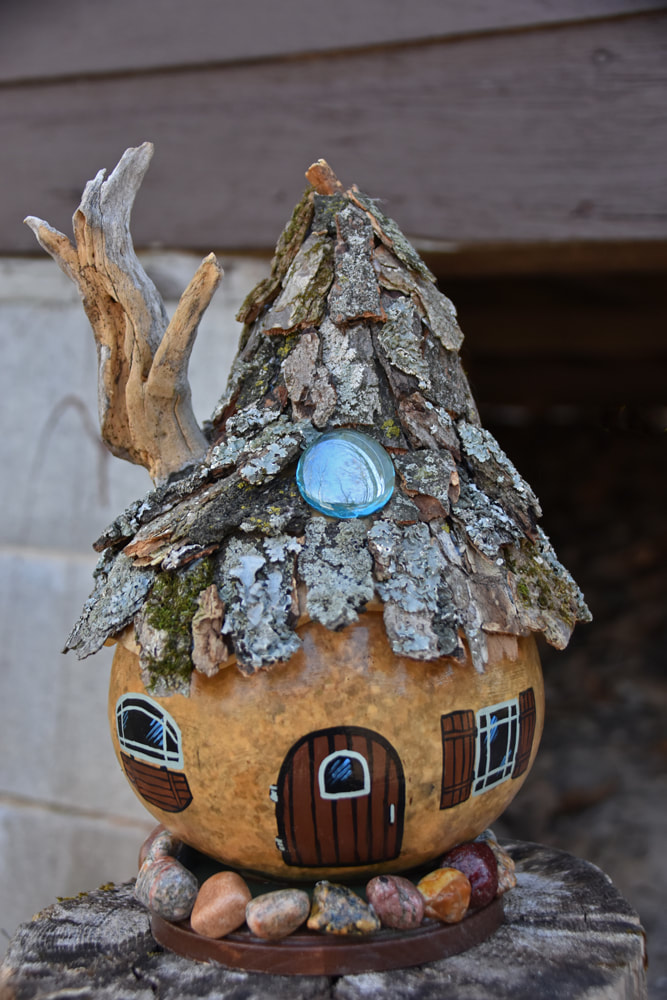 "Gorgeous Garden Hideaway" by Lisa Boerema "Gorgeous Garden Hideaway" by Lisa Boerema "As a matter of fact," Elvira said, "that's what we're hoping for. All the houses are up for auction, to raise money for Camp Newaygo's ongoing improvements. When bidding closes Sunday night, some lucky humans will be taking the houses home—complete with tiny inhabitants, of course—to install in their own special sites. I'm quite sure more than a few will find their way into gardens." What magical beings do you suppose chose these homes? 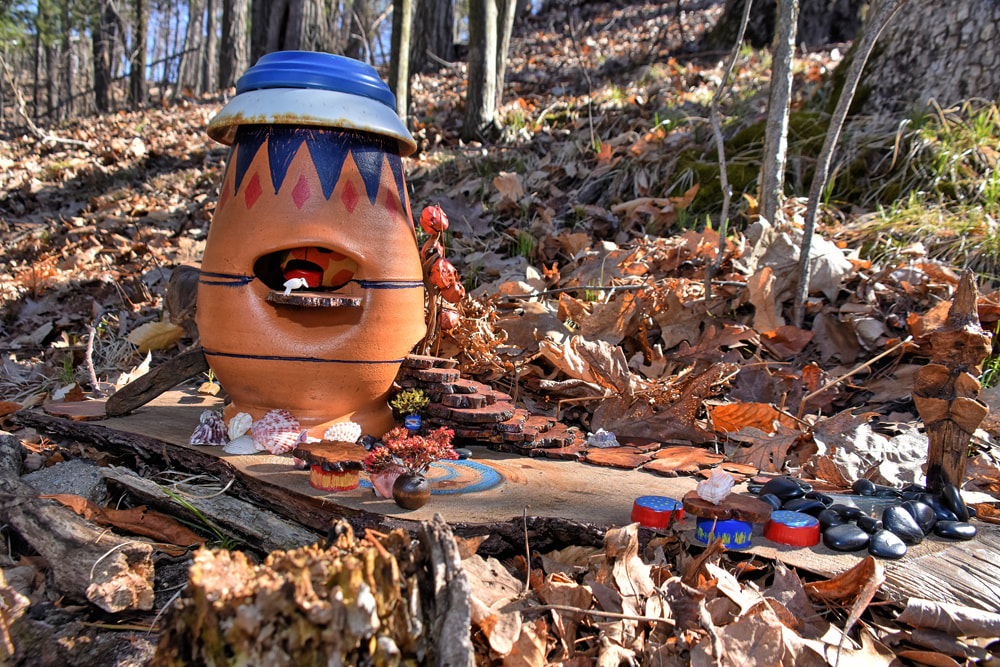 Chiminea home by Valerie Deur 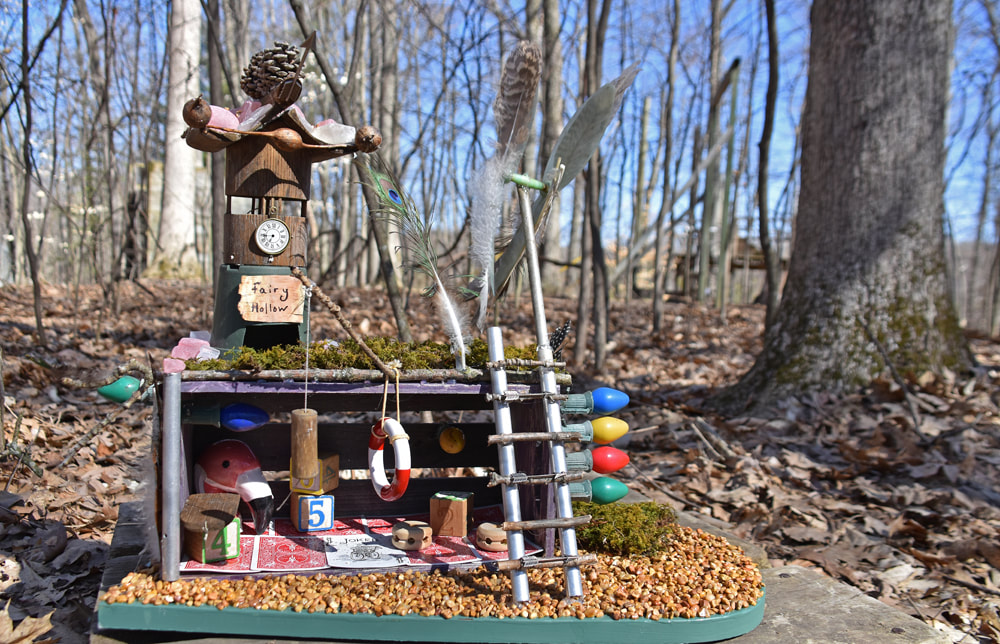 "Fairy Hollow" by Kelly Johnson 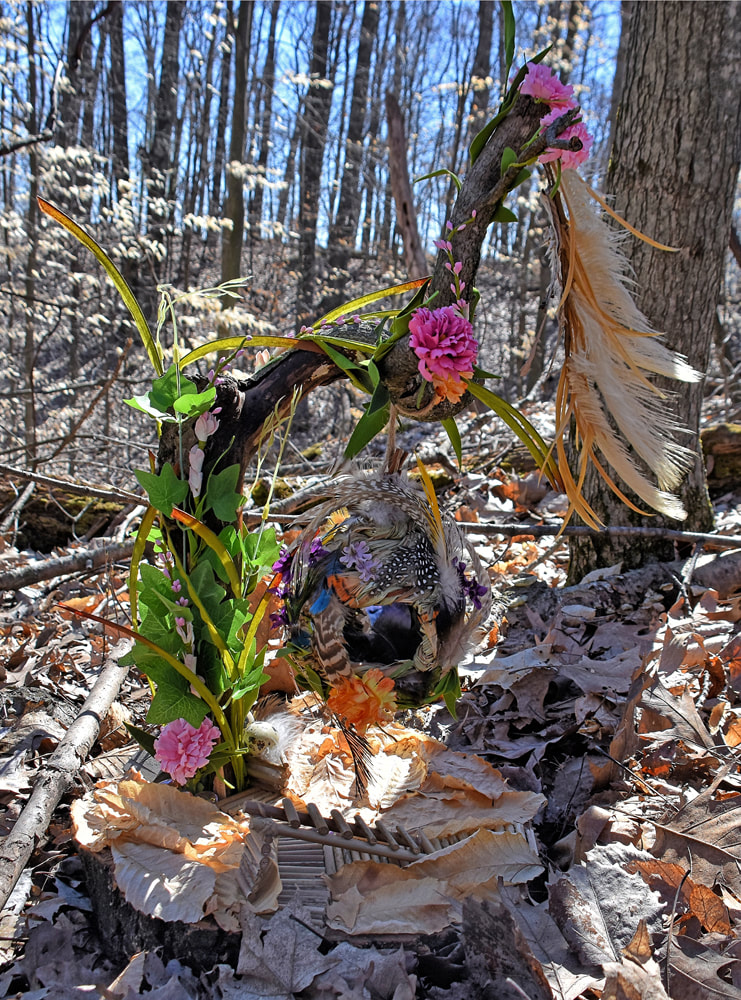 "Nesting Nook" by Sarah Roys 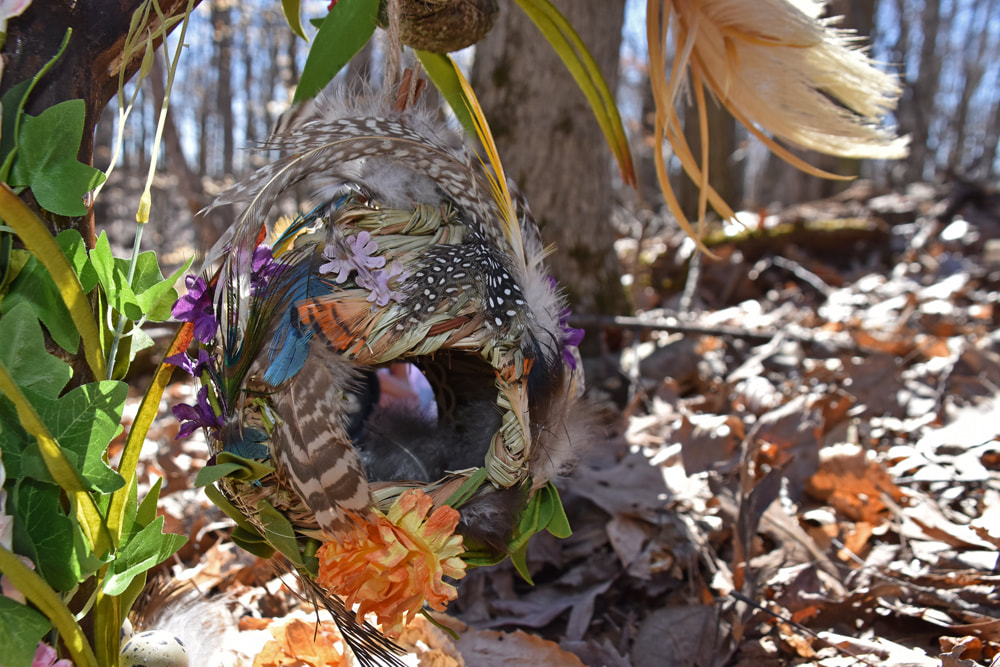 Detail of "Nesting Nook" 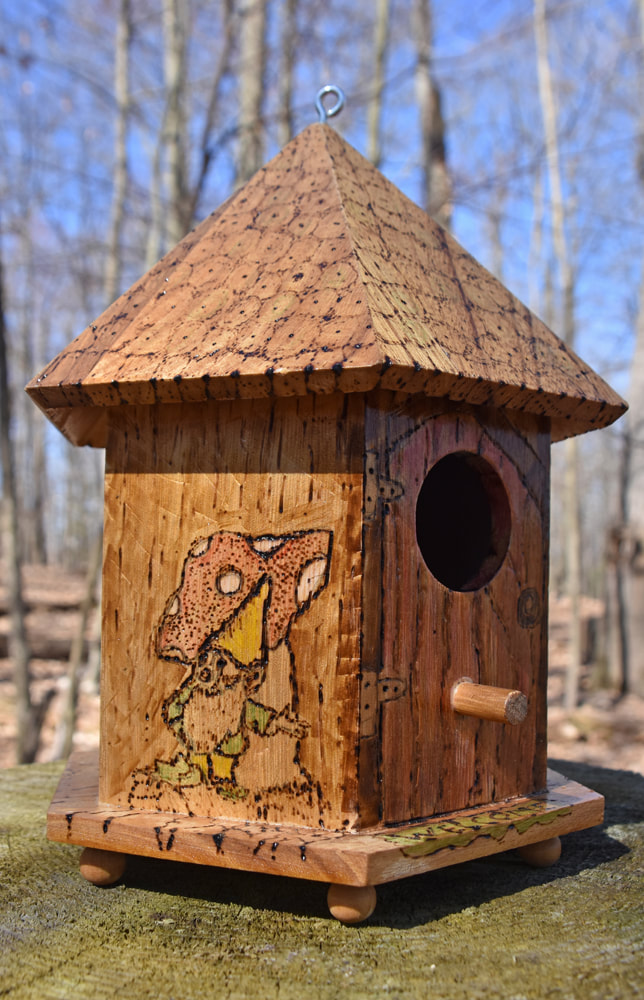 Woodburned house by Sue Barthold 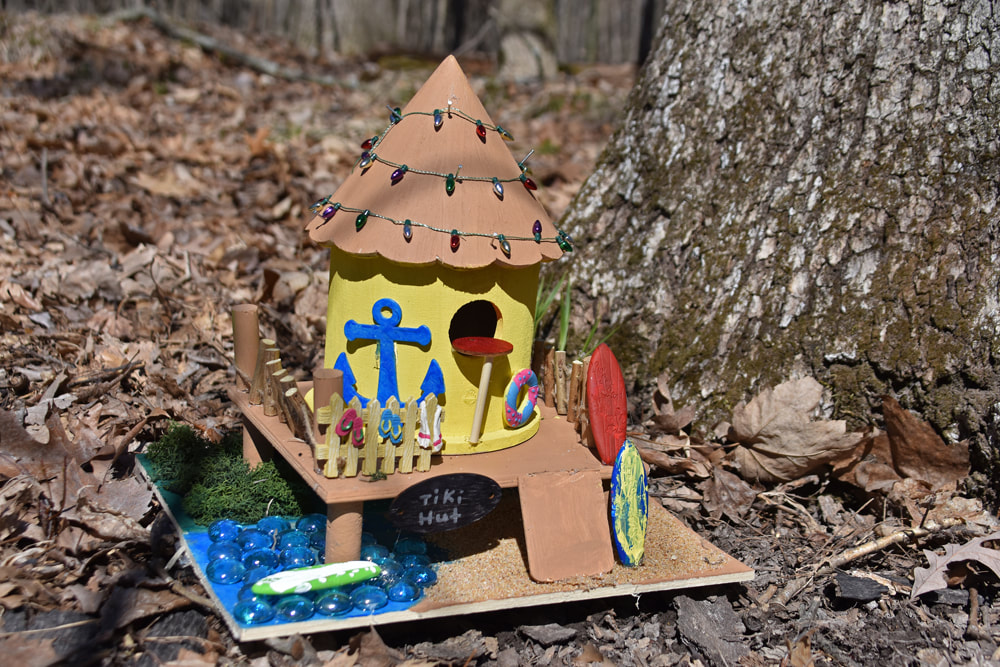 "Tiki Hut" by Nancy Norden 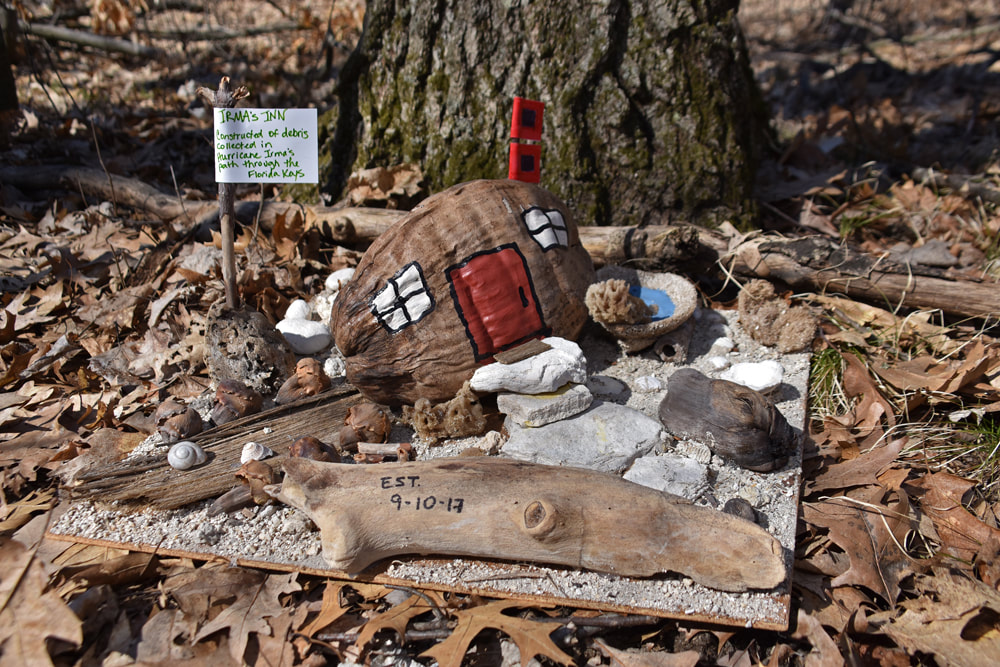 "Irma's Inn" by Mary and Nelson Wilner 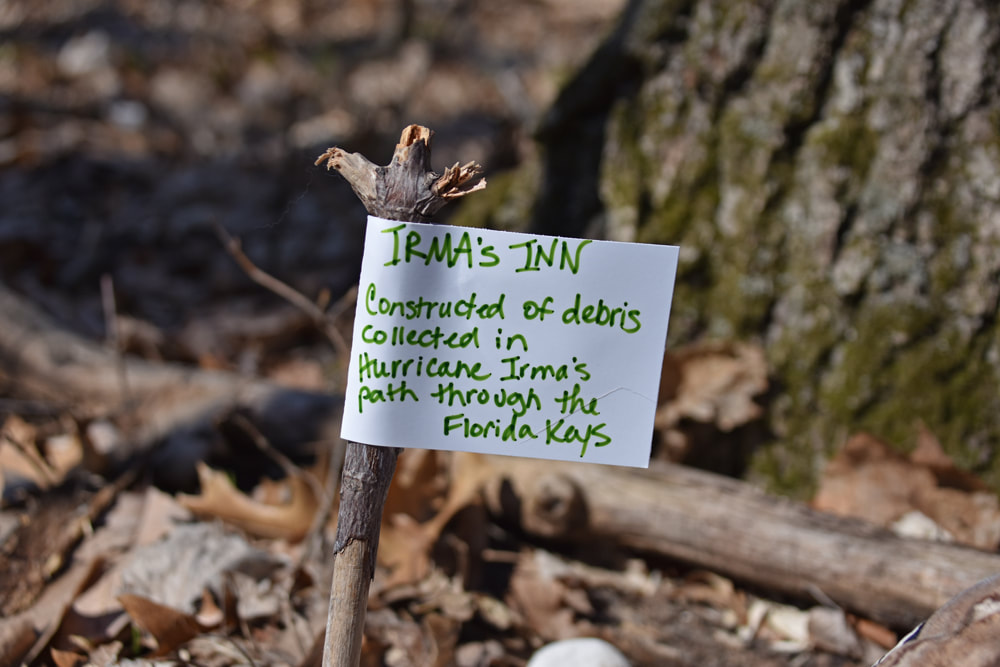 Detail of "Irma's Inn" 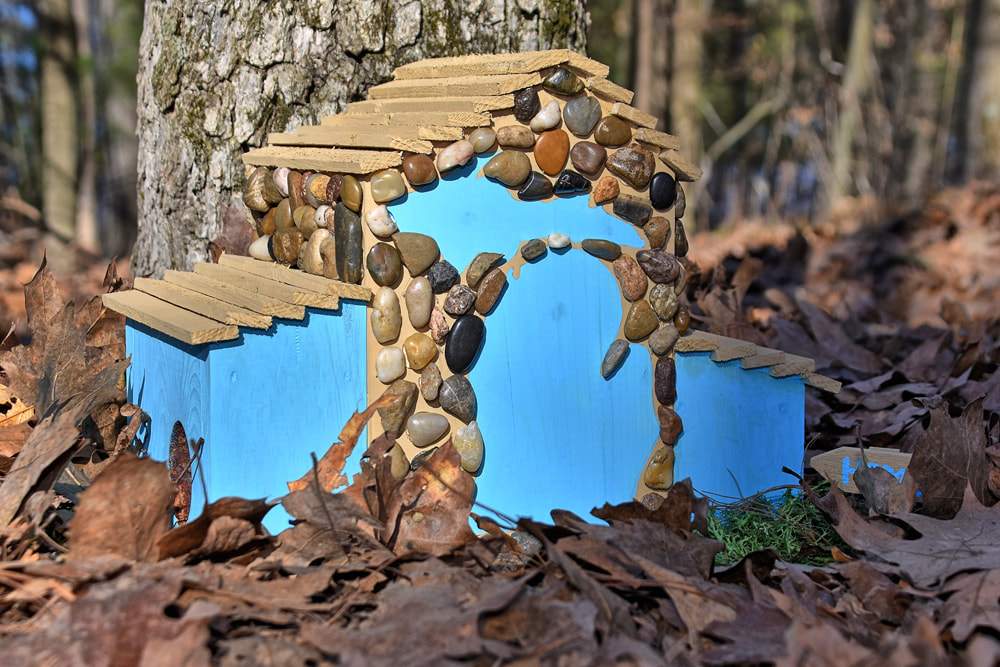 Michigan home by Erin Davis 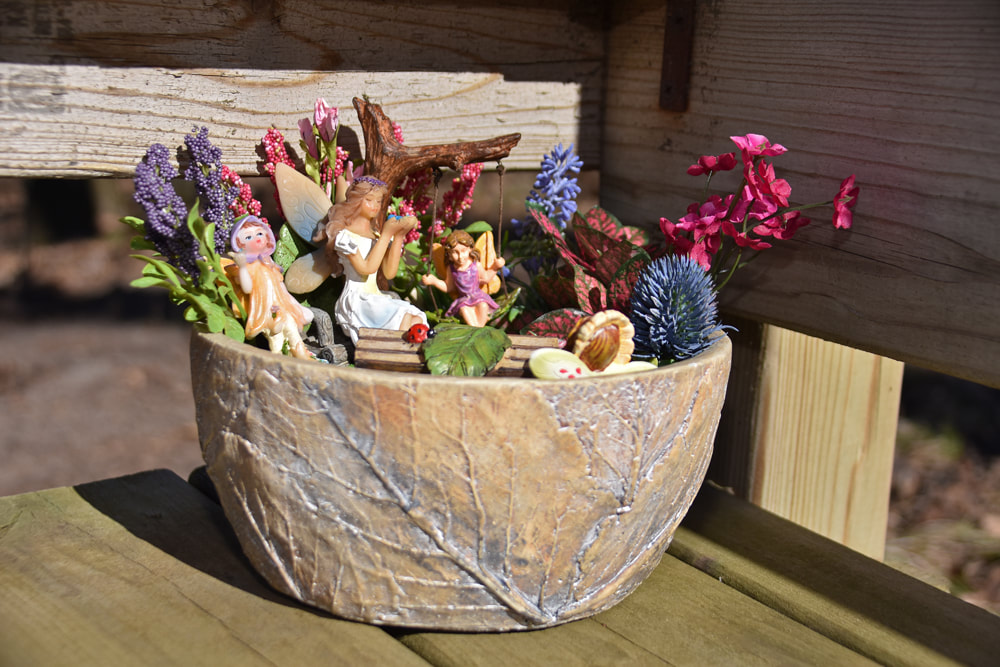 "Fairy Flower Garden" by Patty Jason 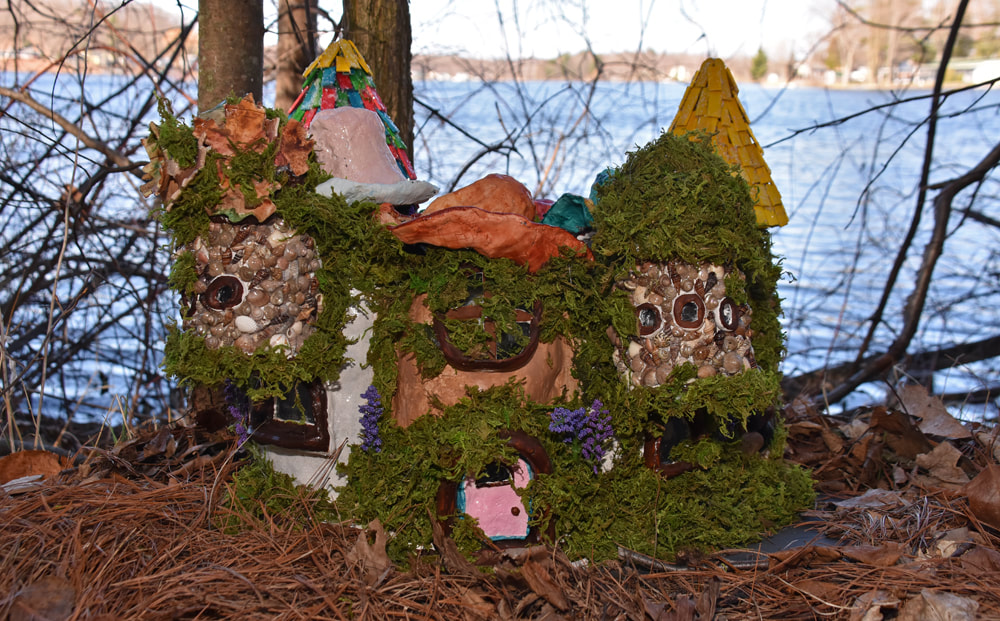 "Blue Bottle Bowery" by Heather Mullins 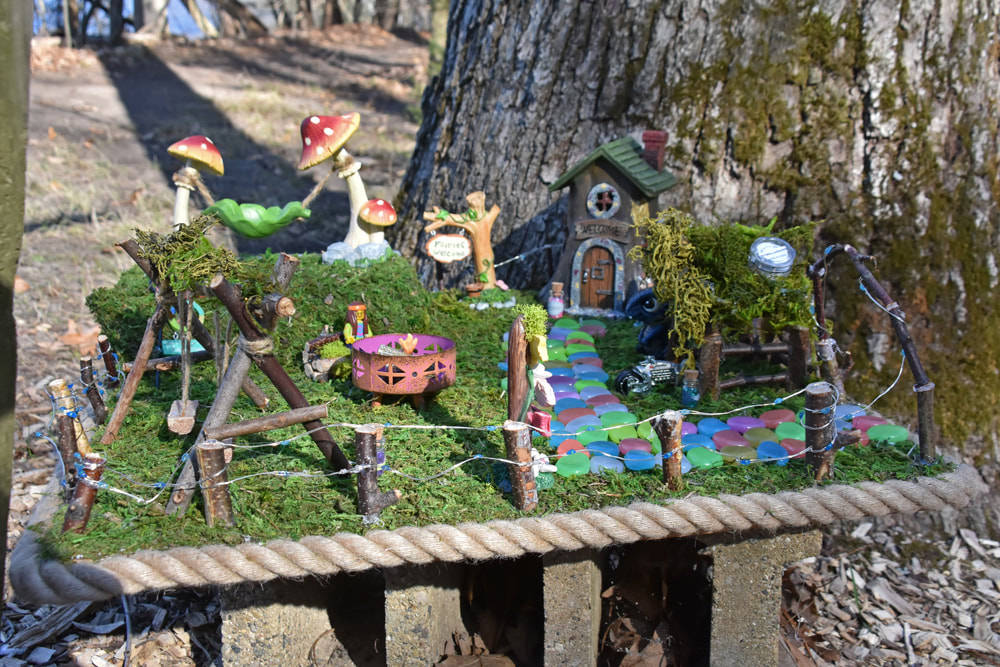 Untitled fairy haven by Arlene Davis 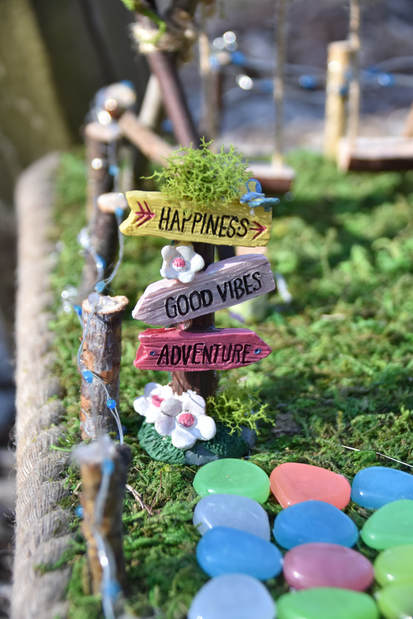 It's National Poetry Month! You didn't think I'd let that slip by unnoticed, did you? What better way to pass the time while waiting for spring's late arrival than to read—or write—a bit of poetry? Short on inspiration? Look no further than the things you encounter every day. 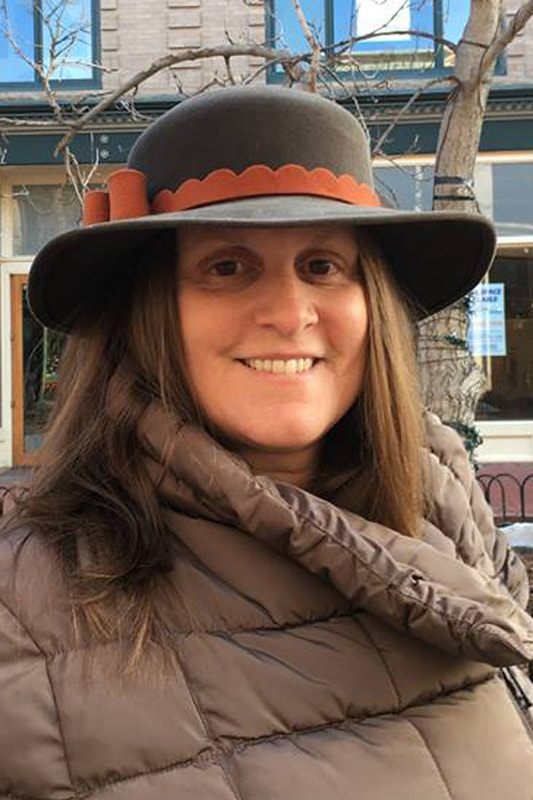 Cristina Trapani-Scott Cristina Trapani-Scott That's the advice of this week's guest, Cristina Trapani-Scott. I first met Cristina fourteen years ago at Bear River Writers' Conference. After the conference, we formed a writers' group with another writer we'd met there. The result was the Sister Scribes, an Ann Arbor-based group that eventually added three more members and became a source of support and motivation for all of us. 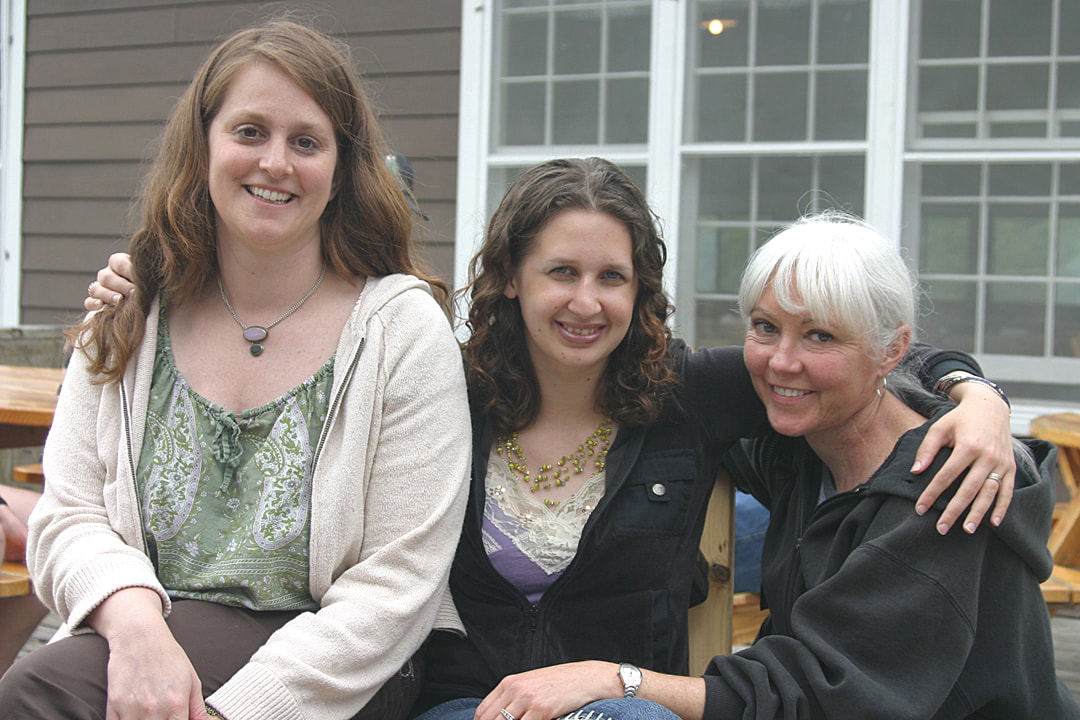 Sister Scribes Cristina, Cyan and Nan in 2005 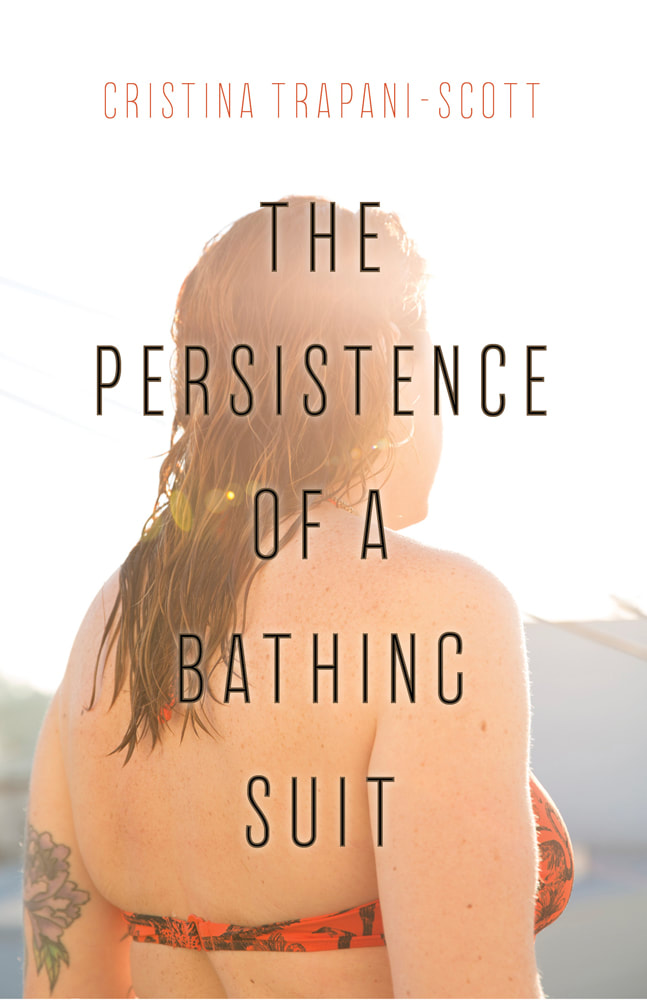 Cristina's debut chapbook collection of poems was published last year Cristina's debut chapbook collection of poems was published last year An author, educator, and former journalist, Cristina now lives and writes in Northern Colorado. Her debut chapbook collection of poems, The Persistence of a Bathing Suit, published in 2017 by Finishing Line Press, explores the moments that fill the space between surviving a breast cancer diagnosis and accepting the inevitability of change and uncertainty. Cristina's work has appeared in the Patterson Literary Review, Hip Mama Magazine, the Driftwood, Bigger Than They Appear: An Anthology of Very Short Poems, and Sweet Lemons 2: International Writings with a Sicilian Accent. She holds an MFA in poetry and fiction from Spalding University and currently teaches creative writing and composition online. Find Poetry in Everyday Things |
Written from the heart,
from the heart of the woods Read the introduction to HeartWood here.
Available now!
Check with your favorite bookseller or order from the BUY BOOKS page on this website.
Author
Nan Sanders Pokerwinski, a former journalist, writes memoir and personal essays, makes collages and likes to play outside. She lives in West Michigan with her husband, Ray. Archives
April 2022
Categories
All
|


 RSS Feed