|
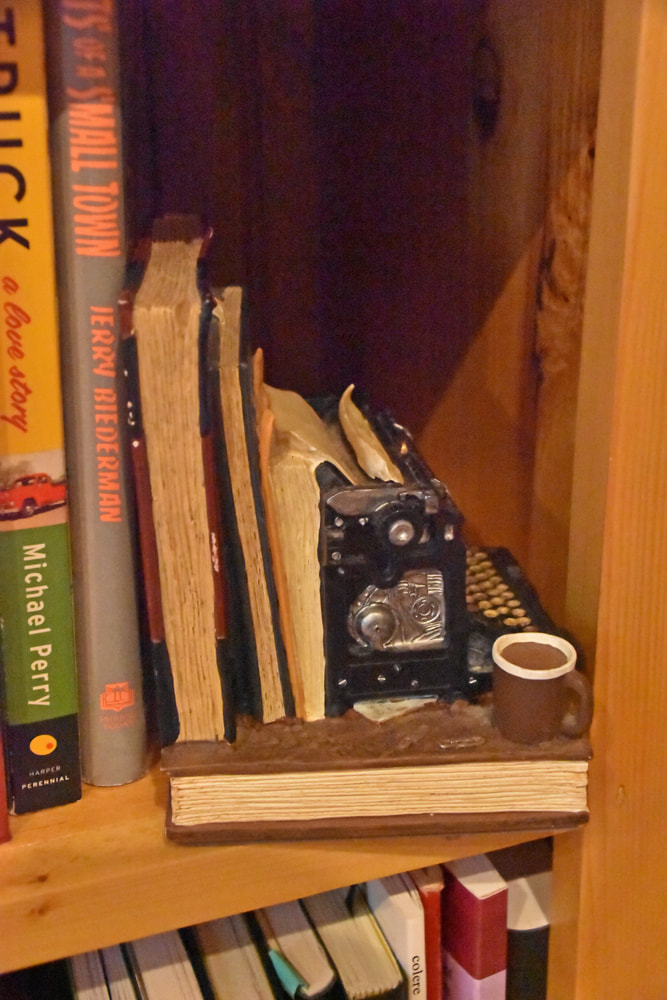
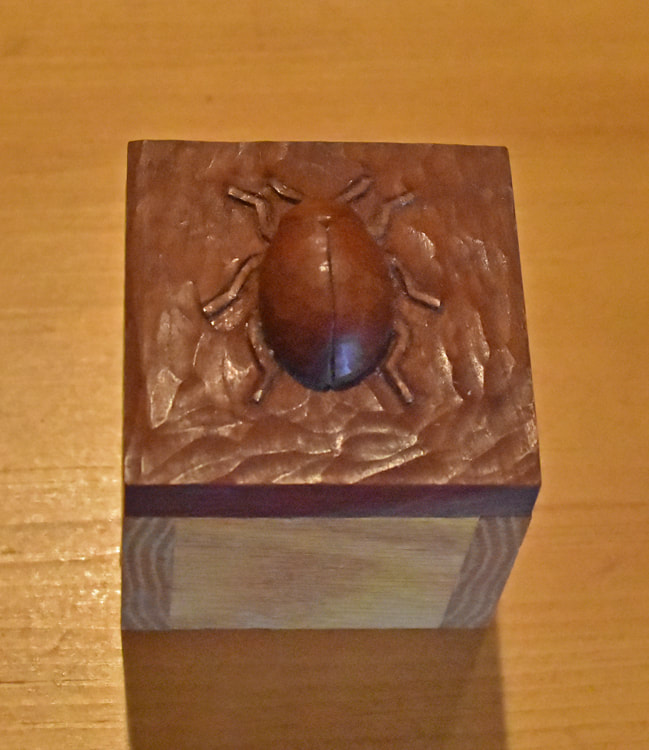
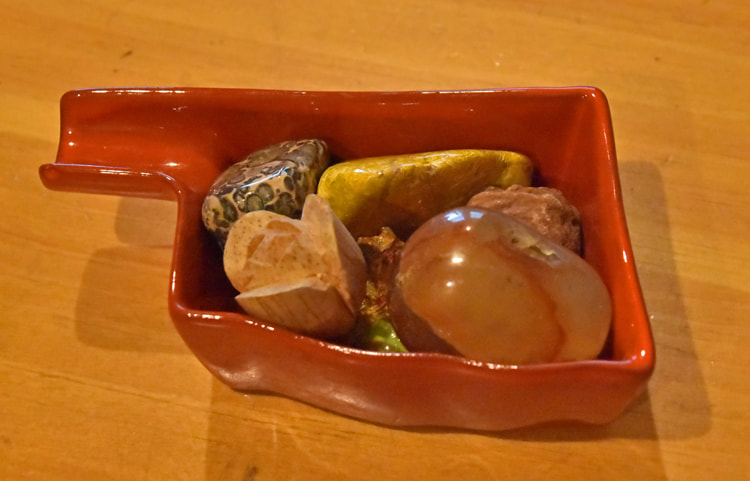
A few weeks ago, Writer’s Digest put out an intriguing invitation to readers: Submit a photo (or two, or three) of your workspace, along with comments on how you use it, why it’s set up the way it is, or anything else you'd like to say about it. The editors will pick a few to publish in the magazine. I had every intention of submitting mine, but before I managed to assemble the pictures and send off the entry, the deadline had passed. Still, the challenge got me thinking about my own work space, not only how I use it, but also what I call it. 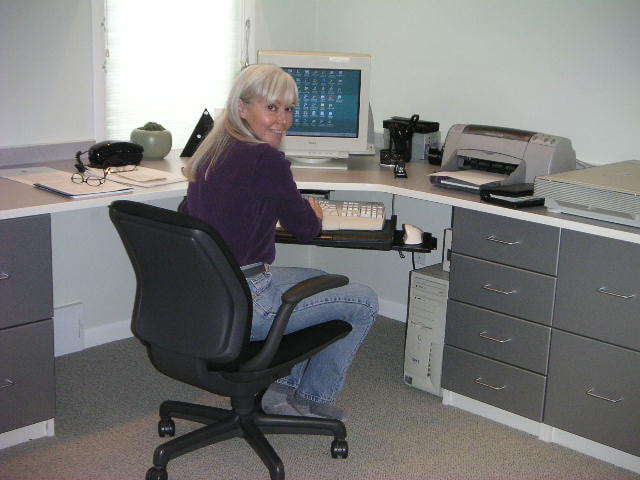 The office in our previous home was functional and definitely office-like The office in our previous home was functional and definitely office-like When I worked from home for my regular job or on freelance assignments, I called my workspace—in our previous home as well as our current one—my “office.” But something about that term grates on me now. It conjures images of deadlines, dingy cubicles, and that sense of being chained to a desk, unable to escape and have fun.  Very conducive to getting stuff done!  Now, I want a place to play--making collages, for instance--as well as work Now, I want a place to play--making collages, for instance--as well as work Nowadays, although I still spend a lot of time in the room where my desk resides, I’m not always working in the strict sense of the word. Sometimes I’m practicing yoga. Sometimes I’m brainstorming ideas for writing projects, or organizing and editing photos, or sorting and cutting out pieces for collages, or creating music playlists, or communicating with friends, or yes, writing. It’s as much a playroom as a workspace. So what to call it? “Workshop” sounds crafty—a good place to build things. But still a little “worky.” “Study” is what spaces like mine used to be called before the home-office kick. Filled with books, as my room is, studies were places for contemplation and rumination. I certainly do contemplate and ruminate. Yet “study” sounds so studious. Not playful. 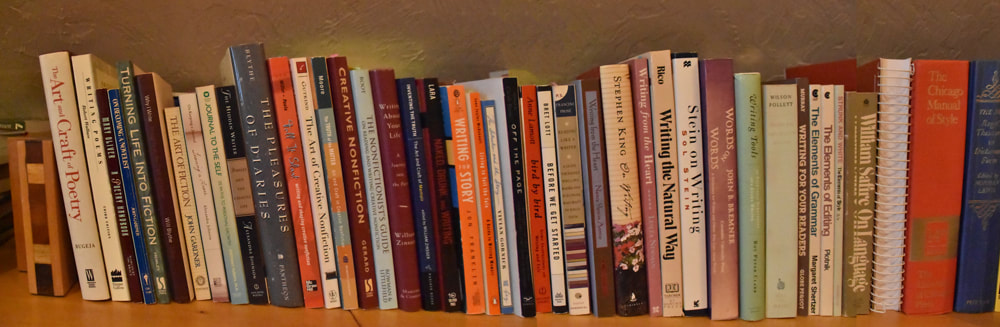 Some of the books I've contemplated in my study--or whatever it's called I’m partial to “studio.” With its artsy connotations, it leaves open possibilities for all sorts of creative activities. Why, I could even dance in a studio (and sometimes I do!). So for now I’m sticking with studio. And just for fun, I’ll take you on a tour. Then, I invite you to send me photos of your own creative space and tell me what you call it and how you use it. 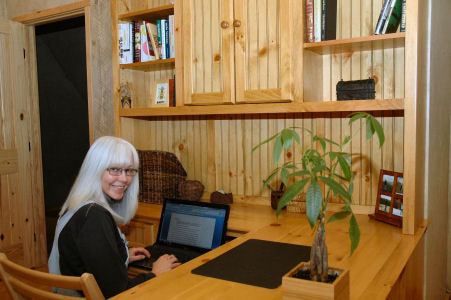 Here's how the workspace in our current home looked when the house was new. Clean desk, clean slate. 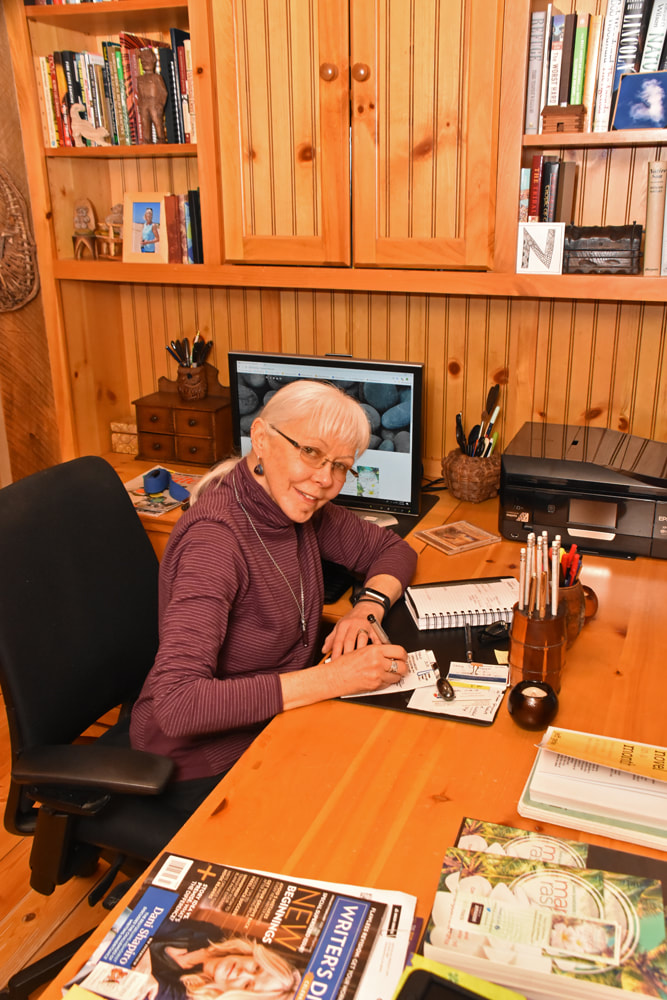 Now, it's more of a happy jumble--a reflection of my usual state of mind. (Photo: Ray Pokerwinski) 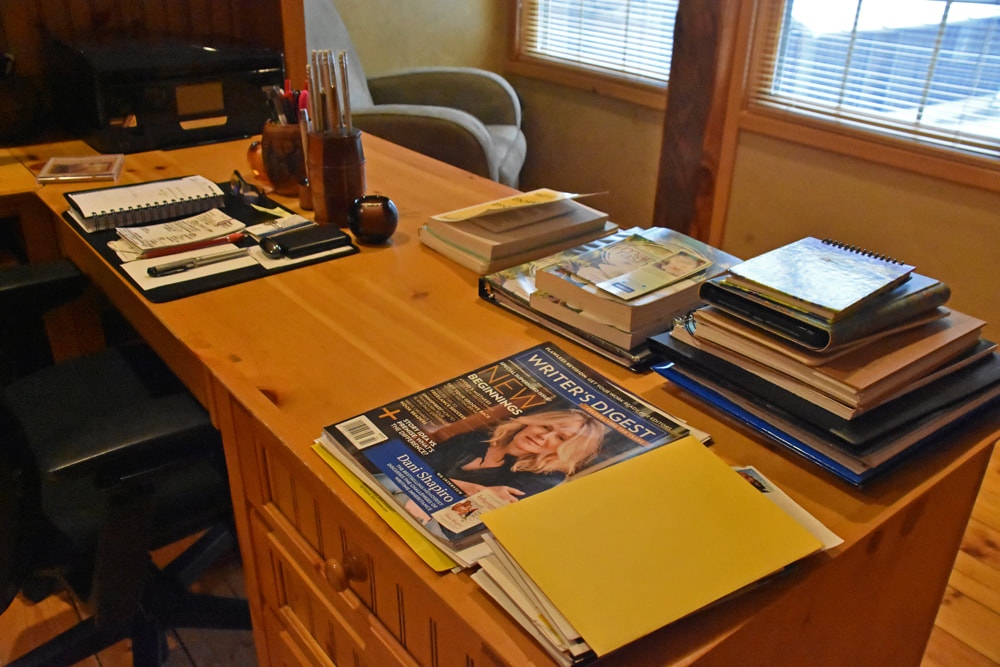 Finished projects, work in progress, and lots of notebooks for ideas and free-writing fill my desktop. 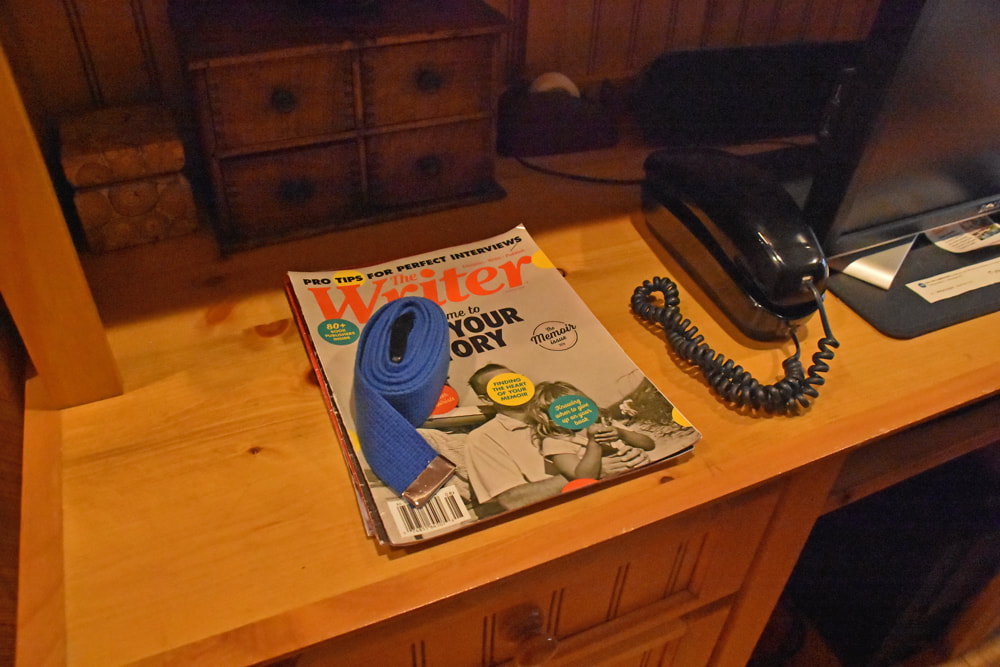 My yoga mat and blocks are stashed in a nearby closet, but I keep a yoga strap handy for impromptu shoulder openers. 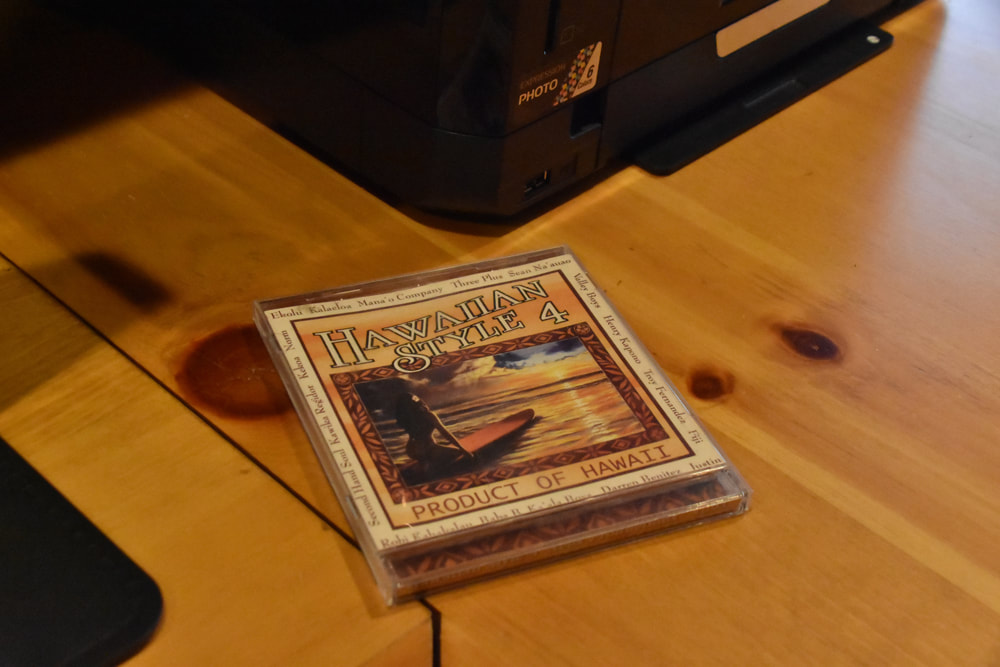 I usually write in silence, but once in a while music helps with inspiration. This CD was a recent gift from one of the major characters in my memoir Mango Rash. 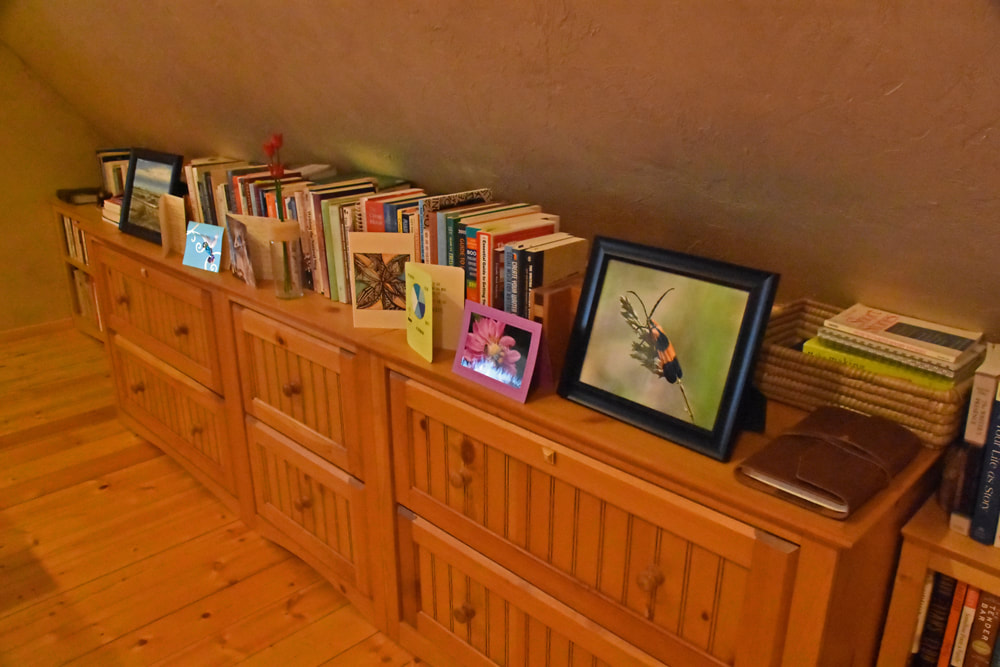 Books, books, books, photos, and cards from friends top the file cabinets. 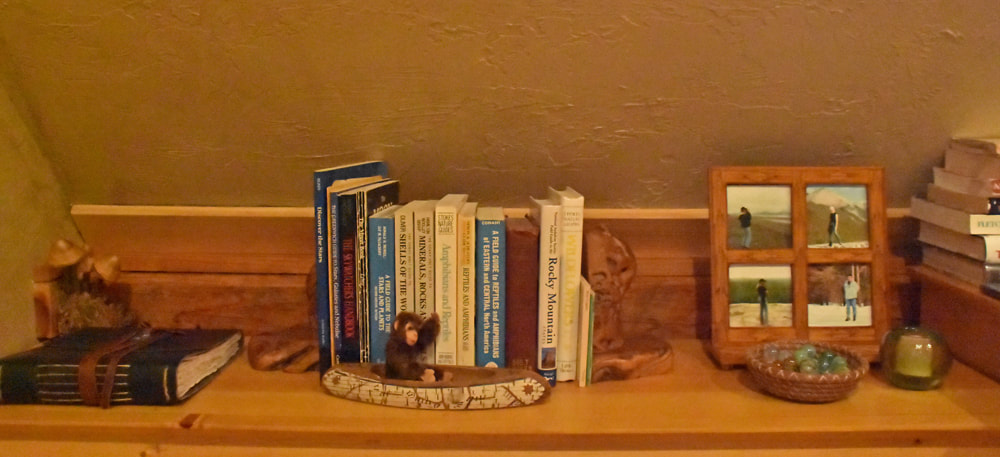 Field guides, childhood treasures, travel photos, and special gifts from friends make me smile. 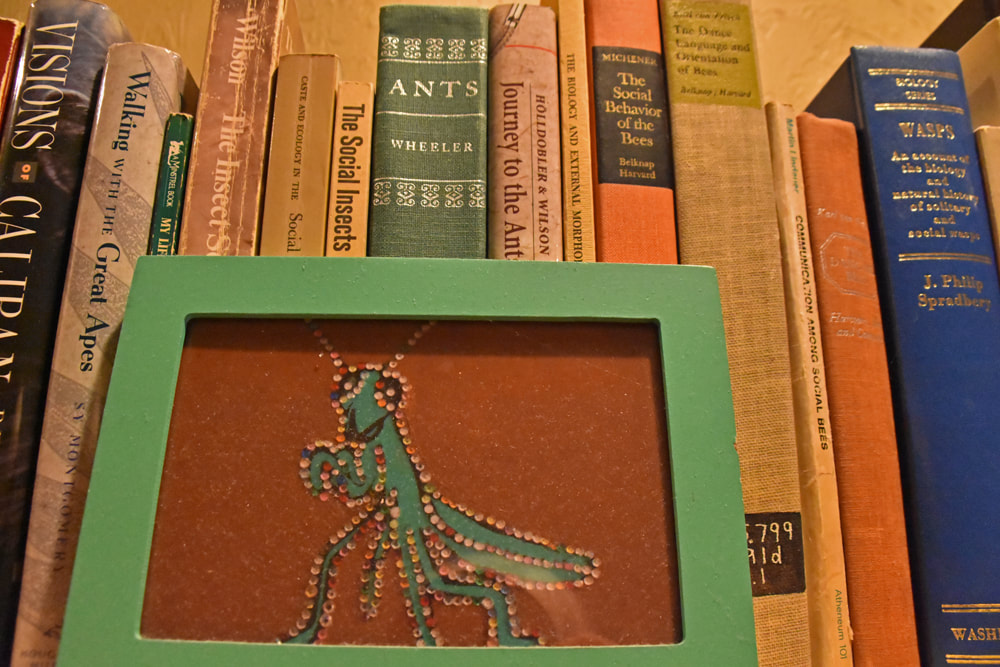 I'm not a book hoarder, honest, but I just can't let go of these reminders of my grad school days. The mantis picture by Claire Fisher seems a perfect complement. 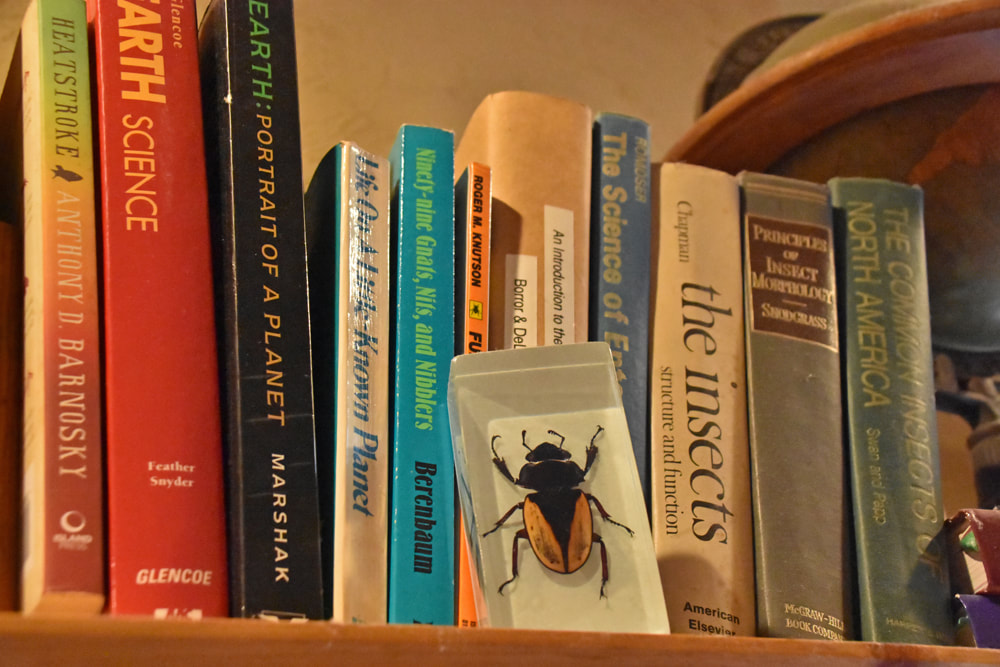 More science stuff, with a buggy treasure from my friend John T.
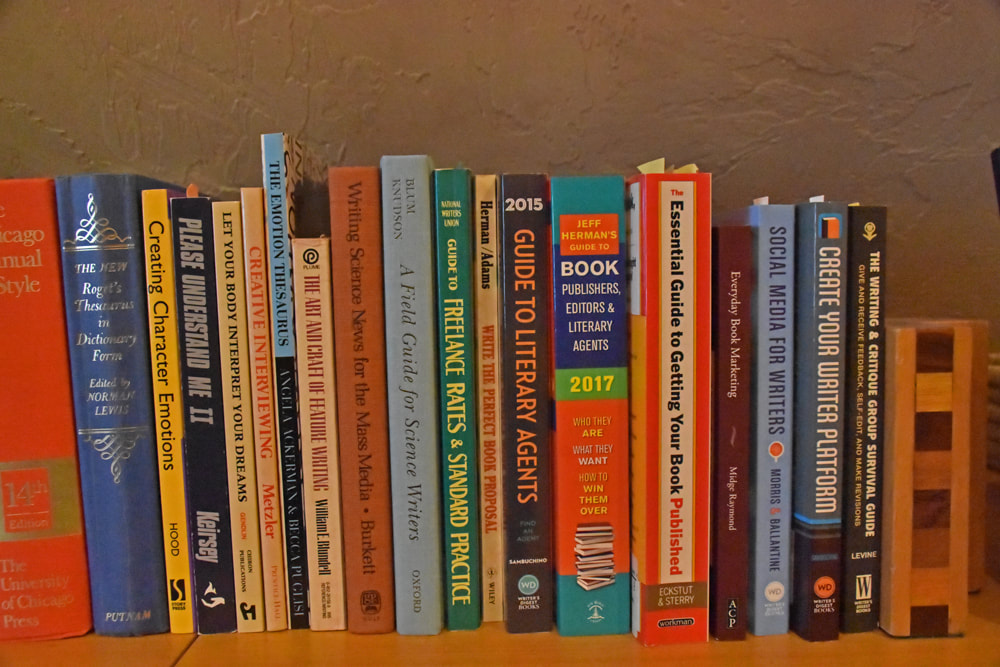 This assortment of books reflects where I've been with my writing . . . 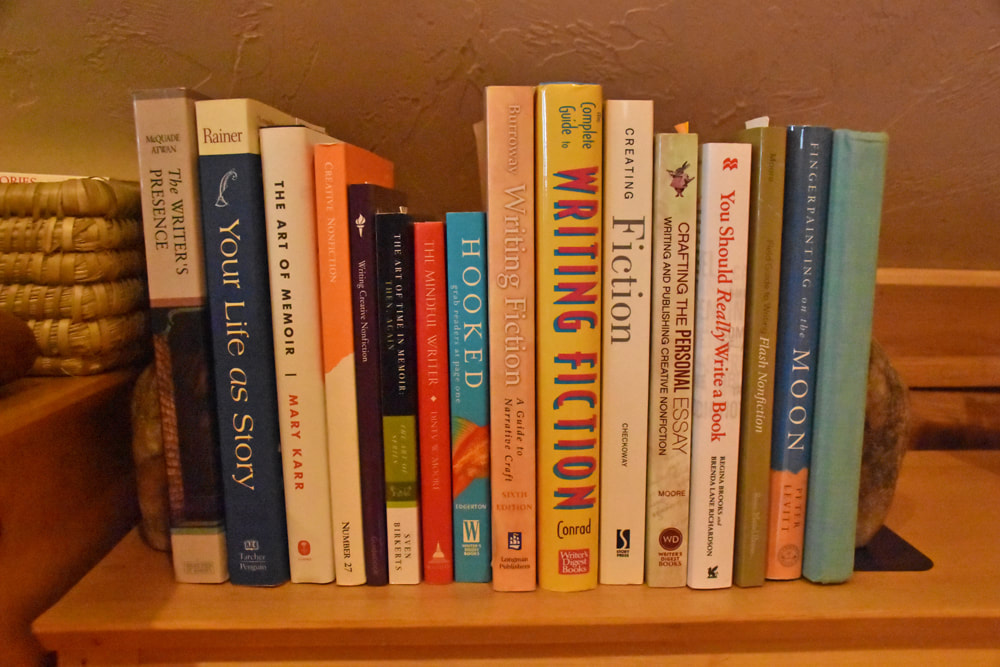 . . . and where I'm going. Where will your workspace--or playspace--take you?
13 Comments
 Happy New Year! Is today just like any other day for you, or do you see the beginning of a new year as a time to reflect and set intentions? As I wrote here a year ago, I no longer make formal resolutions or long lists of goals and aspirations for the coming year. Still, the idea of a fresh start is so appealing I can't resist trying to do a few things differently. Or maybe just one thing. This time last year, I vowed to break the habit of starting my day by checking my inbox and scanning headlines. Too often, that practice left me agitated and unfocused--exactly not the way I want to be when I sit down to write or tackle other tasks that require concentration.  It was a worthy goal, one I tried all year to accomplish. But the busy-ness of book publishing and promotion and the enticement of never-a-dull-moment national news was too seductive. I just couldn't keep myself from going online before breakfast. Until a few weeks ago, when I finally found the mettle to break the habit. What flipped the switch for me was a piece by Colleen Story on her Writing and Wellness website that caught my attention with the subhead, "Why Writers Should Avoid the Internet First Thing in the Morning." In the article, Colleen cites research suggesting that hopping around on the internet interferes with the ability to focus even after getting offline. She goes on to list five first-thing-in-the-morning activities that are more conducive to all-day productivity. I won't repeat the list here--you can read the full article for that. 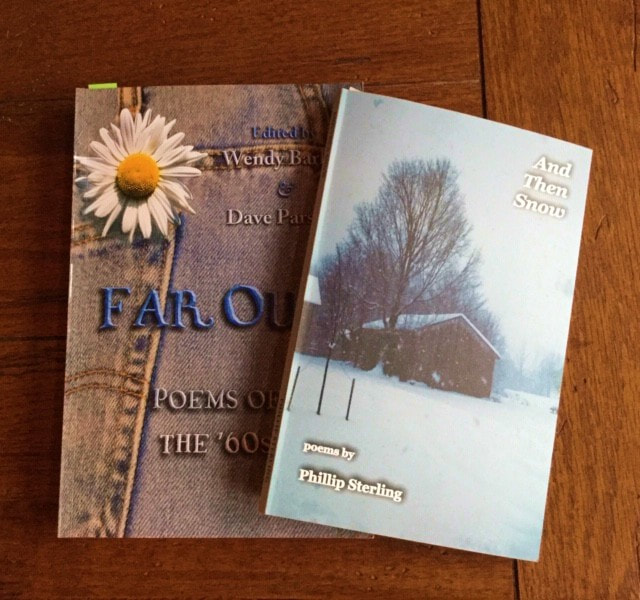 Two poetry books I'm reading this week Two poetry books I'm reading this week But I will tell you about the change I've made. For the past three weeks this has been my morning routine: yoga, reading poetry, writing down dreams or other thoughts (but not to-do lists), then working on my novel-in-progress. Email and other online business come only after all of that. I was astonished at how quickly changing that one habit made a difference in my mindset. As I wrote in my journal after just a few mornings of the new routine, "Ideas flow, I feel calmer, less focused on my to-do list; I think instead about what I'm reading and writing. This is good." In short, simply by changing one habit I feel recharged and ready to put my creativity to work in whole new ways in a whole new year. Do you have a habit you'd like to change? Need a little help making it happen? Here are some suggestions I've gleaned over the years:
May 2020 be a year of creativity, connection, and contentment for us all!
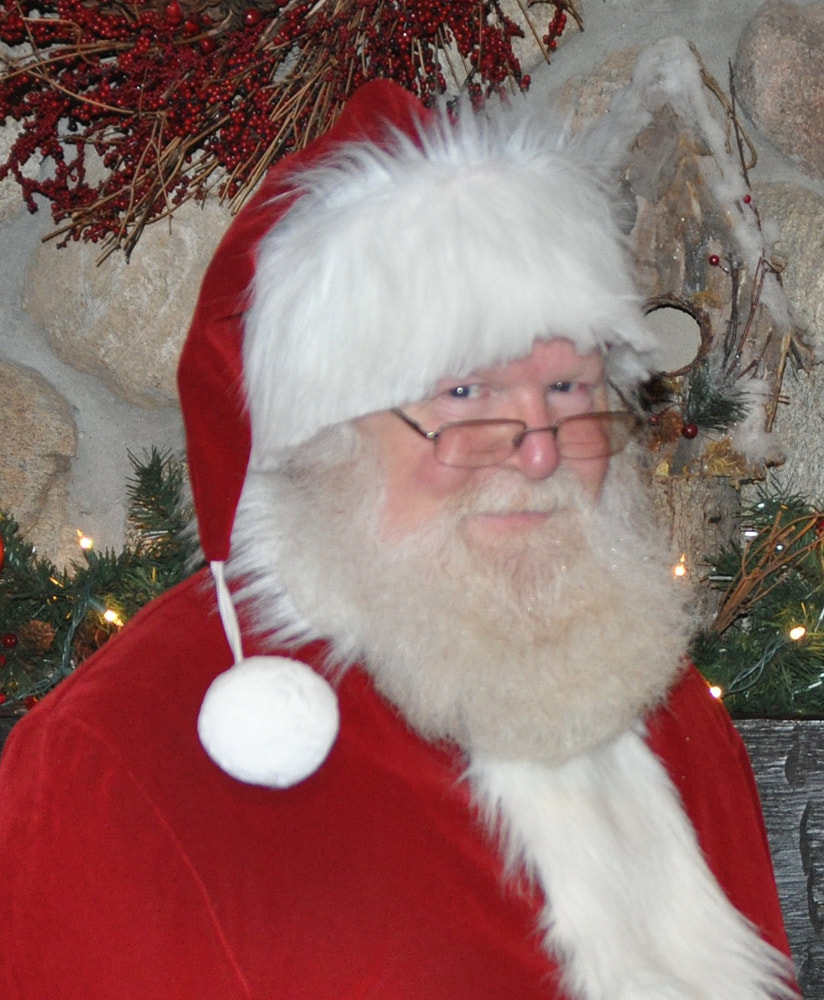 Santa, suited-up Santa, suited-up Santa came to our house early this year. Though he arrived in an SUV, not a sleigh, and he wasn’t “dressed all in fur from his head to his foot,” his long beard and the twinkle in his eye gave him away. Truth be told, a visit from this Santa was high on my Christmas wish list. I’d often seen him around town and wanted to know how he ended up in Newaygo instead of at the North Pole. Turns out he grew up right here in Newaygo County and after a couple of decades away, returned to make this his home. While he admits to owning a few red suits, and he’s been seen in the company of reindeer, this Santa, who calls himself “Charlie Johnson,” doesn’t claim to be the real Santa. Then again, he doesn’t claim not to be. He told me the same thing he tells children who press him on the question. 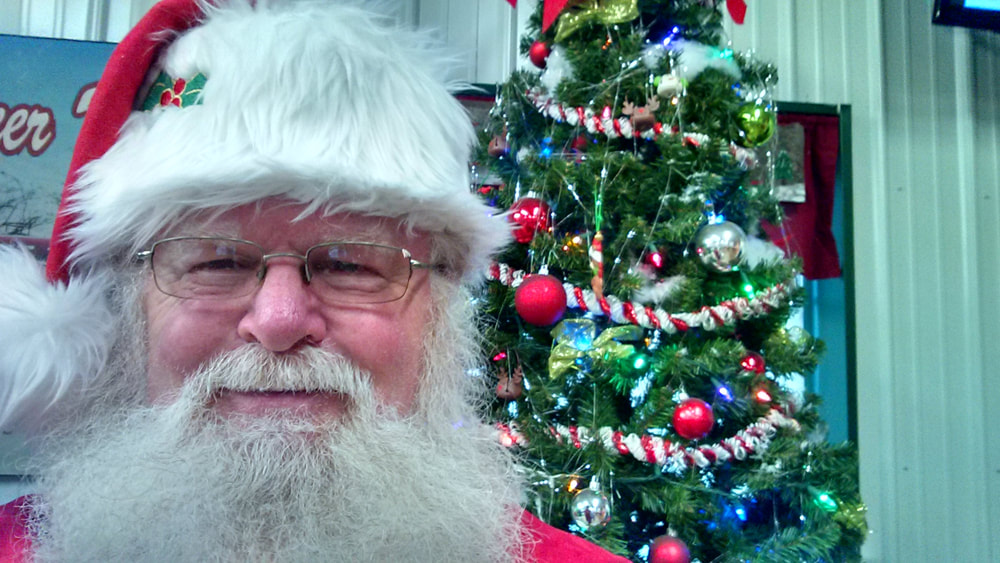 Sure looks like the real one to me Sure looks like the real one to me “Santa can’t see billions of kids all at once, at every mall, so he has helpers that help him out. It’s up to you to decide which one is the real one.” There are so many of these surrogate Santas, in fact, they’ve formed a brotherhood, mingling (and jingling, no doubt) with one another at Santa schools and Santa conventions. Every October, Santa Charlie heads to the Charles W. Howard Santa School in Midland. There, some 300 Santas, Mrs. Clauses, and elves brush up on everything from the history of Saint Nicholas and Santa Claus to proper dress, reindeer habits, radio and television interview tips, and other useful tidbits. Most of all, “it’s about the spirit of being a Santa,” says Charlie. Of course, cookies are served, along with pointers on the do’s and don’ts of Santa-ing. The number one no-no: don’t promise to grant a wish or bring a particular gift. 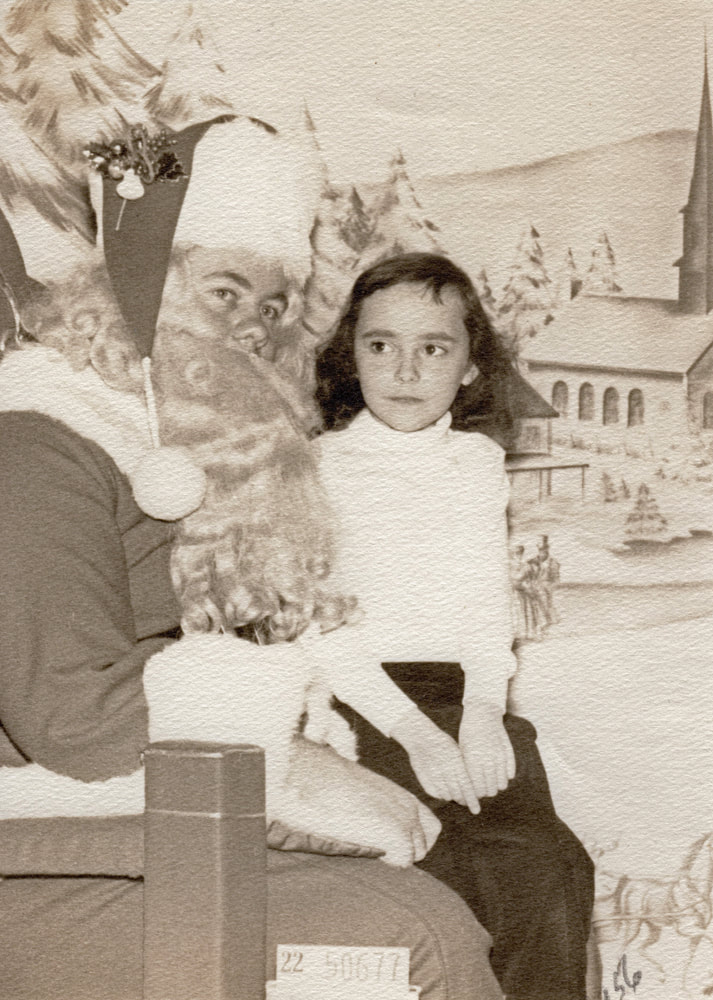 I know one little girl who always appreciated a low-key Santa. She's not too sure about this one. I know one little girl who always appreciated a low-key Santa. She's not too sure about this one. Santa Charlie has a few of his own rules of thumb, as well. “I’m more of a low-key Santa,” he says. “I think the kids respond to that better, especially the littlest ones. I won’t force them to sit on my lap. If the parents try and put them onto my lap, I’ll say, ‘No, hold them, or see if they’ll stand beside me.’” In a venue where Santa can move around a bit—on the Santa Train that runs between Coopersville and Marne, for instance—Charlie resorts to stealth. “I’ll sneak up behind them while their parents are holding them and do a photo bomb so the parents can get their picture of the kid with Santa.” He laughs—more of a chuckle than a ho-ho-ho—and another voice pipes up from the corner: “Santa is the most-photographed icon in the world.” That’s Mrs. Claus, AKA Carol Nickles, who came along with Santa Charlie on his visit to our house. The couple met at Santa school three years ago and became an item about a year later. Now they’re “having a blast” making the Santa scene together, says Carol. At a recent Santa convention they performed in the talent show, harmonizing on a swing tune called “Holiday Romance” while accompanied by a Mrs. Claus from West Virginia. Carol, a seamstress, wore a glitzy red ball gown she’d created, and Charlie was gussied up, too. 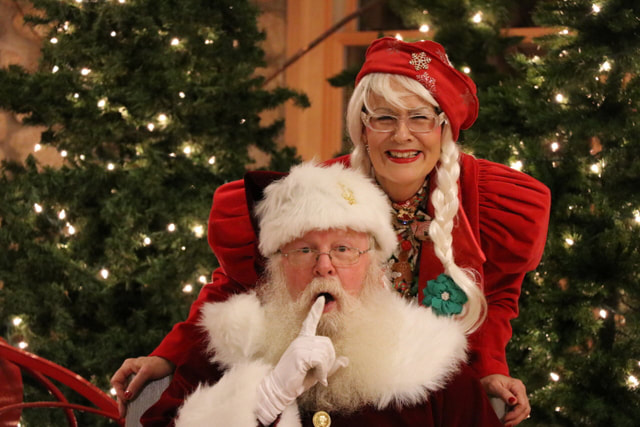 Charlie and Carol, AKA Santa and Mrs. Claus “So fun, so fun,” Carol recalls. Also fun: Appearances at the Rooftop Landing Reindeer Farm in Clare and field trips with busloads of other Santas and Mrs. Clauses from the Midland Santa school to the steam train in Owosso and Bronner’s Christmas Wonderland in Frankenmuth. “Can you imagine these big coach buses pulling up to Bronner’s and all of us getting out?” says Carol. “Now, we’re not dressed in Santa garb, but there are all the beards, and we’re wearing red and green.” 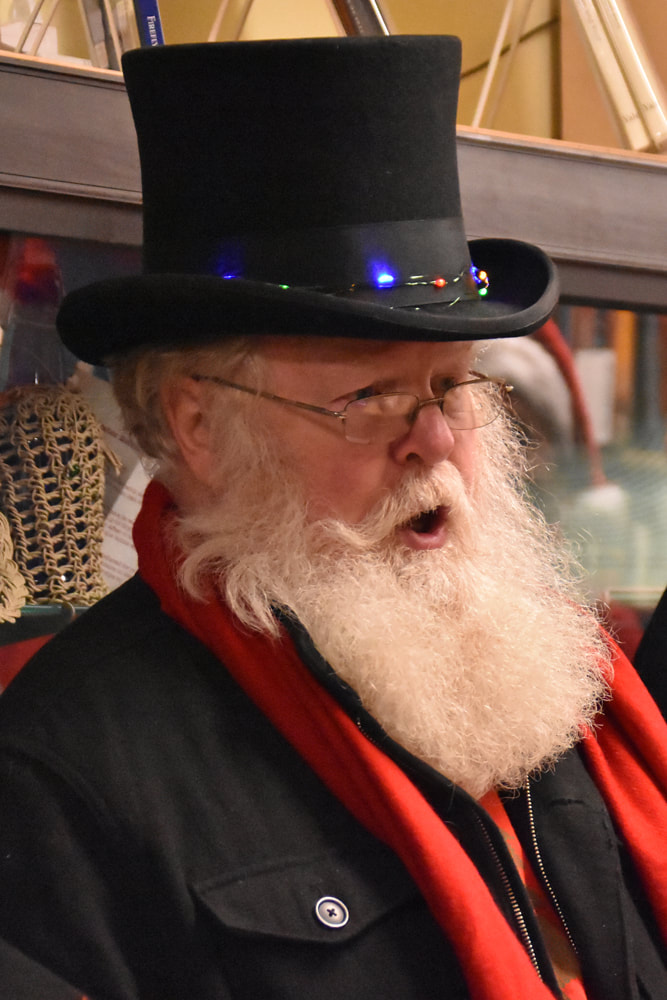 Charlie caroling at the Christmas Walk Charlie caroling at the Christmas Walk Santa-ing isn’t confined to the Christmas season anymore. “Christmas in July is starting to be thing,” says Carol. She and Charlie were invited to add their festive flair to the Star 105.7 radio booth at one such event. Charlie agreed on the condition that he wouldn’t have to wear his full Santa suit in 85-degree weather. Instead, he came up with a “Santa casual” ensemble of red shorts, a Santa-print Hawaiian shirt, and a straw hat, and Carol lightened up her Mrs. Claus-wear accordingly. “Most people would say being a Santa is a calling,” says Carol. Charlie agrees, though Santa-ing doesn’t consume his whole life. He’s plenty busy with a variety of other activities, even after his recent retirement from TrueNorth, where he ran the LifeLink program and coordinated the Newaygo County Senior and Caregiver Expo. He’s often seen playing harmonica at River Stop Café’s open mic nights and running the sound board for Lion Heart Community Theater productions and concerts at Dogwood Center for the Performing Arts. This time of year, you’ll also find him caroling with the men’s chorus that strolls through Newaygo during the yearly Christmas Walk. 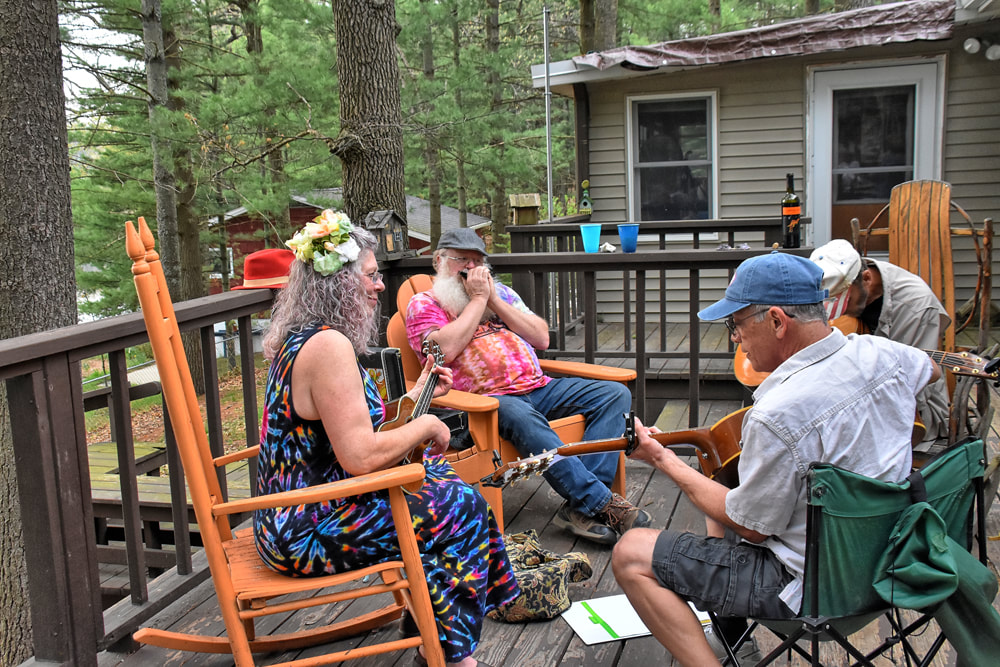 Off-season and out of Santa mode, Charlie jams on harmonica Alas, our house has no chimney, so I couldn’t put Santa Charlie to the test of exiting the traditional way. He just walked out the front door like anyone else. But I heard him exclaim, ere he drove out of sight . . . Oh, who am I kidding? His windows were rolled up; I didn’t hear anything. I’m pretty sure, though, that as he drove away, he wished us “Happy Christmas to all, and to all a good night.” What are your favorite Santa memories?
Around the middle of last week, I looked at the calendar and had a startling realization. Today would be my regular blog-posting day, and not only did I not have a post written, I could not see enough uncommitted time in the intervening days to get one written.  The Detroit book signing at Pages Bookshop The Detroit book signing at Pages Bookshop We were about to leave town for a book signing in Detroit, followed by a Michigan Nature Association dinner in East Lansing the next day, followed by a family birthday party in Northville the day after that. Then back home to Newaygo, where yoga class, a book club appearance, a medical appointment, and the library book sale setup all crowded into the next few days. There just wasn’t time to write and set up a post. Still, I didn’t want to break my commitment to post on HeartWood every first and third Wednesday. So I started scrambling and scheming. I could dig out a post I’d started a year or so ago but had set aside and never finished. Yeah, that’s what I would do. I found the post and the notes and images I needed to finish it, loaded everything onto a flash drive, and figured I’d do the work on our laptop in the downtime between the weekend events.  (Photo: Benjamin Watson) (Photo: Benjamin Watson) Great plan. Until . . . the night of the first event when—thanks to adrenaline, an unfamiliar bed, and leg cramps from the super-stylish but brutal shoes I’d worn that evening—I got almost no sleep and woke up the next morning in a fog so deep there was no way I could write anything coherent. Now that I had the time, I didn’t have the brain power. I needed to rest. I knew that. But my first impulse was to start scrambling and scheming again. I could power nap and then, if I was really efficient, still get the blog post done. Just one problem: Tired as I was, I could not fall asleep for a nap. That’s when I remembered a recent conversation with a friend who’s trying to break the habit of cramming too much into her schedule. She told me she’s cutting back on commitments and learning to rest. That’s when I knew that was what I needed to do, too. Just rest.  Just then, another memory came to me: a blog post I’d written last year, when I was in a similar period of overload and had the radical idea of taking a time out. 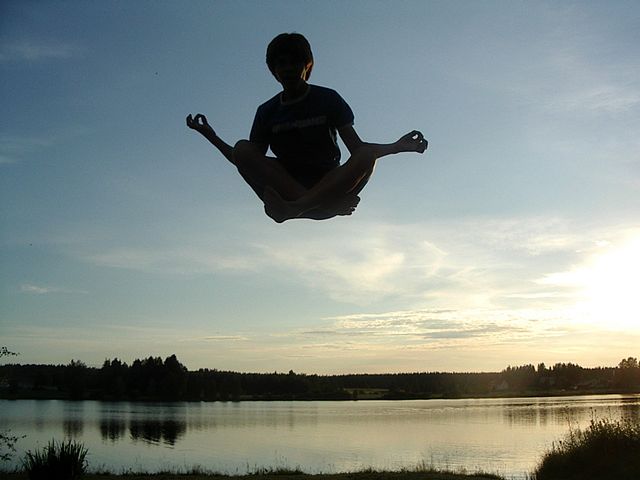 “As soon as I had that thought, the space around me opened up,” I wrote. “My breathing slowed. I felt like I could float on air. “Such a simple solution, just stepping back and saying, ‘Whoa, there.’ Yet it's crazily easy to forget that it's an option—that when things get too hectic, maybe they don't need to be. Maybe there are things that don't have to be done, or that don't have to be done quite the way you thought they did.” I re-read those words and thought, “Who was the wise person who wrote this? Why am I not following her advice?” 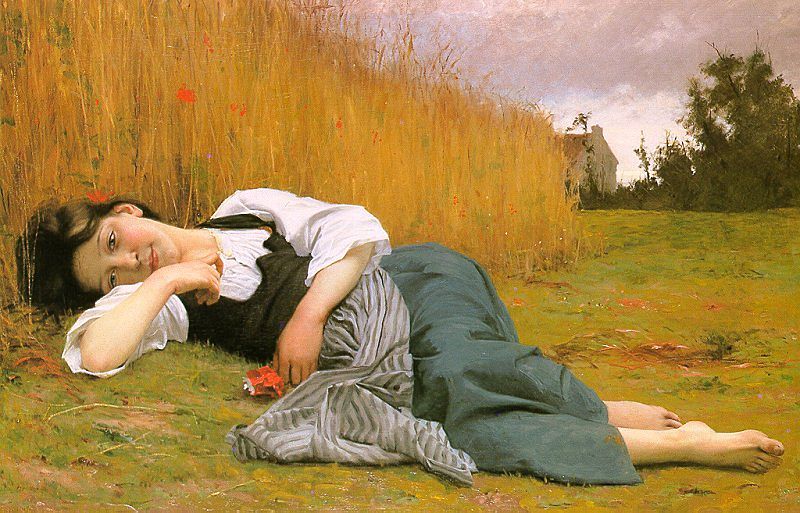 "Rest at Harvest," Bouguereau, 1865 "Rest at Harvest," Bouguereau, 1865 Well, now I am. I’ve given myself permission to a take time out instead of scrambling. That other post I was going to power through and finish for today? It’ll still get done, but in a week when I can give it the time and attention it deserves.
Meanwhile, if you’ll excuse me, I’m going to shut off the computer and give it and my brain and body a rest.  Summer came, and summer went, and just after Labor Day, Ray and I looked at each other and said, "Hey, we forgot to take a vacation." Well, we didn't exactly forget. We just, you know, had stuff to do. So much stuff we thought, Get away? Oh, we couldn't possibly! But have you noticed? Whenever you find yourself thinking, I couldn't possibly, that's exactly when you really, really need to. So in spite of to-do lists, appointments, and other obligations, we found a stretch of blank spaces on our calendars, booked a campsite at Tahquamenon Falls State Park in Michigan's Upper Peninsula, packed up the RV, and headed north. 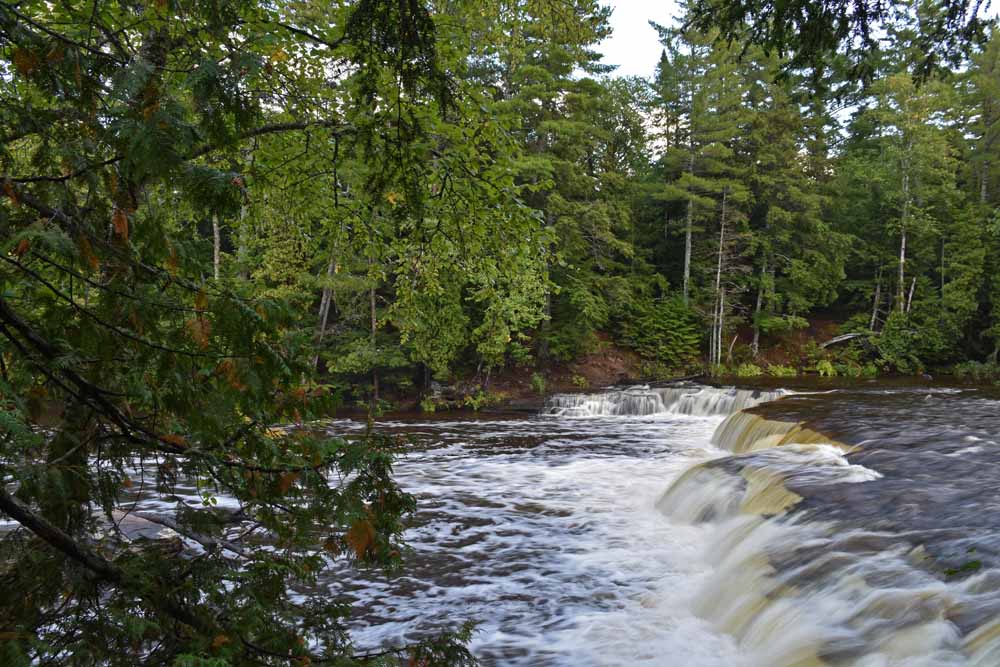 For six days, we hiked on wooded trails, cooked on the grill, took photos, read books, and drank Alaskan Amber by the campfire. Wait, you're saying, aren't those all things you can do at home in Newaygo? 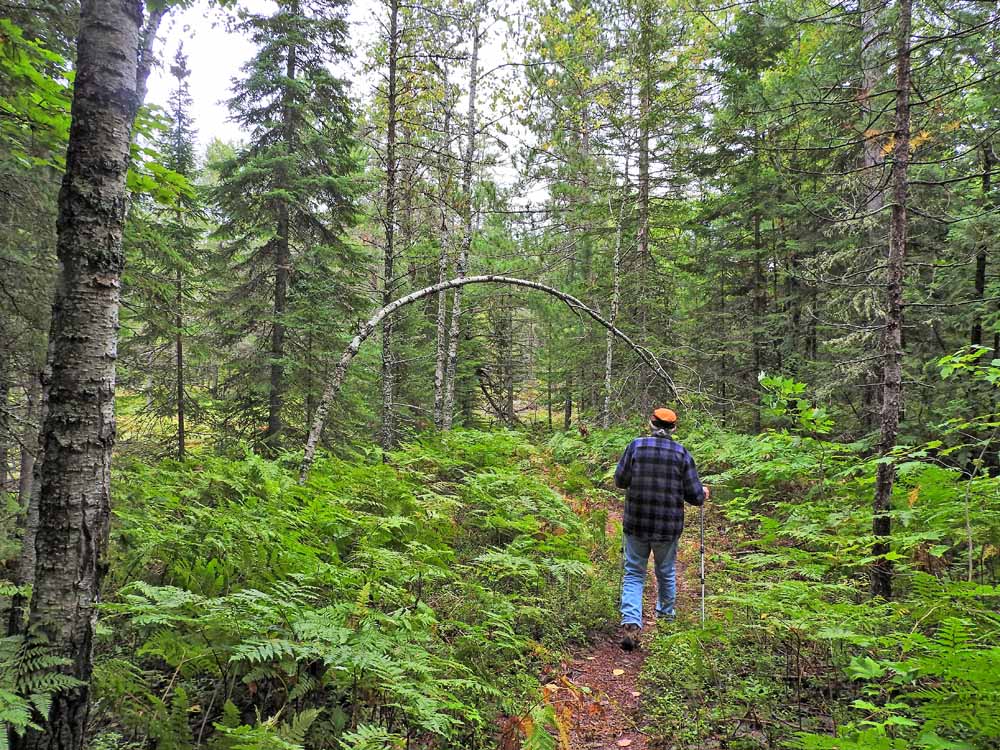 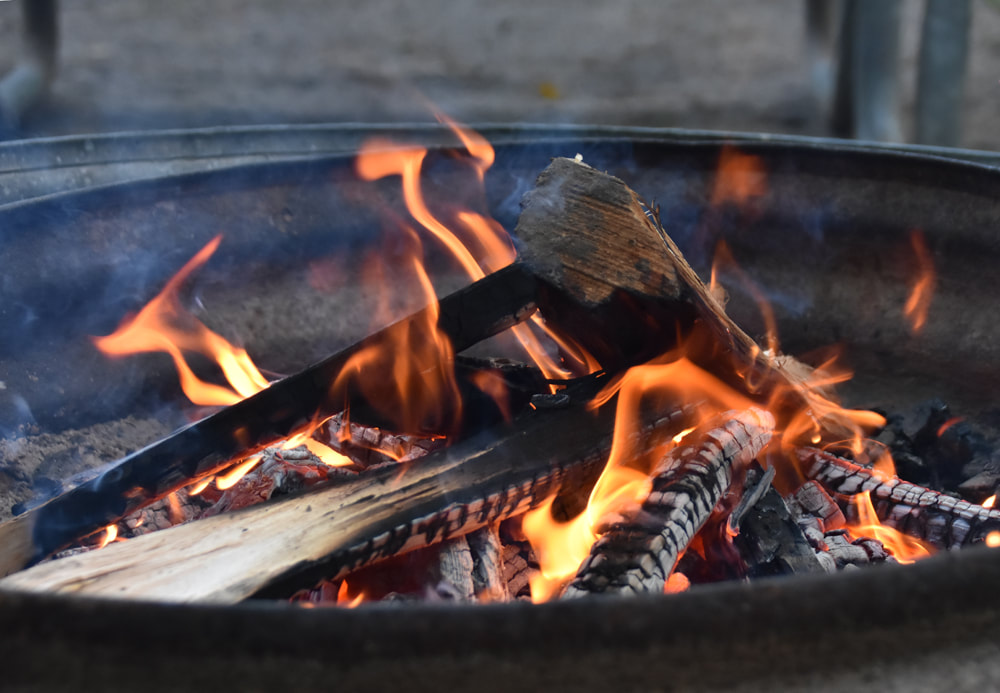 Right you are. We can do all those things at home, and often do. The difference was, for those six days in the U.P., there was nothing else to do. No phone, no internet, no domestic duties, no book launch details to attend to. Plus, views of rushing rapids and cascading waterfalls. 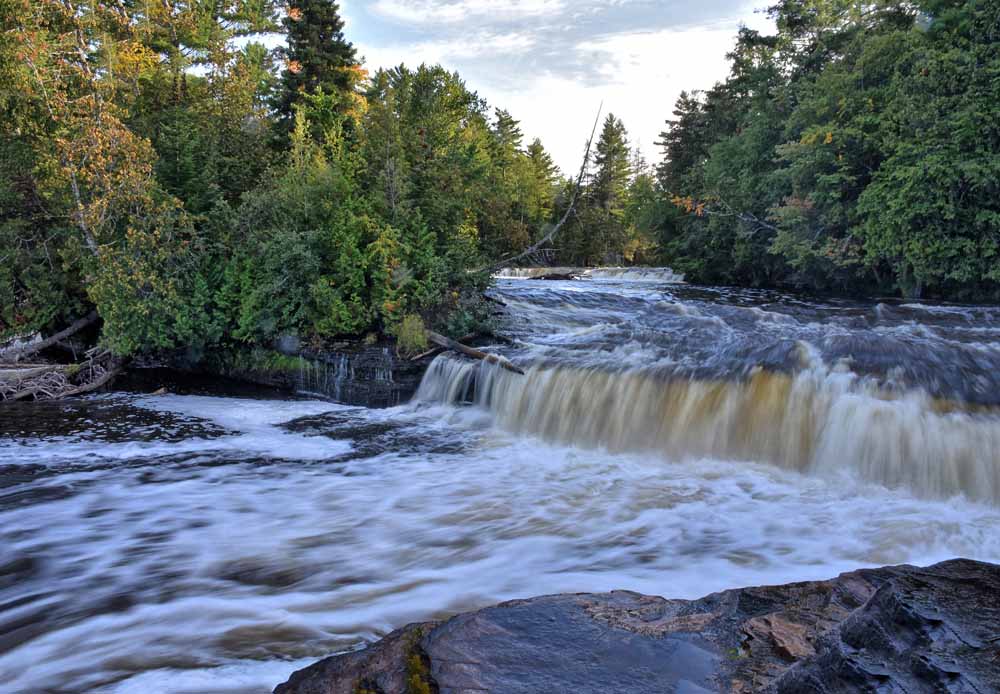 As a result, we truly relaxed for the first time in months, so deeply we couldn't even remember what we'd be obsessing about if we weren't too relaxed to obsess. 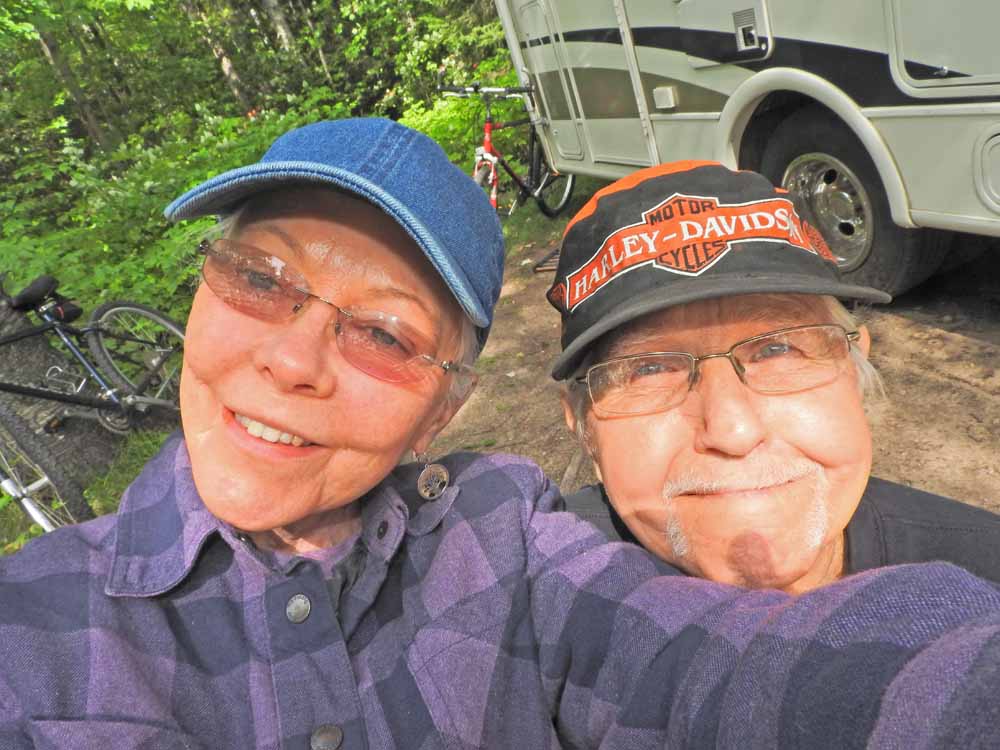 Happy campers Of course, once we were back home, it took about a millisecond for realities and responsibilities to assert themselves. But somehow, even two weeks later, some of that getaway serenity has stayed with me. I'm back in to-do mode, but with a mellower mindset. And when I start to drift back into frenzy, all I have to do is look at photos from the trip to reset my calm-down button. Care to join me? 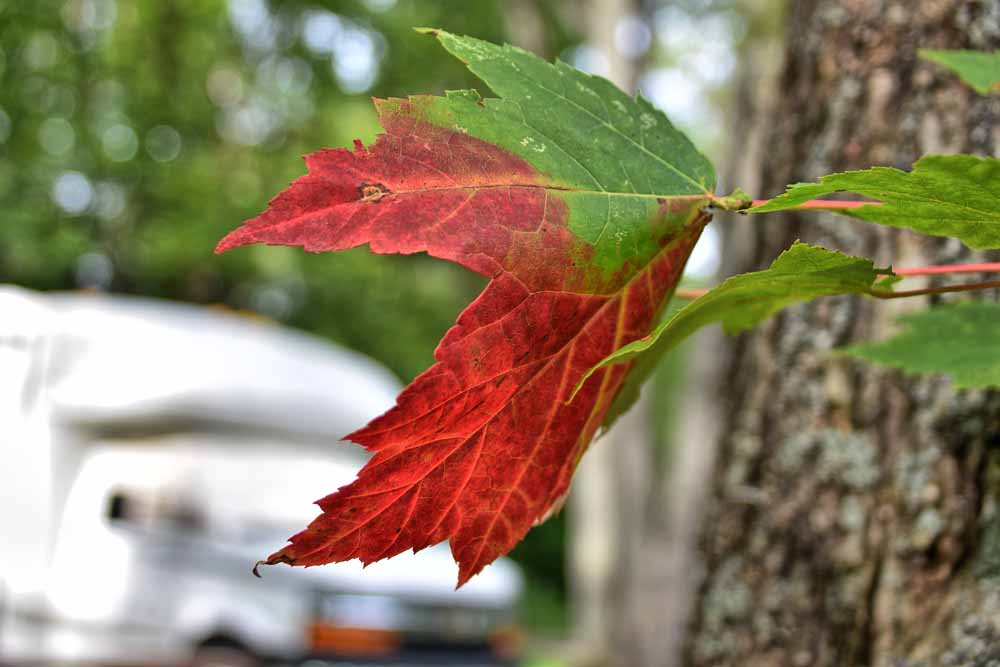 The leaves were just beginning to turn when we arrived. We watched more change every day. 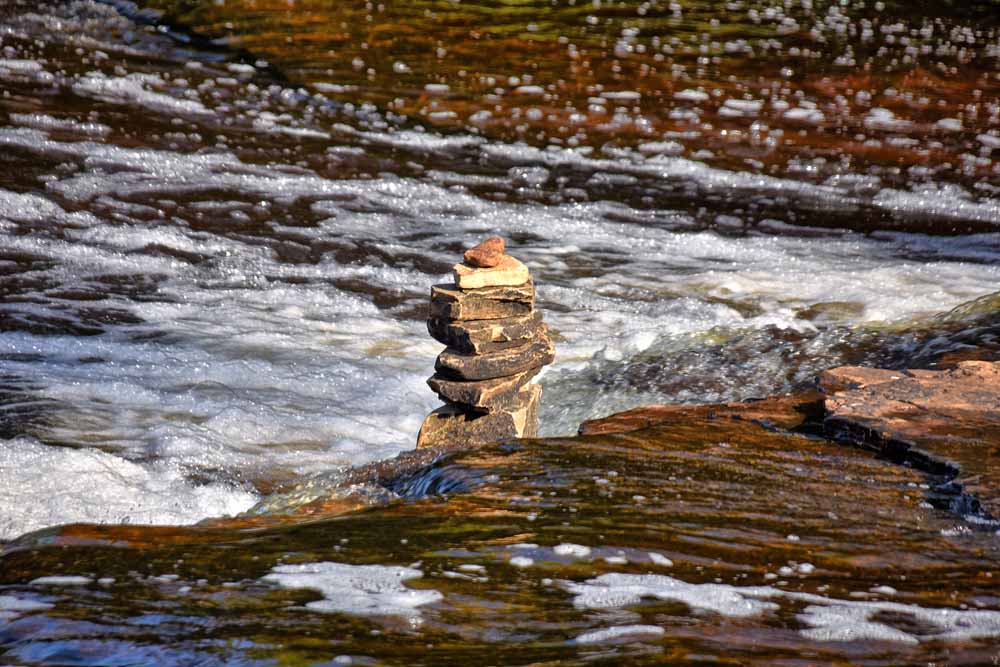 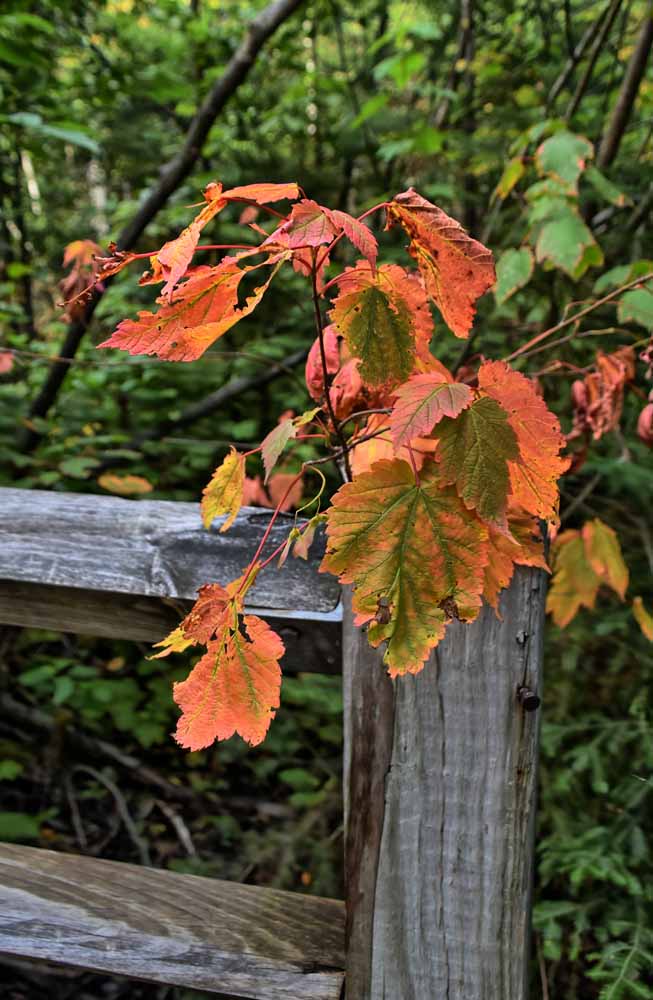 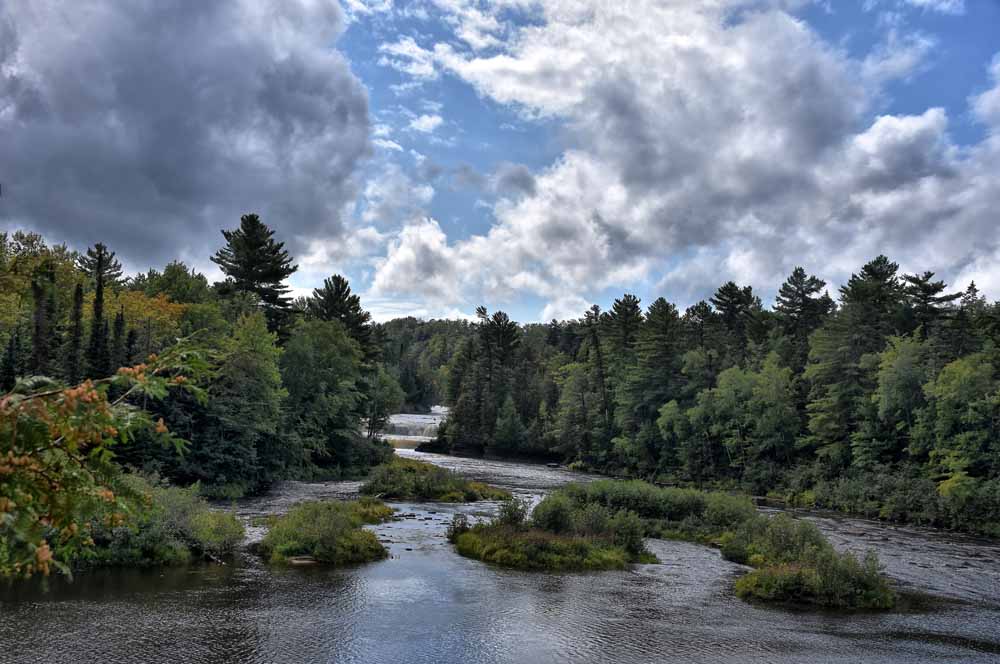 A viewing platform for the Lower Falls area is just a short walk from the campground 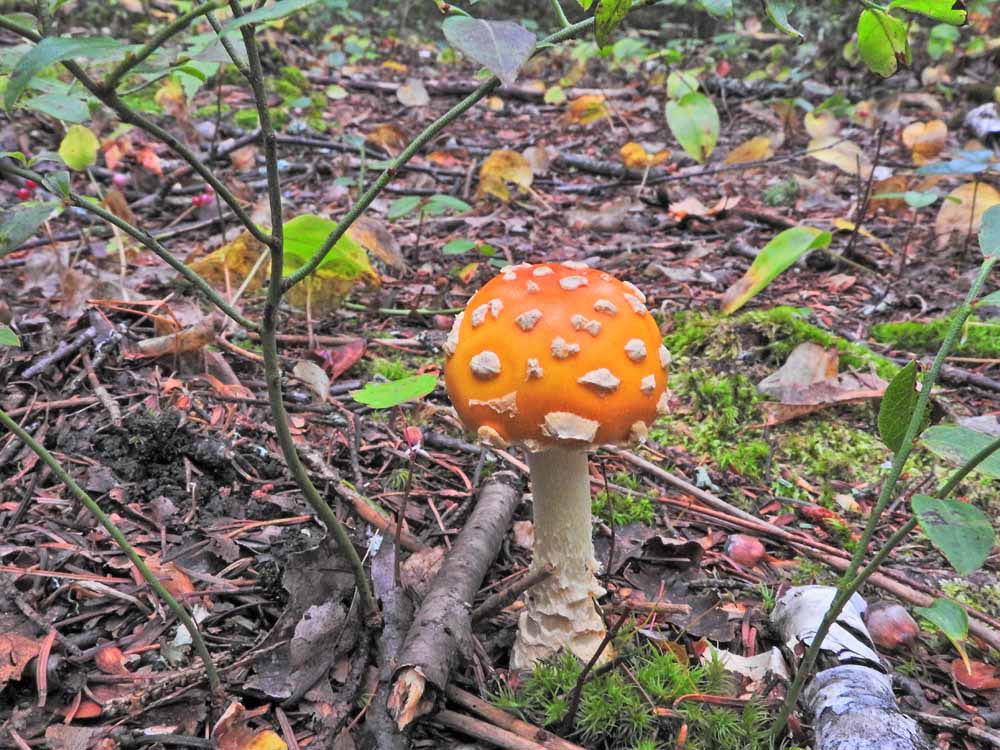 Not all the color was on the trees 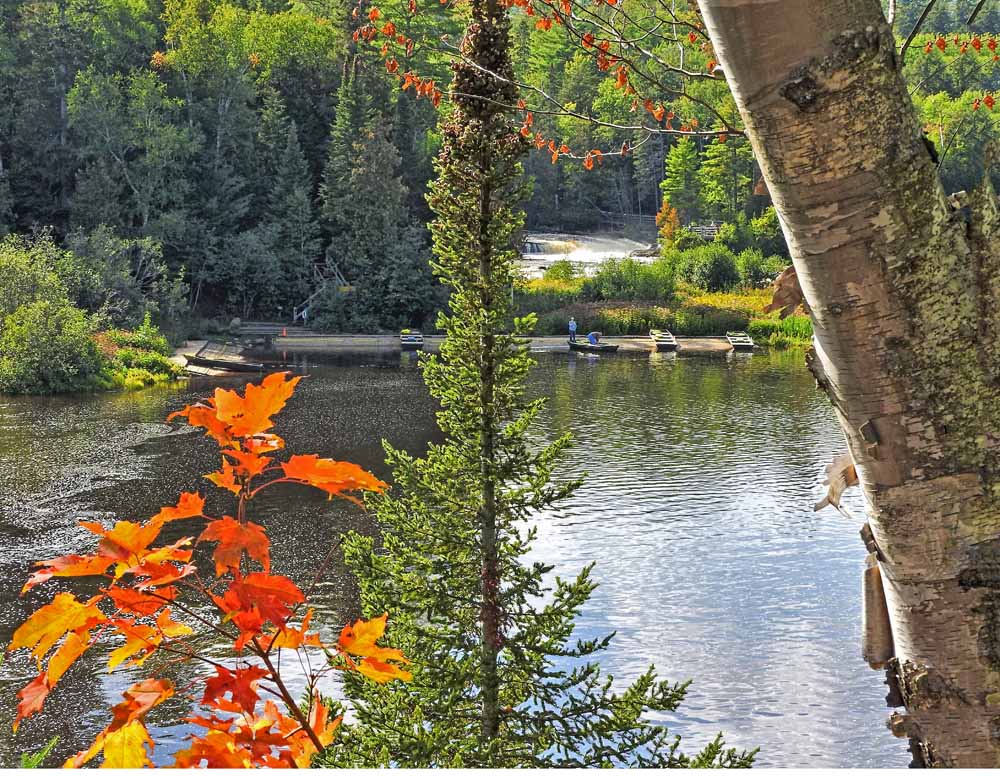 Some visitors row boats across the river to the island for an up-close look at the Lower Falls 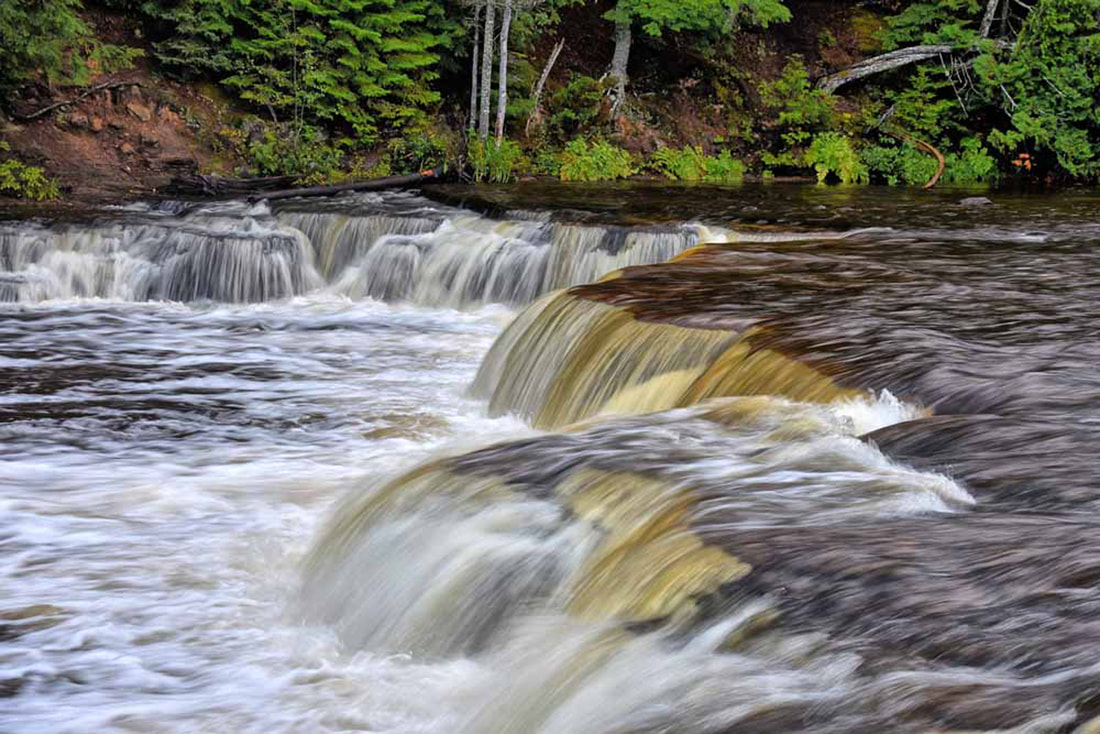 We took the boardwalk instead and were rewarded with this view. The golden color of the water is from tannins leached from the cedar swamps that the river drains. 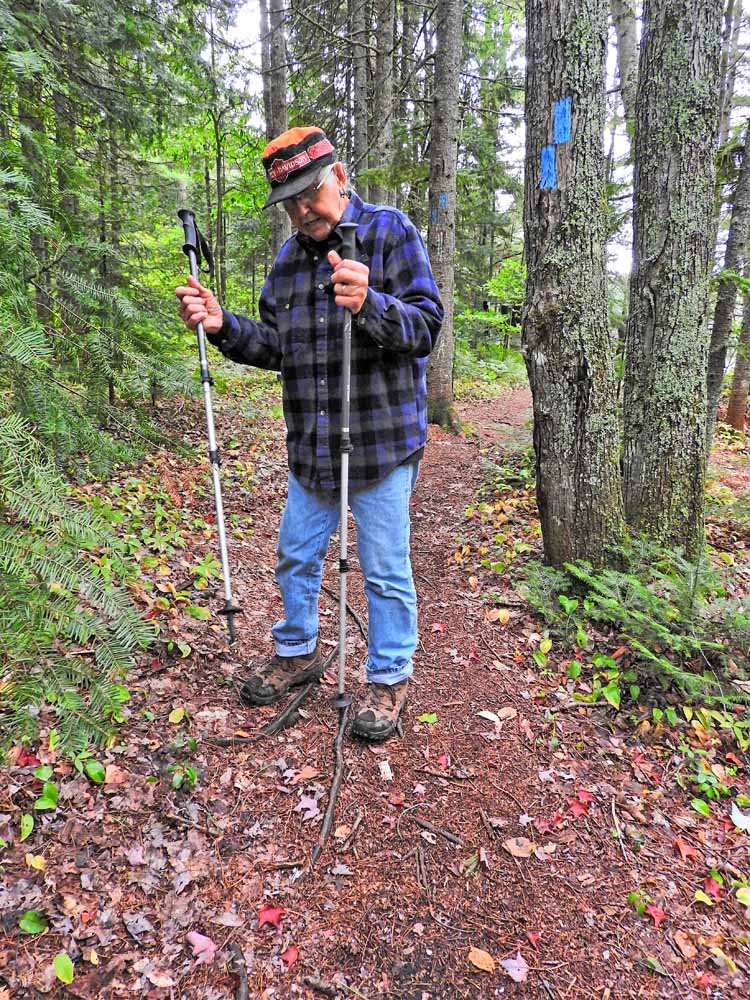 The North Country Trail goes right through the campground where we stayed and connects the Lower and Upper Falls.  The blue blazes are a familiar sight  Found along the trail 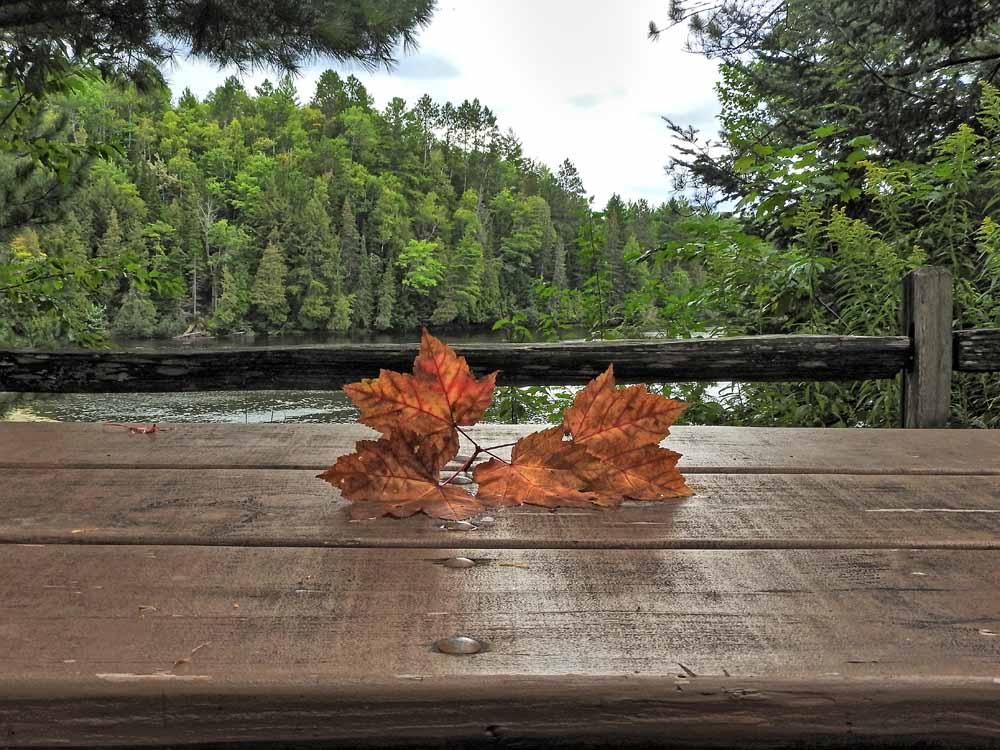 Campground overlook 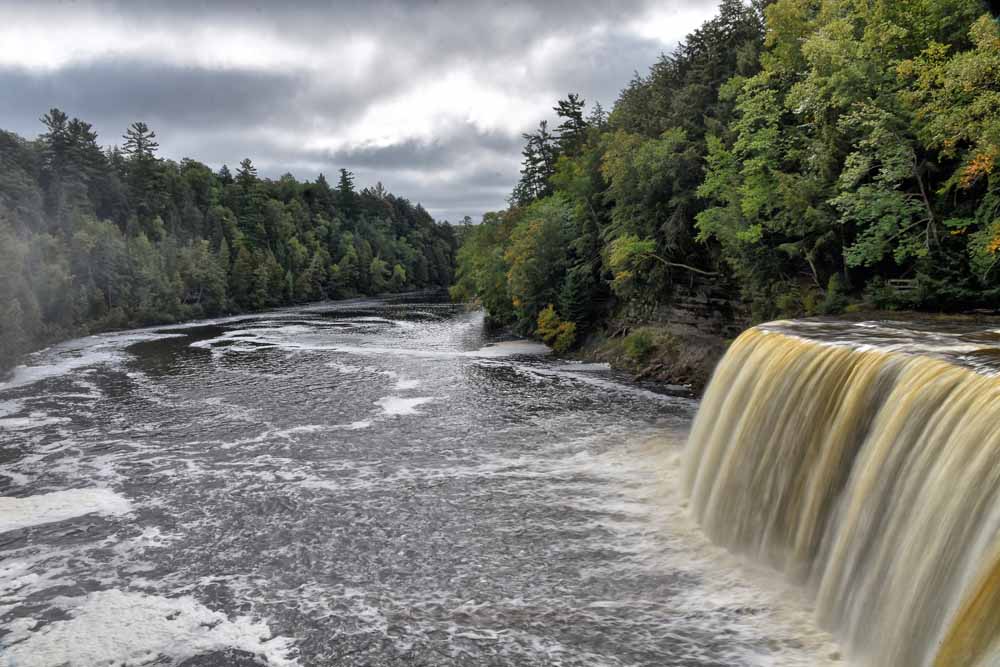 Upper falls with ever-present mist 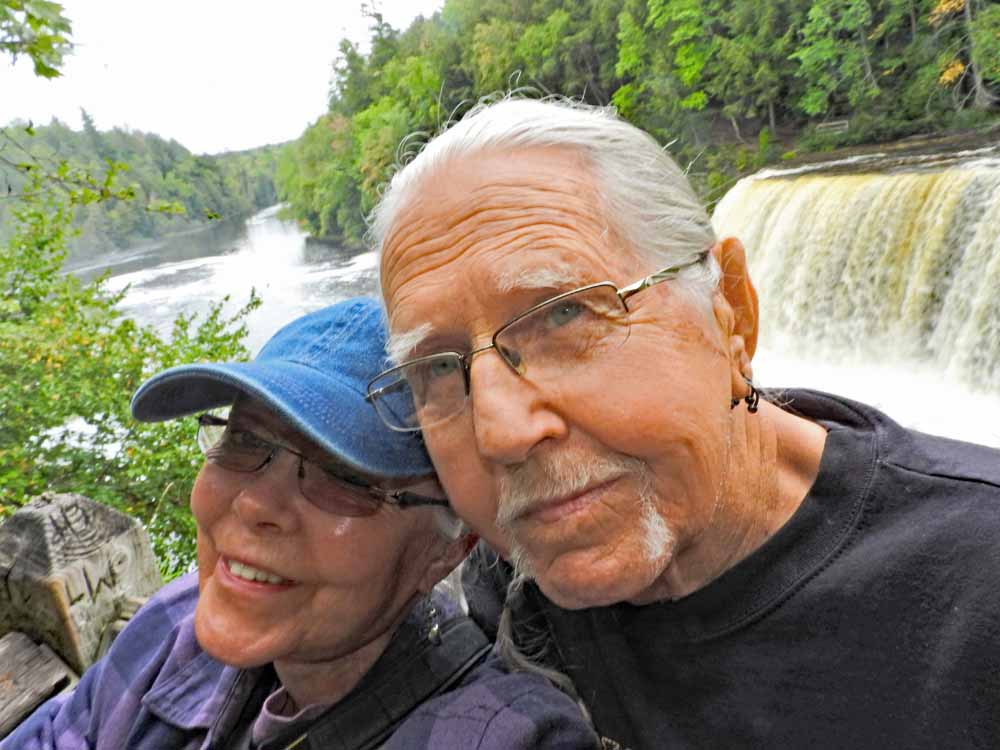 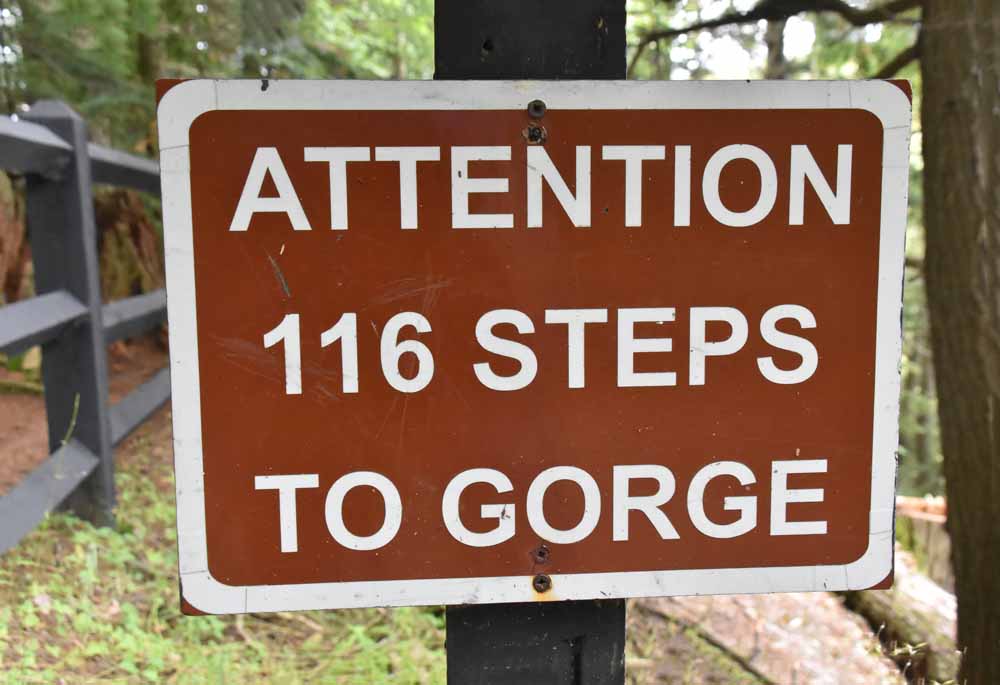 What the sign doesn't tell you is that there are even MORE steps once you get down to the gorge. 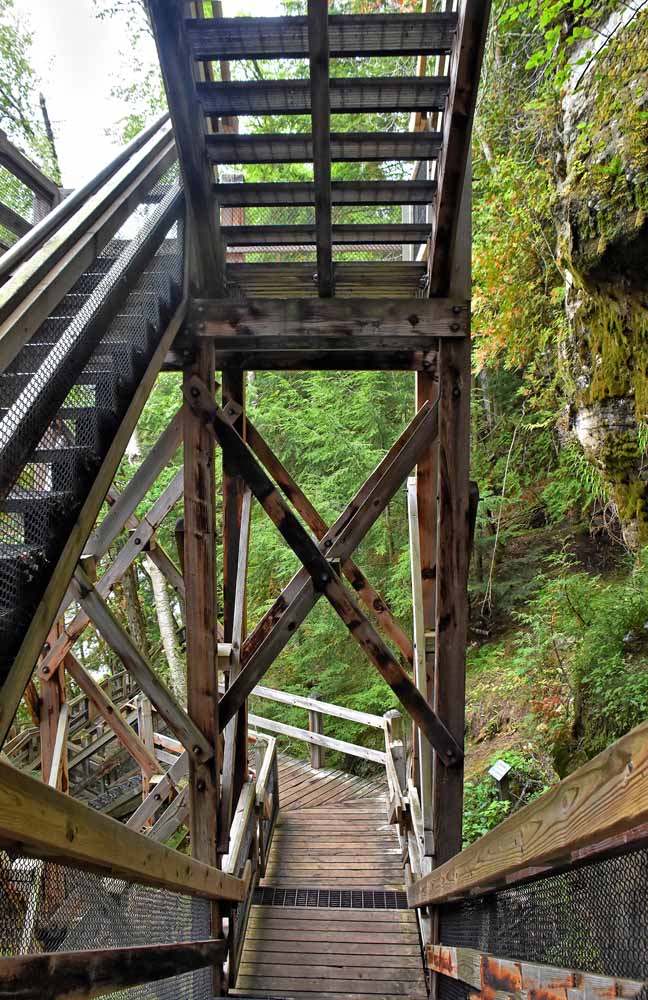 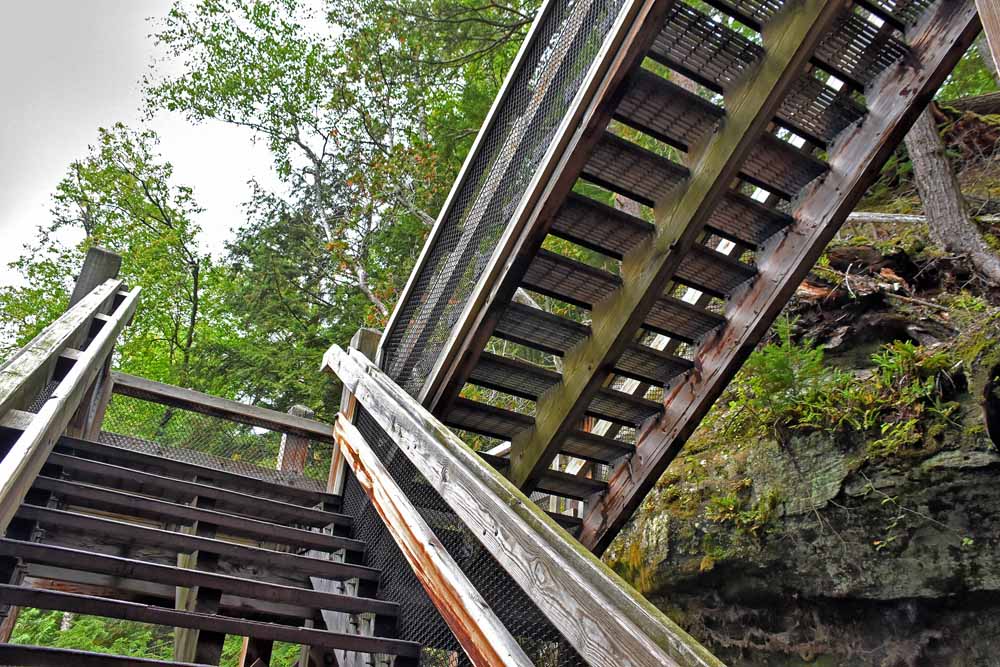 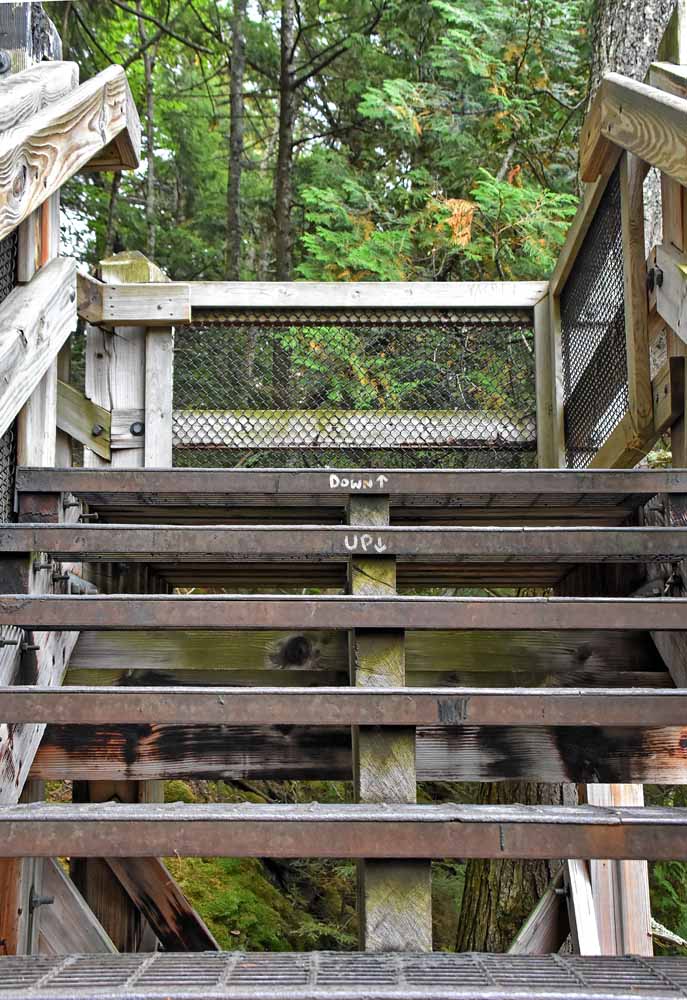 A little stairway humor 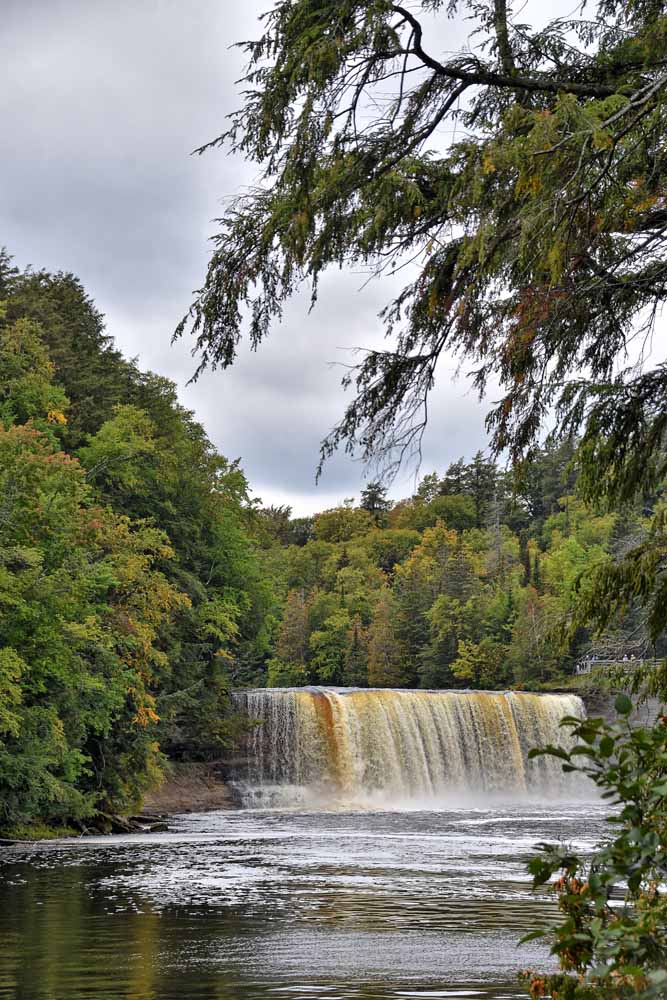 Upper Falls from the gorge 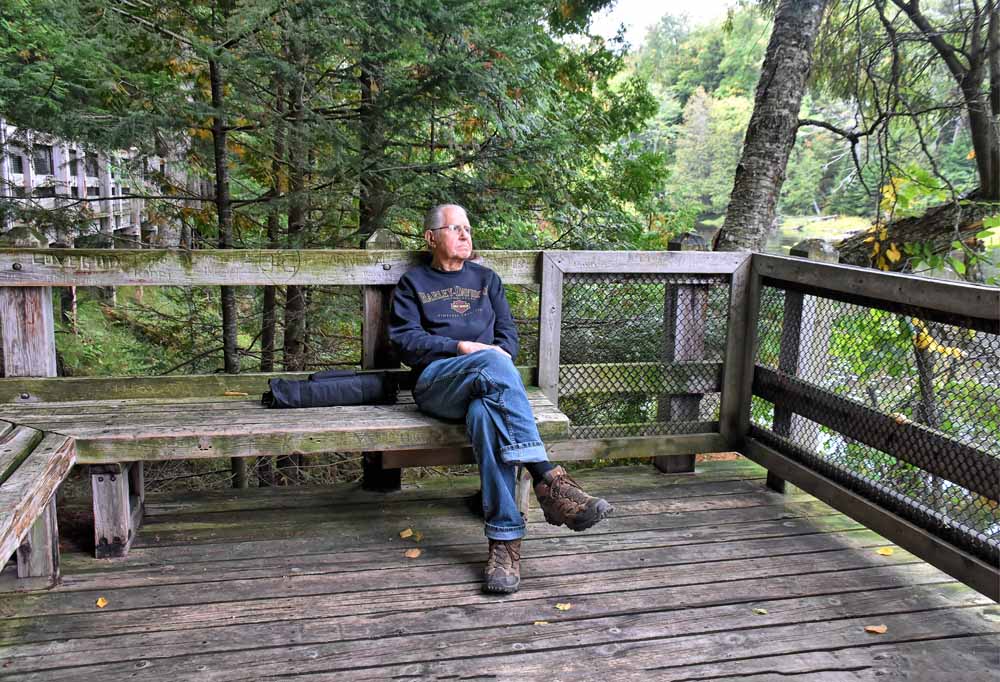 Patient husband waiting for photographer to take several hundred more waterfall shots 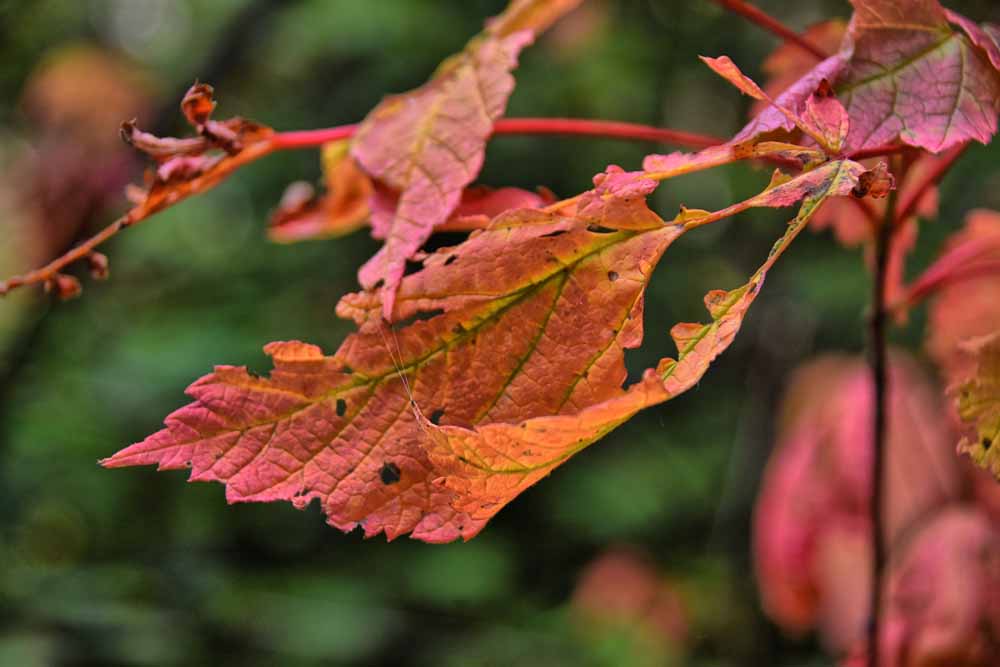 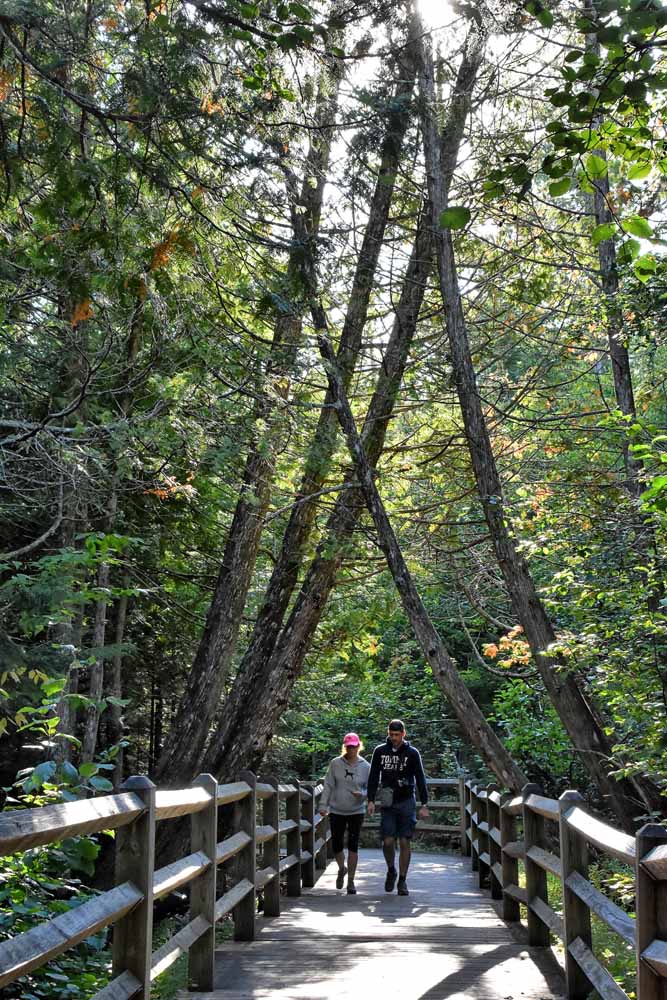 Part of the enjoyment is seeing other people enjoying themselves 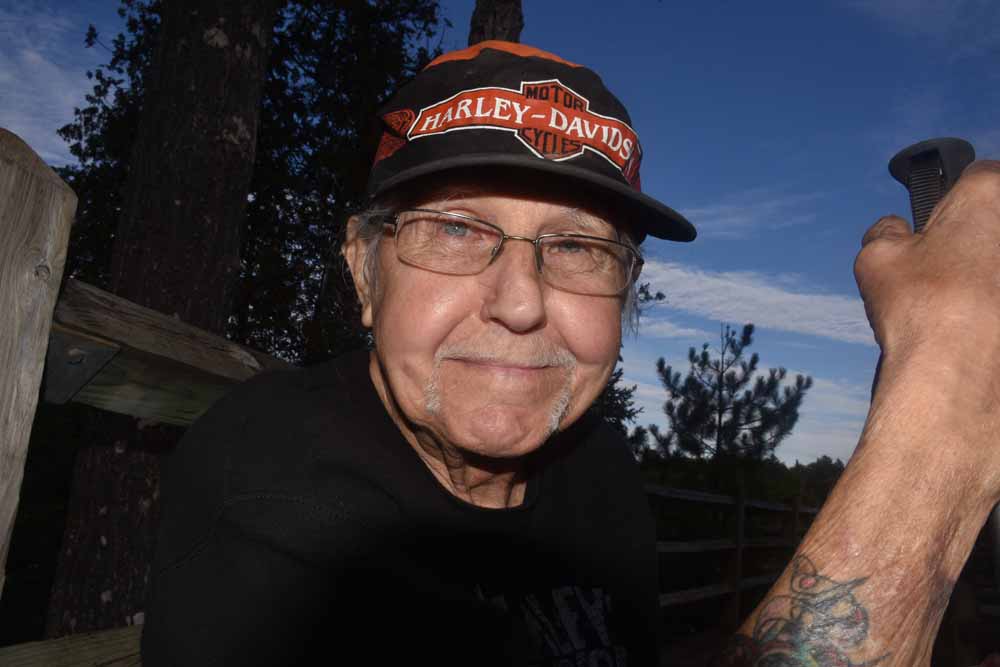 Like this guy, who celebrated his 84th birthday on our getaway. Happy birthday, Ray! Outside my window, the maples are beginning to blush. Soon, the whole woods will be bright with scarlet, gold, russet, and burgundy. In such a dazzling display, it's easy to lose sight of the individual colors. Life can be like that, too. With so much going on in the real and virtual worlds, not to mention our own imaginations, it's sometimes hard to narrow our focus. Yet often that's exactly what we need to do to feel calm and grounded and to nurture our creativity. I recently came across an intriguing exercise that reminded me of the benefits of concentrating on one thing at a time. In her Writing and Wellness newsletter, author Colleen M. Story wrote about boosting creativity with color walks. You pick a color before heading out on a walk and then let that color lead you as you search for objects of that hue. Colleen's article goes into more detail, with tips on how to get the most from the practice. I'll let you read that on your own, because I'm eager to show you what I found on my color walk. On the summer day I chose for my walk, everything was green, so as a challenge to my powers of observation, I picked yellow. I was surprised how many yellow things I found and how paying attention to them helped me see my familiar environment in a whole new way. I hope you'll try a color walk, too, and tell me how it goes. 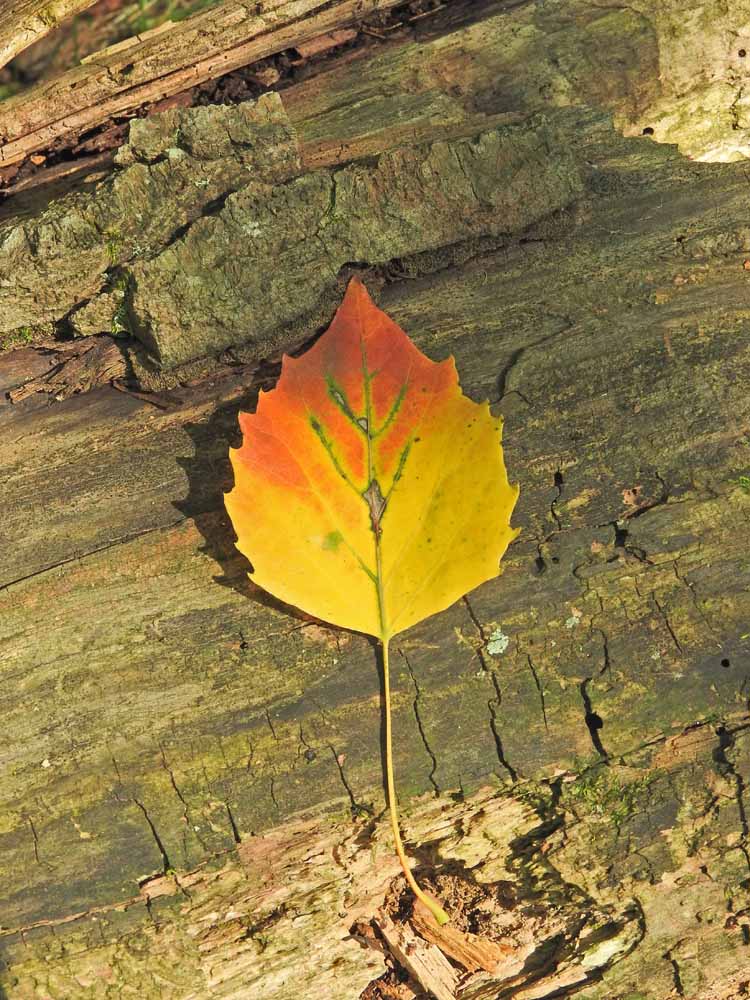  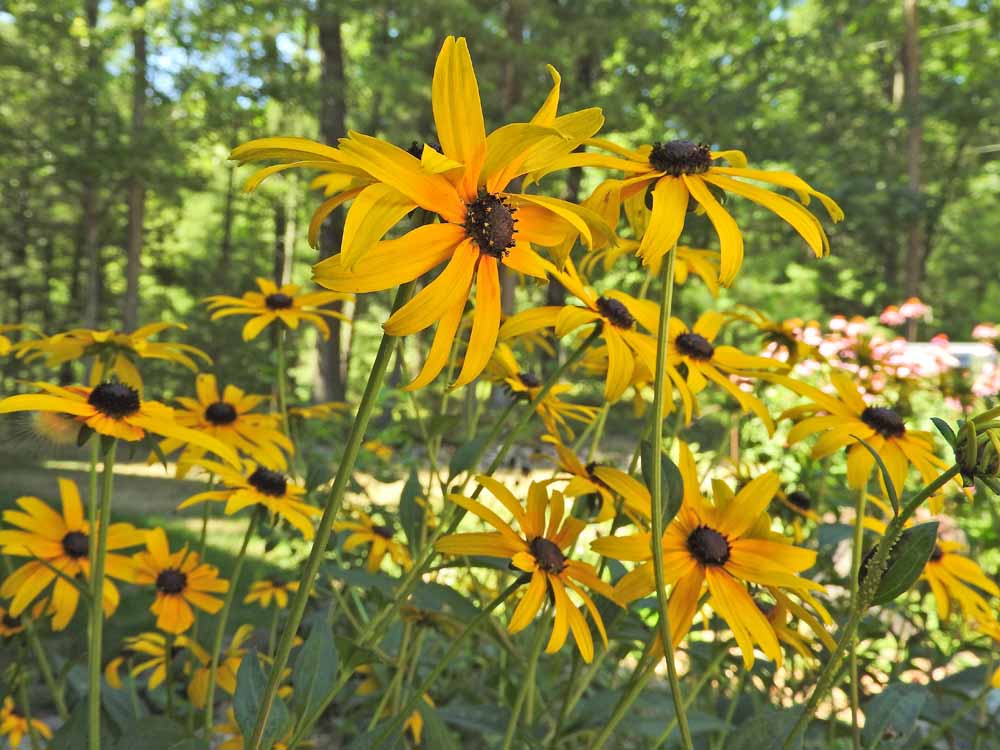 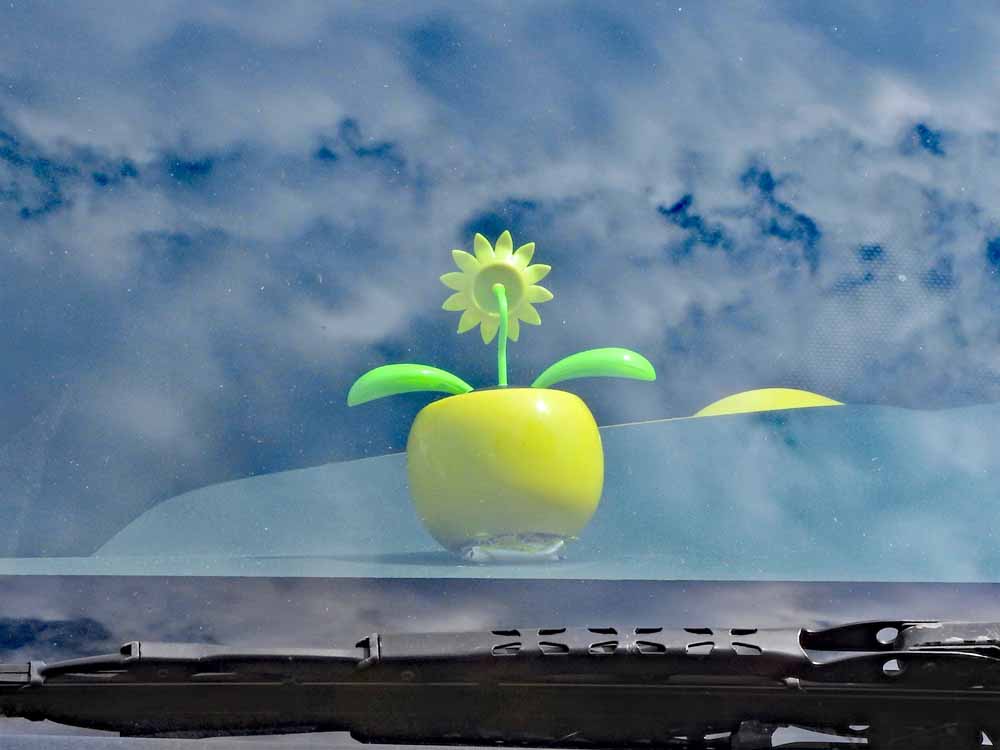 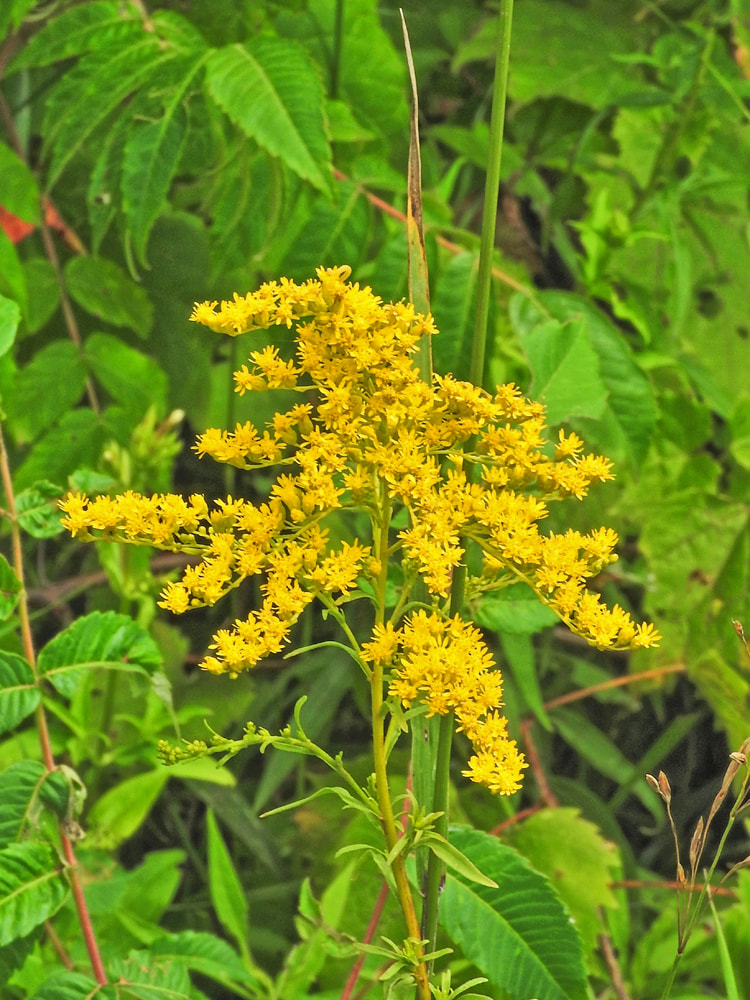  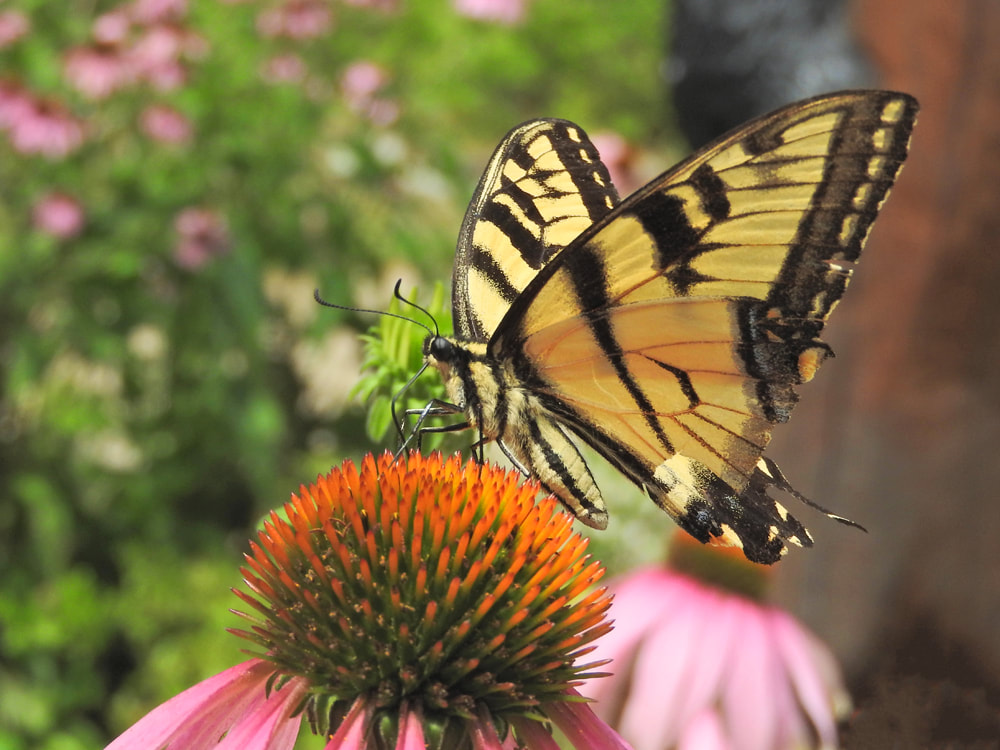 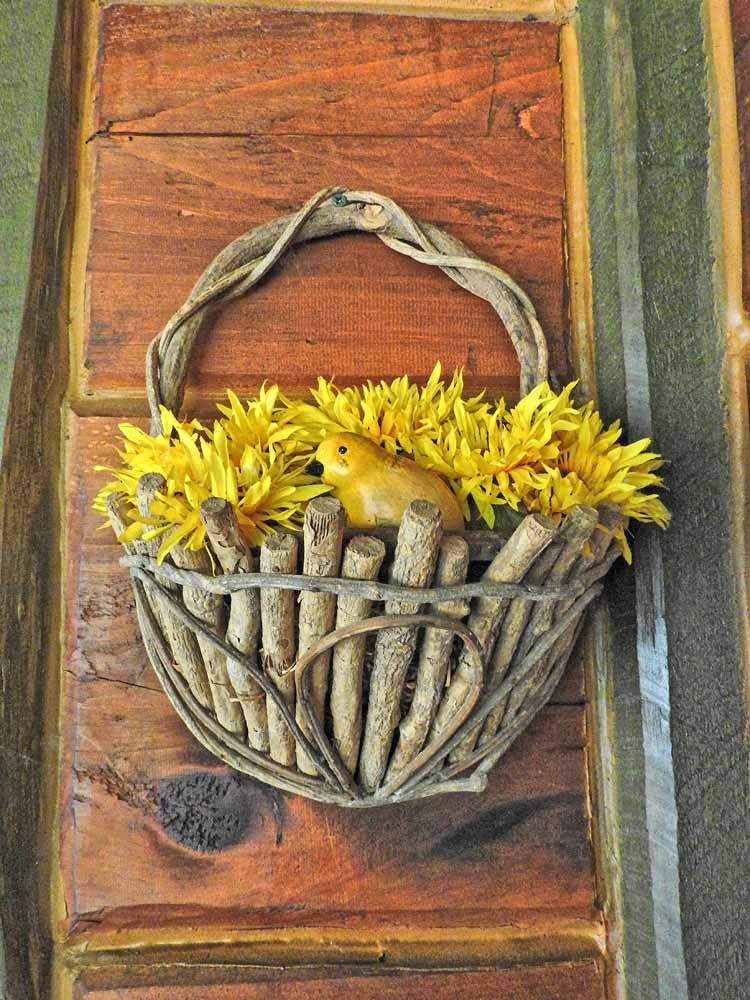 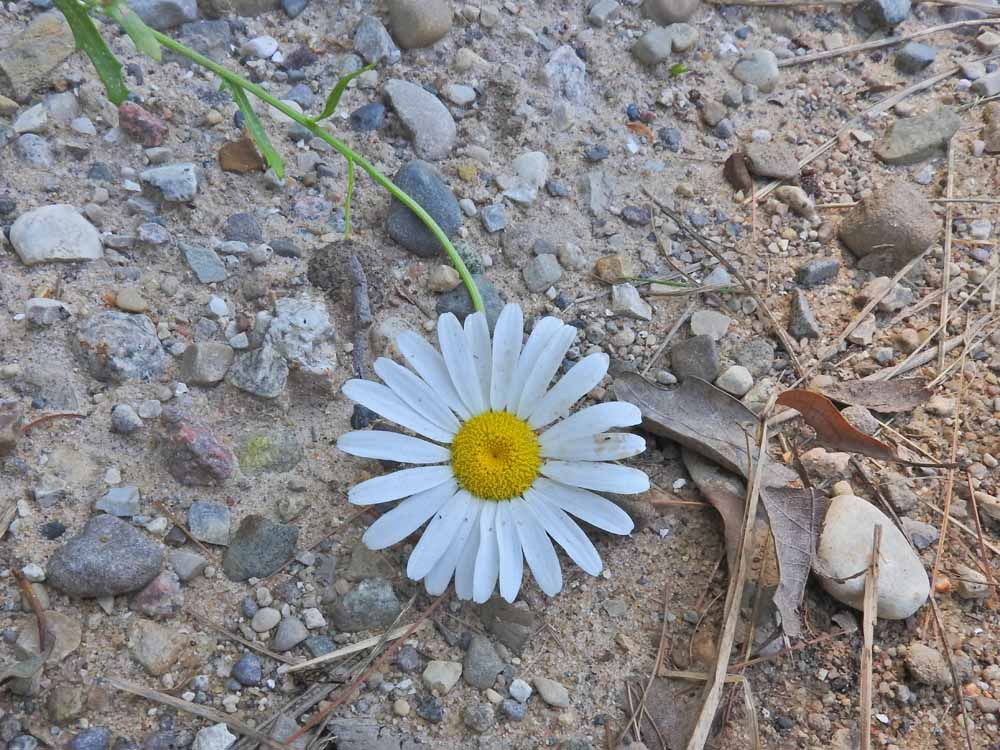  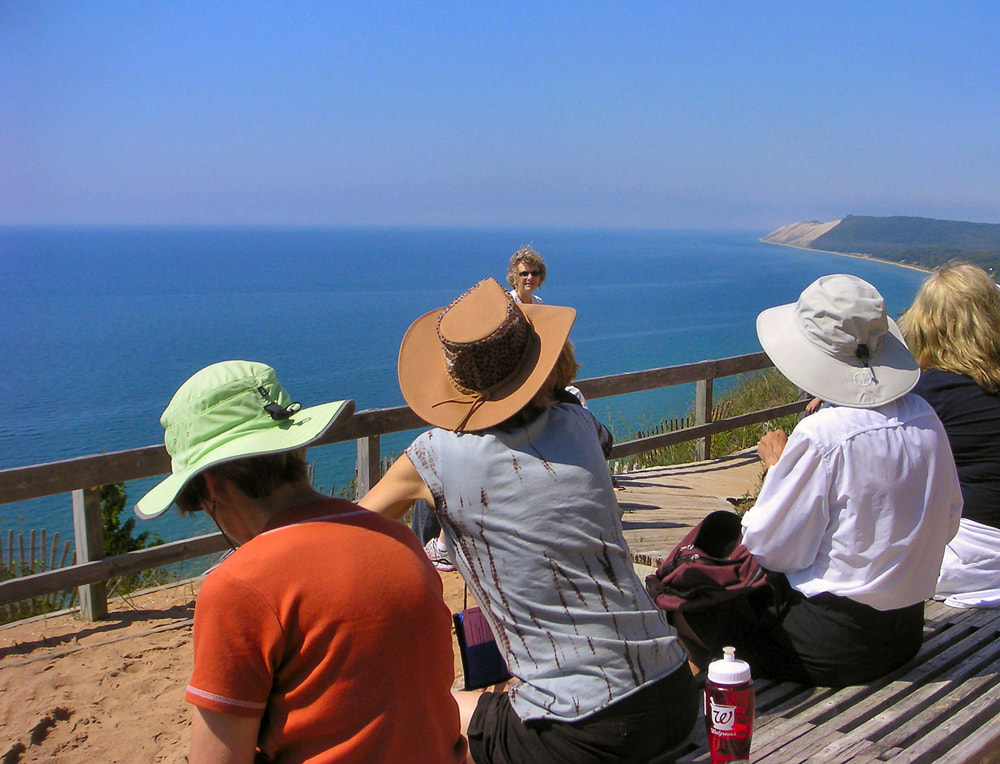 Anne-Marie Oomen leading a writing workshop at Sleeping Bear Dunes on Lake Michigan Anne-Marie Oomen leading a writing workshop at Sleeping Bear Dunes on Lake Michigan What with summer activities and chores and the myriad details associated with the launch of my memoir Mango Rash, I confess I haven’t been doing much new writing lately. I was inspired to make an exception, though, when I received a compelling request earlier in the summer from one of my favorite Michigan authors, Anne-Marie Oomen. She was appealing to writers in her circle to join in an undertaking she called the Lake-love Letters Project. The idea was simple: write a love letter—no more than 400 words—to the Great Lakes or a specific lake. Not a huge investment of time and energy, but an important one, as Anne-Marie’s cover letter made clear. 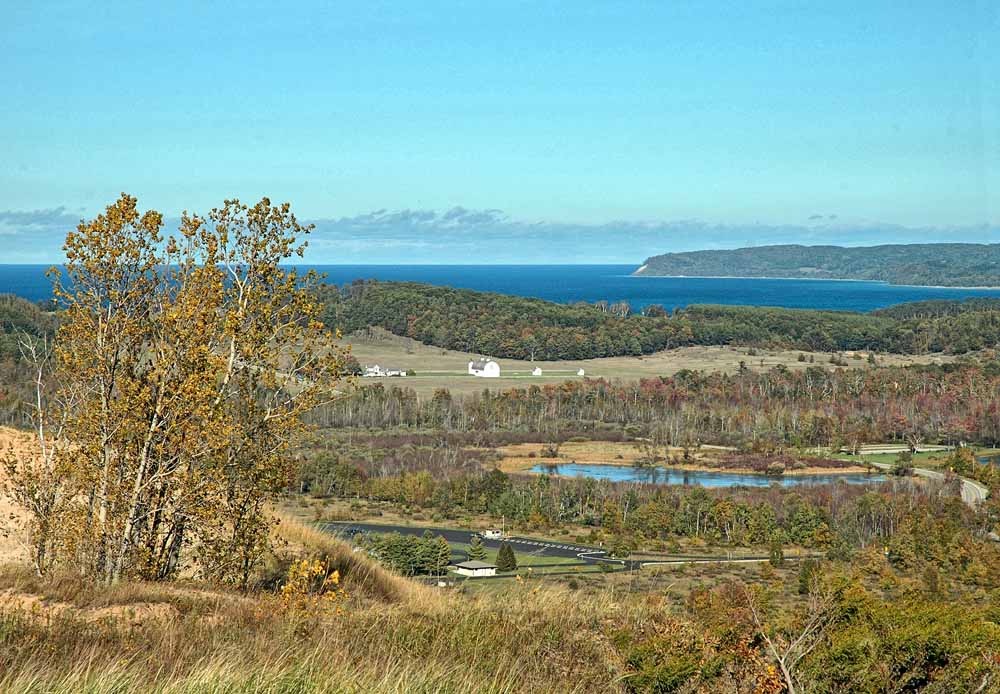 It began: I love our waters: lakes, rivers, wetlands, little sinking ponds, remote swamps. If it’s wet, I’ll probably like it. And of course, I’m worried about all of them, as I know many of you are. I often wonder what I can do. I’m not a scientist, politician, lawyer, not even a very good journalist. I often feel inadequate, a “fish out of water” when it comes to this work. This year, a question I asked myself: how might I use my small gifts a literary artist (creative writer) to do something for our beloved waters. She went on to relate that just as she was considering how she might make a difference, she received a letter from Liz Kirkwood, director of the regional water organization For Love of Water (FLOW). The letter explained that in July, the International Joint Commission of the Great Lakes would meet in Traverse City. Liz wanted to enliven what might otherwise be a dry discussion (subject matter notwithstanding) by involving artists who are passionate about our water.  As Anne-Marie described it in her letter, She had a vision: at the final meeting with the commissioners, could we showcase our love of water in a way that would involve the arts, particularly the writers. She spoke of the arts as one heart behind all the science and legal work. I was so grateful for her rare understanding. And she offered an idea that I could run with. Could we writers and artists do something with love letters to our waters. Love letters? Yes! I usually take my time responding to requests that ask me to write, edit, or critique something. I like to consider what else is on my to-do-list and how interested I am in adding to that ever-expanding list. This time I didn’t hesitate. As soon as I found a sliver of writing time, I drafted my love letter. After a few revisions, I sent it off to Anne-Marie. Here’s what I wrote: 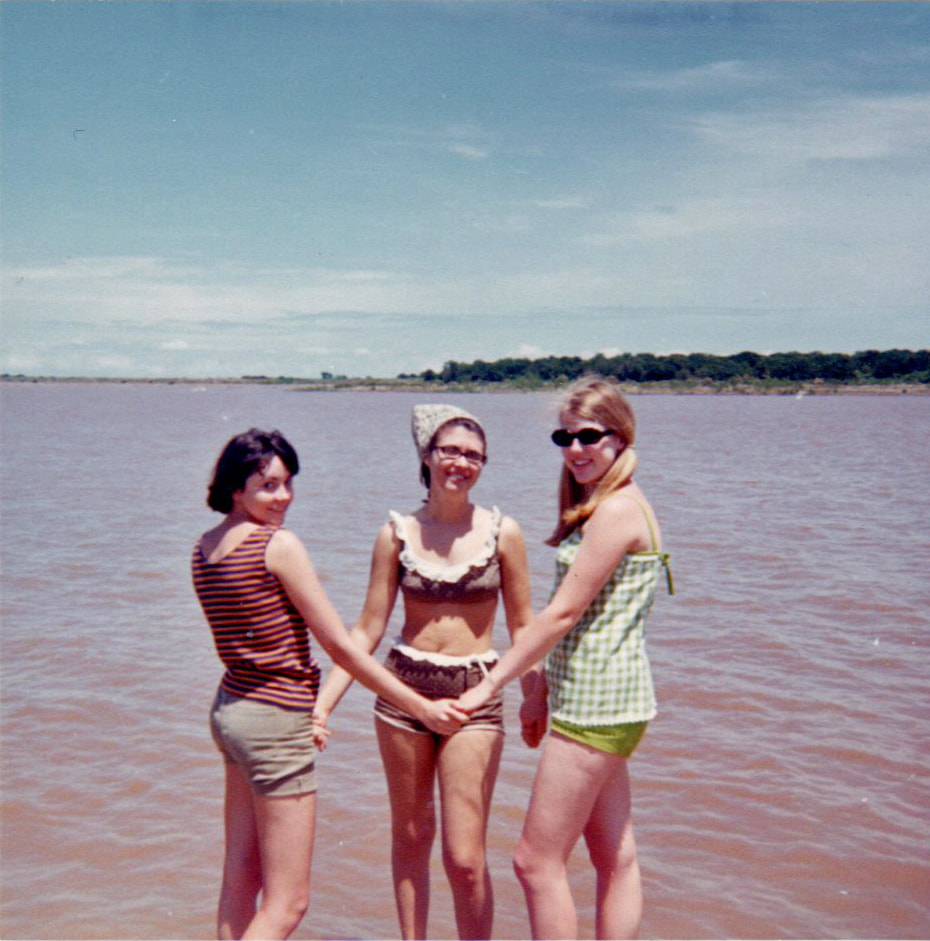 With friends Sarah and Cindi at Lake Carl Blackwell in Oklahoma, circa 1968 With friends Sarah and Cindi at Lake Carl Blackwell in Oklahoma, circa 1968 Dear Lake Michigan, You’re not like the others—the ones I grew up with. In that flat and dusty land, those pretenders to the title were mere puddles. Knowing no better, we suited up, dived in, toweled off, sat on shore with sandwiches, staring out across their dense, red-silted expanses, thinking, “Well, this is nice.” 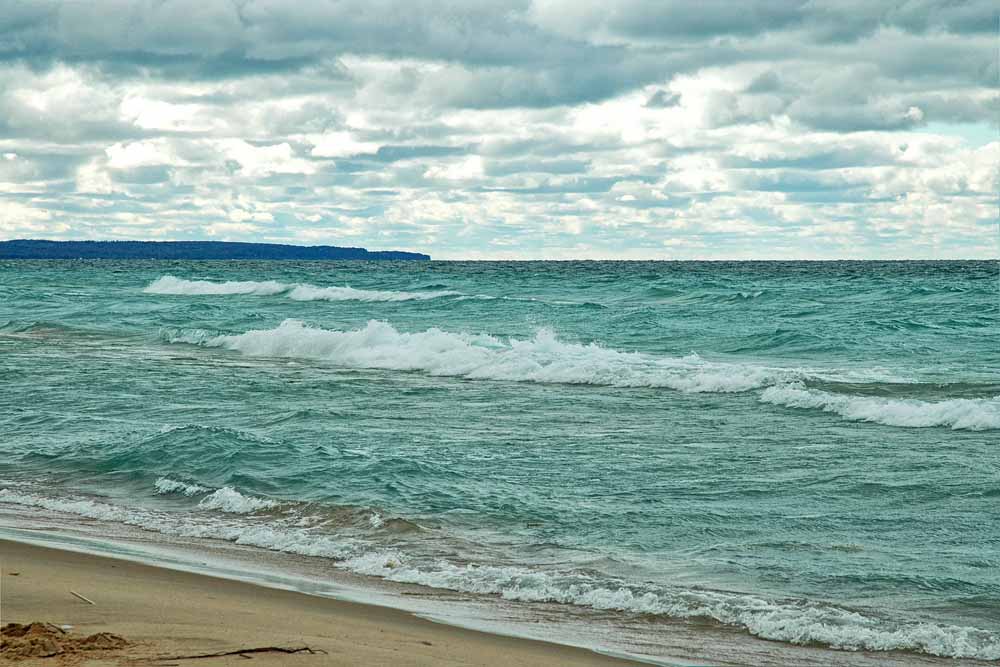 Then I met you, and I had to expand my vocabulary. I’ll admit it: you dazzled me, spangled like a rock star, necklaced with villages whose very names enchant: Empire, Pentwater, Saugatuck. 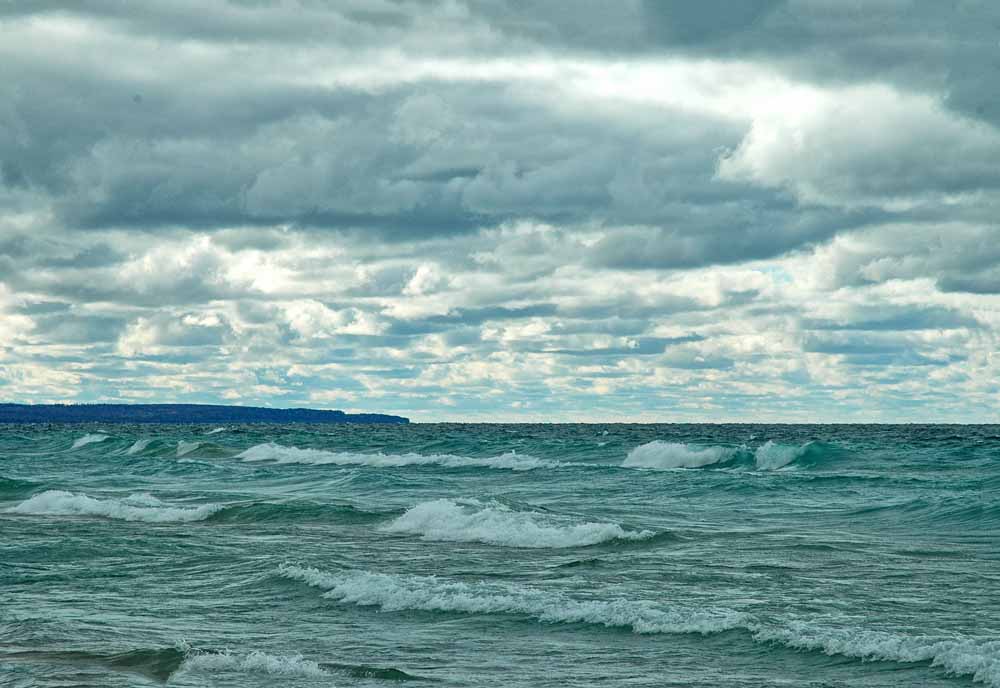 The only time I didn’t love you as much as I wanted to was on that blustery September day I ferried across your liquid skin. Your ups and downs! How they unsettled me. Betrayed, I sulked until I reached the other shore and looked back at your troubled face, your spectrum of shades. 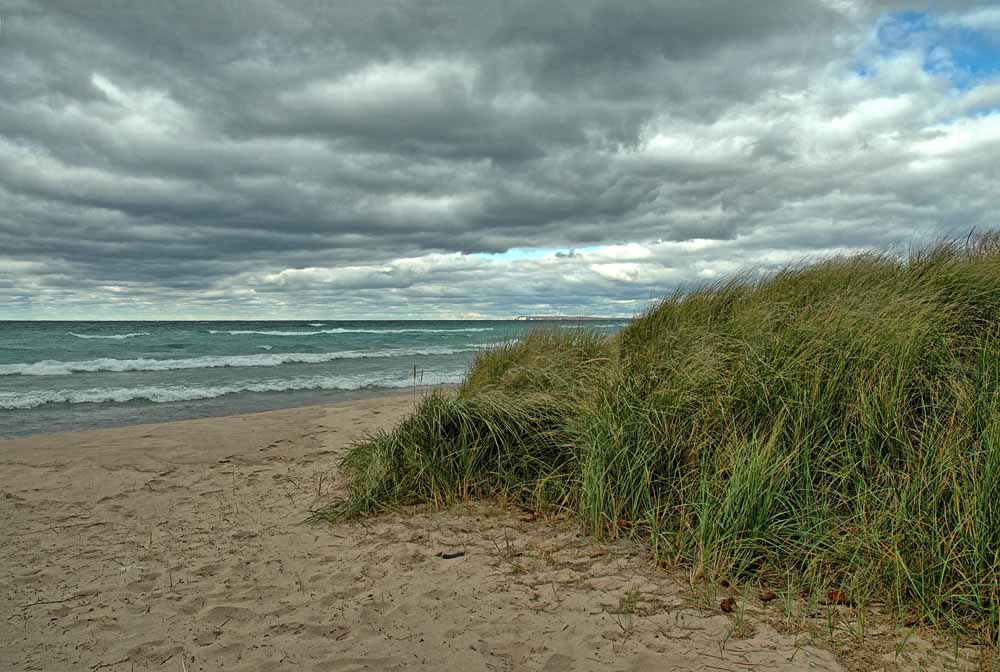 You, too, carry burdens, I realized in that moment. And also this: I may have loved you since we first met, but I haven’t really known you. Let me know you now. Love, Nan 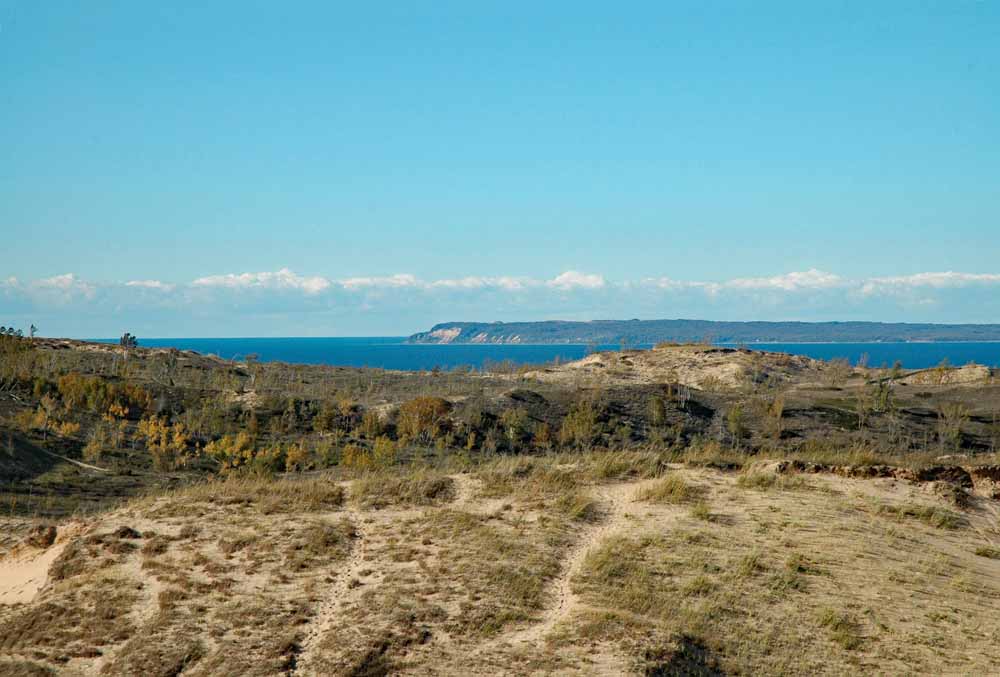 Just before the commission meeting, Anne-Marie reported that nearly 100 letters submitted to the project would be presented in book form to each of the commissioners. In addition, she extracted sentences from some letters and shaped them into a ten-minute script to be read as part of the presentation to the commission. “Your words made a beautiful praise song to the lakes—thank you!” she wrote to contributors. So often, writing feels like a solitary, inwardly-directed pursuit. It was gratifying to take part in this project, and it made me think about other ways I might merge my passion for writing with the issues I care about. How can you apply your talents to something you care about? FLOW’s video of the entire Traverse City meeting can be viewed here. The Lake-love Letters Project portion begins around minute 14 and continues to minute 28. FLOW and the commission also plan to post the entire collection of Lake-love Letters on their websites.
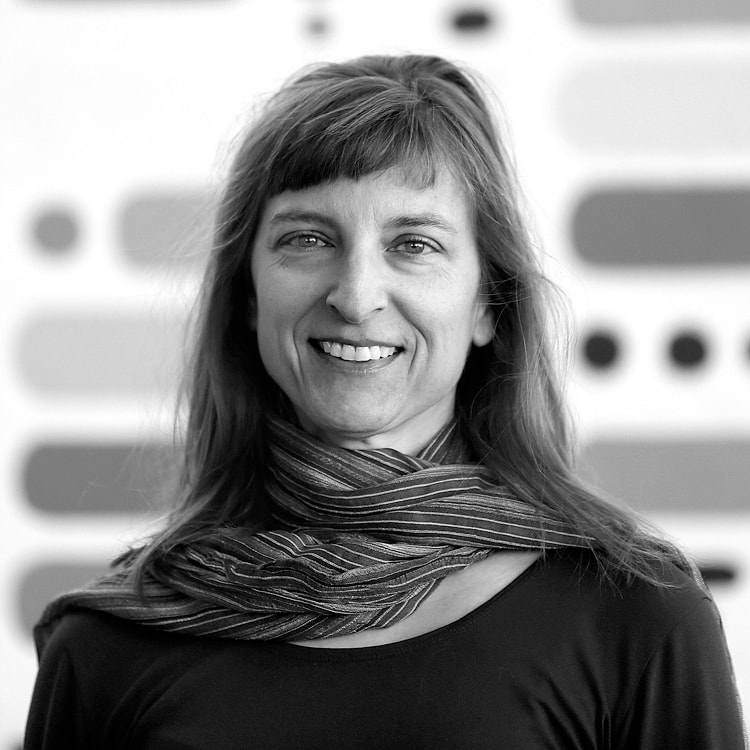 Kirsten Voris Kirsten Voris I’m excited to introduce a very special guest this week: Kirsten Voris, co-creator of the recently-released Trauma Sensitive Yoga Deck for Kids (North Atlantic Books). The deck of 50 yoga cards for kids aged 3-12 comes with a guide for trauma-sensitive facilitation that’s grounded in the evidence-based Trauma Center Trauma-Sensitive Yoga (TCTSY) methodology and the yogic tradition of ahimsa, or non-harming. I met Kirsten through writing, not yoga—we were workshop-mates at the Tucson Festival of Books Masters Workshop a couple of years ago—and I’ve been a fan of her work ever since. When she told me about this latest project, I wanted to hear more, both about the yoga cards and the role of yoga in Kirsten’s life. I know you’ll be interested, too, so I’m sharing our conversation here. How did you first become interested in yoga? The first yoga shape I learned was headstand, and that was taught to me by a German boyfriend when I was in my twenties, so approximately 1992. Then, there was no yoga until I moved to Turkey in 2010. In Turkey I wanted to swim, but there was no way to do so cheaply. There was a yoga studio close to my house, though, so I started going. I eventually signed up for teacher training, so that I could go even more often. I did my teacher training in Ankara, Turkey (Yoga Sala, Ankara, Turkey, class of 2012!). What led you to trauma-sensitive yoga? 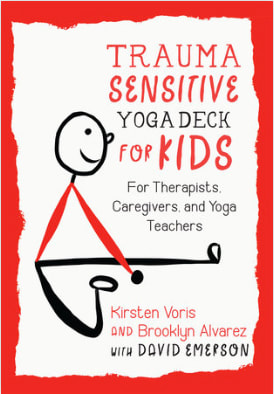 The yoga deck The yoga deck I was led to Trauma Center Trauma-Sensitive Yoga (TCTSY) because there were things that didn't work for me, in regards to how I was in my own body and how I was taught to facilitate yoga for other bodies. How is trauma-sensitive yoga different from other kinds of yoga? 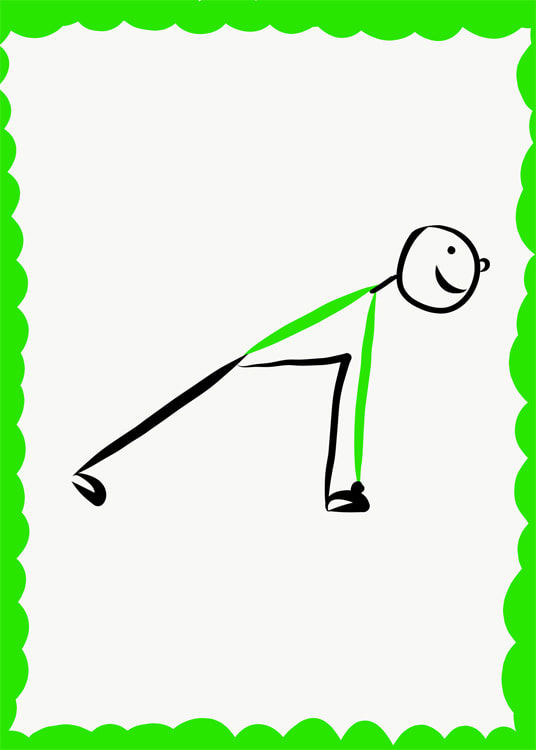 TCTSY was developed as an intervention for complex trauma (also called complex PTSD). It is most helpful for people recovering from disturbed relationships with their bodies and the lack of agency and/or trust that can come from surviving systems of chronic disempowerment or neglect. We use the shapes (forms or asanas) from yoga to practice making choices and noticing sensations in our bodies. In a TCTSY class, participants are 100 percent in charge of their own bodies at all times. The facilitator stays on his or her own mat, and rather than setting goals or correcting or adjusting participants, simply provides them with choices for movement and highlights sensations they may feel in each shape. In order to help us keep the focus on our bodies, there is no music in a TCTSY class. What principles of yoga are most relevant to trauma-sensitive yoga? 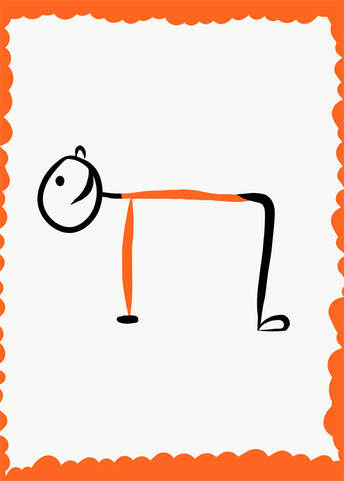 From Patanjali’s eight limbs of yoga, we focus on Asana, or the movement practice. And within the movement, Dhyana, or meditation. In TCTSY we use our bodies and sensation in our bodies as the focus of meditation or mindfulness, as opposed to the breath. Instead of returning to our breath, we’re returning to our bodies when we get distracted. I might invite a client to notice their breath if I know them well. However, in general we don’t work with the breath. For some people, feeling their own breath moving can be a very potent trigger. Some yogic breath practices trigger anxiety and, with Pranayama (breath control), there is a goal involved: to become more centered, more calm, more energized. In TCTSY there is no outcome we are looking to achieve. Ahimsa, which means non-harming, is a part of everything we do. We want to empower, not disempower. I am not someone who can teach others how to heal. I can be a witness, though, to someone’s healing. And I can hold a space for healing. Judith Herman, a therapist, researcher, and author of Trauma and Recovery, inspired so much of what we do. She has another way of putting this. She wrote: “No intervention that takes power away from the survivor can ever foster her recovery no matter how much it appears to be in her immediate self-interest.” I love that. My body knows how to heal. So does yours. How did the yoga deck project come about? Brooklyn Alvarez Brooklyn Alvarez I met co-creator Brooklyn Alvarez in our 300-hour TCTSY facilitation training. We were assigned to be buddies. We spoke every week for nine months. We had both done some facilitation with kids with the available yoga cards and didn't like them. One week in our supervision meeting we told Dave Emerson (director of the center), what we'd been talking about. He told someone at North Atlantic Books. Some time later, Dave announced that North Atlantic Books wanted to publish our deck of trauma-sensitive yoga cards for kids, which up until then, we had only been talking about. It was pretty mind-blowing how that happened. Dave read through the pamphlet and helped us in so many different ways with ideas for content and questions around language and feedback on the cards and the pamphlet. He let Brooklyn and me have our own process when it came to resolving issues that came up during the creation of the final product. He was our first editor. I'm really happy to be associated with him in this way and to have him associated with us and the cards. How do you envision the yoga deck being used? 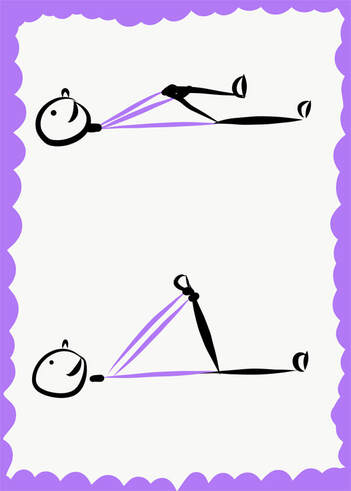 Lots of kids love to move. This is an opportunity to harness that and provide kids with the opportunity to experience choice—in their bodies. And maybe notice sensation in their bodies, to help them ground in the present moment, which is the only place we can feel a sensation. I'd like the cards to be used by people who love kids who have been through terrible things. Anyone can help a child heal. TCTSY practitioners who are therapists can use cards in session with their clients. Foster parents can use the cards to engage with kids in their care. The cards can be a supplemental activity or the main attraction. The pamphlet comes with ideas for group activities involving the cards and practices for one-on-one facilitation or small-group facilitation. And all of these are suggestions. What is important is creating a sense of connection and safety for children. Caregivers can do this by practicing along with the kids in their care, not asking kids to do something and then standing back and watching. Yoga card time can be family time. Time to put down your phone, turn off the TV, and practice being in your body. Everyone practices together: the youth, the moms, the grandmas, the foster dads. Each person noticing their own bodies. How has your own yoga practice evolved over time? My yoga practice started out as anxiety management through overdoing it. I was in class every day and it was vinyasa or ashtanga class. I wanted to stand on my head and balance on my arms. I wasn’t interested in learning to be grounded in my body. Or still. I could not tolerate savasana, or rest. I kept my eyes open. I didn’t like being adjusted or touched. Then, I began to get injured. I have healed-over hamstring tears. I have tendinitis in my left deltoid. In the wake of that particular injury, I couldn’t raise my arm over my head for one year. I discovered the limits of self-medication through exercise. I started to slow down—out of necessity. My favorite teacher in Turkey had a Yin Yoga class that I began attending. It was very difficult for me to hold shapes for long periods of time and give myself over to them. But listening to her guide us through it, as she talked about all the different muscles and meridians we were touching though our practice, helped. (I dedicated my yoga cards to her.) Eventually I began to notice and feel my body and realized that, before I got injured, I couldn’t feel my body at all. And because I couldn’t feel it, I couldn’t make good choices for my body. After graduating from teacher training, I went to a week-long Yin training with Bernie Clark, who introduced me to the idea that adjusting people based on our idea of how a shape needs to look can hurt people. Everyone needs to find their own shape. Since moving back to the US, my yoga is mostly at home. Learning and facilitating TCTSY has made it even more difficult for me to find yoga classes I like, because now I am super-empowered to say what I don’t like (I don’t like to be touched or adjusted or told what to do), and I now know there is a kind of yoga that doesn’t require me to do that to other people. For the past two years I have been involved in an Open Floor Dance community here in Tucson. This is a conscious dance practice. You dance however you want, and you stay with yourself. I’m still learning, and this is the scary leading edge of my evolution as a human being. And it wouldn’t have been possible, without TCTSY. Anything else you’d like to add? Trauma Center Trauma-Sensitive Yoga is very new and very special, and the community is not that large. It has felt amazing to create something that I believe so strongly in, in concert with other humans who are equally passionate about the innate power we all have to help ourselves heal from terrible things--without having to talk about those terrible things. Through movement. The Trauma-Sensitive Yoga Deck for Kids can be ordered through independent bookstores, IndieBound, Penguin Random House, and other online booksellers. ISBN: 9781623173289, $25.95 More about Kirsten and her co-creators KIRSTEN VORIS (RYT-200, TCTSY-F) is a former secondary school teacher and adult educator who completed her initial yoga certification in Ankara, Turkey. Her interest in yoga as a tool for personal integration led her to Yin Yoga and the research-based Trauma Center Trauma Sensitive Yoga (TCTSY). She has facilitated TCTSY for volunteer aid workers in Cusercoli, Italy and brought TCTSY to therapists through PESI trauma training retreats in Sedona, Arizona. In addition to facilitating TCTSY for private clients in and around Tucson, Arizona, Voris has been the TCTSY provider for youth and children through a tribal health service in Southern Arizona. She offers an introduction to TCTSY to fourth year medical students and medical residents at the University of Arizona Center for Integrative Medicine. BROOKLYN ALVAREZ is a clinical psychologist-in-training (doctoral degree expected 2021), certified Kripalu yoga teacher, and avid student of Buddhist psychology and mindfulness meditation. Alvarez's personal and professional experiences have inspired in her a fervent aspiration to specialize in the treatment of developmental trauma and, ultimately, to disrupt systemic hegemony. DAVID EMERSON is the founder and director of Yoga Services for the Trauma Center at the Justice Resource Institute in Brookline Massachusetts, where he coined the term "trauma-sensitive yoga" (TSY). He was responsible for curriculum development, supervision and oversight of the yoga intervention component of the first of its kind, NIH funded study, conducted by Dr. Bessel van der Kolk to assess the utility and feasibility of yoga for adults with treatment-resistant PTSD. Emerson has developed, conducted, and supervised TSY groups for rape crisis centers, domestic violence programs, and residential programs for youth, military bases, survivors of terrorism, and Veterans Administration centers and clinics. In addition to co-authoring several articles on the subject of yoga and trauma, Emerson is the co-author of Overcoming Trauma through Yoga, (North Atlantic Books, 2011) and author of Trauma-Sensitive Yoga in Therapy (Norton, 2015). He leads trainings for yoga teachers and mental health clinicians in North America, Europe, and Asia.
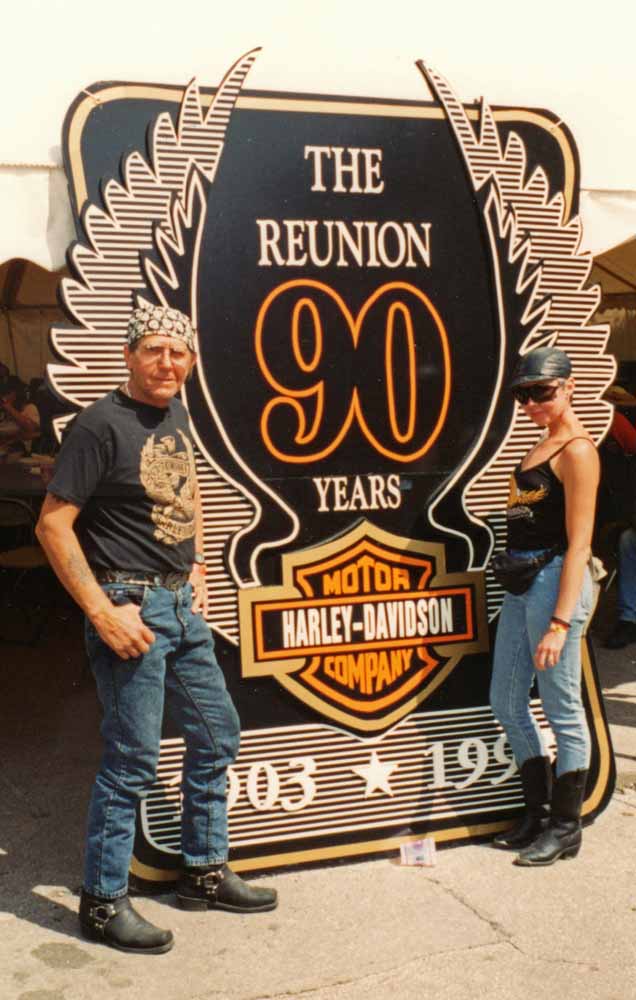
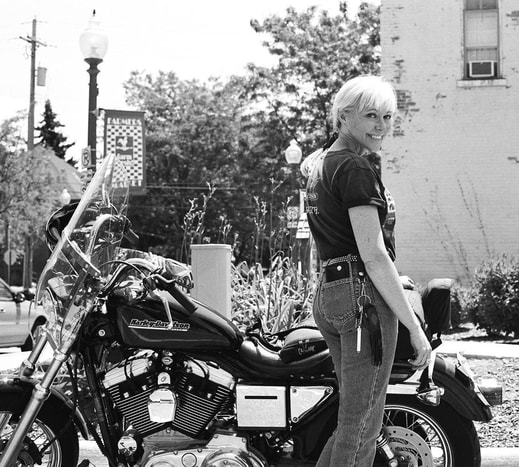 You know that old Bob Seger song, “Roll Me Away”? It’s been running through my mind lately. Only this time, I’m not the one rolling away. My dearly beloved motorcycle rolled out of our driveway for the last time a few weeks ago, destined for a new owner’s garage. 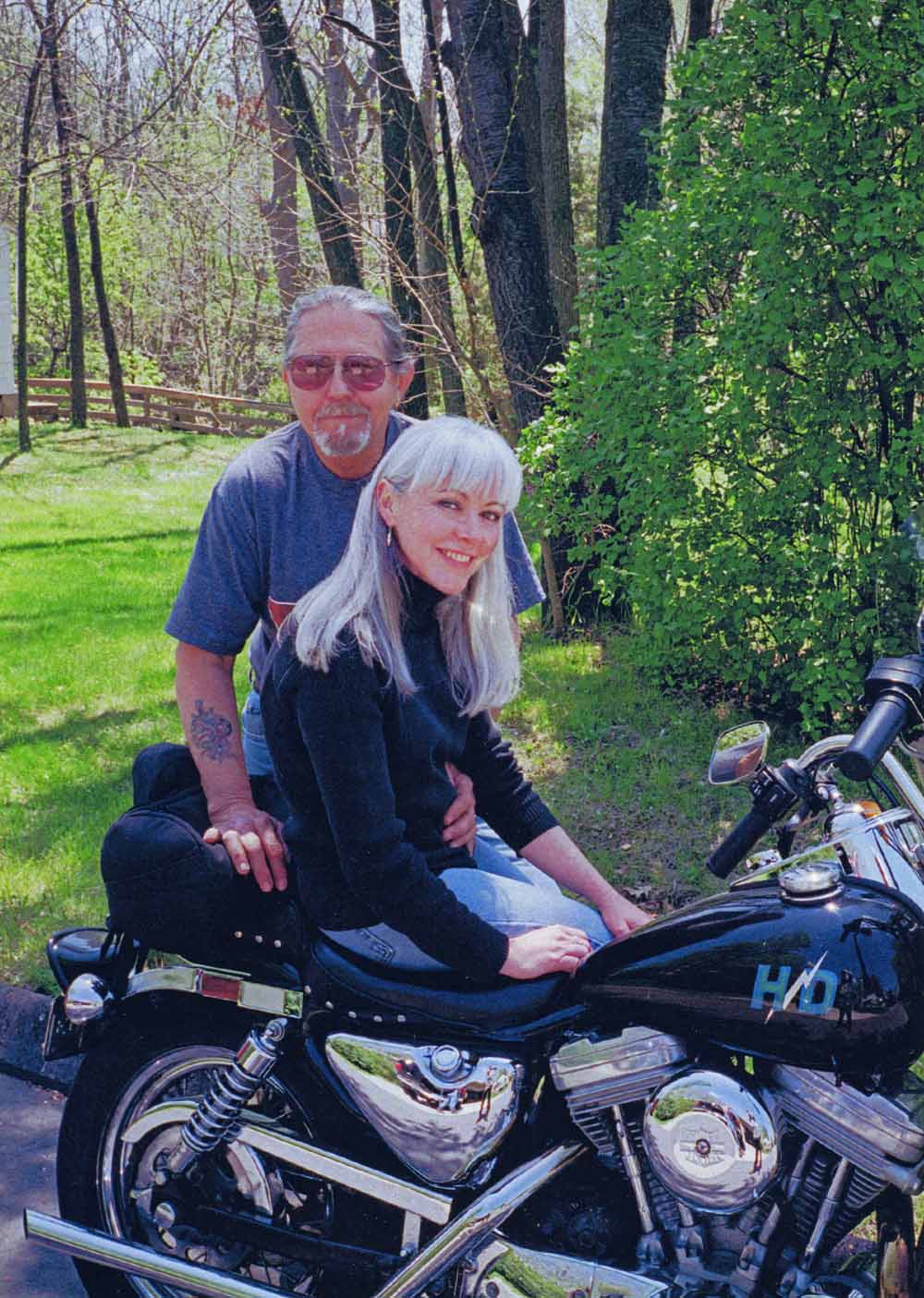 Being bike-less is a first for us Being bike-less is a first for us Now, for the first time in our twenty-seven years together, Ray and I have no motorcycles, as he recently traded his last two in on a side-by-side quad. It’s a strange feeling, a little sad and yet absolutely right. In the seven years since we moved to Newaygo County, I’ve gotten so involved in other activities—yoga, hiking, kayaking, photography, plus this blog and the book project I’m absorbed in right now—there just hasn’t been time for the long motorcycle rides I used to enjoy so much. But there’s more to it than that. Lately, being out on the road, even in a car, has started to feel a lot more hazardous. I don’t know if it’s my age, the increasing number of distracted and aggressive drivers, or both, but I can’t tell you how many times I’ve had an experience on the road in recent years that left me thinking, “Thank goodness I wasn’t on a motorcycle!" So I put the motorcycle up for sale, and before I had time for second thoughts, a young man was pulling into our driveway with a motorcycle trailer and a wad of cash. This would be his first motorcycle, he said, and seeing his excitement brought me joy. For good measure, I threw in saddlebags and a heap of other accessories and sent him and the bike off with my blessings. 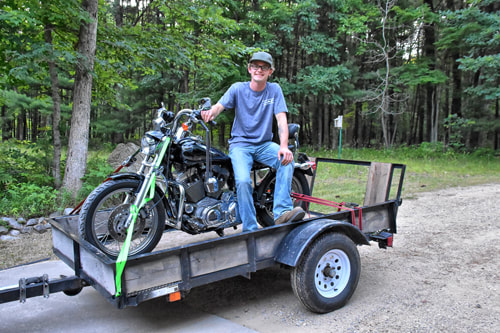 The happy new owner Now, my motorcycle days are memories. But what memories! 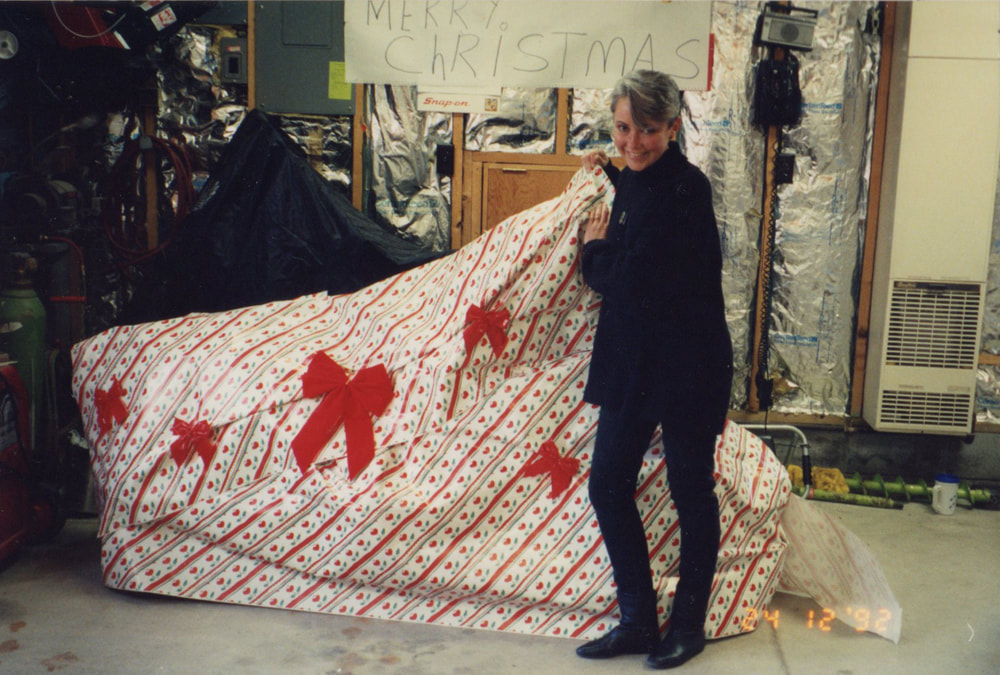 Ever wonder what a gift-wrapped motorcycle looks like? This. Ever wonder what a gift-wrapped motorcycle looks like? This. It all started when Ray gave me my first bike—a Harley-Davidson 883 Sportster—the first Christmas we were together. (So much for that $100 gift limit we’d agreed upon.) I had yet to learn to ride, but riding had been high on my hope-to-do-list for a long time. So I signed up for a Motorcycle Safety Foundation Basic RiderCourse at a local community college the following spring, practiced in parking lots until I got up to speed, and then took to the road.  Sitting on the bike for the first time. The tattoo was new then, too. 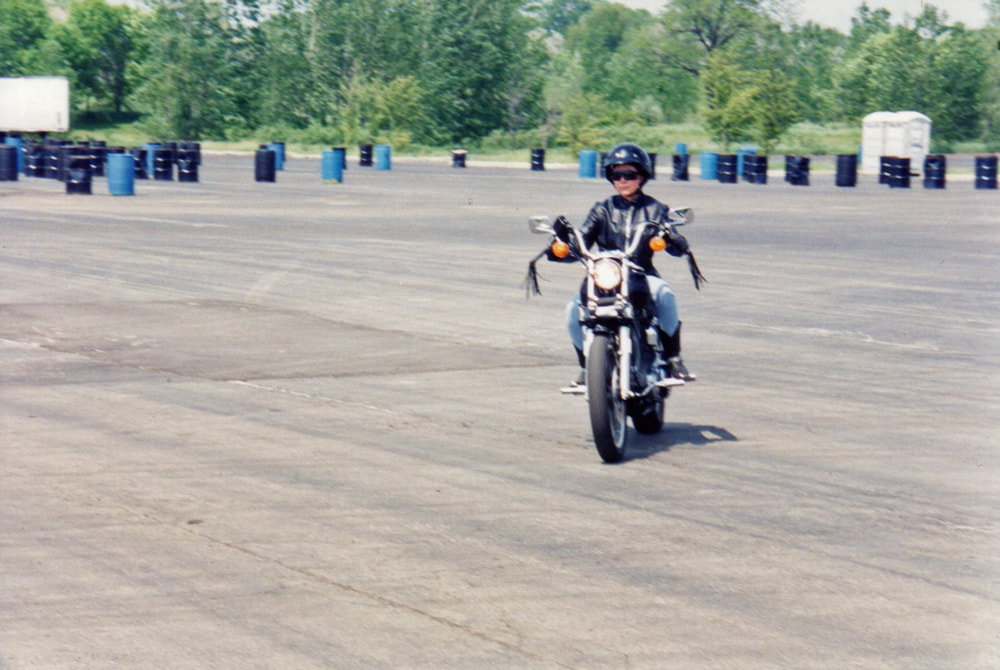 Parking-lot practice Together, Ray and I took motorcycle trips to Milwaukee, South Dakota, Oklahoma, and around the perimeter of Michigan’s mitten. I rode to work in Ann Arbor, and took long, meandering rides all over Southeast Michigan. 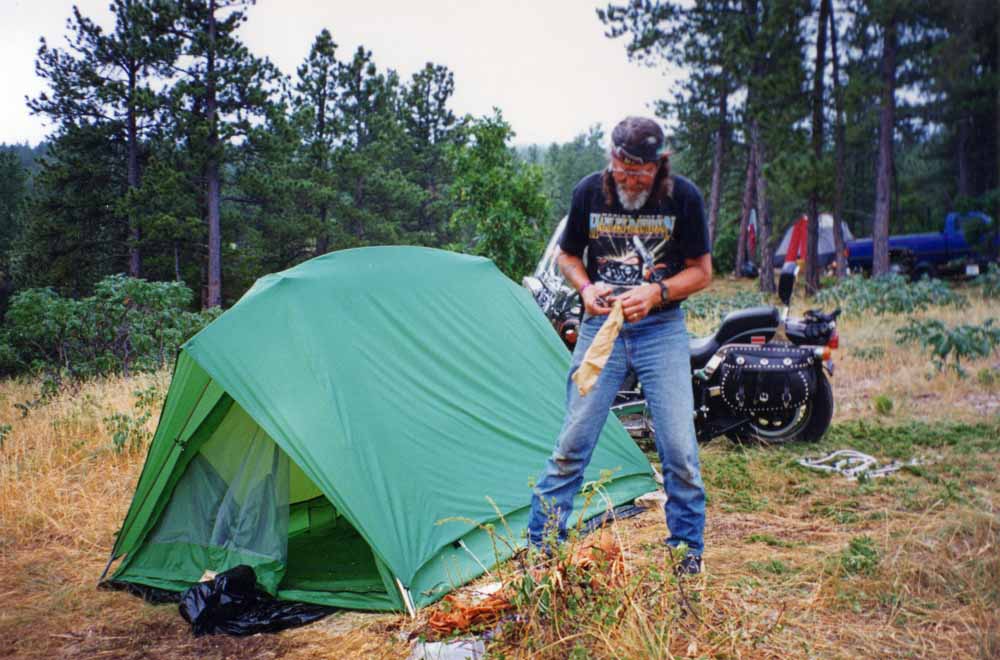 Setting up camp in Sturgis on one of our motorcycle trips 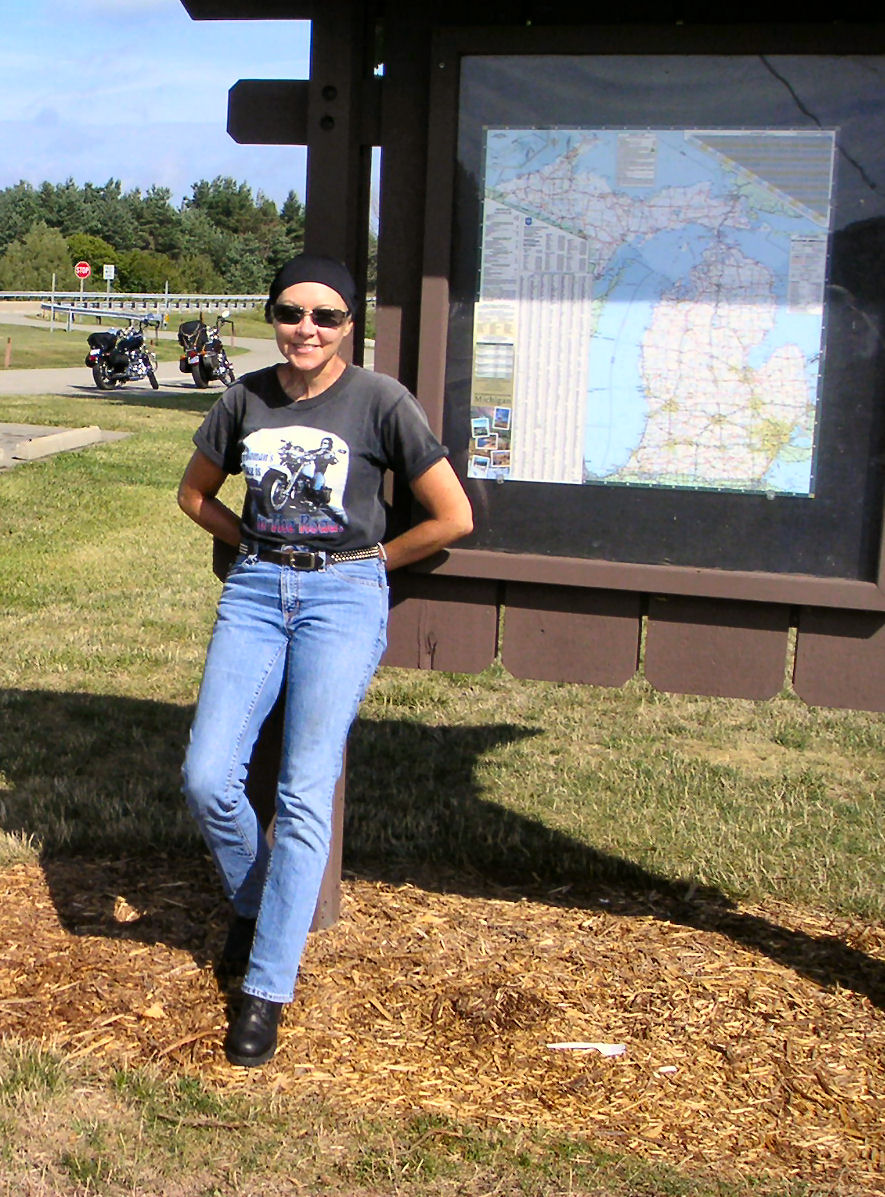 Taking a break on our ride around Michigan's mitten. My T-shirt reads: "A woman's place is on the road." When I outgrew the 883, which Ray had customized for me, I sold it and moved up to a 1200 Sportster. With custom paint and Ray’s touches, it became my dream bike—just the right size and weight, with forward controls, a comfy seat, a stylish Sport Bob tank, spoked wheels, fringed lever covers, and other cool details.  The 1200 Sportster, just the way I wanted it 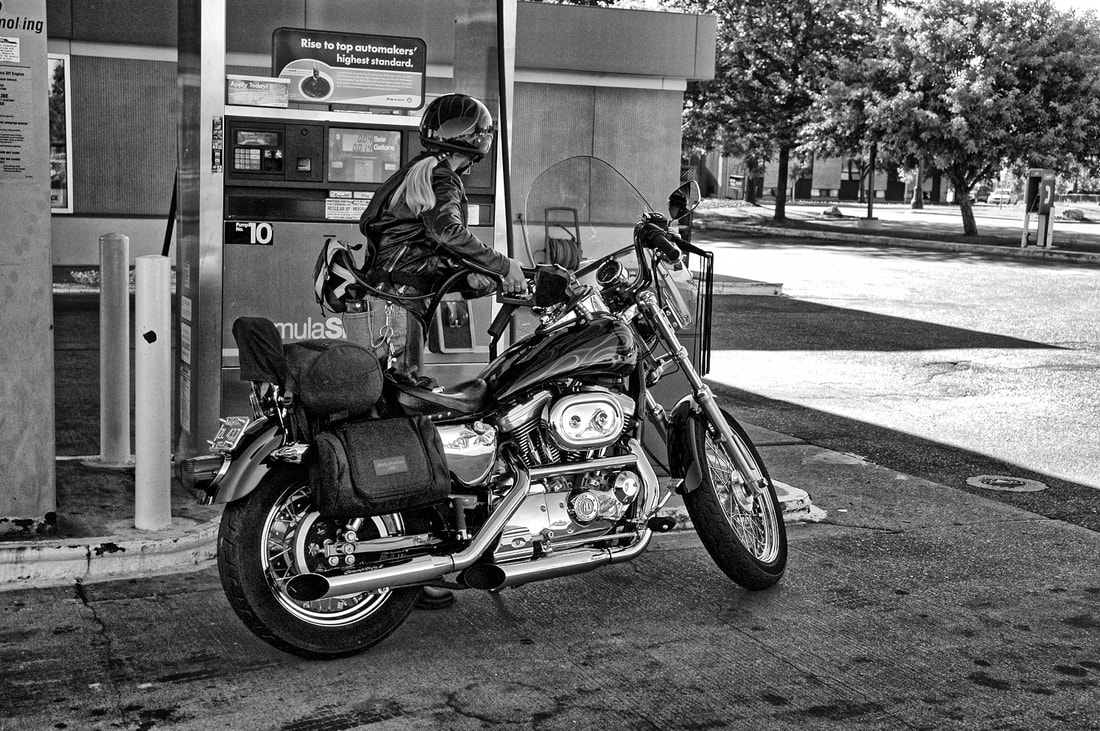 Fueling up for a ride on my beautiful bike At one point, I joined a women’s motorcycle group, the Chrome Divas of Motown, and though I’d always preferred riding solo or with Ray, I came to enjoy the camaraderie of our group rides and social activities. When my “bonus daughter” Michelle (Ray’s daughter) joined the Chrome Divas, riding together gave us new common ground.  Getting ready to ride with Michelle 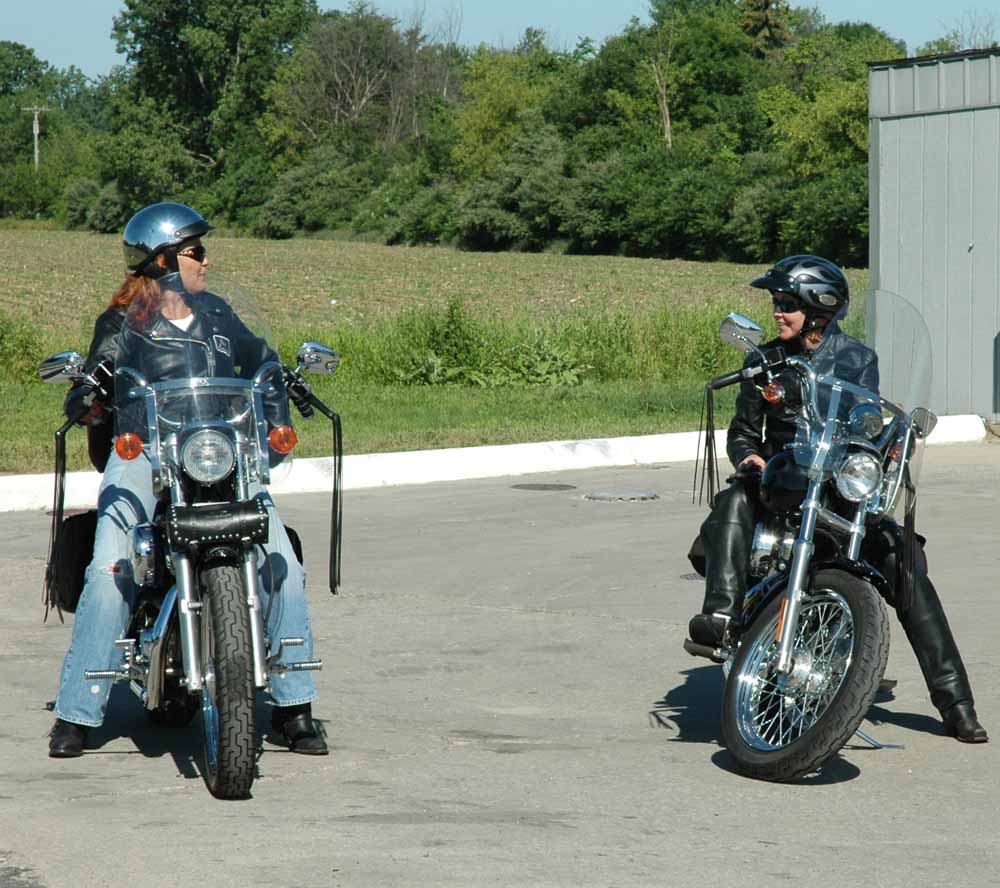 Sharing a moment after a gas stop 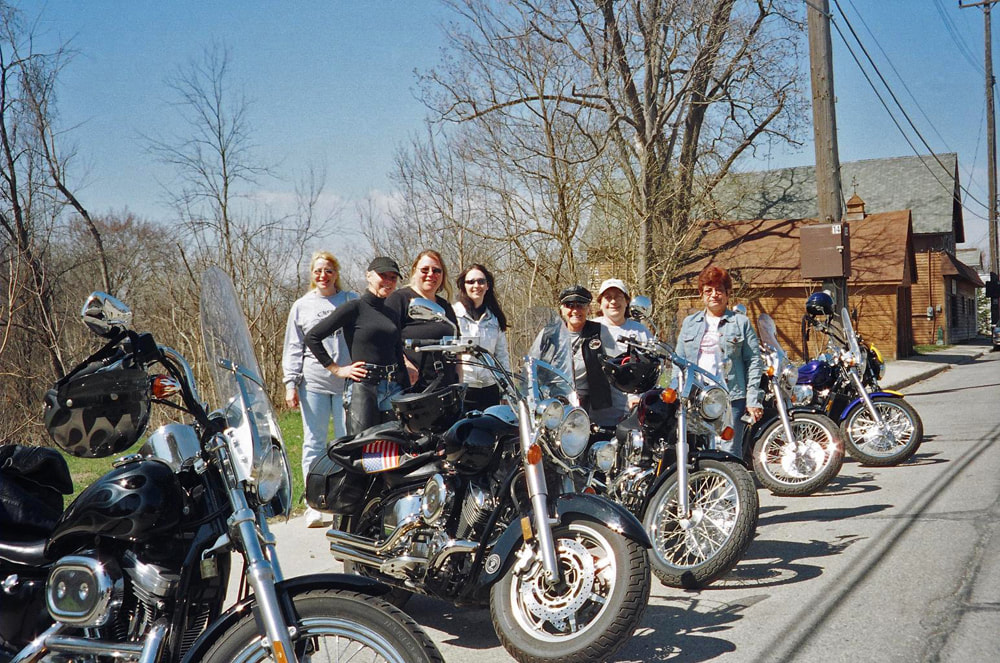 Chrome Divas, ready to ride Riding gave Ray and me a lot of shared experiences, too, and it certainly made gift shopping easy. There was always one more bike accessory or piece of riding gear to be bought. One Valentine’s Day, Ray heard a jewelry store ad on the radio: “This Valentine’s Day, buy your sweetheart something shiny.” So naturally, he headed to the Harley dealer and brought home the perfect gift for his sweetheart: a chrome tachometer cover. 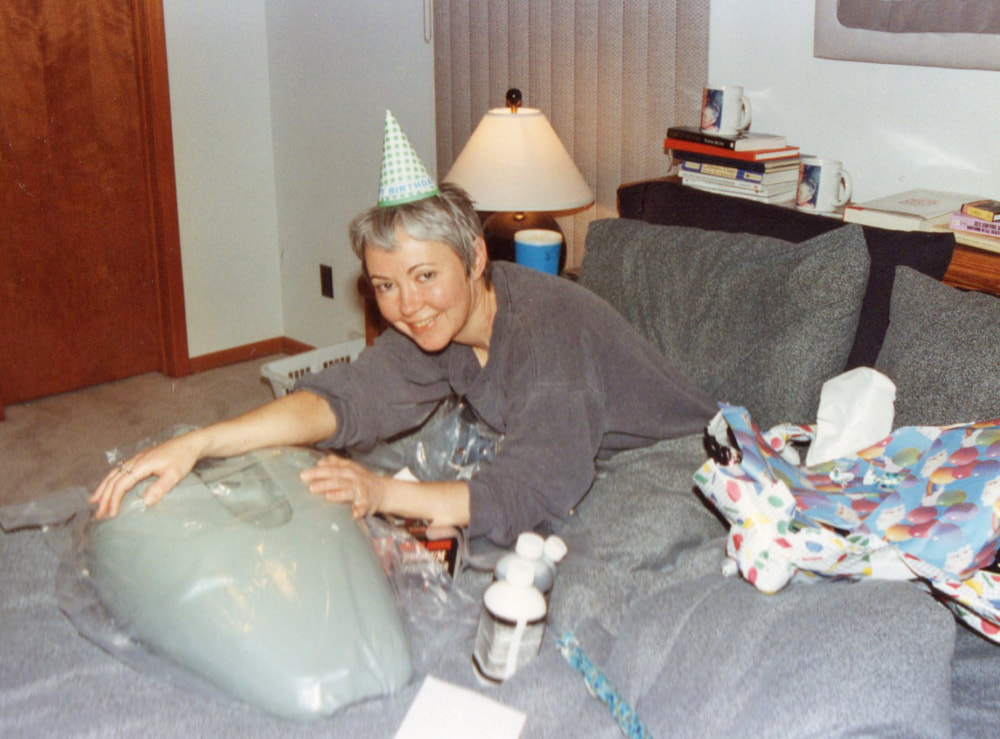 One birthday, I got a new gas tank, a speedometer, and various other motorcycle goodies. We covered a lot of asphalt over the years, and every memory of every ride—even a couple that resulted in broken bones—is a treasure. 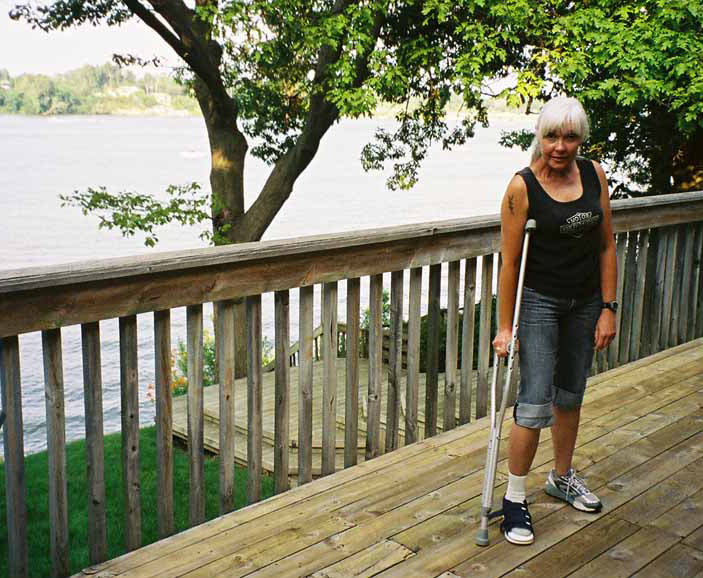 Aftermath of a mishap Now, it’s on to new dreams. That wad of cash I got for the bike? It’s going into my fund for a trip back to Samoa. But before we take off on that journey, come with me on a trip back through my motorcycle memories. Ready? Cue up Bob Seger, roll on the throttle, and let’s ride!
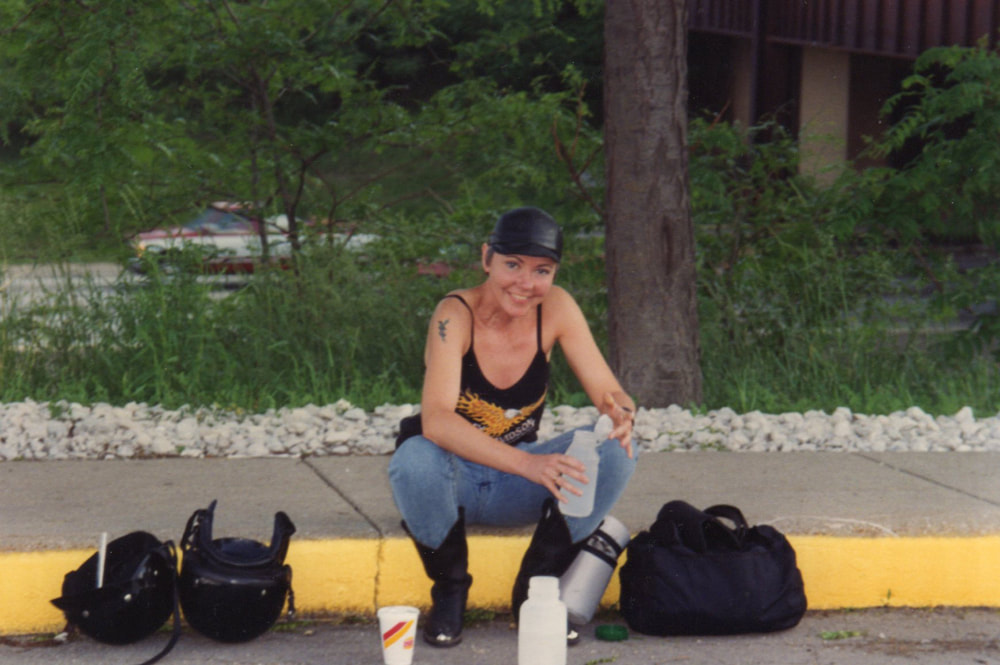 Taking a break along the way 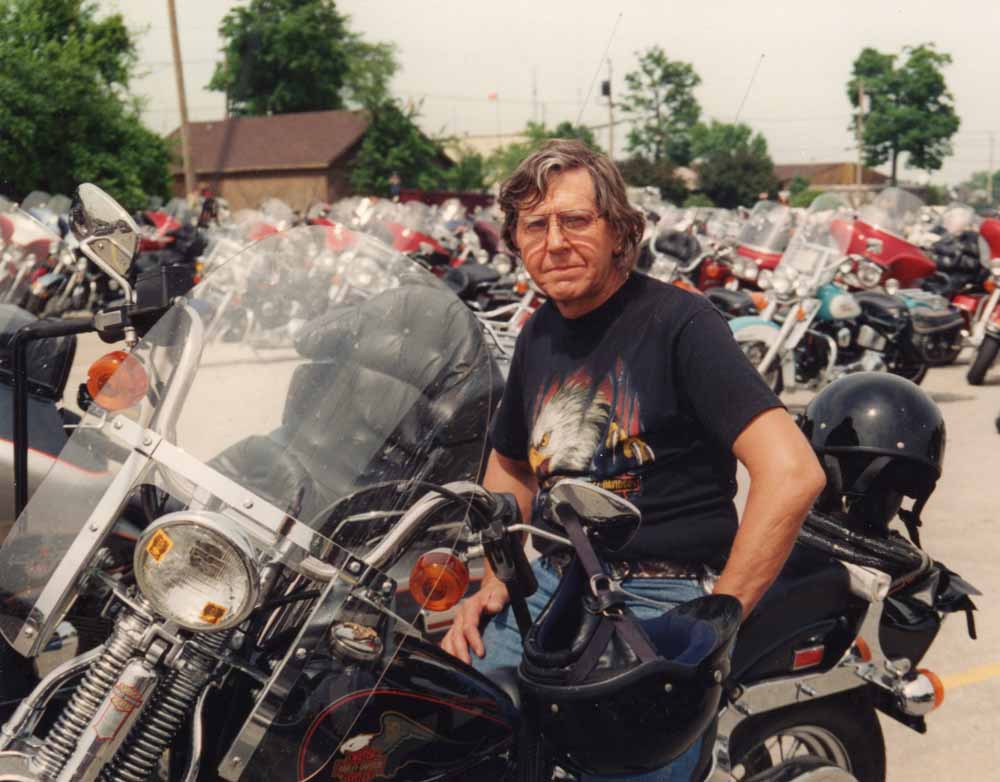 Ray in a sea of motorcycles at one of the Milwaukee events 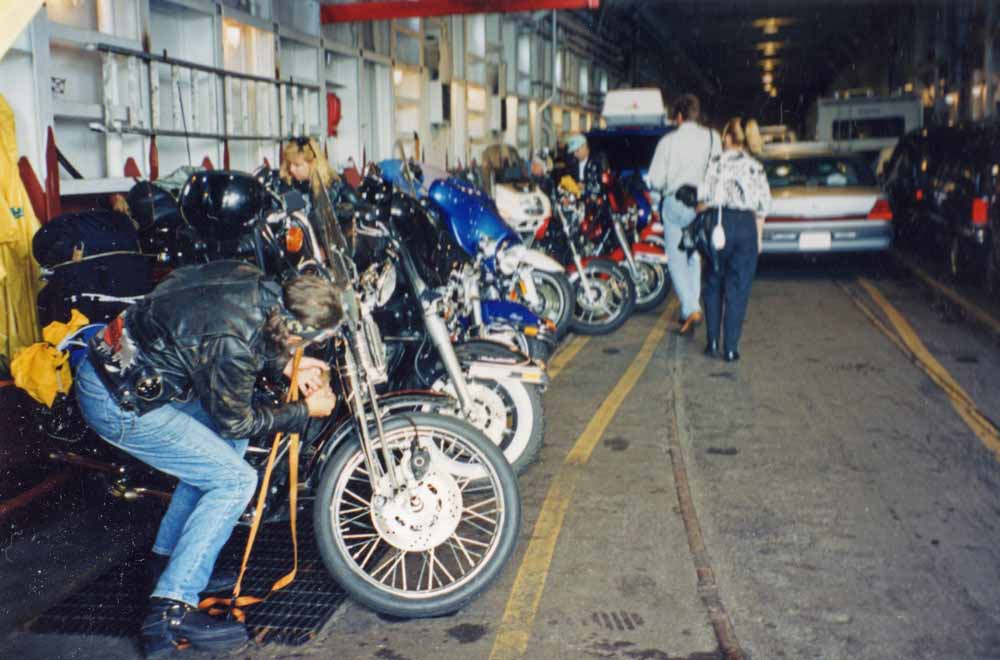 Taking the ferry across Lake Michigan on our 1994 trip to the Sturgis Motorcycle Rally in South Dakota 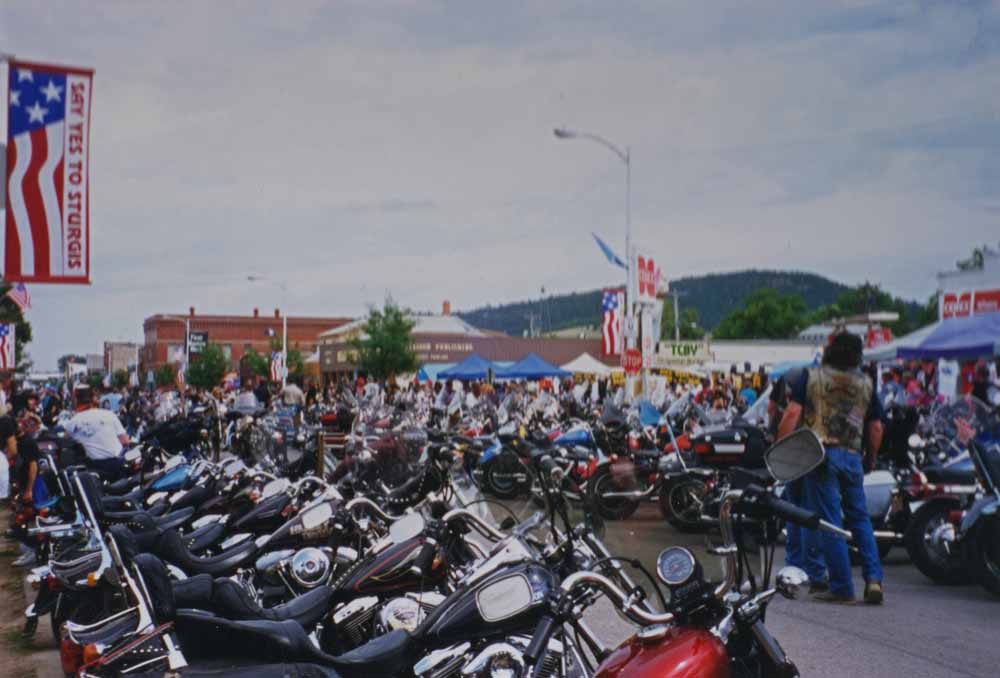 Sturgis street scene  Can't go anywhere without buying a T-shirt 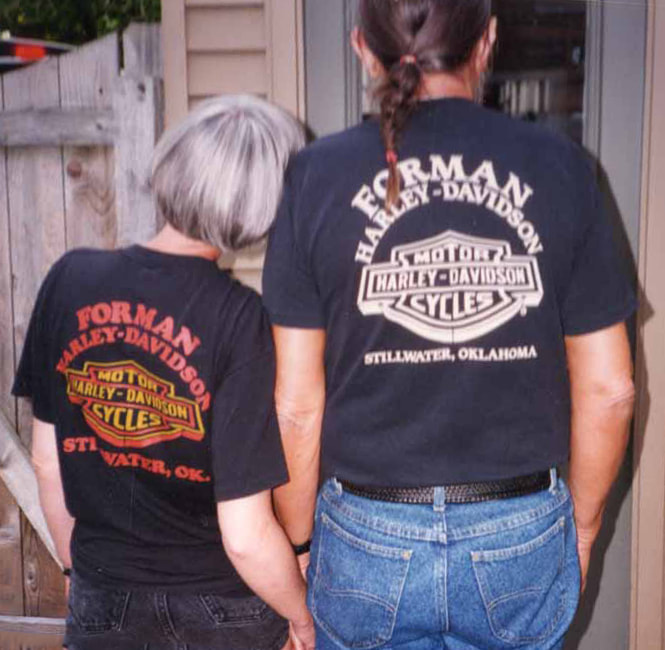 Or two
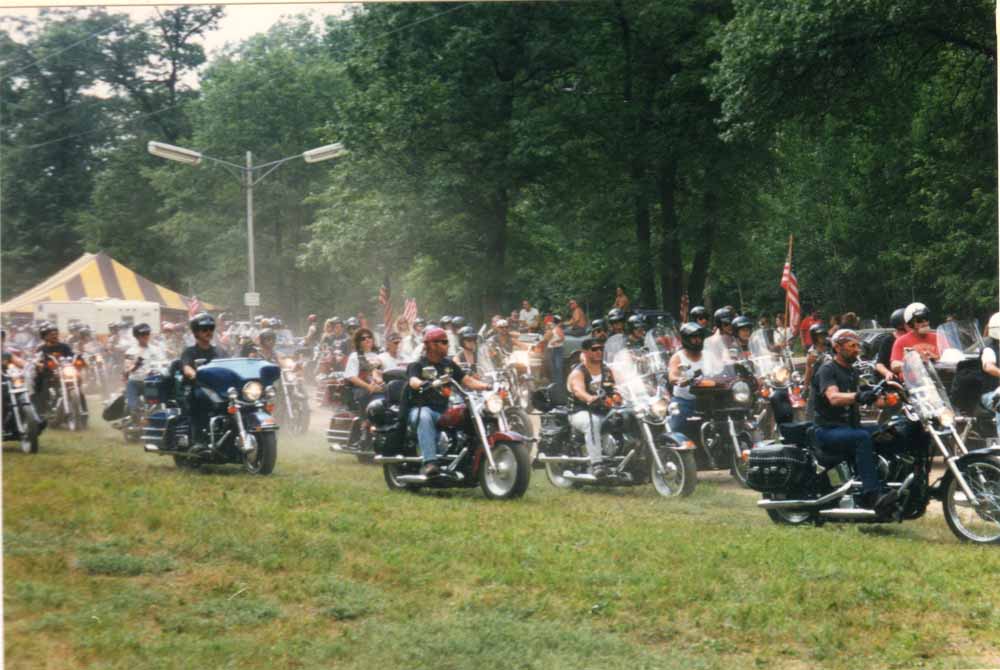 In between longer trips, we took in rallies closer to home, like the Ogemaw Hills Motorcycle Rally in West Branch, MI 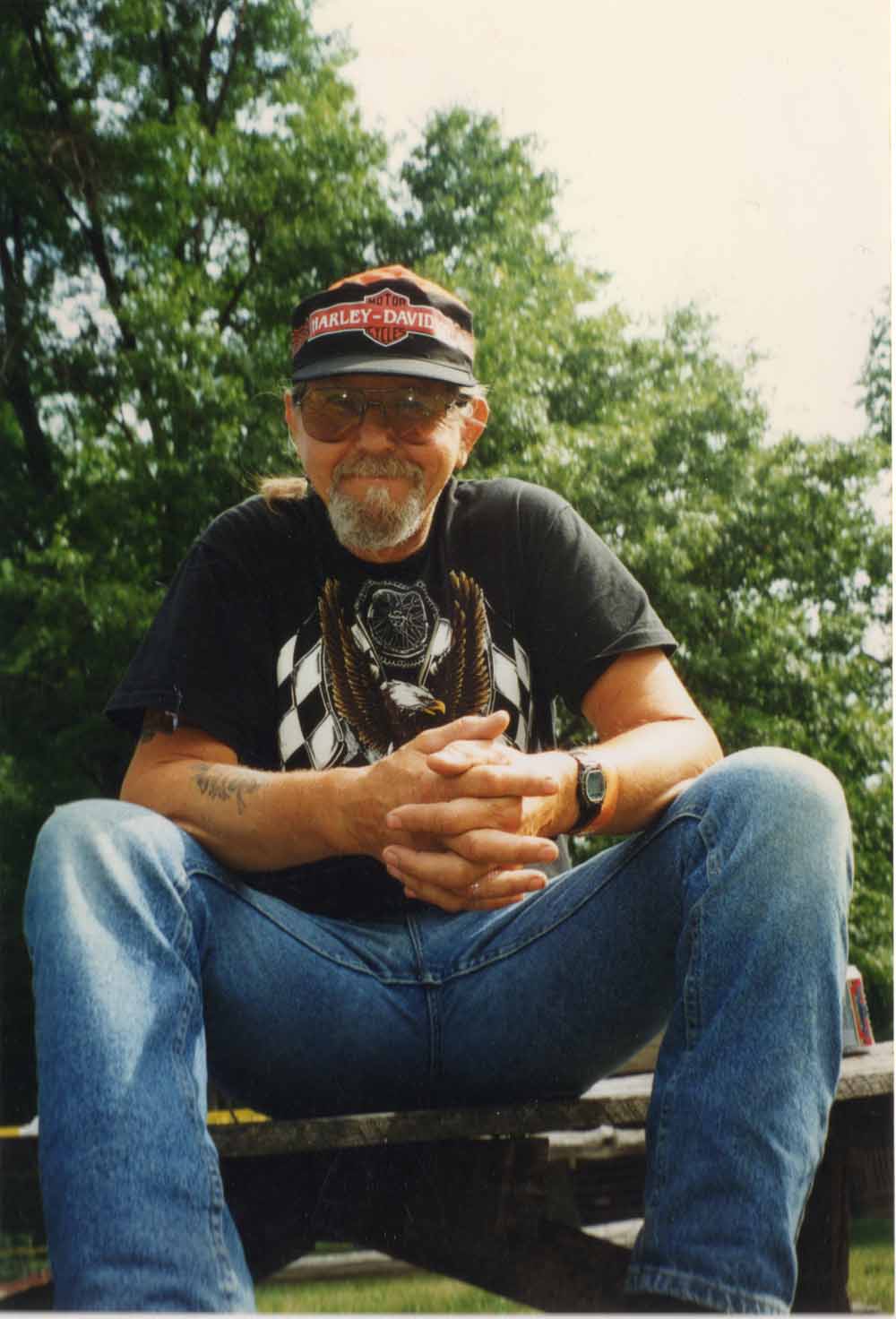 Ray at the rally 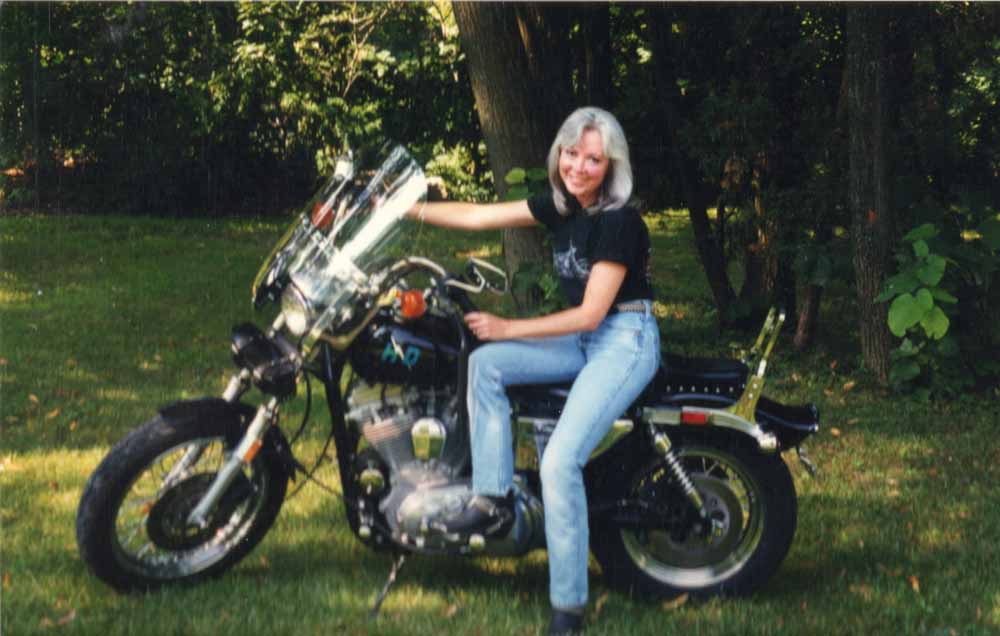 The 883 Sportster, after customizing  I had the top of the gas tank painted to match my tattoo. (The gas tank came out better.)  We even had a motorcycle on our wedding cake 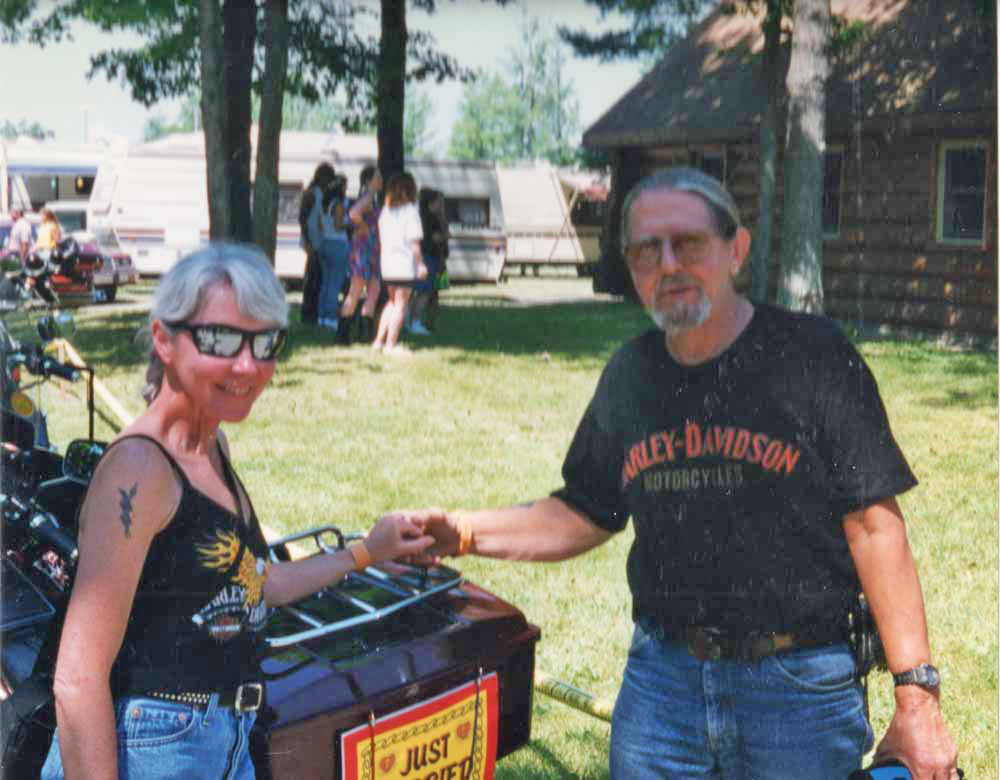 And continued the celebration at West Branch 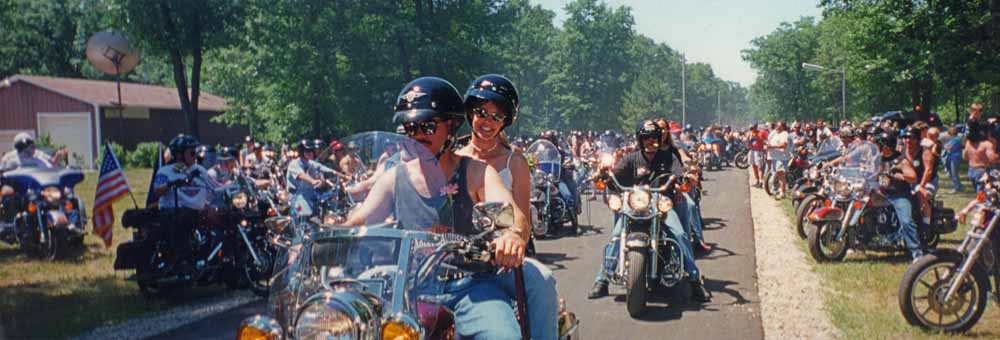 West Branch 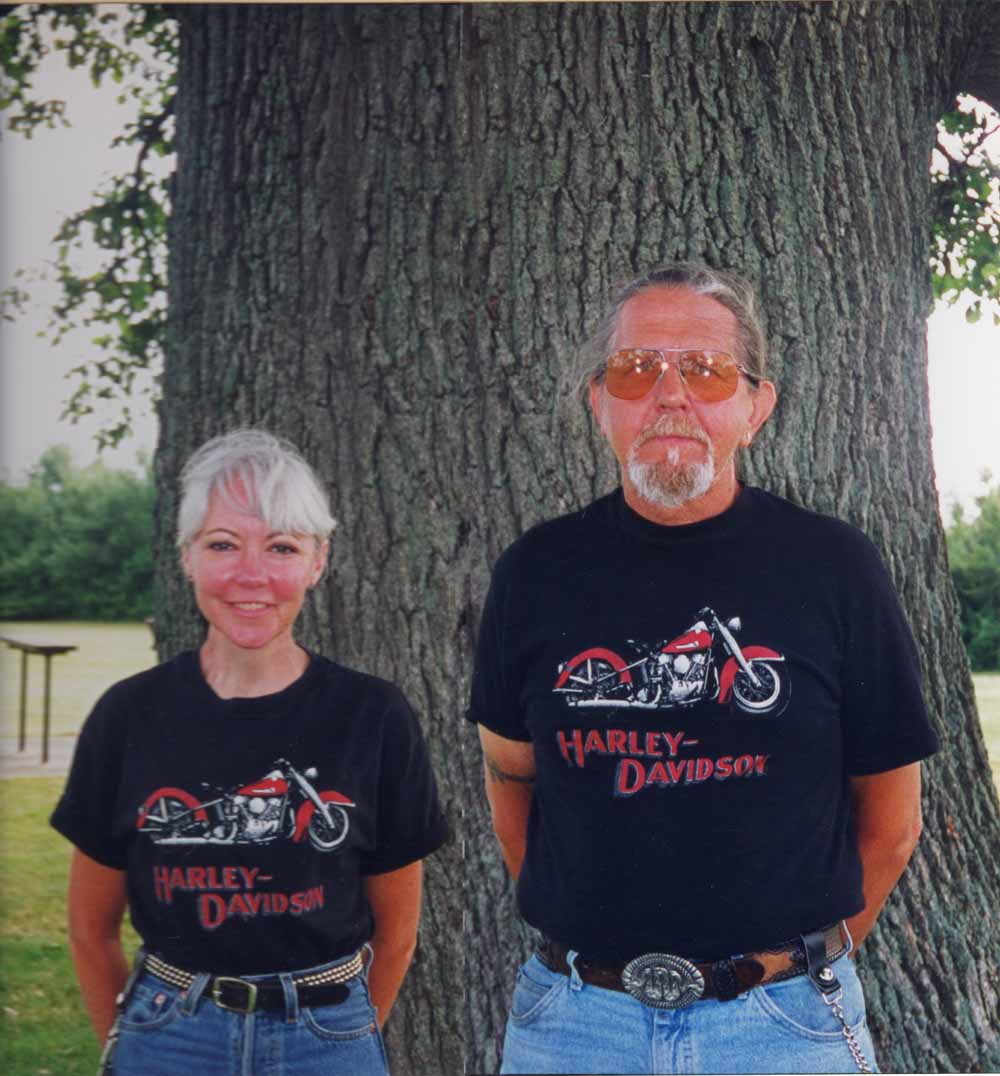 Inadvertently (I swear!) wearing matching T-shirts on the first day of our Oklahoma trip 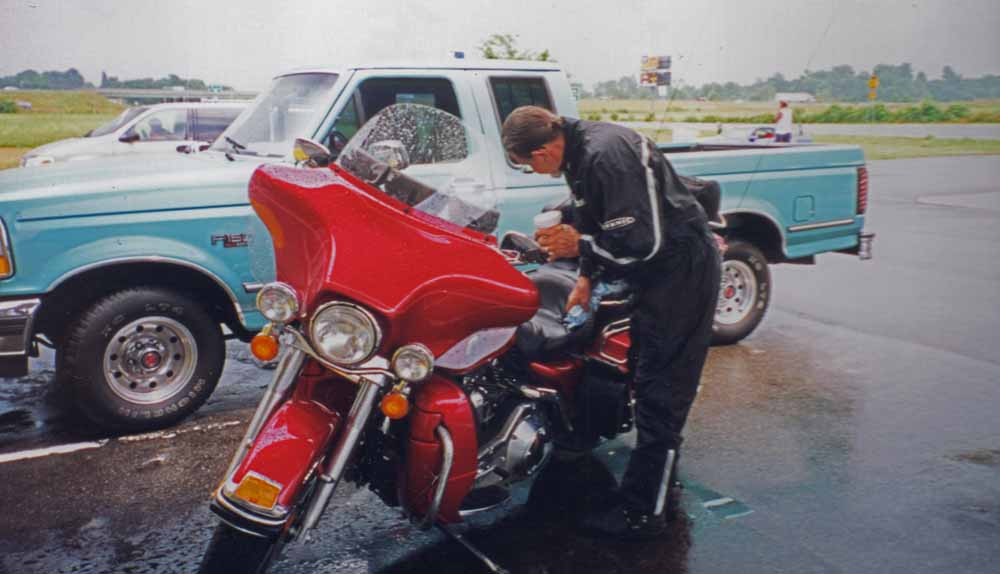 A gas stop on a thoroughly soggy day in Indiana. Riding rain or shine was part of the adventure. 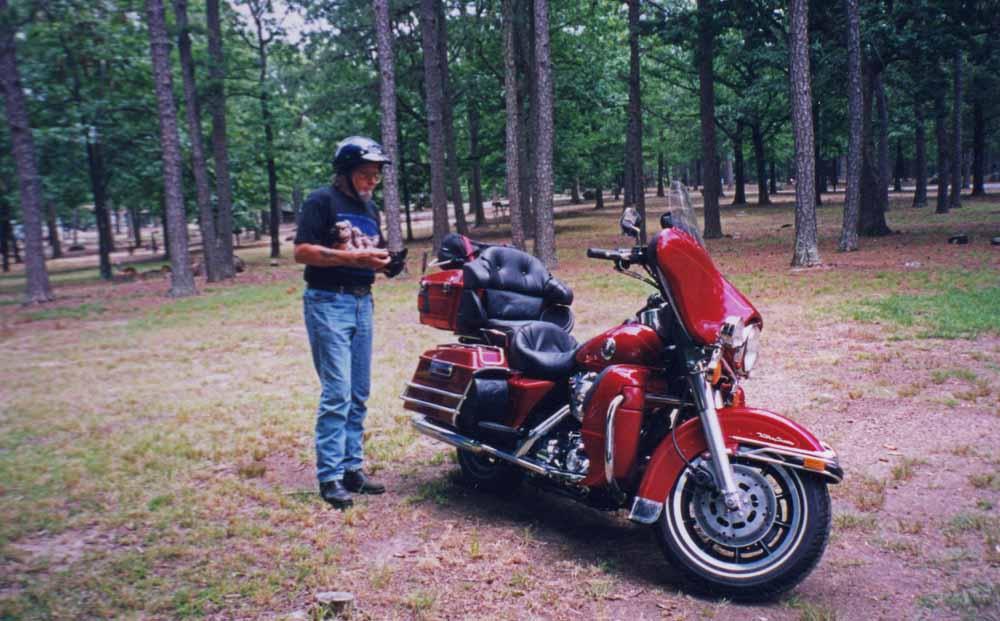 Ray calming down after a nerve-wracking ride up a steep, narrow, and twisty mountain road in Arkansas 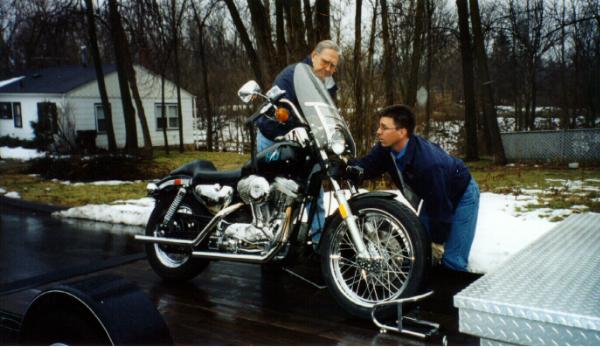 Goodbye to the 883. Ray helps the new owner load it up. 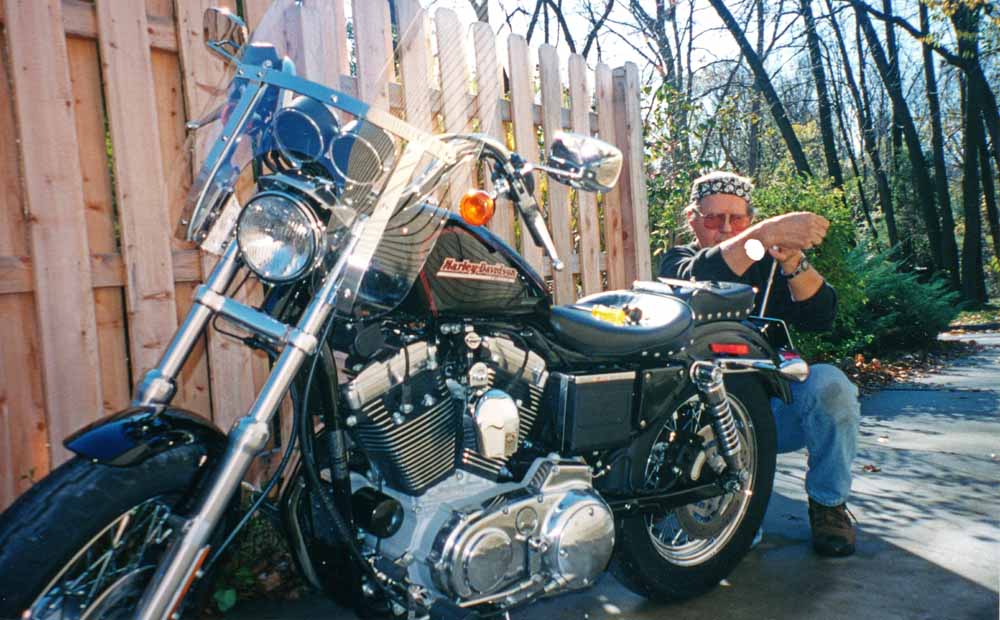 The 1200 -- still new but already being transformed 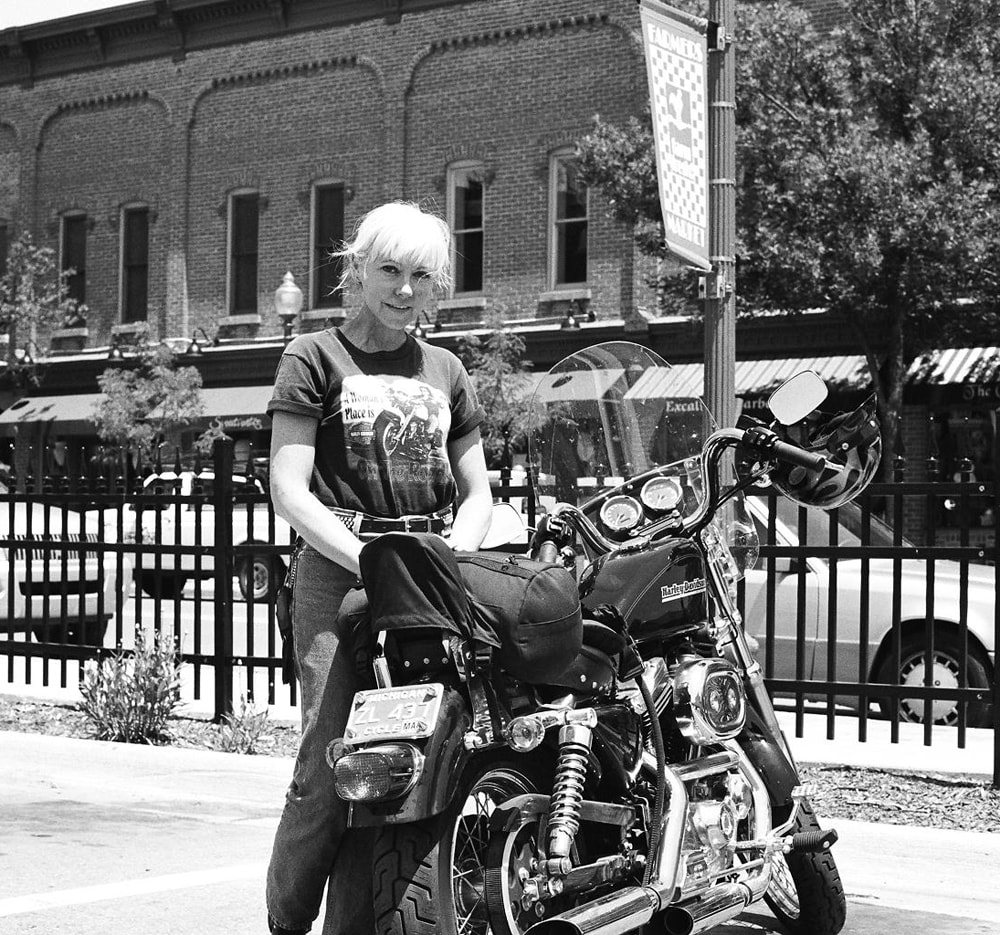 An early ride on the 1200 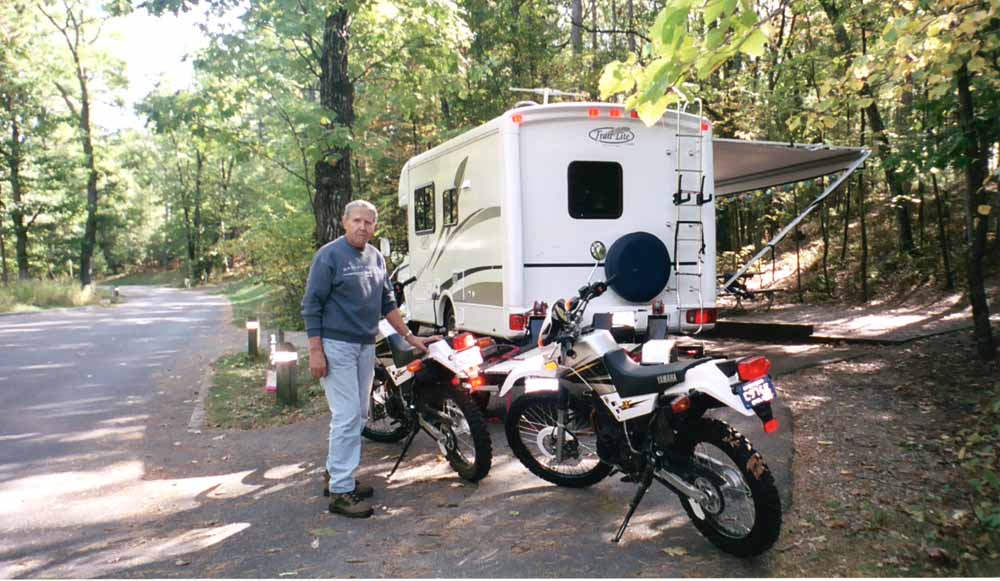 We had fun taking these dual-sport Yamahas with us to northern Michigan 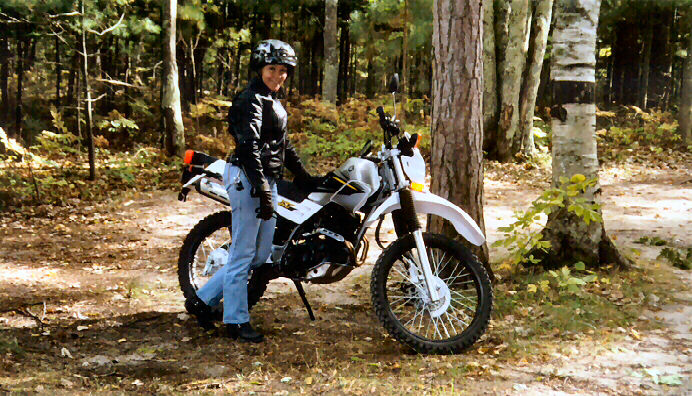 Riding up north 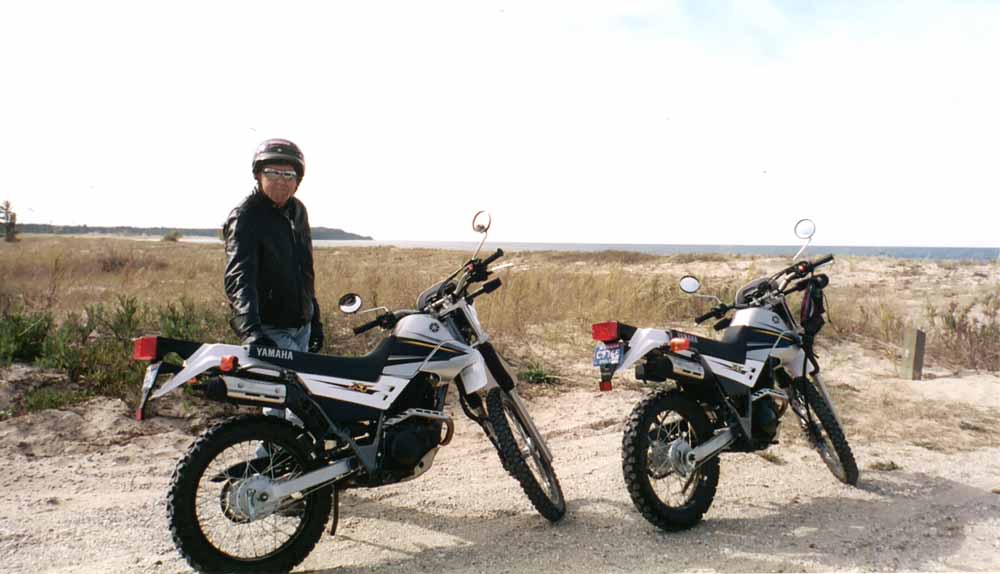 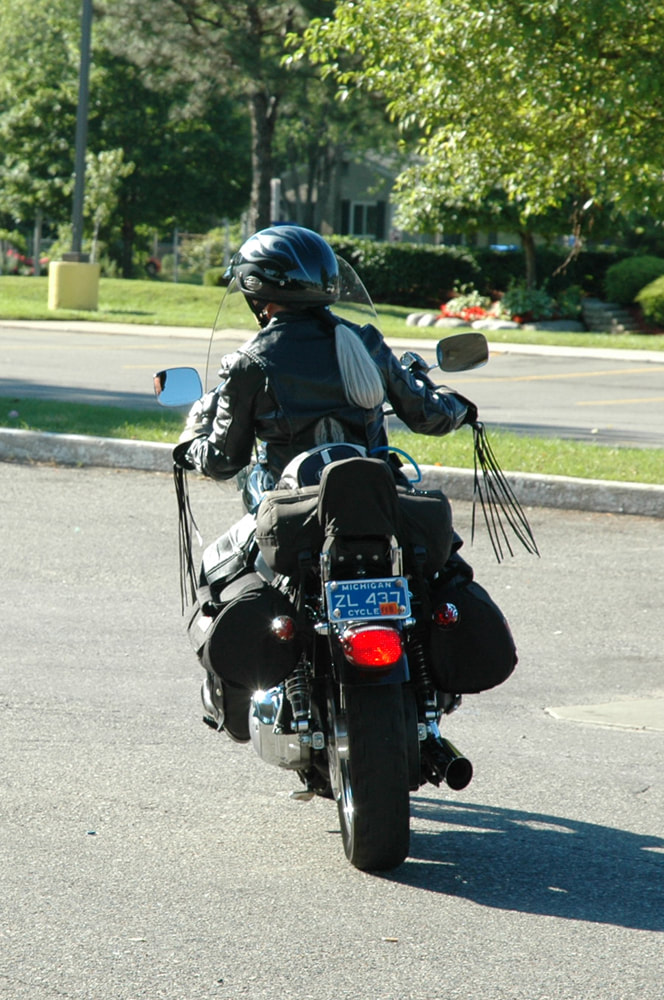 But I was always a Harley girl at heart 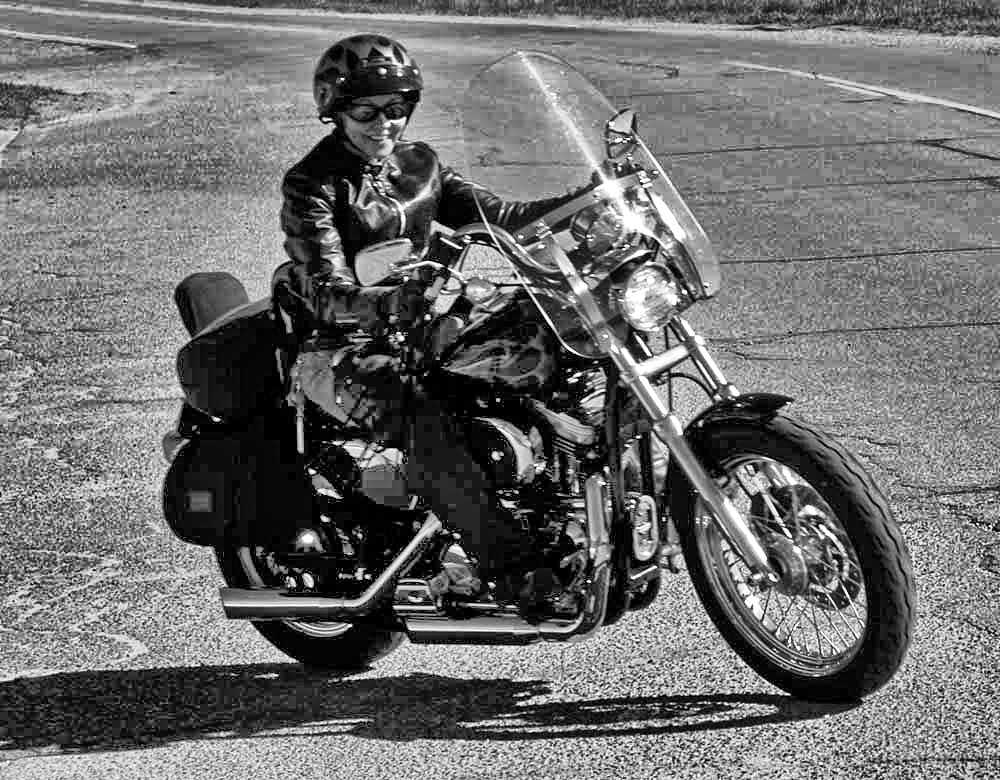 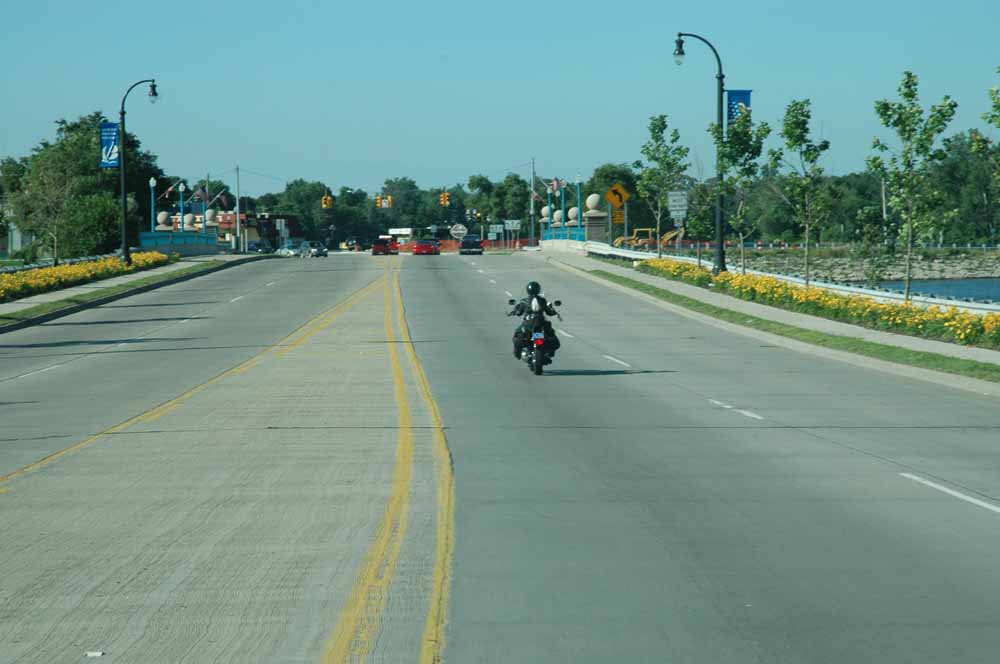 Crossing the Belleville bridge was the beginning of many memorable rides 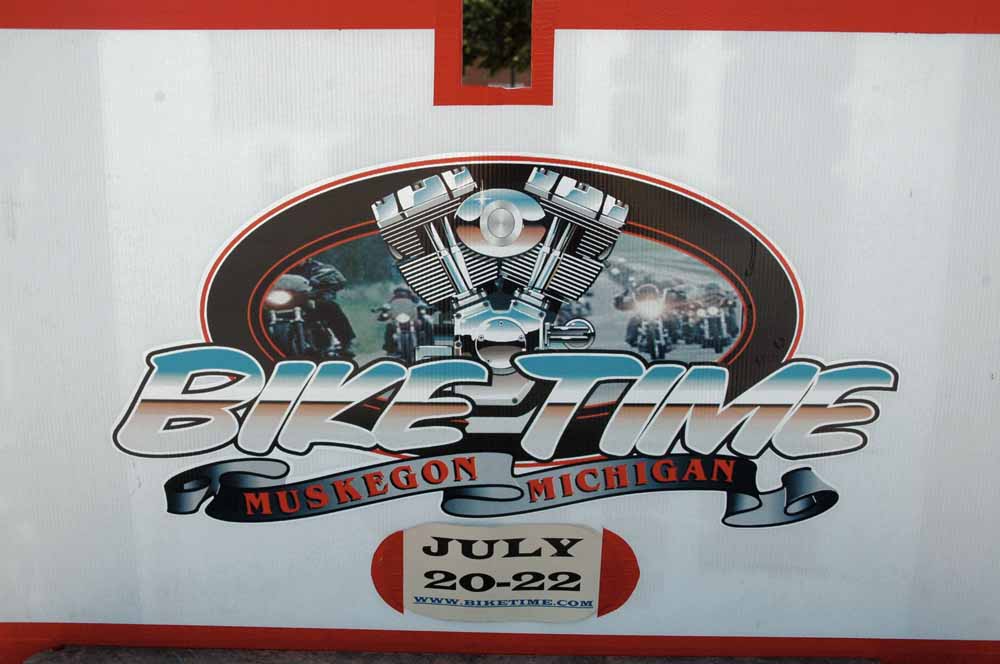 We discovered Muskegon Bike Time almost by accident on a house-hunting trip 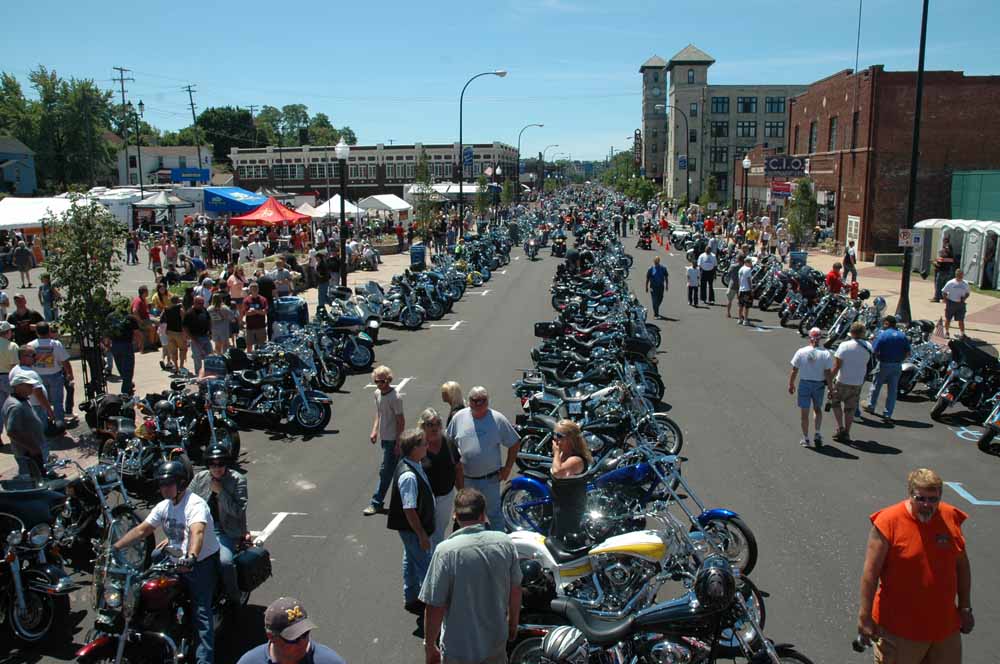 We were glad we did -- great festival!  Ray strikes a pose at Bike Time 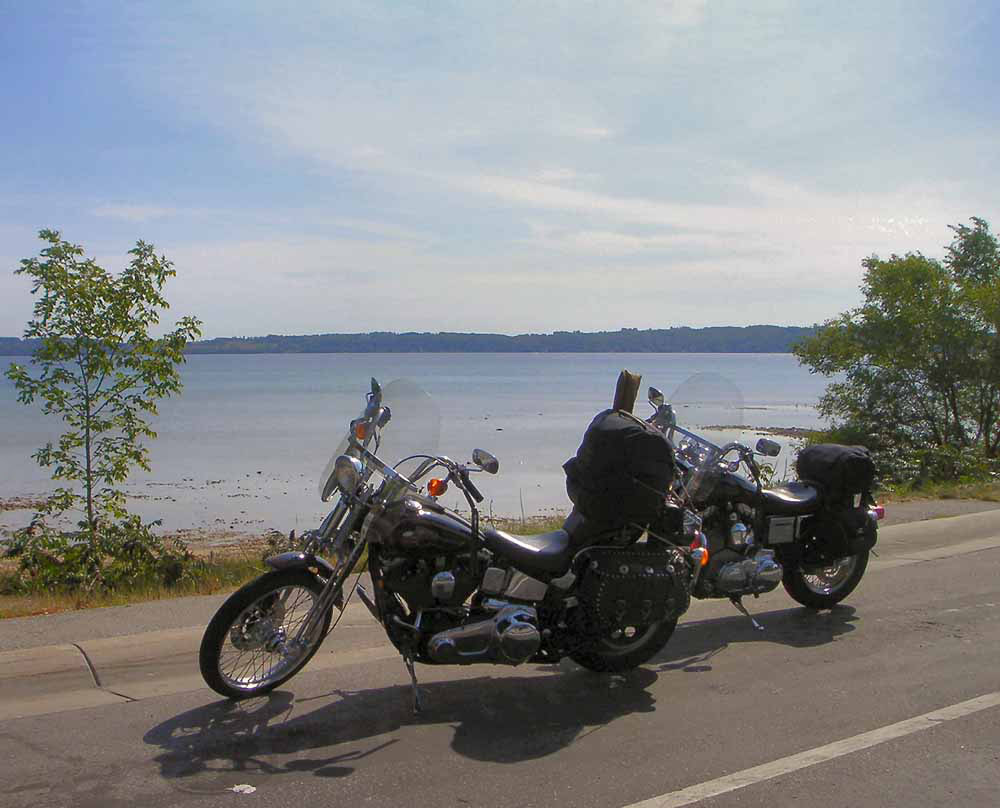 Our trip around Michigan's mitten was our last motorcycle trip together 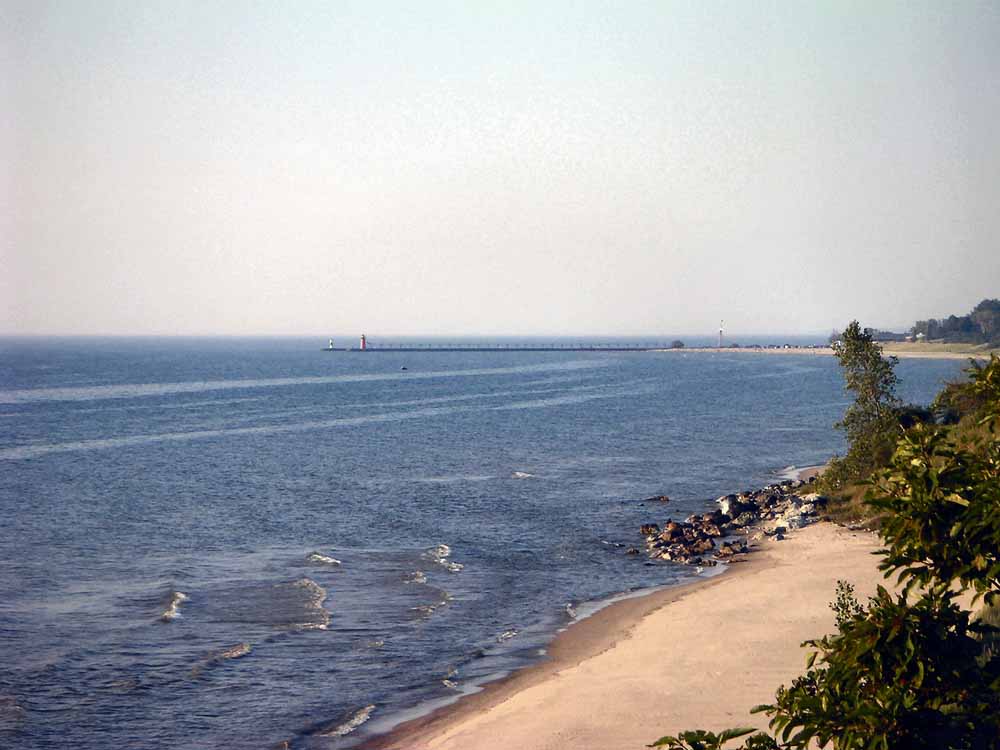 Scenes like this made us fall more in love with Michigan every day.  Coffee stop in Glen Arbor 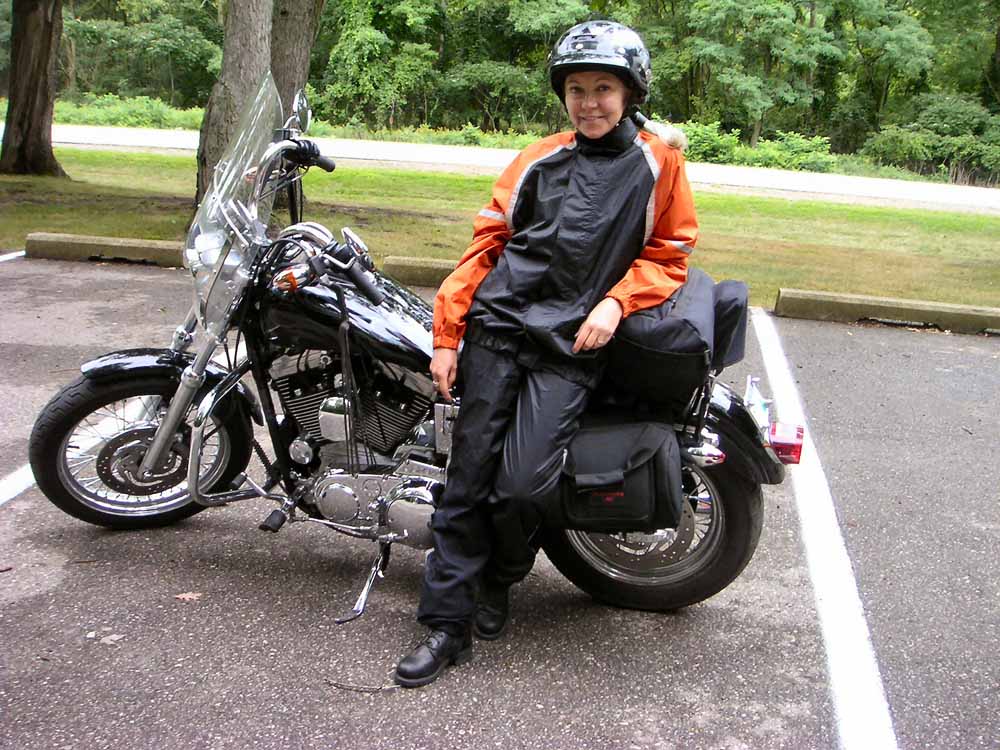 Another rainy day 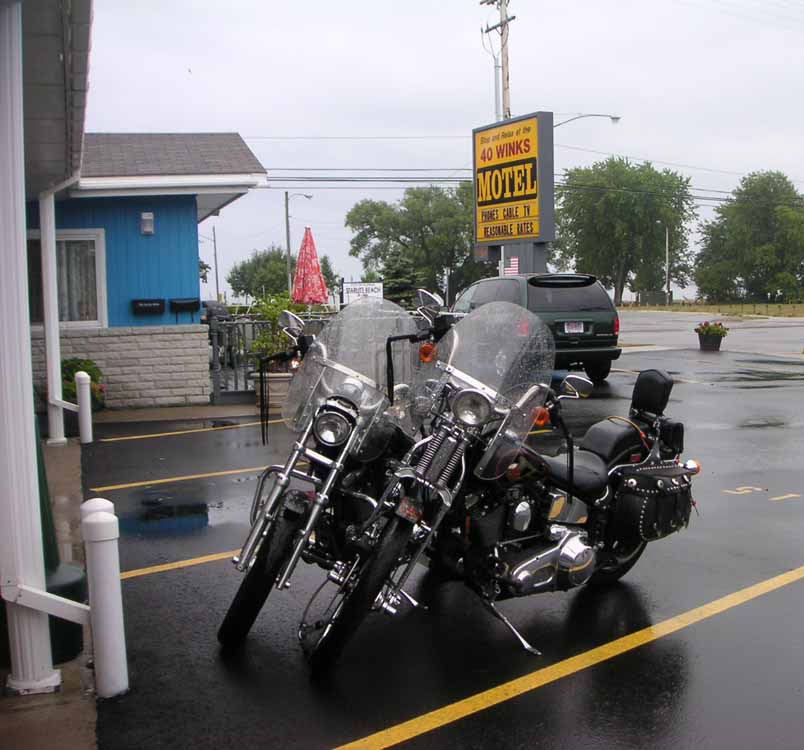 . . . that finally drove us off the road and into a dry motel in Alpena. The rain was so blinding we couldn't make it one more mile to the Holiday Inn with indoor pool and restaurant. Bummer! 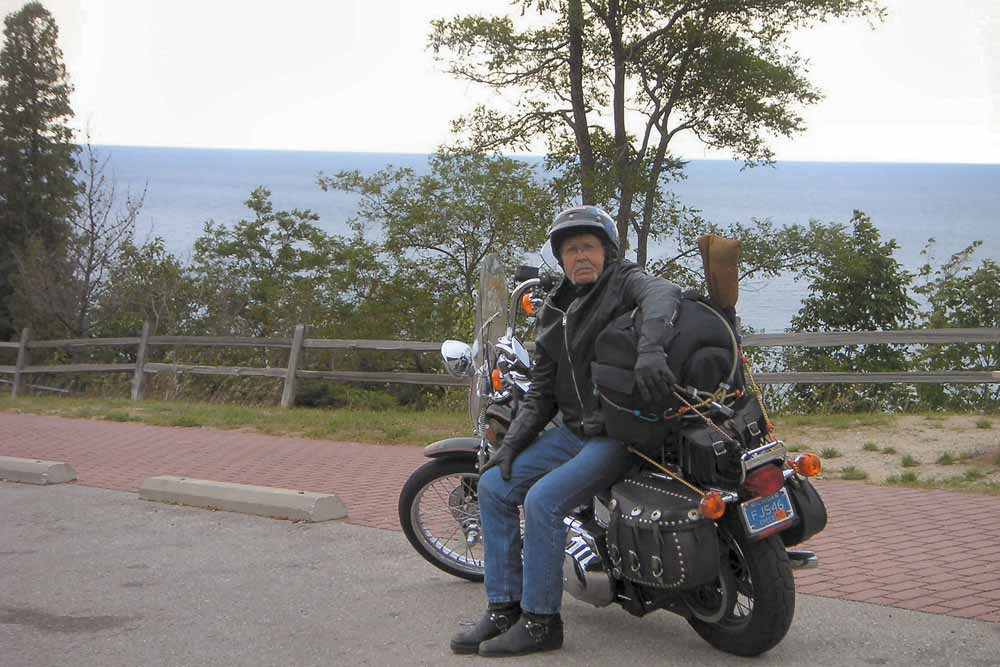 Then it was back on the road 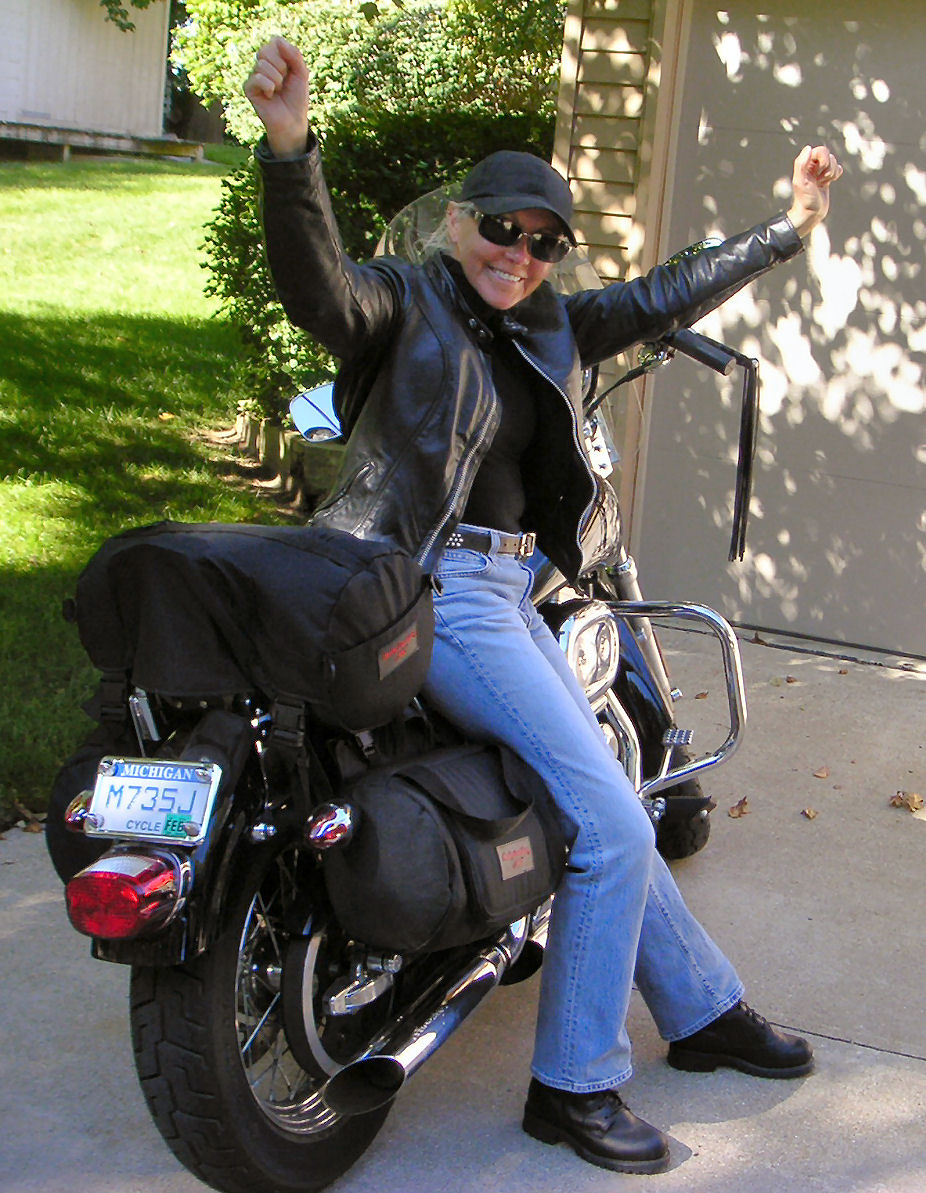 And finally, safely home. This jubilation also sums up my feelings about all our motorcycle days. I realize it's not the last Wednesday of the month, but I haven't done one of these compilations in quite a while, and I blew right past last month's bonus Wednesday, when I fully intended to post something extra. So I owe you! Besides, I've been finding some good stuff that I really want to share. So here you go . . . We tend to think of consciousness as skin bound, brain tethered. However, in nature we can sense something vaster--and that something larger senses us. And from here our perception and understanding transforms. We start to think from this bigger perspective. -- Mark Coleman, Mindful magazine, April 2019  I'd sooner exchange ideas with the birds on earth than learn to carry on intergalactic communications with some obscure race of humanoids on a satellite planet from the world of Betelgeuse. First things first. -- Edward Abbey, "The First Morning," Desert Solitaire: A Season in the Wilderness  Bees teach us so many lessons. When they take all this nectar from the tree, does that deprive the tree of anything? No, it enhances it. And when you give your time and energy to helping someone, does it deplete your skills? No, it gives you something to be proud of. -- Brother Blaise Heuke, "The Beauty of a Bee," AARP The Magazine,   [W]ith art comes empathy. It allows us to look through some else's eyes and know their strivings and struggles. It expands the moral imagination and makes it impossible to accept the dehumanization of others. When we are without art, we are a diminished people--myopic, unlearned and cruel. -- Dave Eggers, The New York Times, June 29, 2018  Authorship is a solitary business, always coming down to a writer and a blank page, but inevitably it becomes a social act as well, because the book is inextricably part of the world. It finds readers, it begins a conversation, it tells a kind of truth that can't be told in any other way--or else it fails to do that. James Gleick, Authors Guild Bulletin, Spring-Summer 2018  But here's the thing: Humans are not what we do. Humans are everything we do, and feel, and think, with a dash of stardust thrown in. The same is true for writers. -- Lenore Myka, "When to ignore good advice," Poets & Writers magazine, Sept/Oct 2018    For a long time, I was looking for happiness from success. Now I am looking for success from happiness.
-- Kathryn Budig, Yoga Journal, August 2018 |
Written from the heart,
from the heart of the woods Read the introduction to HeartWood here.
Available now!
Check with your favorite bookseller or order from the BUY BOOKS page on this website.
Author
Nan Sanders Pokerwinski, a former journalist, writes memoir and personal essays, makes collages and likes to play outside. She lives in West Michigan with her husband, Ray. Archives
April 2022
Categories
All
|

 RSS Feed